You can sort solutions in the Drawdown Explorer by speed of impact. Here’s what each means:
- Emergency Brake solutions work the fastest by addressing short-lived climate pollutants, such as methane, or preventing the sudden release of carbon emissions. For instance, improving diets has a disproportionately fast impact by reducing methane emissions from livestock, while also preventing massive, sudden pulses of carbon dioxide released when forest land is cleared for grazing.
- Gradual solutions offer steady beneficial emissions impacts year after year once they are implemented. Any clean energy replacement for fossil energy fits this category. For instance, electric vehicles replace dirty fossil fuel emissions each and every time they are used. Most solutions fit this gradual category.
- Delayed solutions work the slowest but can offer robust results when they reach their full potential in the long run. For instance, restoring forests can take decades since trees take time to grow, delaying any initial burst of carbon sequestration. For this reason, protecting intact forests can provide more timely climate benefits than restoring degraded ones.
6. Are you interested in a specific sector?
Philanthropic capital plays more of a leading role in some sectors, including nature and food systems, while playing a supporting role in others, such as transportation and electricity, which often involve larger flows of private, institutional, and public capital.
If you’re most interested in cutting emissions, consider solutions in sectors like electricity, food and agriculture, transportation, buildings, and other energy. These sectors all work to cut emissions from happening in the first place.
For instance, in the electricity sector, deploying utility-scale solar power systems and onshore wind turbines reduces carbon emissions by providing renewable energy. In the food and agriculture sector, solutions such as improving diets by reducing meat consumption and offering other protein-rich foods, and reducing food loss and waste, reduce emissions across entire value chains, from production through consumption. And in the buildings sector, solutions like improving windows and glass by moving from single- to double-glazed windows cut emissions by minimizing the energy needed to heat and cool buildings.
There are also sectors working to remove carbon from the atmosphere that has already been emitted. For instance, in the nature-based carbon removal sector, restoring forests helps remove carbon from the atmosphere and sequester it.
If you have a specific sector of interest, you can search in the Drawdown Explorer by using the Filter by Sector drop-down menu.
A generational opportunity
Whether you’re a current philanthropist or you’re part of the Next Gen, these questions can be a starting place for your climate action journey.
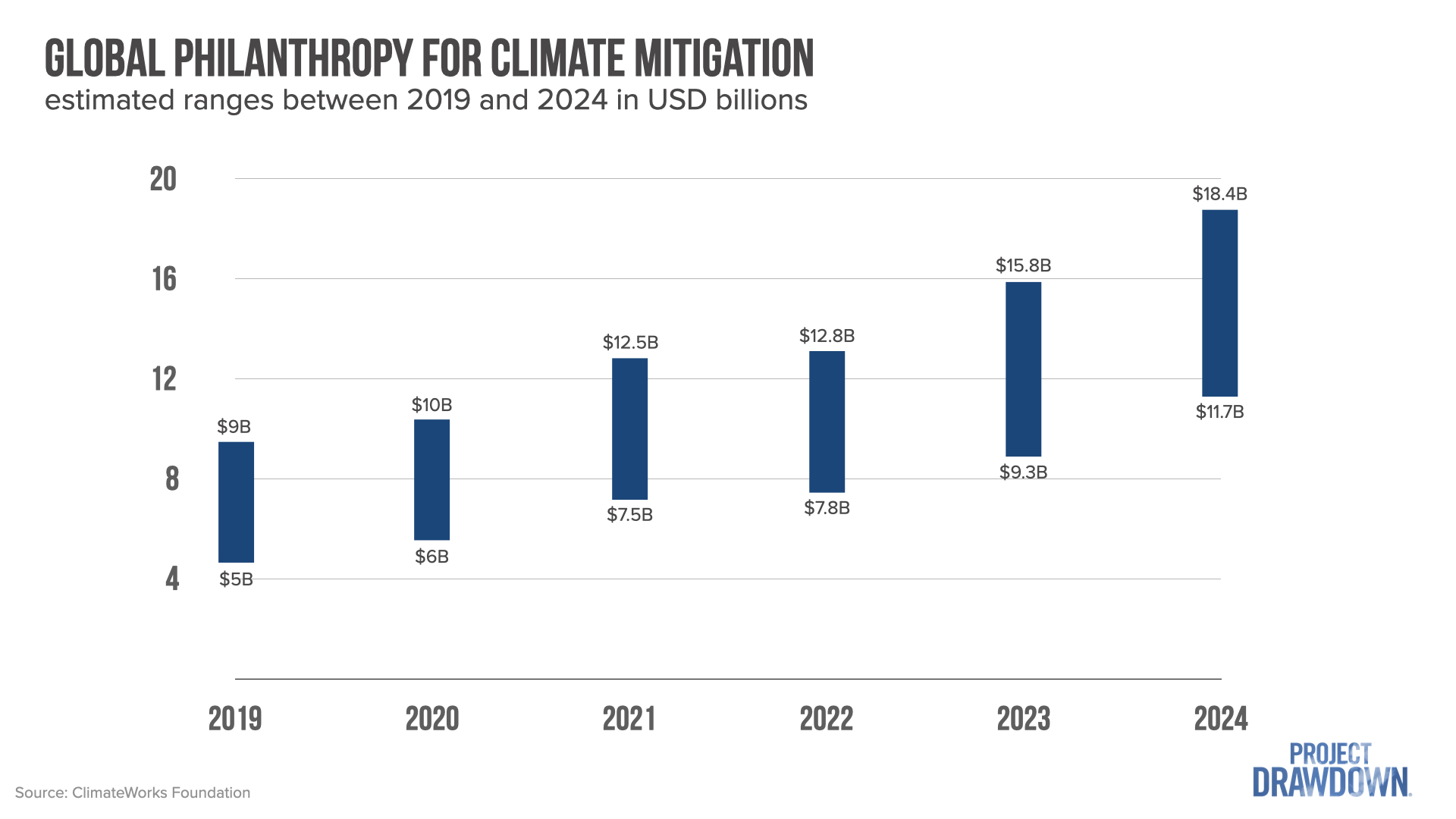
With US$18 trillion projected to soon enter charitable giving as part of the Great Wealth Transfer and a notable upward trend in philanthropy’s focus on climate mitigation solutions, the stakes are high, and the opportunity is historic.
Science can – and must – be a compass to help guide the way.
But following the science doesn’t mean abandoning what inspires you. When philanthropists lead with their passions, it’s often possible to align those interests with scientific priorities, making their giving more durable and impactful.
Trillions of dollars are about to move. This could be a once-in-a-generation alignment of capital, scientific knowledge, and philanthropic will. How we direct those dollars over the next decade will help shape the climate outcomes – and therefore the future – of the next century.
Stay tuned this fall for announcements about Drawdown Capital, a new program from Project Drawdown that will help supercharge the impact of climate capital!
About the Author
Amanda Bielawski, Ph.D., is Director of Global Strategic Partnerships at Project Drawdown, leading strategies to advance the most effective and innovative climate solutions across business, investing, and philanthropy.
About Project Drawdown
Project Drawdown is the world’s leading guide to science-based climate solutions. Our mission is to drive meaningful climate action around the world. A 501(c)(3) nonprofit organization, Project Drawdown is funded by individual and institutional donations.
This work is published under a Creative Commons CC BY-NC-ND 4.0 license. You are welcome to republish it following the license terms.