Remove Carbon Nature-Based Carbon Removal Restore & Manage Ecosystems

Restore Forests

Highly Recommended
Image
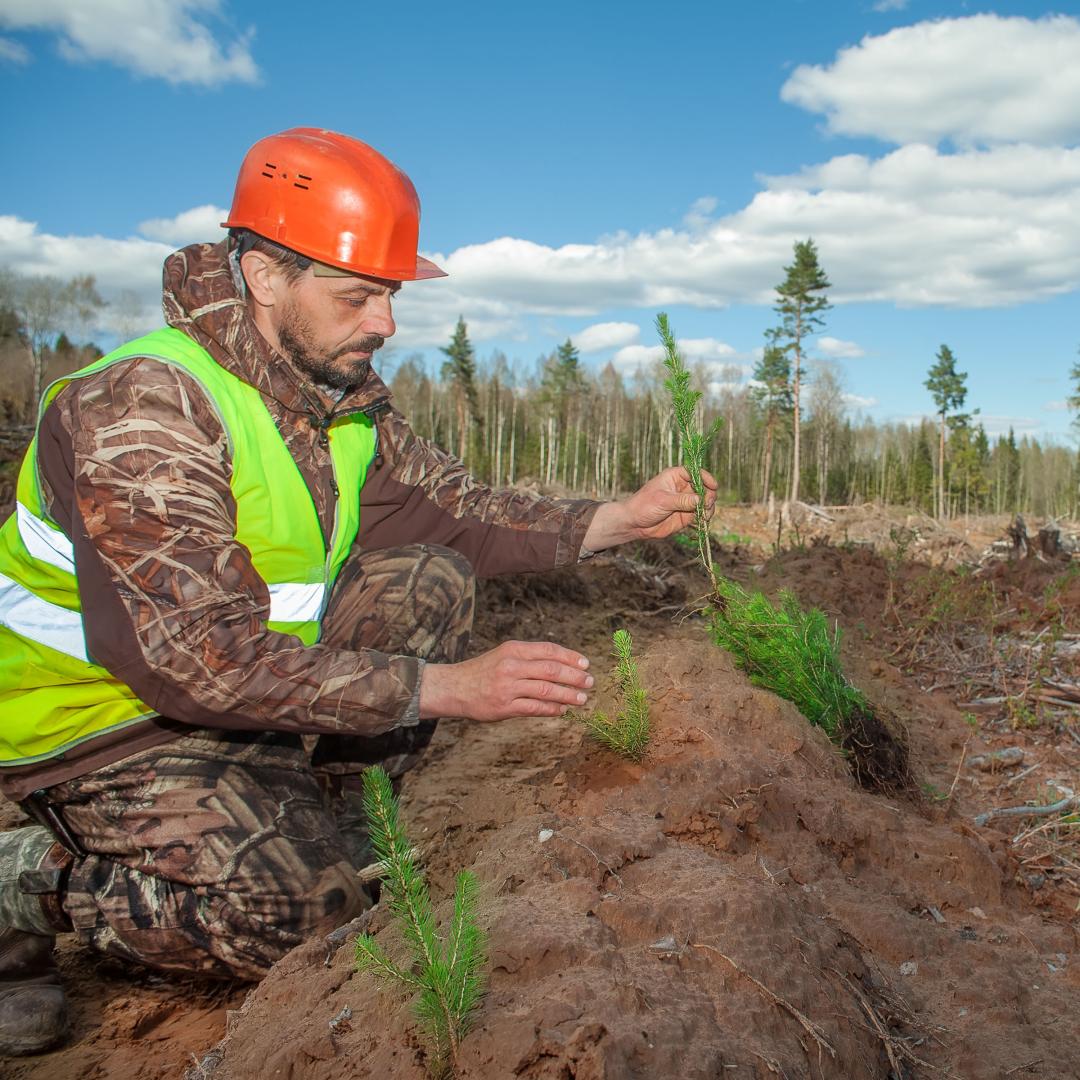
person planting trees

Forest restoration is the process of returning previously forested land to a forested state. As forests regrow, they remove carbon from the atmosphere and sequester it in biomass.

Last updated February 5, 2026

Solution Basics

ha under restoration

t CO₂-eq (100-yr)/unit/yr
09.4410.21
units
Current Not Determined 09.7×10⁶1.46×10⁷
Achievable (Low to High)

Climate Impact

Gt CO₂-eq (100-yr)/yr
Current Not Determined 0.0990.149
US$ per t CO₂-eq
53
Delayed

CO₂

Solution Basics

ha under restoration

t CO₂-eq (100-yr)/unit/yr
010.1612.11
units
Current Not Determined 09.5×10⁶1.43×10⁷
Achievable (Low to High)

Climate Impact

Gt CO₂-eq (100-yr)/yr
Current Not Determined 0.1150.173
US$ per t CO₂-eq
53
Delayed

CO₂

Solution Basics

ha under restoration

t CO₂-eq (100-yr)/unit/yr
09.6811.78
units
Current Not Determined 01.7×10⁶2.6×10⁶
Achievable (Low to High)

Climate Impact

Gt CO₂-eq (100-yr)/yr
Current Not Determined 0.0210.031
US$ per t CO₂-eq
53
Delayed

CO₂

Solution Basics

ha under restoration

t CO₂-eq (100-yr)/unit/yr
014.6717.63
units
Current Not Determined 02.74×10⁷4.11×10⁷
Achievable (Low to High)

Climate Impact

Gt CO₂-eq (100-yr)/yr
Current Not Determined 0.4830.725
US$ per t CO₂-eq
53
Delayed

CO₂

Additional Benefits

177,178,181,182
183,184,187,188
    183
  • 184
  • 185
  • 186
  • 187
  • 188
189,193

Overview

We define forest restoration as planting new trees or allowing trees to naturally regrow on previously forested land that has been cleared. Through photosynthesis, forests take carbon from the atmosphere and store it in biomass. On net, forests currently take up an estimated 11.4–14.7 Gt CO₂‑eq/yr  (Friedlingstein et al., 2023; Gibbs et al., 2025; Pan et al., 2024), equal to approximately 19–25% of total global anthropogenic GHG emissions (Dhakal et al., 2022). Restoring forests increases the size of the forest carbon sink, sequestering additional CO₂.  

As commonly defined, restoration ranges from improving management of existing ecosystems, to re-establishing cleared ecosystems, to maintaining the health of functional ecosystems. Forest restoration includes activities such as exclusion of non-native grazing animals from a regenerating site, weed management, assisted seed dispersal, controlled burning, stand thinning, direct seeding, soil amendment, tree planting, and modification of topography or hydrology and other activities (Chazdon et al., 2024; Gann et al., 2022; Kübler & Günter 2024). While acknowledging that all restoration occurs along a spectrum of intervention intensity, we report effectiveness, cost, and adoption data for “low intensity” and “high intensity” restoration separately, with “low intensity” restoration including all interventions up to, but not including, tree planting, and “high intensity” restoration referring to direct seeding or seedling planting. To account for variability in carbon sequestration rates and area available for forest restoration, this analysis also evaluates forest restoration in boreal, temperate, subtropical, and tropical regions separately where possible.

Our definition of forest restoration is more limited than that used by many other sources. First, we only include reforestation of previously forested land with an element of direct human intervention, and therefore exclude entirely passive tree regrowth on abandoned land (i.e., unassisted natural regeneration) and afforestation of native grasslands and savannas. We also exclude areas currently used for crop production. To avoid double counting, we also do not include activities covered in other Project Drawdown solutions, including increasing carbon stocks in existing forests and establishing timber plantations, agroforestry, or silvopasture (see Improve Forest ManagementDeploy Biomass Crops on Degraded LandDeploy Agroforestry, and Deploy Silvopasture, respectively). Restoration of mangroves and forests on peat soils is also excluded, as this is covered in the Restore Coastal Wetlands and Restore Peatlands solutions. Because the scope of this solution is narrower than that of many other studies, the estimated impacts are correspondingly lower as well. 

Intact and regenerating forests take up carbon, but human clearing of forests for logging, agriculture, and other activities emits carbon. Humans clear an estimated 15.5 Mha of forests annually, emitting ~7.4 Gt CO₂‑eq/yr (2001–2024; Harris et al., 2021; Gibbs et al., 2025; Sims et al., 2025). Protecting existing forests reduces emissions from deforestation (see Protect Forests) and is an essential complement to forest restoration. 

Impact Calculator

Adjust effectiveness and adoption using range sliders to see resulting climate impact potential.

Effectiveness

10.21
t CO2-eq/unit/yr
25th
percentile
9.44
75th
percentile
12.25
10.21
median

Adoption

0
ha under restoration
Low
9.7×10⁶
High
1.46×10⁷
0
Achievable Range

Climate Impact

0.00
Gt CO₂-eq/yr (100-yr)
05
which is the equivalent of
0.00%
of global emissions
Adjust effectiveness and adoption using range sliders to see resulting climate impact potential.

Effectiveness

12.11
t CO2-eq/unit/yr
25th
percentile
10.16
75th
percentile
14.28
12.11
median

Adoption

0
ha under restoration
Low
9.5×10⁶
High
1.43×10⁷
0
Achievable Range

Climate Impact

0.00
Gt CO₂-eq/yr (100-yr)
05
which is the equivalent of
0.00%
of global emissions
Adjust effectiveness and adoption using range sliders to see resulting climate impact potential.

Effectiveness

11.78
t CO2-eq/unit//yr
25th
percentile
9.68
75th
percentile
13.91
11.78
median

Adoption

0
ha under restoration
Low
1.7×10⁶
High
2.6×10⁶
0
Achievable Range

Climate Impact

0.00
Gt CO₂-eq/yr (100-yr)
05
which is the equivalent of
0.00%
of global emissions
Adjust effectiveness and adoption using range sliders to see resulting climate impact potential.

Effectiveness

17.63
t CO2-eq/unit/yr
25th
percentile
14.67
75th
percentile
19.85
17.63
median

Adoption

0
ha under restoration
Low
2.74×10⁷
High
4.11×10⁷
0
Achievable Range

Climate Impact

0.00
Gt CO₂-eq/yr (100-yr)
05
which is the equivalent of
0.00%
of global emissions

The Details

Current State

We estimated that forest restoration can sequester 5.86–18.19 t CO₂‑eq /ha/yr (Table 1), depending on the climate zone and type of intervention, as growing trees take up carbon through photosynthesis and store it in above- and below-ground biomass. Sequestration rates are highly variable globally; much of this variability is driven by climate, soil properties, forest type, and the type of restoration. 

For this solution, we used modeled carbon sequestration rates from natural regeneration to represent low-intensity restoration (Robinson et al., 2025) and modeled carbon sequestration rates from plantation forests to represent high-intensity carbon restoration, which we define as initiatives that include tree planting (Bukoski et al., 2022; Busch et al., 2024). We calculated carbon sequestration rates at the climate zone level (boreal, temperate, subtropical, and tropical) across the potential extent for each reforestation type.

Generally, high-intensity restoration has higher sequestration rates (median values 12.02–18.19 t CO₂‑eq /ha/yr) than low-intensity restoration (median values 5.86–17.06 t CO₂‑eq /ha/yr). Median effectiveness is also higher in tropical areas, where forest growth often continues year-round, than it is in other climate zones. These estimates reflect average sequestration rates over the first 30 years of forest growth. Carbon sequestration rates are also influenced by non-climatic factors. For example, higher tree species diversity is often associated with higher forest carbon storage and uptake (Bialic-Murphy et al., 2024; Poorter et al., 2015; van der Sande et al., 2017).

Table 1. Effectiveness of forest restoration at sequestering carbon.

Unit: t CO₂‑eq /ha/yr, 100-yr basis

Boreal 5.86
Temperate 11.49
Subtropical 11.53
Tropical 17.06

Unit: t CO₂‑eq /ha/yr, 100-yr basis

Boreal 14.57
Temperate 12.74
Subtropical 12.02
Tropical 18.19

We estimated the median cost of low-intensity forest restoration at US$23/t CO₂‑eq (2023 US$) and the median cost of high-intensity forest restoration at US$83/t CO₂‑eq (Table 2). The value given in the dashboard above is the average of the low- and high-intensity cost estimates (US$53/t CO₂‑eq). 

On a per-hectare basis, the estimated cost of low-intensity restoration ranges from US$213/ha (25th percentile) to US$739/ha (75th percentile), with a median cost of US$304/ha. The estimated cost of high-intensity restoration ranges from US$811/ha (25th percentile) to US$1,914/ha (75th percentile), with a median of US$1,348/ha. We derived these estimates from compilations of global restoration project cost data by Verhoeven et al. (2024) and Busch et al. (2024), supplemented with estimates from five additional publications, representing a total of 50 unique projects.

Estimates of restoration costs remain very uncertain, as data are scarce, costs and revenues are highly variable across geographies and projects, and costs are nonlinear, tending to increase under higher adoption scenarios (Austin et al., 2020; Schimetka et al., 2024). Moreover, the success of a project at establishing new forests drives the cost per metric ton of CO₂‑eq , but such success rates are rarely reported alongside costs. Because of data limitations, we did not separate cost estimates into climate zones. 

Our estimates do not account for any new revenues associated with forest restoration, such as carbon credits or provisioning of timber and non-timber forest products (Adams et al. 2016; Ager et al., 2017; Busch et al., 2024). They also do not account for the economic value of ecosystem services, such as increased biodiversity, improved water quality, local cooling, and reduced soil erosion, which have been estimated to outweigh the costs of forest restoration (De Groot et al., 2013).

Table 2. Cost per unit of climate impact.

Unit: 2023 US$/t CO₂‑eq , 100-yr basis

Median 23

Unit: 2023 US$/t CO₂‑eq , 100-yr basis

Median 83

We define a learning curve as falling costs with increased adoption. Reforestation has been practiced for many decades, and there is no evidence of a decrease in costs associated with increasing adoption. Therefore, there is no learning curve for this solution.

Speed of action refers to how quickly a climate solution physically affects the atmosphere after it is deployed. This is different from speed of deployment, which is the pace at which solutions are adopted.

At Project Drawdown, we define the speed of action for each climate solution as emergency brake, gradual, or delayed.

Restore Forests is a DELAYED climate solution. It works more slowly than gradual or emergency brake solutions. Delayed solutions can be robust climate solutions, but it’s important to recognize that they may not realize their full potential for some time.

Adoption

Data on current adoption of forest restoration are very limited. While there are extensive compilations of restoration pledges, estimates of the actual area being restored are noncentralized, typically rely on self-reporting without validation, do not have global coverage, use inconsistent definitions, often include establishment of plantations and agroforestry, and rarely separate estimates by ecosystem. Satellite-based data on tree cover gain are occasionally used as a proxy for restoration, but these do not differentiate among restoration, establishment of timber plantations, regeneration in the absence of human intervention, and plantation regrowth after timber harvest (Reytar et al., 2024). Moreover, they can fail to capture actual restoration areas (Begliomini & Brancalion, 2024).

Due to these limitations, we do not provide an estimate of the global area currently under forest restoration. However, we did compile current restoration estimates from three databases: The Mongabay Reforestation CatalogThe Restoration Initiative, and The Restoration Barometer. These databases are subject to the limitations discussed above. Assuming that there is no overlap in projects reported across these databases, including projects with an agroforestry component, and including projects across all ecosystems, we found 40.6 Mha currently being restored. Under more conservative assumptions, including removing projects with an agroforestry component, removing projects from countries that are reported across multiple databases, and discounting estimates to account for restoration in other ecosystems, we estimated that 9.2 Mha are currently being restored. These estimates provide context, but should not be interpreted as representative of the global area under forest restoration.

Despite extensive data on restoration pledges, comprehensive data on the actual implementation of restoration efforts are very limited and not often temporally resolved. The available data are insufficient to calculate an adoption trend for this solution.

We estimated that there are 96.8 Mha available for forest restoration, with 19.4 Mha in boreal regions, 19.0 Mha in temperate regions, 3.5 Mha in the subtropics, and 54.8 Mha in the tropics (Table 3a–e). In this solution, we only included cleared areas that were previously forests in the calculation of the adoption ceiling. To calculate the adoption ceiling, we started with a recent, conservative map of potential forest restoration areas (Fesenmeyer et al., 2025), which we masked to exclude areas classified as other ecosystems in other solutions (peatlands, grasslands and savannahs, and coastal wetlands). We then used a map of the cost-effectiveness of natural regeneration versus plantation establishment (Busch et al., 2024) to remove areas more suitable for plantation establishment from this solution, and assigned them instead to the Deploy Biomass Crops on Degraded Land solution.

Estimates of the area available for forest restoration vary widely due to differing definitions, ranging from 195 Mha (Fesenmeyer et al., 2025) to 900 Mha (Bastin et al., 2019), for example. Using base maps of forest restoration potential from Griscom et al. (2017) and Walker et al. (2022) gave an estimated global adoption ceiling of 426–434 Mha, after applying the same data processing approach to exclude other ecosystems and plantations. 

Because of the constrained scope of this solution, we find a smaller adoption ceiling relative to other studies, which often include plantation establishment, agroforestry, densification of existing forests, afforestation on grasslands, restoration of forests on peat soils, reforestation of croplands, and other activities sometimes classified as forest restoration. We leveraged the map from Fesenmeyer et al. (2025) for the estimates reported in Table 3 because its scope aligns most closely with our relatively narrow definition of forest restoration, is one of the most recent studies, includes a review of 89 other forest restoration maps, and incorporates safeguards against conflicts between restoration and biodiversity loss, water scarcity, albedo effects, and land use. However, we note that this estimate is lower than other published estimates of potential forest restoration area and that differences across studies are driven by subjective judgments on land suitability for restoration.

Table 3. Adoption ceiling.

Unit: ha available for restoration

Estimate 19,400,000

Unit: ha available for restoration

Estimate 19,000,000

Unit: ha available for restoration

Estimate 3,500,000

Unit: ha available for restoration

Estimate 54,800,000

Unit: ha available for restoration

Estimate 96,800,000

We assigned an arbitrary achievable range of 50–75% of the adoption ceiling, equal to 48.4–72.6 Mha of forest restoration (Table 4a–e). Much of the adoption potential is located in the tropics, which we estimated to contain 27.4 Mha under the Achievable – Low Scenario and 41.1 Mha under the Achievable – High Scenario. We estimated similar achievable ranges of forest restoration area in boreal and temperate regions (9.7–14.6 Mha and 9.5–14.3 Mha, respectively), and an additional 1.7–2.6 Mha in subtropical regions.

Additional research is needed to determine more realistic estimates of the achievable adoption range, particularly differentiated across different restoration activities. National commitments to restoration, as with studies on the potential restoration area, include many activities that are beyond the scope of this solution, such as plantation establishment, agroforestry, and densification. Because of the inconsistency in definitions, we were unable to rely on restoration commitments to quantify the adoption achievable range. For context, the Global Restoration Commitments database (Mariappan & Zumbado, 2024) reports that, under the Rio Conventions, countries have committed to increasing forestland by 122 Mha, with an additional 154 Mha of commitments to restoring or improving forestland. Similarly, 210.1 Mha of land have been pledged for restoration across all ecosystems under the Bonn Challenge (Mariappan & Zumbado, 2024).

Table 4. Range of achievable adoption levels.

Unit: ha

Current adoption NA
Achievable – low 9,700,000
Achievable – high 14,600,000
Adoption ceiling 19,400,000

Unit: ha

Current adoption NA
Achievable – low 9,500,000
Achievable – high 14,300,000
Adoption ceiling 19,000,000

Unit: ha

Current adoption NA
Achievable – low 1,700,000
Achievable – high 2,600,000
Adoption ceiling 3,500,000

Unit: ha

Current adoption NA
Achievable – low 27,400,000
Achievable – high 41,100,000
Adoption ceiling 54,800,000

Unit: ha

Current adoption NA
Achievable – low 48,400,000
Achievable – high 72,600,000
Adoption ceiling 96,800,000

Impacts

We estimated that forest restoration could sequester 0.718 Gt CO₂‑eq/yr at the low-achievable adoption scenario, 1.077 Gt CO₂‑eq/yr at the high-achievable adoption scenario, and 1.437 Gt CO₂‑eq/yr at the adoption ceiling (Table 5a–e). Nearly 70% of the total climate impacts under these scenarios occur in tropical regions, where much of the current investment in restoration is focused.

Our climate impact estimates are lower than existing literature estimates due to our more constrained definition of this solution. Existing estimates also vary widely. For example, Cook-Patton et al. (2020) estimated that fully implemented national forest restoration commitments as of 2020 would take up 5.9 Gt CO₂‑eq/yr, while the Intergovernmental Panel on Climate Change (IPCC) reported an economically feasible mitigation potential of 1.6 Gt CO₂‑eq/yr (Nabuurs et al., 2022), and Griscom et al. (2017) reported a technical mitigation potential of 10.1 Gt CO₂‑eq/yr. Recently, Wang et al. (2025) estimated an upper-end mitigation potential of 5.85 Gt CO₂‑eq/yr (including afforestation and plantation establishment), with current commitments across all of these activities projected to take up 1.8 Gt CO₂‑eq/yr. Discrepancies between estimates are driven by the area considered suitable for restoration, types of restoration activities considered and their associated carbon uptake rates, and inclusion of cost constraints. Each of these individual estimates is also associated with substantial uncertainty, and further work is needed to standardize definitions of forest restoration and constrain the range of impact estimates.

Table 5. Climate impact at different levels of adoption.

Unit: Gt CO₂‑eq/yr, 100-year basis

Current adoption NA
Achievable – low 0.099
Achievable – high 0.149
Adoption ceiling 0.198

Unit: Gt CO₂‑eq/yr, 100-year basis

Current adoption NA
Achievable – low 0.115
Achievable – high 0.173
Adoption ceiling 0.230

Unit: Gt CO₂‑eq/yr, 100-year basis

Current adoption NA
Achievable – low 0.020
Achievable – high 0.031
Adoption ceiling 0.041

Unit: Gt CO₂‑eq/yr, 100-year basis

Current adoption NA
Achievable – low 0.483
Achievable – high 0.725
Adoption ceiling 0.966

Unit: Gt CO₂‑eq/yr, 100-year basis

Current adoption NA
Achievable – low 0.718
Achievable – high 1.077
Adoption ceiling 1.437

Heat Stress

Forests help regulate local climate by reducing temperature extremes (Lawrence et al., 2022; Walton et al., 2016). Zhang et al. (2020) found the land surfaces of restored forests were 1–2 °C cooler than grasslands.

Extreme Weather Events

Forest restoration can improve biodiversity and health of the ecosystem, leading to more ecological resilience (DeGroot et al., 2013; Hua et al., 2022). Restored forests can intercept rainfall and attenuate flood risk during extreme rainfall events (Kabeja et al., 2020; Gardon et al., 2020). In some climates, certain reforestation methods could increase ecosystem resilience to wildfires (North et al., 2019).

Floods

For a description of the flood benefits, please refer to the “Extreme Weather Events” subsection. 

Droughts

Forest restoration may increase or decrease the ecosystem’s resilience to drought, depending on changes in factors such as evapotranspiration, precipitation, and water storage in vegetation (Andres et al., 2022; Sankey et al., 2020; Teo et al., 2022). For example, Teo et al. (2022) found that reforestation of degraded lands reduced the probability of experiencing extremely dry conditions in water-insecure regions of East Asia.

Income and Work

Forest restoration creates both temporary and permanent job opportunities, especially in rural areas (DeGroot et al., 2013). A study in Brazil found that restoration can generate about 0.42 jobs per hectare of forest undergoing restoration (Brancalion et al., 2022). Restoration of forests may also improve livelihoods and income opportunities based on the ecosystem services the forest provides. While these benefits vary substantially with household and community characteristics, in general, they include income diversification and the availability of food and fiber from forests (Adams et al., 2016). For example, in Burkina Faso, smallholders who restored lands through assisted regeneration diversified their income by harvesting resources such as fodder for livestock and small wildlife (Kumar et al., 2015). 

Food Security

Forests provide income and livelihoods for subsistence households and individuals (de Souza et al., 2016; Herrera et al., 2017; Naidoo et al., 2019). Forest restoration may improve food security for some households by improving incomes and livelihoods.

Health

Reforestation may promote the health of nearby communities. Herrera et al. (2017) found that in rural areas of low- and middle-income countries, household members living downstream of higher tree cover had a lower probability of diarrheal disease. Biodiverse forests are linked to a reduced risk of animal-to-human infections because zoonotic hosts tend to be less abundant in less disturbed ecosystems (Keesing & Ostfeld, 2021; Reddington et al., 2015).

Equality

Indigenous peoples have a long history of caring for and shaping landscapes that are rich with biodiversity (Fletcher et al., 2021), and restoring the health and function of forests is essential for protecting indigenous cultural values and practices. Indigenous communities provide vital ecological functions for preserving landscape health, such as seed dispersal and predation (Bliege Bird & Nimmo, 2018). Indigenous peoples also have spiritual and cultural ties to their lands (Garnett et al., 2018). Restoration must be implemented using an equity-centered approach that reduces power imbalances between stakeholders, ensures people are not displaced, and involves local actors (Löfqvist et al., 2023).

Nature Protection

Forests are home to a wide range of species and habitats and are essential for safeguarding biodiversity. Reforestation of native forests increases the biodiversity of an ecosystem relative to its previous cleared state (Brancalion et al., 2025; Hua et al., 2022). While many factors, such as the restoration method, time since restoration, and biophysical conditions, can impact restoration, studies of reforestation report increases in biodiversity and more species abundance after restoration, though the biodiversity typically remains below that of intact forests (Crouzeilles et al., 2016; Hua et al., 2022).

Water Quality

The impacts of reforestation on water quality vary based on factors such as geography and time since undergoing restoration (Dib et al., 2023). In general, forests act as natural water filters, maintaining and improving water quality (Dib et al., 2023; Melo et al., 2021). Restoration of forests is associated with improved water quality in streams compared with their previously degraded state (dos Reis Oliveira et al., 2025).

Other

Barriers to effective forest restoration include challenges around governance, financing, technical capacity (including seed and seedling supply), labor availability, and site-specific knowledge for initial restoration and long-term management (Brumberg et al., 2024; Chazdon et al., 2016; Chazdon et al., 2021; Fargione et al., 2021; Kroeger et al., 2025). Additional research and monitoring are needed to identify locally relevant restoration strategies, reduce barriers, and evaluate the success of restoration projects (Crouzeilles et al., 2019).

Forest restoration also faces challenges around permanence and additionality. Carbon stored in vegetation and soils through forest restoration can be lost to climatic and environmental stressors like wildfire, drought, heat waves, pests, or disease. Young, regenerating forests can be particularly susceptible to these types of stressors. Restored forests are also at risk of clearing (e.g., Piffer et al., 2022), so forest restoration must be coupled with long-term, effective protections against clearing. Additionality refers to the degree to which carbon uptake associated with forest restoration would have occurred in the absence of a project, policy, or incentive. Evaluating additionality is challenging in the context of natural forest regeneration, some of which simply arises from land abandonment without any intervention.

Forest restoration initiatives that are not responsive to local socioeconomic conditions risk displacing community land access and compromising local livelihoods. Effective forest restoration activities can be highly diverse, but must be targeted towards local environmental, sociopolitical, and economic conditions (Stanturf et al., 2019). 

If forest restoration encroaches on agricultural lands, it can trigger clearing of forests elsewhere to replace lost agricultural production. 

Planting trees in areas where they do not naturally occur, such as in grasslands and savannas, can alter hydrologic cycles and harm biodiversity (Veldman et al., 2015a; Veldman et al., 2015b). The estimates of potential forest restoration area that we use in this analysis are constrained to minimize these risks by including only land that was once forested and not allowing for forest restoration on croplands or in urban areas.

Forest restoration can divert resources from other climate solutions, including protecting intact forests. Humans clear approximately 0.4% of forests annually (Curtis et al., 2018; Hansen et al., 2013; Sims et al., 2025), and halting further deforestation is an urgent priority with huge benefits for the climate, biodiversity, and other ecosystem services (see Protect Forests). While restoration provides carbon sequestration over a period of decades, preventing deforestation reduces emissions immediately and is typically more cost-effective. Restoration should therefore complement, rather than compete with, efforts to reduce deforestation.

Forest restoration can also decrease the albedo, or reflectivity, of Earth’s surface. This can increase temperatures as more of the sun’s energy is absorbed and reradiated as thermal energy. Albedo effects are most pronounced in boreal and dryland regions, where they reduce the net climate benefits of forest restoration (Hasler et al., 2024).

Reinforcing

Forest restoration can improve the health and function of adjacent ecosystems that are being protected or restored.

Competing

These solutions are all suitable to implement on degraded land, and thus are in competition for the available degraded land.

Consensus of effectiveness in enhancing carbon removal: High

Many scientific studies have evaluated the potential for forest restoration, consistently reporting that forest restoration has potential to provide substantial carbon removal. The effectiveness of forest restoration in terms of carbon uptake per hectare is highly spatially variable, with over 100-fold variability in uptake rates globally (Cook-Patton et al., 2020). These uptake rates have been extensively modeled, though estimates vary with respect to restoration activity (e.g., natural regeneration or plantation establishment) and carbon pools included (e.g., above-ground biomass only, above- and below-ground biomass, or total biomass and soil carbon). For forests undergoing natural regeneration, estimates of effectiveness ranged from 1.0 t CO₂‑eq /ha/yr for biomass in boreal forests (Cook-Patton et al., 2020) to 18.8 t CO₂‑eq /ha/yr for biomass and soils in humid tropical forests in South America (Bernal et al., 2018).

Estimates of the potential climate impacts of forest restoration vary widely, with differences driven largely by variability in the estimates of land area available for forest restoration. The IPCC reported a global technical mitigation potential of 3.9 Gt CO₂‑eq/yr with an uncertainty range of 0.5–10.1 Gt CO₂‑eq/yr, and an economically feasible mitigation potential of 1.6 Gt CO₂‑eq/yr with an uncertainty range of 0.5–3.0 Gt CO₂‑eq/yr (Nabuurs et al., 2022). Cook-Patton et al. (2020) estimated a maximum mitigation potential of 8.91 Gt CO₂‑eq/yr and a mitigation potential of 5.87 Gt CO₂‑eq/yr under existing national commitments. Roe et al. (2021) estimated a technical mitigation potential of 8.47 Gt CO₂‑eq/yr and a cost-effective mitigation potential of 1.53 Gt CO₂‑eq/yr. Griscom et al. (2017) reported a technical mitigation potential of 10.1 Gt CO₂‑eq/yr, though the uncertainty estimates spanned 2.7–17.9 Gt CO₂‑eq/yr. Using a more conservative estimate of the area available for forest restoration than previous studies, Fesenmeyer et al. (2025) estimated that sequestration of 2.2 Gt CO₂‑eq/yr is feasible.

The quantitative results presented in this assessment synthesize findings from 16 global datasets supplemented by four national-scale studies. We recognize that geographic bias in the information underlying global data products creates bias and hope this work inspires research and data sharing on this topic in underrepresented regions.

Take Action

Looking to get involved? Below are some key actions for this solution that can get you started, arranged according to different roles you may play in your professional or personal life.

These actions are meant to be starting points for involvement and are not intended to be prescriptive or necessarily suggest they are the most important or impactful actions to take. We encourage you to explore and get creative!

Lawmakers and Policymakers

  • Set achievable targets and pledges for forest restoration with clear effectiveness goals; regularly measure and report on restoration progress, area under restoration, challenges, and related data points.
  • Help develop definitions at the international level for forest restoration and degradation along with frameworks for measurement and monitoring; design indicators to capture long-term impacts, including metrics to capture social and biodiversity impacts.
  • Ensure public procurement uses deforestation-free products and sustainable products from reforested areas.
  • Create strong regulatory frameworks with clear definitions for active and passive restoration and/or related terms such as reforestation, regeneration, improving forest functionality, and increasing forest cover; ensure the framework is gender responsive and seeks to include women throughout the restoration process.
  • Coordinate forest protection and restoration policies horizontally (e.g., across agencies) and vertically (e.g., across subnational, national, and international efforts); seek to align social and environmental safeguards with protection and reforestation policies and goals.
  • Develop regional and transboundary coordination mechanisms for protection and restoring forests, especially, when working across international borders; consider using coordination methods from adjacent issue areas such as water management and/or working closely with existing coordination bodies for relevant watersheds.
  • Prioritize forest protection first and restoring forests second; ensure areas under restoration are classified as protected lands.
  • Create financial incentives for both active and passive restoration techniques, such as direct payments, payment for ecosystem services (PES), property tax breaks, rebates, subsidies, and cash prizes for meeting tree and/or vegetative growth metrics; ensure incentives allow for long timelines; provide similar incentives to reduce fertilizer use; ensure equitable access to incentives for low- and middle-income communities.
  • Provide financial incentives for businesses that support restoration by developing sustainable products.
  • Create disincentives by taxing or fining land clearance, deforestation, poor land management, and agricultural pollution.
  • Remove harmful agriculture and logging subsidies, particularly those that incentivize livestock, biofuels, land encroachment, and overuse of fertilizers.
  • Seek to designate lands for reforestation that are adjacent to or connect with already protected areas, intact lands, and/or watersheds.
  • Delegate the authority to allocate direct payments for fiscal incentives to local governments.
  • Use tax revenues from extractive industries to pay for restoration.
  • Use taxes from beneficiaries of forest services to pay for nearby restoration (e.g., use taxes from downstream users to improve practices upstream); before instituting such a tax regime, consult with stakeholders, clearly define tax arrangements, and put into place strict enforcement measures.
  • Create an ongoing, equity-centered community engagement process; ensure local communities help shape local projects and receive benefits.
  • Strengthen land and tree tenure rights; grant Indigenous communities’ full property rights and autonomy.
  • Ensure projects operating in or with Indigenous communities only do so under free, prior, and informed consent (FPIC); codify FPIC into legal systems.
  • Ensure regulations allow and encourage a variety of legal models for reforestation efforts, such as cooperatives.
  • Prioritize reducing food loss and waste and improving diets.
  • Invest in R&D to identify best practices, where reforestation is viable, and how to improve the local enabling environment(s).
  • When possible, use social science research to determine the best interventions, incentives, and community engagement models before beginning restoration projects.
  • Create programs to monitor for activity and market leakage from reforestation sites; adjust enforcement and policies to reduce leakage, if necessary.
  • Foster national pride for the natural landscape and reforestation efforts through communication campaigns.
  • Work with public universities and other educational institutions to develop degree and certification programs in forest restoration; encourage them to offer subspecialities, such as protected lands governance, management, policy, and finance.
  • Create educational programs that work with schools, universities, NGOs, and the general public to inform communities how to participate in restoration efforts, benefits, and opportunities; expand extension services to develop local capacity in forest restoration, especially in community-led monitoring and evaluation; establish knowledge-sharing initiatives with Indigenous peoples.
  • Join, create, or participate in public-private partnerships dedicated to mobilizing financing, restoration activities, knowledge transfers, general education, and other relevant areas.
  • Join, support, or create certification schemes that verify restoration activity and sustainable use of forest products.

Further information:

Practitioners

  • Set achievable targets and pledges for forest restoration with clear effectiveness goals.
  • Help develop regulatory frameworks with clear definitions for active and passive restoration and/or related terms such as reforestation, regeneration, improving forest functionality, and increasing forest cover; ensure the framework is gender responsive and seeks to include women throughout the restoration process.
  • Help develop definitions at the international level for forest restoration and degradation along with frameworks for measurement and monitoring; design indicators to capture long term impacts, including metrics to capture social and biodiversity impacts.
  • Help develop or advocate for regional and transboundary coordination mechanisms for restoring forests, especially, when working across international borders; consider using coordination methods from adjacent issue areas such as water management and/or working closely with existing coordination bodies for relevant watersheds.
  • Offer or take advantage of financial incentives such as direct payments or PES; if necessary, advocate for public incentives for both active and passive restoration, such as property tax breaks, rebates, subsidies, and cash prizes for meeting tree and/or vegetative growth metrics; help ensure incentives allow for long timelines; help ensure equitable access to incentives for low- and middle-income communities.
  • Seek to designate lands for reforestation that are adjacent to or connect with already protected areas, intact lands, and/or watersheds.
  • Create an ongoing, equity-centered community engagement process; ensure local communities help shape local projects and receive benefits.
  • Advocate for strong land and tree tenure rights; support Indigenous property rights and autonomy.
  • Ensure projects operating in or with Indigenous communities only do so under FPIC; help codify FPICinto legal systems.
  • Help create high-integrity carbon markets with long durations; use dynamic baselines for more accurate additionality assessments.
  • Create programs to monitor for activity and market leakage from reforestation sites; advocate for adjustments to enforcement and policies to reduce leakage, if necessary.
  • Develop markets for native species products and other sustainable uses of reforested lands.
  • Develop or support opportunities for ecotourism industries in locally restored forests.
  • Explore and use alternative legal models for reforestation, such as cooperatives.
  • Invest in R&D to identify best practices, where reforestation is viable, and how to improve the local enabling environment(s).
  • When possible, use social science research to determine the best interventions, incentives, and community engagement models before beginning restoration projects.
  • Help foster pride for natural landscape and reforestation efforts through communication campaigns.
  • Work with educational institutions to develop degree and certification programs in forest restoration; encourage them to offer subspecialities such as protected lands governance, management, policy, and finance.
  • Create educational programs that work with schools, NGOs, and the general public to inform communities how to participate in restoration efforts, benefits, and opportunities; advocate for expanded extension services to develop local capacity in forest restoration, especially in community-led monitoring and evaluation; establish knowledge-sharing initiatives with Indigenous peoples.
  • Join, create, or participate in public-private partnerships dedicated to mobilizing financing, restoration activities, knowledge transfers, general education, and other relevant areas.
  • Join, support, or create certification schemes that verify restoration activity and sustainable use of forest products.

Further information:

Business Leaders

  • Create deforestation-free supply chains, using data, information, and the latest technology to inform product sourcing.
  • Develop markets and supply chains for native species products; innovate other sustainable uses for resources from reforested lands.
  • Integrate deforestation-free business and investment policies and practices into your net-zero strategies.
  • Develop or support opportunities for ecotourism in restored forests.
  • Offer company grants to suppliers or others to improve resource management and support reforestation within your supply chain.
  • Offer incubator services for those restoring forests; offer pro bono business advice or general support for community restoration projects.
  • Enter into outgrower schemes to support smallholder farmers restoring their land; make long-term commitments to help stabilize projects.
  • Contribute to local restoration efforts; use an internal carbon fee or set aside a percentage of revenue to fund reforestation.
  • Only purchase carbon credits from high-integrity, verifiable carbon markets, and do not use them as replacements for reducing emissions.
  • Help create high-integrity carbon markets with long durations; use dynamic baselines for additionality assessments.
  • Help shift the public narrative around carbon markets as integrity increases to boost education, dialogue, and awareness.
  • Develop financial instruments to invest in reforestation, focusing on supporting Indigenous communities.
  • Amplify the voices of local communities and civil society to promote robust media coverage.
  • Offer employee professional development funds to be used for certification in reforestation or related fields such as curricular economies.
  • Create company volunteer opportunities such as annual-tree planting days; consider partnering with a relevant local non-profit.
  • Join, create, or participate in public-private partnerships dedicated to mobilizing financing, restoration activities, knowledge transfers, general education, and other relevant areas.
  • Join, support, or create certification schemes that verify restoration activity and sustainable use of forest products.

Further information:

Nonprofit Leaders

  • Use deforestation-free products and sustainable products from reforested areas.
  • Help manage restoration projects; consider using alternatives to corporate business structures such as cooperatives to facilitate management and legal structures.
  • Advocate for achievable public targets and pledges for forest restoration with clear effectiveness goals.
  • Help develop regulatory frameworks with clear definitions for active and passive restoration and/or related terms such as reforestation, regeneration, improving forest functionality, and increasing forest cover; ensure the framework is gender responsive and seeks to include women throughout the restoration process.
  • Help develop definitions at the international level for forest restoration and degradation along with frameworks for measurement and monitoring; design indicators to capture long-term impacts, including social and biodiversity impacts.
  • Help develop or advocate for regional and transboundary coordination mechanisms for restoring forests, especially, when working across international borders; consider using coordination methods from adjacent issue areas such as water management and/or working closely with existing coordination bodies for relevant watersheds.
  • Offer or take advantage of financial incentives such as direct payments or PES; if necessary, advocate for public incentives such as property tax breaks, rebates, subsidies, and cash prizes for meeting tree and/or vegetative growth metrics; help ensure incentives allow for long timelines; help ensure equitable access to incentives.
  • Seek to designate lands for reforestation that are adjacent to or connect with already protected areas, intact lands, and/or watersheds.
  • Advocate to remove harmful agriculture and logging subsidies, particularly those that incentivize livestock, biofuels, land encroachment, and overuse of fertilizers.
  • Call on governments and administrators of reforestation projects to use transparent, inclusive, and ongoing community engagement processes to co-design restoration projects; help solicit community feedback on area designations, finance, monitoring, and distribution of benefits; help ensure projects address relevant sociological, agricultural, and ecological considerations.
  • Advocate for strong land and tree tenure rights; support Indigenous property rights and autonomy.
  • Ensure projects operating in or with Indigenous communities only do so under FIPC; help codify FIPC into legal systems.
  • Help create high-integrity, long-lasting carbon markets; use dynamic baselines for more accurate additionality assessments.
  • Help monitor reforestation projects for success metrics such as vegetative growth, biodiversity, and water quality using high-resolution data and active remote sensing if possible.
  • Help translate reforestation materials into locally relevant languages.
  • Conduct cost-benefit analyses of potential local interventions to identify optimal strategies.
  • Develop markets and supply chains for native species products; innovate other sustainable uses for resources from reforested lands.
  • Develop or support opportunities for ecotourism in restored forests.
  • Facilitate investment in reforestation; create economic models to help maintain long-term financing; identify priorities for financing and help distribute incentives.
  • Help identify local sources of degradation and distribute findings to policymakers and the public; document and share best practices for reforestation.
  • Help establish outgrower schemes and negotiate favorable contracts for smallholder farmers.
  • Create programs to monitor for activity and market leakage from reforestation sites; advocate for adjustments to enforcement and policies to reduce leakage, if necessary.
  • Support high-integrity carbon markets, institutions, rules, and norms to cultivate demand for high-quality carbon credits.
  • Help shift the public narrative around carbon markets as integrity increases to boost education, dialogue, and awareness.
  • Amplify the voices of local communities and civil society to promote robust media coverage.
  • Invest in and support Indigenous and local communities’ capacity for legal protection, administration, and public relations.
  • When possible, use social science research to determine the best interventions, incentives, and community engagement models before beginning restoration projects.
  • Help foster national pride for the natural landscape and reforestation efforts through communication campaigns.
  • Work with educational institutions to develop degree and certification programs in forest restoration; encourage them to offer subspecialities such as protected lands governance, management, policy, and finance.
  • Create educational programs that work with schools, NGOs, and the general public to inform communities how to participate in restoration efforts, benefits, and opportunities; advocate for expanded extension services to develop local capacity in forest restoration, especially in community-led monitoring and evaluation; establish knowledge-sharing initiatives with Indigenous peoples.
  • Join, create, or participate in public-private partnerships dedicated to mobilizing financing, restoration activities, knowledge transfers, general education, and other relevant areas.
  • Join, support, or create certification schemes that verify restoration activity and sustainable use of forest products.

Further information:

Investors

  • Create deforestation-free investment portfolios.
  • Apply environmental and social standards to existing investments; divest from destructive industries and/or work with portfolio companies to improve practices.
  • Offer specific credit lines for reforestation projects with long-term timelines; offer low-interest loans, microfinancing, and specific financial products for medium-sized projects.
  • Own equity in sustainable projects that manage or support reforestation, especially during the early and middle phases.
  • Offer incubator services for those working on forest restoration projects; offer pro bono business advice or general support for community restoration projects.
  • Offer insurance and risk mitigation products for reforestation projects, especially, to farmers transitioning their lands.
  • Provide catalytic financing for businesses developing sustainable products made from native species, ecotourism, or other sustainable uses of reforested lands.
  • Invest in green bonds or high-integrity carbon credits for reforestation.
  • Support reforestation, other investors, and NGOs by sharing data, information, and investment frameworks that successfully avoid investments that drive deforestation.
  • Join, create, or participate in public-private partnerships dedicated to mobilizing financing, restoration activities, knowledge transfers, general education, and other relevant areas.

Further information:

Philanthropists and International Aid Agencies

  • Use deforestation-free products and sustainable products from reforested areas.
  • Offer grants or credit lines for reforestation projects with long-term timelines; offer low-interest loans, microfinancing options, and favorable financial products for medium-sized projects.
  • Own equity in sustainable projects that manage or support reforestation, especially during the early and middle phases.
  • Offer incubator services for those working on forest restoration; offer pro bono business advice or general support for community restoration projects.
  • Offer insurance and risk mitigation products for reforestation projects, especially, to farmers transitioning their lands.
  • Provide catalytic financing for businesses developing sustainable products made from native species, local ecotourism, or other sustainable uses of reforested lands.
  • Advocate for achievable public targets and pledges for forest restoration with clear effectiveness goals.
  • Help develop regulatory frameworks with clear definitions for active and passive restoration and/or related terms such as reforestation, regeneration, improving forest functionality, and increasing forest cover; ensure the framework is gender responsive and seeks to include women throughout the restoration process.
  • Help develop definitions at the international level for forest restoration and degradation along with frameworks for measurement and monitoring; design indicators to capture long-term impacts, including metrics to capture social and biodiversity impacts.
  • Help develop or advocate for regional and transboundary coordination mechanisms for restoring forests, especially, when working across international borders; consider using coordination methods from adjacent issue areas such as water management and/or working closely with existing coordination bodies for relevant watersheds.
  • Offer or take advantage of financial incentives such as PES; if necessary, advocate for public incentives for both active and passive restoration techniques such as property tax breaks, rebates, subsidies, and cash prizes for meeting tree and/or vegetative growth metrics; help ensure incentives allow for long timelines; help ensure equitable access to incentives.
  • Seek to designate lands for reforestation that are adjacent to or connect with already protected areas, intact lands, and/or watersheds.
  • Advocate to remove harmful agriculture and logging subsidies, particularly those that incentivize livestock, biofuels, land encroachment, and overuse of fertilizers.
  • Call on governments and administrators to use transparent, inclusive, and ongoing community engagement to co-design restoration projects; help solicit community feedback on area designations, finance, monitoring, and distribution of benefits; help ensure projects address relevant sociological, agricultural, and ecological considerations.
  • Advocate for strong land and tree tenure rights; support Indigenous property rights and autonomy.
  • Ensure projects operating in or with Indigenous communities only do so under FPIC; help codify FPIC into legal systems.
  • Help create high-integrity carbon markets with long durations; use dynamic baselines for more accurate additionality assessments.
  • Help monitor reforestation projects using high-resolution data and active remote sensing if possible.
  • Help translate reforestation materials into local relevant languages.
  • Conduct cost-benefit analysis of potential local interventions to identify optimal reforestation strategies.
  • Develop markets and supply chains for native species products; innovate other sustainable uses for resources from reforested lands.
  • Develop or support opportunities for ecotourism industries in locally restored forests.
  • Facilitate investment strategies among stakeholders; create economic models to help maintain long-term financing; identify priorities for financing and help to distribute both financial and nonfinancial incentives to stakeholders.
  • Help identify local sources of degradation and distribute findings to policymakers and the public; document and share best practices for reforestation.
  • Help establish outgrower schemes and negotiate contracts for smallholder farmers to ensure they receive the most favorable terms possible.
  • Create programs to monitor for activity and market leakage from reforestation sites; advocate for adjustments to enforcement and policies to reduce leakage if necessary.
  • Support high-integrity carbon markets, institutions, rules, and norms to cultivate the demand for high-quality carbon credits.
  • Help shift the public narrative around carbon markets as integrity increases to boost education, dialogue, and awareness.
  • Amplify the voices of local communities and civil society to promote robust media coverage.
  • Invest in and support Indigenous and local communities' capacity for legal protection, administration, and public relations.
  • When possible, use social science research to determine the best interventions, incentives, and community engagement models before beginning restoration projects.
  • Work with educational institutions to develop degree and certification programs in forest restoration; encourage them to offer subspecialities such as protected lands governance, management, policy, and finance.
  • Create educational programs that work with schools, NGOs, and the general public to inform communities of how to participate in restoration efforts, benefits, and opportunities; advocate for expanded extension services to develop local capacity in forest restoration, especially in community-led monitoring and evaluation; establish knowledge-sharing initiatives with Indigenous peoples.
  • Join, create, or participate in public-private partnerships dedicated to mobilizing financing, restoration activities, knowledge transfers, general education, and other relevant areas.
  • Join, support, or create certification schemes that verify restoration activity and sustainable use of forest products.

Further information:

Thought Leaders

  • If possible, conduct restoration projects on your property; work with local experts, share your experience, and document your progress.
  • Advocate for achievable public targets and pledges for forest restoration with clear effectiveness goals.
  • Help develop regulatory frameworks with clear definitions for active and passive restoration and/or related terms such as reforestation, regeneration, improving forest functionality, and increasing forest cover; ensure the framework is gender responsive and seeks to include women throughout the restoration process.
  • Help develop definitions at the international level for forest restoration and degradation along with frameworks for measurement and monitoring; design indicators to capture long-term impacts, including metrics to capture social and biodiversity impacts.
  • Help develop or advocate for regional and transboundary coordination mechanisms for restoring forests, especially, when working across international borders; consider using coordination methods from adjacent issue areas such as water management and/or working closely with existing coordination bodies for relevant watersheds.
  • Take advantage of and/or advocate for public incentives for both active and passive restoration techniques such as direct payments, PES, property tax breaks, rebates, subsidies, and cash prizes for meeting tree and/or vegetative growth metrics; help ensure incentives allow for long timelines; help ensure equitable access to incentives.
  • Seek to designate lands for reforestation that are adjacent to or connect with already protected areas, intact lands, and/or watersheds.
  • Advocate to remove harmful agriculture and logging subsidies, particularly those that incentivize livestock, biofuels, land encroachment, and overuse of fertilizers.
  • Call on governments and administrators to use transparent, inclusive, and ongoing community engagement processes to co-design restoration projects; help solicit community feedback on area designations, finance, monitoring, and distribution of benefits; help ensure projects address relevant sociological, agricultural, and ecological considerations.
  • Advocate for strong land and tree tenure rights; support Indigenous property rights and autonomy.
  • Ensure projects operating in or with Indigenous communities only do so under FPIC; help codify FPIC into legal systems.
  • Help create high-integrity carbon markets with long durations; use dynamic baselines for more accurate additionality assessments.
  • Help identify local sources of degradation and distribute findings to policymakers and the public; document and share best practices for reforestation.
  • Support high-integrity carbon markets, institutions, rules, and norms to cultivate the demand for high-quality carbon credits.
  • Help shift the public narrative around carbon markets as integrity increases to boost education, dialogue, and awareness.
  • Amplify the voices of local communities and civil society to promote robust media coverage.
  • Work with educational institutions to develop degree and certification programs in forest restoration; encourage them to offer subspecialities such as protected lands governance, management, policy, and finance.
  • Create educational programs that work with schools, NGOs, and the general public to inform communities of how to participate in restoration efforts, benefits, and opportunities; advocate for expanded extension services to develop local capacity in forest restoration, especially in community-led monitoring and evaluation; establish knowledge-sharing initiatives with Indigenous peoples.
  • Join, create, or participate in public-private partnerships dedicated to mobilizing financing, restoration activities, knowledge transfers, general education, and other relevant areas.
  • Join, support, or create certification schemes that verify restoration activity and sustainable use of forest products.

Further information:

Technologists and Researchers

  • Examine and compare a wide range of interventions, ideally in local sites, to inform reforestation.
  • Help document and examine local knowledge as it relates to reforestation; help integrate Indigenous and local knowledge into restoration science and technology.
  • Help develop local spatial models to identify sites suitable for restoration with low risk of being recleared.
  • Use or improve Artificial Intelligence models and satellite imagery to help develop early warning systems and predictive models for degraded forests and illegal deforestation.
  • Use AI and satellite data to monitor and evaluate restoration activities; map practices and identify locally relevant interventions.
  • Develop web-based platforms and applications to support large-scale forest restoration; include peer-reviewed studies that map risks and amounts of buffer pools available for each disturbance.
  • Research locally viable risk management strategies in restoration; study and identify social risks and related mitigation strategies.
  • Create a database to measure reforestation progress against global commitments.
  • Develop or improve techniques to monitor for activity and market leakage from reforestation sites.
  • Examine and compare a wide range of local incentive structures to identify optimal policies.
  • Conduct long-term documentation of socioeconomic and biodiversity outcomes for restoration projects; identify challenges and opportunities; distill best practices for a global audience.
  • Conduct social ground truthing for local restoration projects to gather data, test models, and develop potential interventions.
  • Conduct research on native species found in restored forests and potential uses for sustainable commercial development.
  • Evaluate the relationships among large-scale forest restoration, food security, and wood demand; develop recommendations for land and resource allocation among these activities.
  • Improve understanding of forest dynamics, including how they relate to cloud feedbacks, volatile organic compounds, aerosol effects, and black carbon.

Further information:

Communities, Households, and Individuals

  • If possible, restore forests on your property; work with local experts, share your experience, and document your progress.
  • Help establish and participate in local restoration efforts; volunteer with a local nonprofit or establish one if none exists.
  • If degraded forests are in your area and no action is being taken, speak to local officials, hand out fliers, or otherwise advocate for restoration.
  • Reduce and/or eliminate use of chemicals on your lawn and/or property; set up a sign that indicates your lawn is chemical-free.
  • Prioritizing reducing your household’s food waste and improving your diet to incorporate more plant-rich meals.
  • Have community conversations about local forests, agriculture, and lawn maintenance practices; seek to reduce harmful practices such as overuse of fertilizers and pesticides and to initiate restoration efforts; educate friends and neighbors about local degraded forests and potential solutions.
  • Contribute to local restoration efforts.
  • When traveling, look for opportunities to support reforestation projects and ecotourism.
  • Help document and develop knowledge-sharing opportunities for Indigenous and local knowledge.
  • Help identify local sources of degradation and distribute findings to policymakers and the public; document and share best practices for reforestation.
  • Try to purchase sustainable forest products that support local reforestation.
  • Take advantage of and/or advocate for public incentives for restoration techniques such as direct payments, PES, property tax breaks, rebates, subsidies, and cash prizes for meeting tree and/or vegetative growth metrics; help ensure incentives allow for long timelines; help ensure equitable access to incentives.
  • Seek to designate lands for reforestation that are adjacent to or connect with already protected areas, intact lands, and/or watersheds.
  • Advocate to remove harmful agriculture and logging subsidies, particularly those that incentivize livestock, biofuels, land encroachment, and overuse of fertilizers.
  • Call on governments and administrators to use transparent, inclusive, and ongoing community engagement processes to co-design restoration projects; help solicit community feedback on area designations, finance, monitoring, and distribution of benefits; help ensure projects address relevant sociological, agricultural, and ecological considerations.
  • Advocate for strong land and tree tenure rights; support Indigenous property rights and autonomy.
  • Ensure projects operating in or with Indigenous communities only do so under FPIC; help codify FPIC into legal systems.
  • Create educational programs that work with schools, NGOs, and the general public to inform communities how to participate in restoration efforts, benefits, and opportunities; advocate for expanded extension services to develop local capacity in forest restoration, especially in community-led monitoring and evaluation; establish knowledge-sharing initiatives with Indigenous peoples.
  • Join, create, or participate in public-private partnerships dedicated to mobilizing financing, restoration activities, knowledge transfers, general education, and other relevant areas.
  • Join, support, or create certification schemes that verify restoration activity and sustainable use of forest products.

Further information:

“Take Action” Sources

References

Adams, C., Rodrigues, S. T., Calmon, M., & Kumar, C. (2016). Impacts of large-scale forest restoration on socioeconomic status and local livelihoods: What we know and do not know. Biotropica48(6), 731–744. Link to source: https://doi.org/10.1111/btp.12385

Ager, A. A., Vogler, K. C., Day, M. A., & Bailey, J. D. (2017). Economic opportunities and trade-offs in collaborative forest landscape restoration. Ecological Economics136, 226–239. Link to source: https://doi.org/10.1016/j.ecolecon.2017.01.001

Andres, S. E., Standish, R. J., Lieurance, P. E., Mills, C. H., Harper, R. J., Butler, D. W., Adams, V. M., Lehmann, C., Tetu, S. G., Cuneo, P., Offord, C. A., & Gallagher, R. V. (2023). Defining biodiverse reforestation: Why it matters for climate change mitigation and biodiversity. Plants, People, Planet5(1), 27–38. Link to source: https://doi.org/10.1002/ppp3.10329

Austin, K. G., Baker, J. S., Sohngen, B. L., Wade, C. M., Daigneault, A., Ohrel, S. B., Ragnauth, S., & Bean, A. (2020). The economic costs of planting, preserving, and managing the world’s forests to mitigate climate change. Nature Communications11(1), Article 5946. Link to source: https://doi.org/10.1038/s41467-020-19578-z

Bastin, J.-F., Finegold, Y., Garcia, C., Mollicone, D., Rezende, M., Routh, D., Zohner, C. M., & Crowther, T. W. (2019). The global tree restoration potential. Science365(6448), 76–79. Link to source: https://doi.org/10.1126/science.aax0848

Begliomini, F. N., & Brancalion, P. H. S. (2024). Are state-of-the-art LULC maps able to track ecological restoration efforts in Brazilian Atlantic forest? IGARSS 2024 - 2024 IEEE International Geoscience and Remote Sensing Symposium, 4748–4752. Link to source: https://doi.org/10.1109/IGARSS53475.2024.10641177

Beltrão, M. G., Gonçalves, C. F., Brancalion, P. H. S., Carmignotto, A. P., Silveira, L. F., Galetti, P. M., & Galetti, M. (2024). Priority areas and implementation of ecological corridor through forest restoration to safeguard biodiversity. Scientific Reports14(1), Article 30837. Link to source: https://doi.org/10.1038/s41598-024-81483-y

Bernal, B., Murray, L. T., & Pearson, T. R. H. (2018). Global carbon dioxide removal rates from forest landscape restoration activities. Carbon Balance and Management13(1), Article 22. Link to source: https://doi.org/10.1186/s13021-018-0110-8

Betts, R. A. (2000). Offset of the potential carbon sink from boreal forestation by decreases in surface albedo. Nature408(6809), 187–190. Link to source: https://doi.org/10.1038/35041545

Bialic-Murphy, L., McElderry, R. M., Esquivel-Muelbert, A., van den Hoogen, J., Zuidema, P. A., Phillips, O. L., de Oliveira, E. A., Loayza, P. A., Alvarez-Davila, E., Alves, L. F., Maia, V. A., Vieira, S. A., Arantes da Silva, L. C., Araujo-Murakami, A., Arets, E., Astigarraga, J., Baccaro, F., Baker, T., Banki, O., … Crowther, T. W. (2024). The pace of life for forest trees. Science386(6717), 92–98. Link to source: https://doi.org/10.1126/science.adk9616

Bliege Bird, R., & Nimmo, D. (2018). Restore the lost ecological functions of people. Nature Ecology & Evolution2(7), 1050–1052. Link to source: https://doi.org/10.1038/s41559-018-0576-5

Brancalion, P. H. S., de Siqueira, L. P., Amazonas, N. T., Rizek, M. B., Mendes, A. F., Santiami, E. L., Rodrigues, R. R., Calmon, M., Benini, R., Tymus, J. R. C., Holl, K. D., & Chaves, R. B. (2022). Ecosystem restoration job creation potential in Brazil. People and Nature4(6), 1426–1434. Link to source: https://doi.org/10.1002/pan3.10370

Brancalion, P. H. S., Hua, F., Joyce, F. H., Antonelli, A., & Holl, K. D. (2025). Moving biodiversity from an afterthought to a key outcome of forest restoration. Nature Reviews Biodiversity1(4), 248–261.  https://doi.org/10.1038/s44358-025-00032-1

Brumberg, H., Margaret Hegwood, Eichhorst, W., LoPresti, A., Erbaugh, J. T., & Kroeger, T. (2025). Global analysis of constraints to natural climate solution implementation. PNAS Nexus4(6), Article pgaf173. Link to source: https://doi.org/10.1093/pnasnexus/pgaf173

Bukoski, J. J., Cook-Patton, S. C., Melikov, C., Ban, H., Chen, J. L., Goldman, E. D., Harris, N. L., & Potts, M. D. (2022). Rates and drivers of aboveground carbon accumulation in global monoculture plantation forests. Nature Communications13(1), Article 4206. Link to source: https://doi.org/10.1038/s41467-022-31380-7

Busch, J., Bukoski, J. J., Cook-Patton, S. C., Griscom, B., Kaczan, D., Potts, M. D., Yi, Y., & Vincent, J. R. (2024). Cost-effectiveness of natural forest regeneration and plantations for climate mitigation. Nature Climate Change14(9), 996–1002. Link to source: https://doi.org/10.1038/s41558-024-02068-1

Chaplin-Kramer, R., Ramler, I., Sharp, R., Haddad, N. M., Gerber, J. S., West, P. C., Mandle, L., Engstrom, P., Baccini, A., Sim, S., Mueller, C., & King, H. (2015). Degradation in carbon stocks near tropical forest edges. Nature Communications6(1), Article 10158. Link to source: https://doi.org/10.1038/ncomms10158

Chazdon, R. L., Falk, D. A., Banin, L. F., Wagner, M., J. Wilson, S., Grabowski, R. C., & Suding, K. N. (2024). The intervention continuum in restoration ecology: Rethinking the active–passive dichotomy. Restoration Ecology32(8), Article e13535. Link to source: https://doi.org/10.1111/rec.13535

Chazdon, R. L., & Guariguata, M. R. (2016). Natural regeneration as a tool for large-scale forest restoration in the tropics: Prospects and challenges. Biotropica48(6), 716–730. Link to source: https://doi.org/10.1111/btp.12381

Chazdon, R. L., Wilson, S. J., Brondizio, E., Guariguata, M. R., & Herbohn, J. (2021). Key challenges for governing forest and landscape restoration across different contexts. Land Use Policy104, Article 104854. Link to source: https://doi.org/10.1016/j.landusepol.2020.104854

Cook-Patton, S. C., Leavitt, S. M., Gibbs, D., Harris, N. L., Lister, K., Anderson-Teixeira, K. J., Briggs, R. D., Chazdon, R. L., Crowther, T. W., Ellis, P. W., Griscom, H. P., Herrmann, V., Holl, K. D., Houghton, R. A., Larrosa, C., Lomax, G., Lucas, R., Madsen, P., Malhi, Y., … Griscom, B. W. (2020). Mapping carbon accumulation potential from global natural forest regrowth. Nature585(7826), 545–550. Link to source: https://doi.org/10.1038/s41586-020-2686-x

Crouzeilles, R., Barros, F. S. M., Molin, P. G., Ferreira, M. S., Junqueira, A. B., Chazdon, R. L., Lindenmayer, D. B., Tymus, J. R. C., Strassburg, B. B. N., & Brancalion, P. H. S. (2019). A new approach to map landscape variation in forest restoration success in tropical and temperate forest biomes. Journal of Applied Ecology56(12), 2675–2686. Link to source: https://doi.org/10.1111/1365-2664.13501

Crouzeilles, R., Curran, M., Ferreira, M. S., Lindenmayer, D. B., Grelle, C. E. V., & Rey Benayas, J. M. (2016). A global meta-analysis on the ecological drivers of forest restoration success. Nature Communications7(1), Article 11666. Link to source: https://doi.org/10.1038/ncomms11666

Curtis, P. G., Slay, C. M., Harris, N. L., Tyukavina, A., & Hansen, M. C. (2018). Classifying drivers of global forest loss. Science361(6407), 1108–1111. Link to source: https://doi.org/10.1126/science.aau3445

Dhakal, S., J.C. Minx, F.L. Toth, A. Abdel-Aziz, M.J. Figueroa Meza, K. Hubacek, I.G.C. Jonckheere, Yong-Gun Kim, G.F. Nemet, S. Pachauri, X.C. Tan, T. Wiedmann, 2022: Emissions Trends and Drivers. In IPCC, 2022: Climate Change 2022: Mitigation of Climate Change. Contribution of Working Group III to the Sixth Assessment Report of the Intergovernmental Panel on Climate Change [P.R. Shukla, J. Skea, R. Slade, A. Al Khourdajie, R. van Diemen, D. McCollum, M. Pathak, S. Some, P. Vyas, R. Fradera, M. Belkacemi, A. Hasija, G. Lisboa, S. Luz, J. Malley, (eds.)]. Cambridge University Press, Cambridge, UK and New York, NY, USA. Link to source: https://doi.org/10.1017/9781009157926.004

De Groot, R. S., Blignaut, J., Van Der Ploeg, S., Aronson, J., Elmqvist, T., & Farley, J. (2013). Benefits of investing in ecosystem restoration. Conservation Biology27(6), 1286–1293. Link to source: https://doi.org/10.1111/cobi.12158

de Souza, S. E. X. F., Vidal, E., Chagas, G. de F., Elgar, A. T., & Brancalion, P. H. S. (2016). Ecological outcomes and livelihood benefits of community-managed agroforests and second growth forests in Southeast Brazil. Biotropica48(6), 868–881. Link to source: https://doi.org/10.1111/btp.12388

Di Sacco, A., Hardwick, K. A., Blakesley, D., Brancalion, P. H. S., Breman, E., Cecilio Rebola, L., Chomba, S., Dixon, K., Elliott, S., Ruyonga, G., Shaw, K., Smith, P., Smith, R. J., & Antonelli, A. (2021). Ten golden rules for reforestation to optimize carbon sequestration, biodiversity recovery and livelihood benefits. Global Change Biology27(7), 1328–1348. Link to source: https://doi.org/10.1111/gcb.15498

Dib, V., Brancalion, P. H. S., Chan Chou, S., Cooper, M., Ellison, D., Farjalla, V. F., Filoso, S., Meli, P., Pires, A. P. F., Rodriguez, D. A., Iribarrem, A., Latawiec, A. E., Scarano, F. R., Vogl, A. L., de Viveiros Grelle, C. E., & Strassburg, B. (2023). Shedding light on the complex relationship between forest restoration and water services. Restoration Ecology31(5), Article e13890. Link to source: https://doi.org/10.1111/rec.13890

dos Reis Oliveira, P. C., Gualda, G. A. F., Rossi, G. F., Camargo, A. F. M., Filoso, S., Brancalion, P. H., & Ferraz, S. F. de B. (2025). Forest restoration improves habitat and water quality in tropical streams: A multiscale landscape assessment. Science of The Total Environment963, Article 178256. Link to source: https://doi.org/10.1016/j.scitotenv.2024.178256

Fargione, J., Haase, D. L., Burney, O. T., Kildisheva, O. A., Edge, G., Cook-Patton, S. C., Chapman, T., Rempel, A., Hurteau, M. D., Davis, K. T., Dobrowski, S., Enebak, S., De La Torre, R., Bhuta, A. A. R., Cubbage, F., Kittler, B., Zhang, D., & Guldin, R. W. (2021). Challenges to the reforestation pipeline in the United States. Frontiers in Forests and Global Change4, Article 629198. https://doi.org/10.3389/ffgc.2021.629198

Fesenmyer, K. A., Poor, E. E., Terasaki Hart, D. E., Veldman, J. W., Fleischman, F., Choksi, P., Archibald, S., Armani, M., Fagan, M. E., Fricke, E. C., Terrer, C., Hasler, N., Williams, C. A., Ellis, P. W., & Cook-Patton, S. C. (2025). Addressing critiques refines global estimates of reforestation potential for climate change mitigation. Nature Communications16(1), Article 4572. Link to source: https://doi.org/10.1038/s41467-025-59799-8

Fletcher, M.-S., Hamilton, R., Dressler, W., & Palmer, L. (2021). Indigenous knowledge and the shackles of wilderness. Proceedings of the National Academy of Sciences118(40), Article e2022218118. Link to source: https://doi.org/10.1073/pnas.2022218118

Friedlingstein, P., O’Sullivan, M., Jones, M. W., Andrew, R. M., Bakker, D. C. E., Hauck, J., Landschützer, P., Le Quéré, C., Luijkx, I. T., Peters, G. P., Peters, W., Pongratz, J., Schwingshackl, C., Sitch, S., Canadell, J. G., Ciais, P., Jackson, R. B., Alin, S. R., Anthoni, P., … Zheng, B. (2023). Global carbon budget 2023. Earth System Science Data15(12), 5301–5369. Link to source: https://doi.org/10.5194/essd-15-5301-2023

Gann, G. D., Walder, B., Gladstone, J., Manirajah, S. M., & Roe, S. (2022). Restoration project information sharing framework. Climate Focus and The Society for Ecological Restoration. Link to source: https://globalrestorationobservatory.com/restoration-project-information-sharing-framework/

Gardon, F. R., Toledo, R. M. de, Brentan, B. M., & Santos, R. F. dos. (2020). Rainfall interception and plant community in young forest restorations. Ecological Indicators109, Article 105779. Link to source: https://doi.org/10.1016/j.ecolind.2019.105779

Garnett, S. T., Burgess, N. D., Fa, J. E., Fernández-Llamazares, Á., Molnár, Z., Robinson, C. J., Watson, J. E. M., Zander, K. K., Austin, B., Brondizio, E. S., Collier, N. F., Duncan, T., Ellis, E., Geyle, H., Jackson, M. V., Jonas, H., Malmer, P., McGowan, B., Sivongxay, A., & Leiper, I. (2018). A spatial overview of the global importance of Indigenous lands for conservation. Nature Sustainability1(7), 369–374. Link to source: https://doi.org/10.1038/s41893-018-0100-6

Gibbs, D. A., Rose, M., Grassi, G., Melo, J., Rossi, S., Heinrich, V., & Harris, N. L. (2024). Revised and updated geospatial monitoring of twenty-first century forest carbon fluxes. Earth System Science Data Discussions17(3), 1217-1243. Link to source: https://doi.org/10.5194/essd-2024-397

Griscom, B. W., Adams, J., Ellis, P. W., Houghton, R. A., Lomax, G., Miteva, D. A., Schlesinger, W. H., Shoch, D., Siikamäki, J. V., Smith, P., Woodbury, P., Zganjar, C., Blackman, A., Campari, J., Conant, R. T., Delgado, C., Elias, P., Gopalakrishna, T., Hamsik, M. R., … Fargione, J. (2017). Natural climate solutions. Proceedings of the National Academy of Sciences114(44), 11645–11650. Link to source: https://doi.org/10.1073/pnas.1710465114

Hansen, M. C., Potapov, P. V., Moore, R., Hancher, M., Turubanova, S. A., Tyukavina, A., Thau, D., Stehman, S. V., Goetz, S. J., Loveland, T. R., Kommareddy, A., Egorov, A., Chini, L., Justice, C. O., & Townshend, J. R. G. (2013). High-resolution global maps of 21st-century forest cover change. Science342(6160), 850–853. Link to source: https://doi.org/10.1126/science.1244693

Harris, N. L., Gibbs, D. A., Baccini, A., Birdsey, R. A., de Bruin, S., Farina, M., Fatoyinbo, L., Hansen, M. C., Herold, M., Houghton, R. A., Potapov, P. V., Suarez, D. R., Roman-Cuesta, R. M., Saatchi, S. S., Slay, C. M., Turubanova, S. A., & Tyukavina, A. (2021). Global maps of twenty-first century forest carbon fluxes. Nature Climate Change11(3), 234–240. Link to source: https://doi.org/10.1038/s41558-020-00976-6

Hasler, N., Williams, C. A., Denney, V. C., Ellis, P. W., Shrestha, S., Terasaki Hart, D. E., Wolff, N. H., Yeo, S., Crowther, T. W., Werden, L. K., & Cook-Patton, S. C. (2024). Accounting for albedo change to identify climate-positive tree cover restoration. Nature Communications15(1), Article 2275. Link to source: https://doi.org/10.1038/s41467-024-46577-1

Herrera, D., Ellis, A., Fisher, B., Golden, C. D., Johnson, K., Mulligan, M., Pfaff, A., Treuer, T., & Ricketts, T. H. (2017). Upstream watershed condition predicts rural children’s health across 35 developing countries. Nature Communications8(1), Article 811. Link to source: https://doi.org/10.1038/s41467-017-00775-2

Hua, F., Bruijnzeel, L. A., Meli, P., Martin, P. A., Zhang, J., Nakagawa, S., Miao, X., Wang, W., McEvoy, C., Peña-Arancibia, J. L., Brancalion, P. H. S., Smith, P., Edwards, D. P., & Balmford, A. (2022). The biodiversity and ecosystem service contributions and trade-offs of forest restoration approaches. Science376(6595), 839–844. Link to source: https://doi.org/10.1126/science.abl4649

Kabeja, C., Li, R., Guo, J., Rwatangabo, D. E. R., Manyifika, M., Gao, Z., Wang, Y., & Zhang, Y. (2020). The impact of reforestation induced land cover change (1990–2017) on flood peak discharge using HEC-HMS hydrological model and satellite observations: A study in two mountain basins, China. Water12(5), Article 1347. Link to source: https://doi.org/10.3390/w12051347

Keesing, F., & Ostfeld, R. S. (2021). Impacts of biodiversity and biodiversity loss on zoonotic diseases. Proceedings of the National Academy of Sciences118(17), Article e2023540118. Link to source: https://doi.org/10.1073/pnas.2023540118

Kroeger, T., Erbaugh, J., Luo, Z., Brumberg, H., Eichhorst, W., Hegwood, M., LoPresti, A., Shyamsundar, P., Ellis, P., Oakes, L., Martin, D., Brancalion, P., Bourne, M., Jagadish, A., Austin, K., Kinzer, A., Sanjuán, M., McCullough, L., & Echavarria, M. (2025). Implementation constraints on natural climate solutions: A global literature review and survey. Research Square. Link to source: https://doi.org/10.21203/rs.3.rs-6890465/v1

Kübler, D., & Günter, S. (2024). Forest restoration for climate change mitigation and adaptation. In P. Katila, C. J. Pierce Colfer, W. de Jong, G. Galloway, P. Pacheco, & G. Winkel (Eds.), Restoring Forests and Trees for Sustainable Development: Policies, Practices, Impacts, and Ways Forward (p. 135-159). Oxford University Press. Link to source: https://doi.org/10.1093/9780197683958.003.0006

Kumar, C., Calmon, M., & Saint-Laurent, C. (Eds.) (with Begeladze, S.). (2015). Enhancing food security through forest landscape restoration: Lessons from Burkina Faso, Brazil, Guatemala, Viet Nam, Ghana, Ethiopia and Philippines. IUCN International Union for Conservation of Nature. Link to source: https://doi.org/10.2305/IUCN.CH.2015.FR.2.en

Lawrence, D., Coe, M., Walker, W., Verchot, L., & Vandecar, K. (2022). The unseen effects of deforestation: Biophysical effects on climate. Frontiers in Forests and Global Change5, Article 756115. Link to source: https://doi.org/10.3389/ffgc.2022.756115

Löfqvist, S., Kleinschroth, F., Bey, A., de Bremond, A., DeFries, R., Dong, J., Fleischman, F., Lele, S., Martin, D. A., Messerli, P., Meyfroidt, P., Pfeifer, M., Rakotonarivo, S. O., Ramankutty, N., Ramprasad, V., Rana, P., Rhemtulla, J. M., Ryan, C. M., Vieira, I. C. G., … Garrett, R. D. (2023). How social considerations improve the equity and effectiveness of ecosystem restoration. BioScience73(2), 134–148. Link to source: https://doi.org/10.1093/biosci/biac099

Mariappan, M., & Zumbado, A. R. (2024). Global Restoration Commitments and Pledges: 2024 Report. International Union for the Conservation of Nature.

Melo, F. P. L., Parry, L., Brancalion, P. H. S., Pinto, S. R. R., Freitas, J., Manhães, A. P., Meli, P., Ganade, G., & Chazdon, R. L. (2021). Adding forests to the water–energy–food nexus. Nature Sustainability4(2), 85–92. Link to source: https://doi.org/10.1038/s41893-020-00608-z

Nabuurs, G.-J., Mrabet, R., Hatab, A. A., Bustamante, M., Clark, H., Havlík, P., House, J. I., Mbow, C., Ninan, K. N., Popp, A., Roe, S., Sohngen, B., & Towprayoon, S. (2022). Agriculture, forestry and other land uses (AFOLU). In P. R. Shukla, J. Skea, R. Slade, A. Al Khourdajie, R. van Diemen, D. McCollum, M. Pathak, S. Some, P. Vyas, R. Fradera, M. Belkacemi, A. Hasija, G. Lisboa, S. Luz, & J. Malley (Eds.), Climate change 2022: Mitigation of climate change. Contribution of working group III to the sixth assessment report of the intergovernmental panel on climate change (pp. 747–860). Cambridge University Press. Link to source: https://doi.org/10.1017/9781009157926.009 

Naidoo, R., Gerkey, D., Hole, D., Pfaff, A., Ellis, A. M., Golden, C. D., Herrera, D., Johnson, K., Mulligan, M., Ricketts, T. H., & Fisher, B. (2019). Evaluating the impacts of protected areas on human well-being across the developing world. Science Advances5(4), Article eaav3006. Link to source: https://doi.org/10.1126/sciadv.aav3006

North, M. P., Stevens, J. T., Greene, D. F., Coppoletta, M., Knapp, E. E., Latimer, A. M., Restaino, C. M., Tompkins, R. E., Welch, K. R., York, R. A., Young, D. J. N., Axelson, J. N., Buckley, T. N., Estes, B. L., Hager, R. N., Long, J. W., Meyer, M. D., Ostoja, S. M., Safford, H. D., … Wyrsch, P. (2019). Tamm review: Reforestation for resilience in dry western U.S. forests. Forest Ecology and Management432, 209–224. Link to source: https://doi.org/10.1016/j.foreco.2018.09.007

Pan, Y., Birdsey, R. A., Phillips, O. L., Houghton, R. A., Fang, J., Kauppi, P. E., Keith, H., Kurz, W. A., Ito, A., Lewis, S. L., Nabuurs, G.-J., Shvidenko, A., Hashimoto, S., Lerink, B., Schepaschenko, D., Castanho, A., & Murdiyarso, D. (2024). The enduring world forest carbon sink. Nature631(8021), 563–569. Link to source: https://doi.org/10.1038/s41586-024-07602-x

Piffer, P. R., Rosa, M. R., Tambosi, L. R., Metzger, J. P., & Uriarte, M. (2022). Turnover rates of regenerated forests challenge restoration efforts in the Brazilian Atlantic forest. Environmental Research Letters17(4), Article 045009. Link to source: https://doi.org/10.1088/1748-9326/ac5ae1

Poorter, L., van der Sande, M. T., Thompson, J., Arets, E. J. M. M., Alarcón, A., Álvarez-Sánchez, J., Ascarrunz, N., Balvanera, P., Barajas-Guzmán, G., Boit, A., Bongers, F., Carvalho, F. A., Casanoves, F., Cornejo-Tenorio, G., Costa, F. R. C., de Castilho, C. V., Duivenvoorden, J. F., Dutrieux, L. P., Enquist, B. J., … Peña-Claros, M. (2015). Diversity enhances carbon storage in tropical forests. Global Ecology and Biogeography24(11), 1314–1328. Link to source: https://doi.org/10.1111/geb.12364

Reddington, C. L., Butt, E. W., Ridley, D. A., Artaxo, P., Morgan, W. T., Coe, H., & Spracklen, D. V. (2015). Air quality and human health improvements from reductions in deforestation-related fire in Brazil. Nature Geoscience8(10), 768–771. Link to source: https://doi.org/10.1038/ngeo2535

Reddington, C. L., Smith, C., Butt, E. W., Baker, J. C. A., Oliveira, B. F. A., Yamba, E. I., & Spracklen, D. V. (2025). Tropical deforestation is associated with considerable heat-related mortality. Nature Climate Change15(9), 992–999. Link to source: https://doi.org/10.1038/s41558-025-02411-0

Reytar, K., Ferreira-Ferreira, J., Alves, L., Oliveira Cordeiro, C. L. de, & Calmon, M. (2024, December 19). What can tree cover gain data tell us about restoration? Brazil case studies. Global Forest Watch. Link to source: https://www.globalforestwatch.org/blog/forest-insights/tree-cover-gain-restoration-brazil

Robinson, N., Drever, C. R., Gibbs, D. A., Lister, K., Esquivel-Muelbert, A., Heinrich, V., Ciais, P., Silva-Junior, C. H. L., Liu, Z., Pugh, T. A. M., Saatchi, S., Xu, Y., & Cook-Patton, S. C. (2025). Protect young secondary forests for optimum carbon removal. Nature Climate Change15, 793–800. Link to source: https://doi.org/10.1038/s41558-025-02355-5

Roe, S., Streck, C., Beach, R., Busch, J., Chapman, M., Daioglou, V., Deppermann, A., Doelman, J., Emmet-Booth, J., Engelmann, J., Fricko, O., Frischmann, C., Funk, J., Grassi, G., Griscom, B., Havlik, P., Hanssen, S., Humpenöder, F., Landholm, D., … Lawrence, D. (2021). Land-based measures to mitigate climate change: Potential and feasibility by country. Global Change Biology27(23), 6025–6058. Link to source: https://doi.org/10.1111/gcb.15873

Sankey, T., Belmonte, A., Massey, R., & Leonard, J. (2021). Regional-scale forest restoration effects on ecosystem resiliency to drought: A synthesis of vegetation and moisture trends on Google Earth Engine. Remote Sensing in Ecology and Conservation7(2), 259–274. Link to source: https://doi.org/10.1002/rse2.186

Schimetka, L. R., Ruggiero, P. G. C., Carvalho, R. L., Behagel, J., Metzger, J. P., Nascimento, N., Chaves, R. B., Brancalion, P. H. S., Rodrigues, R. R., & Krainovic, P. M. (2024). Costs and benefits of restoration are still poorly quantified: Evidence from a systematic literature review on the Brazilian Atlantic Forest. Restoration Ecology32(5), Article e14161. Link to source: https://doi.org/10.1111/rec.14161

Seymour, F., Wolosin, M., & Gray, E. (2022, October 23). Policies underestimate forests’ full effect on the climate. World Resources Institute. Link to source: https://www.wri.org/insights/how-forests-affect-climate

Sims, M. J., Stanimirova, R., Raichuk, A., Neumann, M., Richter, J., Follett, F., MacCarthy, J., Lister, K., Randle, C., Sloat, L., Esipova, E., Jupiter, J., Stanton, C., Morris, D., Melhart Slay, C., Purves, D., & Harris, N. (2025). Global drivers of forest loss at 1 km resolution. Environmental Research Letters20(7), Article 074027. Link to source: https://doi.org/10.1088/1748-9326/add606

Stanturf, J. A., Kleine, M., Mansourian, S., Parrotta, J., Madsen, P., Kant, P., Burns, J., & Bolte, A. (2019). Implementing forest landscape restoration under the Bonn Challenge: A systematic approach. Annals of Forest Science76(2), 1–21. Link to source: https://doi.org/10.1007/s13595-019-0833-z

Teo, H. C., Raghavan, S. V., He, X., Zeng, Z., Cheng, Y., Luo, X., Lechner, A. M., Ashfold, M. J., Lamba, A., Sreekar, R., Zheng, Q., Chen, A., & Koh, L. P. (2022). Large-scale reforestation can increase water yield and reduce drought risk for water-insecure regions in the Asia-Pacific. Global Change Biology28(21), 6385–6403. Link to source: https://doi.org/10.1111/gcb.16404

van der Sande, M. T., Poorter, L., Kooistra, L., Balvanera, P., Thonicke, K., Thompson, J., Arets, E. J. M. M., Garcia Alaniz, N., Jones, L., Mora, F., Mwampamba, T. H., Parr, T., & Peña-Claros, M. (2017). Biodiversity in species, traits, and structure determines carbon stocks and uptake in tropical forests. Biotropica49(5), 593–603. Link to source: https://doi.org/10.1111/btp.12453

Veldman, J. W., Overbeck, G. E., Negreiros, D., Mahy, G., Le Stradic, S., Fernandes, G. W., Durigan, G., Buisson, E., Putz, F. E., & Bond, W. J. (2015a). Tyranny of trees in grassy biomes. Science347(6221), 484–485. Link to source: https://doi.org/10.1126/science.347.6221.484-c

Veldman, J. W., Overbeck, G. E., Negreiros, D., Mahy, G., Le Stradic, S., Fernandes, G. W., Durigan, G., Buisson, E., Putz, F. E., & Bond, W. J. (2015b). Where Tree Planting and Forest Expansion are Bad for Biodiversity and Ecosystem Services. BioScience65(10), 1011–1018. Link to source: https://doi.org/10.1093/biosci/biv118

Verhoeven, D., Berkhout, E., Sewell, A., & van der Esch, S. (2024). The global cost of international commitments on land restoration. Land Degradation & Development35(16), 4864–4874. Link to source: https://doi.org/10.1002/ldr.5263

Walker, W. S., Gorelik, S. R., Cook-Patton, S. C., Baccini, A., Farina, M. K., Solvik, K. K., Ellis, P. W., Sanderman, J., Houghton, R. A., Leavitt, S. M., Schwalm, C. R., & Griscom, B. W. (2022). The global potential for increased storage of carbon on land. Proceedings of the National Academy of Sciences119(23), Article e2111312119. Link to source: https://doi.org/10.1073/pnas.2111312119

Walton, Z. L., Poudyal, N. C., Hepinstall-Cymerman, J., Johnson Gaither, C., & Boley, B. B. (2016). Exploring the role of forest resources in reducing community vulnerability to the heat effects of climate change. Forest Policy and Economics, 71, 94–102. Link to source: https://doi.org/10.1016/j.forpol.2015.09.001 

Wang, Y., Zhu, Y., Cook-Patton, S. C., Sun, W., Zhang, W., Ciais, P., Li, T., Smith, P., Yuan, W., Zhu, X., Canadell, J. G., Deng, X., Xu, Y., Xu, H., Yue, C., & Qin, Z. (2025). Land availability and policy commitments limit global climate mitigation from forestation. Science389(6763), 931–934. Link to source: https://doi.org/10.1126/science.adj6841

Williams, B. A., Beyer, H. L., Fagan, M. E., Chazdon, R. L., Schmoeller, M., Sprenkle-Hyppolite, S., Griscom, B. W., Watson, J. E. M., Tedesco, A. M., Gonzalez-Roglich, M., Daldegan, G. A., Bodin, B., Celentano, D., Wilson, S. J., Rhodes, J. R., Alexandre, N. S., Kim, D.-H., Bastos, D., & Crouzeilles, R. (2024). Global potential for natural regeneration in deforested tropical regions. Nature636(8041), 131–137. Link to source: https://doi.org/10.1038/s41586-024-08106-4

Zhang, Q., Barnes, M., Benson, M., Burakowski, E., Oishi, A. C., Ouimette, A., Sanders-DeMott, R., Stoy, P. C., Wenzel, M., Xiong, L., Yi, K., & Novick, K. A. (2020). Reforestation and surface cooling in temperate zones: Mechanisms and implications. Global Change Biology26(6), 3384–3401. Link to source: https://doi.org/10.1111/gcb.15069

Credits

Lead Fellow

  • Avery Driscoll, Ph.D.

Contributors

  • Ruthie Burrows, Ph.D.

  • James Gerber, Ph.D.

  • Daniel Jasper

  • Alex Sweeney

Internal Reviewers

  • James Gerber, Ph.D.

  • Megan Matthews, Ph.D.

  • Paul C. West, Ph.D.

  • Greenhouse gas quantity expressed relative to CO₂ with the same warming impact over 100 years, calculated by multiplying emissions by the 100-yr GWP for the emitted gases.

  • Greenhouse gas quantity expressed relative to CO with the same warming impact over 20 years, calculated by multiplying emissions by the 20-yr GWP for the emitted gases.

  • 8th World Congress on Conservation Agriculture

  • Reducing greenhouse gas concentrations in the atmosphere by preventing or reducing emissions.

  • Air conditioning

  • The process of increasing acidity.

  • The extent to which emissions reduction or carbon removal is above and beyond what would have occurred without implementing a particular action or solution.

  • An upper limit on solution adoption based on physical or technical constraints, not including economic or policy barriers. This level is unlikely to be reached and will not be exceeded.

  • The quantity and metric to measure implementation for a particular solution that is used as the reference unit for calculations within that solution.

  • A composting method in which organic waste is processed in freestanding piles that can be aerated actively with forced air or passively by internal convection.

  • The interactions of aerodynamic forces and flexible structures, often including the stucture's control system.

  • A process in which microbes break down organic materials in the presence of oxygen. This process converts food and green waste into nutrient-rich compost.

  • Establishment of new forests in areas that did not historically support forests.

  • Farming practices that work to create socially and ecologically sustainable food production.

  • Addition of trees and shrubs to crop or animal farming systems.

  • Artificial intelligence

  • Spread out the cost of an asset over its useful lifetime.

  • A process in which microorganisms break down organic material in the absence of oxygen. Methane and CO₂ are the main byproducts.

  • A crop that live one year or less from planting to harvest; also called annual.

  • aerated static piles

  • Electric power delivered at a steady, around-the-clock rate, to cover power demand that exists at all times. Baseload power is typically supplied by high availability, low operating-cost plants, such as nuclear or geothermal.

  • black carbon

  • Solar panels that generate electricity from sunlight captured on both sides, increasing energy output by reflecting light from the ground and surroundings.

  • Made from material of biological origin, such as plants, animals, or other organisms.

  • A renewable energy source generated from organic matter from plants and/or algae.

  • An energy source composed primarily of methane and CO that is produced by microorganisms when organic matter decomposes in the absence of oxygen.

  • Carbon stored in biological matter, including soil, plants, fungi, and plant products (e.g., wood, paper, biofuels). This carbon is sequestered from the atmosphere but can be released through decomposition or burning.

  • Living or dead renewable matter from plants or animals, not including organic material transformed into fossil fuels. Peat, in early decay stages, is partially renewable biomass.

  • Biogas refined to the same quality as natural gas. CO₂ and impurities are removed, and the biomethane can be distributed and used in existing natural gas technologies.
     

  • A type of carbon sequestration that captures carbon from CO via photosynthesis and stores it in soils, sediments, and biomass, distinct from sequestration through chemical or industrial pathways.

  • A synthetic organic compound used to make a type of hard, clear plastic for food and drink packaging and many consumer goods.

  • A climate pollutant, also called soot, produced from incomplete combustion of organic matter, either naturally (wildfires) or from human activities (biomass or fossil fuel burning).

  • A secure, decentralized way of digitally tracking transactions that could be used to improve the transparency and efficiency of carbon markets. 

  • A global initiative launched by Germany and the IUCN in 2011 to restore 150 Mha of land by 2020 and 350 Mha by 2030.

  • High-latitude (>50°N or >50°S) climate regions characterized by short growing seasons and cold temperatures.

  • bisphenol A

  • Revenue from carbon credits reserved for payout to land- and rights-holders in the event of a disturbance such as a fire; similar to insurance scheme.

  • The components of a building that physically separate the indoors from the outdoor environment.

  • Businesses involved in the sale and/or distribution of solution-related equipment and technology, and businesses that want to support adoption of the solution.

  • Compound annual growth rate

  • A chemical reaction involving heating a solid to a high temperature; to make cement clinker, limestone is calcined into lime in a process that requires high heat and produces CO.

  • The ratio of the actual electricity an energy technology generates over a period of time to the maximum it could have produced if it operated continuously at full capacity.

  • A four-wheeled passenger vehicle.

  • Average number of people traveling in a car per trip.

  • Technologies that collect CO before it enters the atmosphere, preventing emissions at their source. Collected CO can be used onsite or in new products, or stored long term to prevent release.

  • A greenhouse gas that is naturally found in the atmosphere. Its atmospheric concentration has been increasing due to human activities, leading to warming and climate impacts.

  • Total GHG emissions resulting from a particular action, material, technology, or sector.

  • Amount of GHG emissions released per activity or unit of production. 

  • A marketplace where carbon credits are purchased and sold. One carbon credit represents activities that avoid, reduce, or remove one metric ton of GHG emissions.

  • A colorless, odorless gas released during the incomplete combustion of fuels containing carbon. Carbon monoxide can harm health and be fatal at high concentrations.

  • The time it takes for the emissions reduction from a measure to equal the emissions invested in implementing the measure.

  • Activities or technologies that pull CO out of the atmosphere, including enhancing natural carbon sinks and deploying engineered sinks.

  • Long-term storage of carbon in soils, sediment, biomass, oceans, and geologic formations after removal of CO from the atmosphere or CO capture from industrial and power generation processes.

  • carbon capture and storage

  • carbon capture, utilization, and storage

  • Cooling degree days

  • A binding ingredient in concrete responsible for most of concrete’s life-cycle emissions. Cement is made primarily of clinker mixed with other mineral components.

  • chlorofluorocarbon

  • Processes that use chemical reactions or heat to break down plastic waste into basic molecular components or feedstocks that can then be used to make new plastic products.

  • Process that uses chemical reactions or heat to break down plastic waste into basic molecular components that can be used to make new plastic products.

  • methane

  • A system in which resources, materials, and products are used for as long as possible through reuse, repair, refurbishment, and recycling.

  • Energy sources that have little to no negative environmental or climate impacts during operation relative to fossil fuel–based energy sources.

  • Gases or particles that have a planet-warming effect when released to the atmosphere. Some climate pollutants also cause other forms of environmental damage.

  • A binding ingredient in cement responsible for most of the life-cycle emissions from cement and concrete production.

  • A waste management process where waste is made into the same original product, preserving quality and value so materials can be reused multiple times while keeping resources in continuous use.

  • A system that encompasses both forward supply chains (from producer to consumer) and reverse logistics for reuse, recycling, or proper disposal.

  • Neighbors, volunteer organizations, hobbyists and interest groups, online communities, early adopters, individuals sharing a home, and private citizens seeking to support the solution.

  • A solution that potentially lowers the benefit of another solution through reduced effectiveness, higher costs, reduced or delayed adoption, or diminished global climate impact.

  • The average annual rate at which a value grows over a specified period, assuming profits are reinvested and growth occurs steadily each year.

  • Funding with substantially more generous terms than market loans (typically due to lower interest rates, longer repayment periods, or partial grants) used to support projects with public or development benefits.

  • A farming system that combines reduced tillage, cover crops, and crop rotations.

  • The proportion of water used or applied that is evaporated, transpired, or incorporated into a product and therefore is not returned to the local hydrological system through runoff or leaching.

  • A risk-sharing financial agreement in which two parties (e.g., renewable generator, government) guarantee a fixed price (e.g., electricity price). If market prices fluctuate, one party pays the other the difference.

  • Persistent long, thin clouds that form behind aircraft when water vapor in the exhaust condenses, then freezes into ice crystals at high altitudes. 

  • A measure of the total space cooling demand to maintain an indoor temperature below 24 °C

  • carbon dioxide

  • A  measure standardizing the warming effects of greenhouse gases relative to CO. CO-eq is calculated as quantity (metric tons) of a particular gas multiplied by its GWP.

  • carbon dioxide equivalent

  • Plant materials left over after a harvest, such as stalks, leaves, and seed husks.

  • A granular material made by crushing broken or waste glass.

  • direct air capture

  • Financial agreements in which government creditors forgive a portion of debt in exchange for specific conservation commitments.

  • The process of cutting greenhouse gas emissions (primarily CO) from a particular sector or activity.

  • An industrial process that removes printing ink from used or waste paper fibers, creating clean pulp that can be turned into new paper products.

  • A solution that works slower than gradual solutions and is expected to take longer to reach its full potential.

  • Microbial conversion of nitrate into inert nitrogen gas under low-oxygen conditions, which produces the greenhouse gas nitrous oxide as an intermediate compound.

  • Greenhouse gas emissions produced as a direct result of the use of a technology or practice.

  • Electric power that can be increased, decreased, or turned on/off to match real-time fluctuations in grid conditions. Typically supplied by fast-responding plants such as natural gas, hydroelectric, or battery storage.

  • A system of underground distribution pipes that supply heat from centralized sources to a large number of buildings for space and water heating or industrial use.

  • A window consisting of two glass panes separated by a sealed gap and typically filled with air or an inert gas to improve the heat flow resistance.

  • A waste management system that transforms waste into different products of lower quality and value, making materials harder to recycle again and limiting reuse.

  • Flexible benchmarks derived from independent, publicly available, frequently updated data sets.

  • European Energy Agency

  • Ability of a solution to reduce emissions or remove carbon, expressed in CO-eq per installed adoption unit. Effectiveness is quantified per year when the adoption unit is cumulative over time.

  • Enhanced geothermal system

  • Exajoule (one quintillion joules)

  • A process that uses electric current to drive a reaction, such as using electricity to split water molecules into hydrogen and oxygen.

  • Produced by electrolysis.

  • Greenhouse gas emissions accrued over the lifetime of a material or product, including as it is produced, transported, used, and disposed of.

  • Solutions that work faster than gradual solutions, front-loading their impact in the near term.

  • Methane produced by microbes in the digestive tracts of ruminant livestock, such as cattle, sheep and goats.

  • Environmental Protection Agency

  • Extended Producer Responsibility

  • expanded polystyrene

  • Environmental Research & Education Foundation

  • environmental, social, and governance

  • exchange-traded fund

  • A process triggered by an overabundance of nutrients in water, particularly nitrogen and phosphorus, that stimulates excessive plant and algae growth and can harm aquatic organisms.

  • Electric vehicle

  • The movement of water from the earth’s surface to the atmosphere directly from land or water surfaces (evaporation) and through plant tissues (transpiration).


  • The scientific literature that supports our assessment of a solution's effectiveness.

  • A policy framework that assigns responsibility to producers for the end-of-life servicing of their products.

  • A group of human-made molecules that contain fluorine atoms. They are potent greenhouse gases with GWPs that can be hundreds to thousands times higher than CO.

  • Food, agriculture, land, and ocean

  • Food and Agriculture Organization of the United Nations

  • feed conversion ratio

  • The efficiency with which an animal converts feed into increased body mass, measured as the ratio of the weight of the feed given to weight gain. Lower FCR means less feed for the same growth.

  • Raw material inputs for manufacturing, processing, and managing waste.

  • Containing or consisting of iron.

  • A measure of fishing activity over time and area, commonly measured by number of trips, vessel time, or gear deployed.

  • A solar PV system with panels mounted at a constant angle.

  • Glass is manufactured by floating molten glass on a molten tin bath, producing a smooth, flat product with high optical clarity, often used for window applications.

  • food loss and waste

  • Food discarded during pre-consumer supply chain stages, including production, harvest, and processing.

  • Food discarded during pre-consumer supply chain stages, including production, harvest, and processing, along with food discarded wt the retail and consumer stages of the supply chain.

  • Food discarded at the retail and consumer stages of the supply chain.

  • Combustible materials found in Earth's crust that can be burned for energy, including oil, natural gas, and coal. They are formed from decayed organisms through prehistoric geological processes.

  • Free, prior, and informed consent

  • A principled process of working with Indigenous communities that requires consent from Indigenous peoples for any decision, action, or activity that impacts their community and/or lands.

  • Unintentional leaks of gases or vapor into the atmosphere.

  • A group of countries representing the majority of the world's population, trade, and GDP. There are 19 member countries plus the European Union and the African Union

  • A design or approach to policy, programs, or activities that addresses the different situations, roles, needs, and interests of women, men, girls, and boys.

  • Manipulating the environment to influence the quantities or impact of climate pollutants in the atmosphere.

  • greenhouse gas

  • Global Horizontal Irradiance

  • gigajoule or billion joules

  • The glass layers or panes in a window.

  • A measure of how effectively a gas traps heat in the atmosphere relative to CO. GWP converts greenhouse gases into CO-eq emissions based on their 20- or 100-year impacts.

  • A solution that has a steady impact on the atmosphere. Effectiveness is expected to be constant over time rather than having a higher impact in the near or long term.

  • A system that uses the slope of a field and furrows, borders, or flooding to apply water without pumping.

  • Hydrogen produced from natural gas, most commonly by combining heated steam with methane. Producing grey hydrogen emits CO₂ and leaks methane. Most hydrogen made today is grey.

  • A fixed income debt instrument focused on sustainable projects. Green bonds work in the same manner as traditional bonds and may be issued by corporations, financial institutions, and governments.

  • A fixed income debt instrument focused on sustainable projects. They work in the same manner as traditional bonds and may be issued by corporations, financial institutions, and governments.

  • Hydrogen gas made through electrolysis using electricity produced onsite using renewable energy sources.

  • The practice of charging more for renewable energy than for conventional energy to cover added costs .

  • Biomass discarded during landscaping and gardening.

  • A gas that traps heat in the atmosphere, contributing to climate change.

  • The makeup of electricity generation on a power grid, showing the share contributed by various energy sources (e.g., coal, natural gas, nuclear, wind, solar, hydro) relative to total electricity production.

  • A process by which GHGs dissolved in groundwater are released to the atmosphere when the groundwater is extracted from the aquifer.

  • metric gigatons or billion metric tons

  • global warming potential

  • A low-carbon steel-making technology that uses hydrogen from water, direct reduction of iron, and electric arc furnaces. 

  • hectare

  • household air pollution

  • A sector or process that is exceptionally challenging to decarbonize, often because of a lack of mature technology options.  

  • hydrochlorofluorocarbon

  • Number of years a person is expected to live without disability or other limitations that restrict basic functioning and activity.

  • A measure of the total space heating demand to maintain an indoor temperature above 18 °C

  • A unit of land area comprising 10,000 square meters, roughly equal to 2.5 acres.

  • Hybrid electric car

  • hydrofluorocarbon

  • hydrofluoroolefin

  • hydrofluoroolefin

  • high-income countries

  • Metal waste that is produced at a mill or foundry during the metal production process and recycled internally.

  • Particles and gases released from use of polluting fuels and technologies such as biomass cookstoves that cause poor air quality in and around the home.

  • heating, ventilation, air conditioning, and refrigeration

  • Organic compounds that contain hydrogen and carbon.

  • Human-made F-gases that contain hydrogen, fluorine, and carbon. They typically have short atmospheric lifetimes and GWPs hundreds or thousands times higher than CO

  • Human-made F-gases that contain hydrogen, fluorine, and carbon, with at least one double bond. They have low GWPs and can be climate-friendly alternatives to HFC refrigerants.

  • Hydrogen is a gas that can be a fuel, feedstock, or means of storing energy. It generates water instead of GHG when burned, but the process of producing it can emit high levels of GHGs. 

  • A recycling process that separates fibers from contaminants for reuse. Paper or cardboard is mixed with water to break down fibrous materials into pulp.

  • internal combustion engine

  • International Energy Agency

  • Aerobic decomposition of organic waste in a sealed container or bin/bay system. 

  • Greenhouse gas emissions produced as a result of a technology or practice but not directly from its use.

  • A solid block of purified silicon formed by melting and crystallizing raw silicon; it serves as the base material for slicing into wafers used in solar cells.

  • Device used to power vehicles by the intake, compression, combustion, and exhaust of fuel that drives moving parts.

  • The annual discount rate that balances net cash flows for a project over time. Also called IRR, internal rate of return is used to estimate profitability of potential investments.

  • Individuals or institutions willing to lend money in search of a return on their investment.

  • Intergovernmental Panel on Climate Change

  • Indigenous peoples’ land

  • Integrated pest management.

  • internal rate of return

  • The timing and amount of irrigation water applied.

  • International Union for Conservation of Nature

  • The most comprehensive global list of species threatened with extinction, maintained by the International Union for Conservation of Nature.

  • International agreement adopted in 2016 to phase down the use of high-GWP HFC F-gases over the time frame 2019–2047.

  • A measure of energy equivalent to the energy delivered by 1,000 watts of power over one hour.

  • kiloton or one thousand metric tons

  • kilowatt-hour

  • The intentional or unintentional act of property use crossing ownership boundaries without permission.

  • A land-holding system, e.g. ownership, leasing, or renting. Secure land tenure means farmers or other land users will maintain access to and use of the land in future years.

  • Gases, mainly methane and CO, created by the decomposition of organic matter in the absence of oxygen.

  • levelized cost of electricity

  • leak detection and repair

  • Regular monitoring for fugitive methane leaks throughout oil and gas, coal, and landfill sector infrastructure and the modification or replacement of leaking equipment.

  • Relocation of emissions-causing activities outside of a mitigation project area rather than a true reduction in emissions.

  • The rate at which solution costs decrease as adoption increases, based on production efficiencies, technological improvements, or other factors.

  • Percent decrease in costs per doubling of adoption.

  • A metric describing the expected break-even cost of generating electricity per megawatt-hour ($/MWh), combining costs related to capital, operation, and fuel (if used) and dividing by total output over the generator's lifetime.

  • landfill gas

  • Greenhouse gas emissions from the sourcing, production, use, and disposal of a technology or practice.

  • A process that converts biomass, plastics, or other solid wastes into liquid fuel or chemicals.

  • The total weight of an organism before any meat processing.

  • low- and middle-income countries

  • liquefied petroleum gas

  • land use change

  • A measure of the amount of light produced by a light source per energy input.

  • live weight

  • Mobility as a Service

  • marginal abatement cost curve

  • Livestock grazing practices that strategically manage livestock density, grazing intensity, and timing. Also called improved grazing, these practices have environmental, soil health, and climate benefits, including enhanced soil carbon sequestration.

  • A tool to measure and compare the financial cost and abatement benefit of individual actions based on the initial and operating costs, revenue, and emission reduction potential.

  • Defined by the International Union for Conservation of Nature as: "A clearly defined geographical space, recognised, dedicated and managed, through legal or other effective means, to achieve the long-term conservation of nature with associated ecosystem services and cultural values." References to PAs here also include other effective area-based conservation measures defined by the IUCN. 

  • The transfer of economic activity or environmental impact from one area to another as a result of conservation activities, often having the effect of reducing or offsetting intended benefits.

  • The transfer of economic activity or environmental impact from one location to another as a result of conservation activities, often having the effect of reducing or offsetting intended benefits.

  • A facility that receives recyclable waste from residential, commercial, and industrial sources; separates, processes, and prepares them; and then sells them to manufacturers for reuse in new products.

  • A measure of energy equivalent to the energy delivered by one million watts of power over one hour.

  • A greenhouse gas with a short lifetime and high GWP that can be produced through a variety of mechanisms including the breakdown of organic matter.

  • A measure of mass equivalent to 1,000 kilograms (~2,200 lbs).

  • million hectares

  • The natural process by which microbes convert matter to energy, often producing CO₂ or other GHGs as a byproduct.

  • Soils mostly composed of inorganic materials formed through the breakdown of rocks. Most soils are mineral soils, and they generally have less than 20% organic matter by weight.

  • A localized electricity system that independently generates and distributes power. Typically serving limited geographic areas, mini-grids can operate in isolation or interconnected with the main grid.

  • Reducing the concentration of greenhouse gases in the atmosphere by cutting emissions or removing CO.

  • megajoule or one million joules

  • Digital platform that integrates transport modes such as public transit, carpooling, and bike sharing into a single service, allowing users to plan, book, and pay for multimodal trips through one application.

  • Percent of trips made by different passenger and freight transportation modes.

  • Marine Protected Area

  • materials recovery facility

  • Municipal solid waste

  • megaton or million metric tons

  • Materials discarded from residential and commercial sectors, including organic waste, glass, metals, plastics, paper, and cardboard.

  • megawatt

  • Megawatt-hour

  • micro wind turbine

  • square meter kelvins per watt (a measure of thermal resistance, also called R-value)

  • nitrous oxide

  • The enclosed housing at the top of a wind turbine tower that contains the main mechanical and electrical components of the turbine.

  • A commitment from a country to reduce national emissions and/or sequester carbon in alignment with global climate goals under the Paris Agreement, including plans for adapting to climate impacts.

  • A gaseous form of hydrocarbons consisting mainly of methane.

  • Chemicals found in nature that are used for cooling and heating, such as CO, ammonia, and some hydrocarbons. They have low GWPs and are ozone friendly, making them climate-friendly refrigerants.

  • Microbial conversion of ammonia or ammonium to nitrite and then to nitrate under aerobic conditions.

  • A group of air pollutant molecules composed of nitrogen and oxygen, including NO and NO.

  • A greenhouse gas produced during fossil fuel combustion and agricultural and industrial processes. NO is hundreds of times more potent than CO at trapping atmospheric heat, and it depletes stratospheric ozone.

  • Metals or alloys that do not contain significant amounts of iron.

  • Social welfare organizations, civic leagues, social clubs, labor organizations, business associations, and other not-for-profit organizations.

  • A material or energy source that relies on resources that are finite or not naturally replenished at the rate of consumption, including fossil fuels like coal, oil, and natural gas.

  • nitrogen oxides

  • nitrous oxide

  • The process of increasing the acidity of seawater, primarily caused by absorption of CO from the atmosphere.

  • Organisation for Economic Co-operation and Development

  • An agreement between a seller who will produce future goods and a purchaser who commits to buying them, often used as project financing for producers prior to manufacturing.

  • Waste made of plant or animal matter, including food waste and green waste.

  • Systems to connect buyers with a network of smallholder farmers to stabilize supply and demand (sometimes called "contract farming.”

  • organic waste

  • Protected Area

  • A certification that verifies a metric ton of packaging waste has been recovered and is being exported for reprocessing.

  • A certification that verifies a metric ton of packaging waste has been recovered and reprocessed.

  • Productive use of wet or rewetted peatlands that does not disturb the peat layer, such as for hunting, gathering, and growing wetland-adapted crops for food, fiber, and energy.

  • A legally protected area that lacks effective enforcement or management, resulting in minimal to no conservation benefit.

  • Airborne particles composed of solids and liquids.

  • A measure of transporting one passenger over a distance of one kilometer.

  • Incentive payments to landowners or managers to conserve natural resources and promote healthy ecological functions or ecosystem services.

  • Small, hardened pieces of plastic made from cooled resin that can be melted to make new plastic products.

  • The longevity of any greenhouse gas emission reductions or removals. Solution impacts are considered permanent if the risk of reversing the positive climate impacts is low within 100 years.

  • Packaging waste export recovery note

  • Advanced solar cells combining perovskite and silicon layers to capture more of the solar spectrum, achieving higher efficiency than conventional silicon cells.

  • Payments for ecosystem services

  • A mixture of hydrocarbons, small amounts of other organic compounds, and trace amounts of metals used to produce products such as fuels or plastics.

  • Per- and polyfluoroalkyl substances, a class of synthetic chemicals that do not degrade easily in the environment. They can pollute the environment and can have negative impacts on human health.

  • Reduce the use of a material or practice over time.

  • Eliminate the use of a material or practice over time.

  • Plug-in hybrid electric car

  • Private, national, or multilateral organizations dedicated to providing aid through in-kind or financial donations.

  • An atmospheric reaction among sunlight, VOCs, and nitrogen oxide that leads to ground-level ozone formation. Ground-level ozone, a component of smog, harms human health and the environment.

  • The process by which certain materials, such as those in solar cells, convert sunlight into electricity by releasing electrons.

  • The process by which sunlight is converted into electricity. When light hits certain materials, such as those in solar panels, it mobilizes electrons, creating an electric current.

  • A family of synthetic organic compounds used to make plastics softer, more flexible, and durable. They are added to a wide range of plastics for consumer and industrial uses.

  • polyisocyanurate

  • The adjustment of turbine blade angles around their long axis in which a control system rotates blades slightly forward or backward to regulate wind capture and optimize electricity generation.

  • passenger kilometer

  • particulate matter

  • Particulate matter 2.5 micrometers or less in diameter that can harm human health when inhaled.

  • Elected officials and their staff, bureaucrats, civil servants, regulators, attorneys, and government affairs professionals.

  • System in a vehicle that generates power and delivers it to the wheels. It typically includes an engine and/or motor, transmission, driveshaft, and differential.

  • Purchase Power Agreements

  • Purchase Power Agreement.

  • People who most directly interface with a solution and/or determine whether the solution is used and/or available. 

  • A substance that is the starting material for a chemical reaction that forms a different substance.

  • Extraction of naturally occurring resources from the Earth, including mining, logging, and oil and gas refining. These resources can be used in raw or minimally processed forms to produce materials.

  • The process of converting inorganic matter, including carbon dioxide, into organic matter (biomass), primarily by photosynthetic organisms such as plants and algae.

  • Packaging waste recovery note

  • Defined by the International Union for the Conservation of Nature as "A clearly defined geographical space, recognised, dedicated and managed, through legal or other effective means, to achieve the long-term conservation of nature with associated ecosystem services and cultural values". References to PAs here also include other effective area-based conservation measures defined by the IUCN. 

  • A process that separates and breaks down wood and other raw materials into fibers that form pulp, the base ingredient for making paper products.

  • polyurethane

  • Long-term contract between a company (the buyer) and a renewable energy producer (the seller).

  • Long-term contracts between a company (the buyer) and a renewable energy producer (the seller).

  • photovoltaic

  • research and development

  • A situation in which improvements in efficiency or savings lead to consumers increasing consumption, partially or fully offsetting or exceeding the emissions or cost benefits.

  • renewable energy certificate

  • Chemical or mixture used for cooling and heating in refrigeration, air conditioning, and heat pump equipment. Refrigerants absorb and release heat as they move between states under changing pressure.

  • The amount of refrigerant needed for a particular refrigeration, air conditioning, or heat pump system.

  • A group of approaches to farming and ranching that emphasizes enhancing the health of soil by restoring its carbon content and providing other benefits to the farm and surrounding ecosystem.

  • A solution that can increase the beneficial impact of another solution through increased effectiveness, lower costs, improved adoption, enhanced global climate impact, and/or other benefits to people and nature.

  • A material or energy source that relies on naturally occuring and replenishing resources such as plant matter, wind, or sunlight.

  • A market-based instrument that tracks ownership of renewable energy generation.

  • The moldable form of raw plastic material, created by melting down waste or virgin plastics and serving as the building block for creating new plastic goods.

  • The process of moving items from end users (e.g., consumers) back to the sellers or manufacturers to reuse, recycle, or dispose of. This can include transportation, cleaning, sorting, and more.

  • Hiring a vehicle to take a passenger or passengers to a particular destination.

  • U.N. treaties to combat climate change, biodiversity loss, and desertification. They include the U.N. Framework Convention on Climate Change (UNFCCC), the Convention on Biological Diversity (CBD), and the U.N. Convention to Combat Desertification (UNCCD).

  • A class of animals with complex stomachs that can digest grass. Most grazing livestock are ruminants including cows, sheep, and goats along with several other species.

  • sustainable aviation fuel

  • A wetland ecosystem regularly flooded by tides and containing salt-tolerant plants, such as grasses and herbs.

  • An ecosystem characterized by low-density tree cover that allows for a grass subcanopy.

  • Very large or small numbers are formatted in scientific notation. A positive exponent multiplies the number by powers of ten; a negative exponent divides the number by powers of ten.

  • Seasonal coefficient of performance

  • Sustainable Development Goals

  • Average units of heat energy released for every unit of electrical energy consumed, used to measure heat pump efficiency.

  • A single pane window (glass and frame) added to an existing single-glazed window, converting the unit into double glazing, with each pane independently operable.

  • A practice in which multiple utility companies own and operate high-voltage power lines, sharing both costs and benefits.

  • A window consisting of one glass pane without any additional insulating layers.

  • Small-scale family farmers and other food producers, often with limited resources, usually in the tropics. The average size of a smallholder farm is two hectares (about five acres).

  • soil organic carbon

  • The process of using direct, real-world observations to verify, validate, and/or improve data and models about social systems, often using in-person observations in the field.

  • Carbon stored in soils, including both organic (from decomposing plants and microbes) and inorganic (from carbonate-containing minerals).

  • Carbon stored in soils in organic forms (from decomposing plants and microbes). Soil organic carbon makes up roughly half of soil organic matter by weight.

  • Biologically derived matter in soils, including living, dead, and decayed plant and microbial tissues. Soil organic matter is roughly half carbon on a dry-weight basis.

  • Reducing global warming by increasing how much of the sun's radiation is reflected back to space and/or decreasing how much of the Earth's radiative heat is trapped in the atmosphere. 

  • soil organic matter

  • A substance that takes up another liquid or gas substance, either by absorbtion or adsorption.

  • sulfur oxides

  • sulfur dioxide

  • The rate at which a climate solution physically affects the atmosphere after being deployed. At Project Drawdown, we use three categories: emergency brake (fastest impact), gradual, or delayed (slowest impact).

  • Climate regions between latitudes 23.4° to 35° above and below the equator characterized by warm summers and mild winters.

  • A polluting gas produced primarily from burning fossil fuels and industrial processes that directly harms the environment and human health.

  • A group of gases containing sulfur and oxygen that predominantly come from burning fossil fuels. They contribute to air pollution, acid rain, and respiratory health issues.

  • Processes, people, and resources involved in producing and delivering a product from supplier to end customer, including material acquisition.

  • Sport utility vehicle

  • metric ton

  • metric tons

  • Technology developers, including founders, designers, inventors, R&D staff, and creators seeking to overcome technical or practical challenges.

  • Climate regions between 35° to 50° above and below the equator characterized by moderate mean annual temperatures and distinct seasons, with warm summers and cold winters.

  • A measure of energy equivalent to the energy delivered by one trillion watts of power over one hour.

  • trifluoroacetic acid

  • trifluoroacetic acid

  • A measure of how well a material prevents heat flow, often called R-value or RSI-value for insulation. A higher R-value means better thermal performance.

  • A measure of the rate of heat flow or heat transfer through a material or building component. A lower U-value means better thermal performance.

  • Individuals with an established audience for their work, including public figures, experts, journalists, and educators.

  • Charges for disposal of materials paid to facility operators. Fees can be charged per ton of waste disposed or based on economic indicators such as the Consumer Price Index.

  • A solar PV systems with panels that move automatically to follow the sun’s path, maximizing energy capture and improving efficiency over fixed systems.

  • A window consisting of three panes of glass separated by two insulating inert gas-filled layers, providing more heat flow resistance than single or double glazing.

  • Low-latitude (23.4°S to 23.4°N) climate regions near the Equator characterized by year-round high temperatures and distinct wet and dry seasons.

  • Terawatt, equal to 1,000 gigawatts

  • terawatt-hour

  • United Nations

  • United Nations Environment Programme

  • U.S. Composting Council

  • Self-propelled machine for transporting passengers or freight on roads.

  • A measure of one vehicle traveling a distance of one kilometer.

  • Aerobic decomposition of organic waste by earthworms and microorganisms.

  • vehicle kilometer

  • volatile organic compound

  • Gases made of organic, carbon-based molecules that are readily released into the air from other solid or liquid materials. Some VOCs are greenhouse gases or can harm human health.

  • watt (a measure of power or energy transfer.)

  • Watts per square meter Kelvin

  • A thin, flat slice of silicon cut from an ingot and processed to create individual solar cells that convert sunlight into electricity.

  • Landscape waste, storm debris, wood processing residues, and recovered post-consumer wood.

  • A framework for waste management that ranks options by their sustainability: 1) prevent (do not purchase unnecessary waste), 2) reduce, 3) reuse, 4) recycle, 5) recover, 6) dispose.

  • A measure of power equal to one joule per second.

  • Using strategies such as insulation, air sealing, ventilation, and moisture control to upgrade a building’s exterior structure, making indoors more comfortable and energy efficient.

  • Aerobic decomposition of organic waste in long, narrow rows called windrows. Windrows are generally twice as long as they are wide.

  • A subset of forest ecosystems that may have sparser canopy cover,  smaller-stature trees, and/or trees characterized by basal branching rather than a single main stem.

  • extruded polystyrene

  • The rotation of the nacelle (the enclosed housing at the top of a wind turbine tower that contains the main mechanical and electrical components of the turbine) so that the rotor blades are always facing directly into the wind.

  • year-over-year

  • year

Drawdown Delivered

Join the 85,000+ subscribers discovering how to drive meaningful climate action around the world! Every other week, you'll get expert insights, cutting-edge research, and inspiring stories.

Receive biweekly email newsletter updates from Project Drawdown. Unsubscribe at any time.

Support Climate Action