The intricate graphic below from a 2023 paper depicts 127 factors related to just the adoption of distributed solar alone. It’s a perfect illustration of the complexity around the implementation of climate solutions, and I can think of many more factors that were not examined in their study.
After nearly 2,000 hours studying climate action, here's how I think policy can be more impactful

Image

Key Takeaways
- All the solutions to climate change exist, but policy is often more of a barrier than a boon to implementation. But that doesn’t have to be the case.
- Policymakers should follow science, not trends, for climate action. By focusing on fast-acting emergency brake solutions and long-term systemic changes, rather than just carbon dioxide or buzzy technologies, policymakers can drive real impact.
- Climate policies work best when communities help design them. Public support depends on meaningful community involvement, since local concerns about land use, livelihoods, and cultural impacts are often legitimate and can determine whether projects succeed.
- Governments must lead by example. Stronger coordination across agencies, redirecting subsidies from fossil fuels to climate solutions, and using public procurement to purchase low-carbon goods and services can accelerate climate solutions.
One of the most common questions I receive after presenting on Project Drawdown’s climate solutions is ‘if people know all the solutions, why aren’t we implementing them?’
It’s an important question, but one that isn’t easily answered. The influence of special interest groups, specifically Big Oil and Big Ag, immediately comes to mind. Last year, at COP30, the UN’s foremost climate conference, over 1,600 fossil fuel lobbyists attended, eclipsing all of the national delegations.
At the same time, climate action faces a number of other obstacles, ranging from behavioral patterns and lack of awareness to grid infrastructure and technical capacity, to regulatory inflexibility and eroding multilateral cooperation.
Image
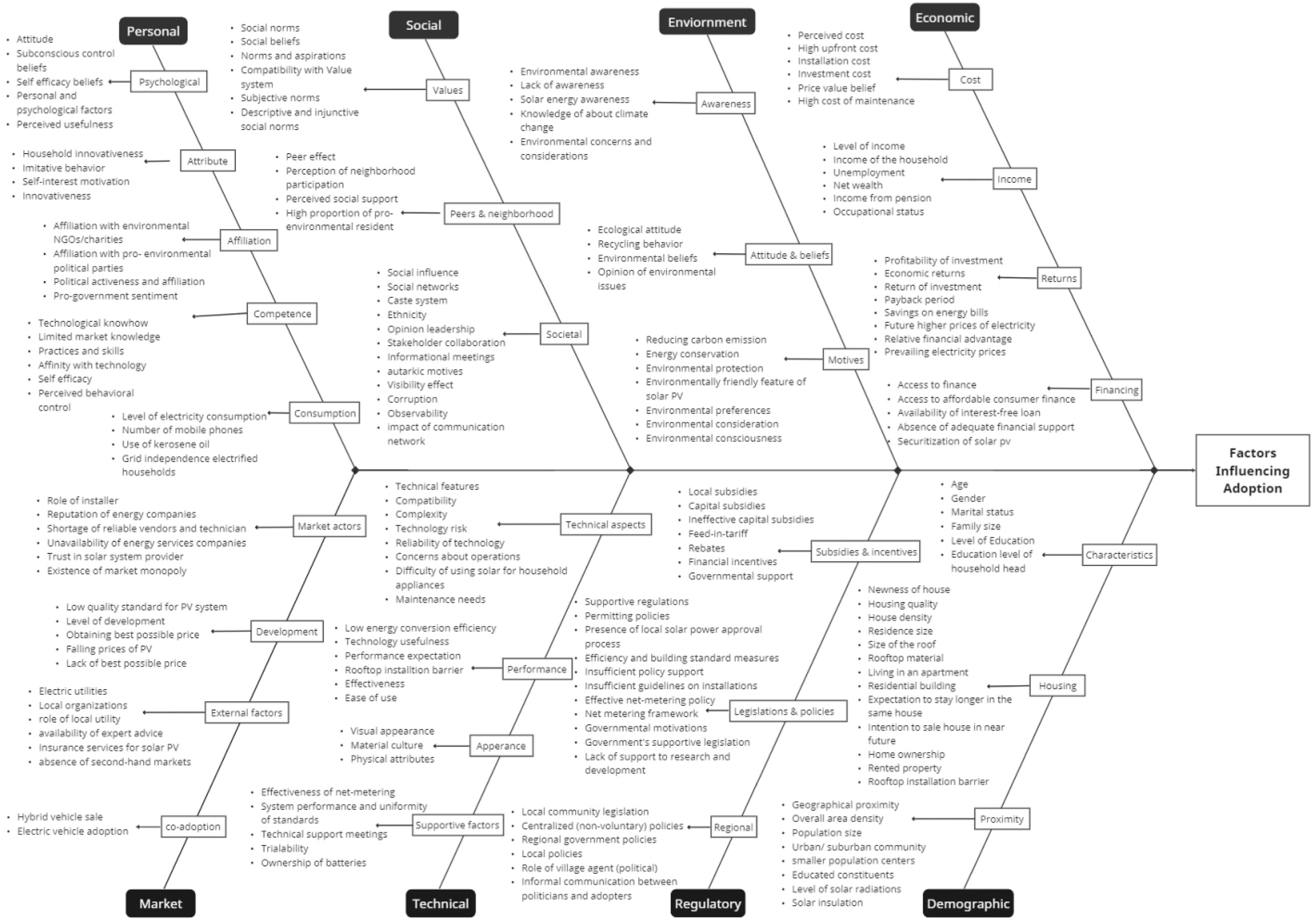
Solar PV adoption at household level: Insights based on a systematic literature review. Shakeel et al., 2023
But as a policy advisor, what jumps out to me amidst the avalanche of adoption factors is how a few key adjustments to policy can shape so many of these factors.
After spending nearly 2,000 hours reviewing literature focused on climate action for the Drawdown Explorer, I’ve noticed several themes emerging for how policymakers can make the most of the power they wield and accelerate the deployment of a wide range of climate solutions.
Follow the science
One abundantly clear theme from the literature (and is apparent to most anyone with a degree of climate awareness) is the disconnect between science and policy. This disconnect often results from the tension between the comprehensive, long-term views of science and the narrowly focused, short-term goals of policymakers. To address this gap, we’ll need emergency brake climate solutions – solutions that can have an impact quickly – coupled with long-term structural change.
Policymakers and climate conferences have too often become hyper-focused on carbon dioxide while missing critical opportunities to address other potent, fast-acting pollutants such as methane and nitrous oxide.
One way to remove these carbon dioxide blinders is to emphasize emergency brake solutions such as reducing food waste and loss, protecting forests, and using alternative refrigerants that can help address not only CO₂ but also methane and nitrous oxide emissions. These types of solutions can have a noticeable impact much more quickly than focusing on carbon dioxide alone and, as a result, they demand more attention from policymakers.
Policymakers also have the tendency to enact the latest trendy approach or to place big public bets on the newest technologies. This fad-chasing approach is often a top-down process with little input from scientists on the ground. As a result, these efforts rarely address sectors in a holistic manner, leading policymakers down the dead-end road of solving for a specific technology or approach at the expense of structural change.
Take the transportation sector, for example. While solutions like electric vehicles can help us avoid billions of tonnes of carbon dioxide, too much emphasis is placed on substituting one type of car with another without re-examining our underlying transportation systems and whether there’s a better way forward.
Structural change would involve much more of the oft-overlooked solutions, like public transportation and walkable cities. While these solutions aren’t as sexy as EV’s, they could actually start to curb the staggering 26 trillion miles (or four-and-a-half light years!) that humanity drives by car each year. That type of change comes from policymakers following the science instead of the trends.
Co-design solutions with the public
Much attention has been given to the need for permitting reform in the climate world. Often, the discussion centers around renewable electricity generation, but the need for this type of reform extends to a wide range of solutions, many of which involve land use and building codes. Permitting reform is, no doubt, a major obstacle. However, policymakers often fall into the fallacy of believing bureaucratic permission equates to democratic approval.
Anecdotally, I’ve heard several policymakers bemoan situations in which a solar or other renewable developer obtained all necessary permissions, yet the community still protested the development.
When asked whether the community was involved in the decision-making process, many of the policymakers frankly don’t know, or sometimes imply that community involvement was unnecessary since the developer had regulatory permits.
Throughout the climate literature, a major theme appears – climate solutions fail when the community is not involved in a meaningful way. While the majority of people across the world support climate action, deployment cannot succeed without input from the communities where solutions are being deployed.
And it’s not all NIMBY-ism. Community members often have legitimate concerns about land use change, systems transformation, and new technologies coming to their community, all of which could mean a loss of income, culture, history, and anxiety about who will truly benefit. As a result, many researchers are concluding that co-designing with communities must be a cornerstone of climate action.
Pave the way
Even policymakers who advocate for climate action often frame it as something on which the public and business should take the lead. But governments need to walk the walk; not just to set a good example but, more importantly, to institutionalize solutions, build supply chains, and increase adoption.
Improving intra-governmental coordination is an important starting point. Many solutions will require cooperation among a myriad of agencies operating at different levels of government with overlapping mandates and struggles over jurisdiction.
Protecting coastal wetlands, for instance, could help us maintain existing carbon stocks and avoid tens of millions of metric tons of emissions each year. In action, these projects require extensive coordination.
In the United States, protecting coastal wetlands might involve the Environmental Protection Agency, Fish and Wildlife Service, Department of the Interior, National Oceanic and Atmospheric Administration, Department of Agriculture, and more – just at the federal level.
To accelerate climate action, then, governments will need to begin perfecting both horizontal coordination (e.g., between departments and agencies) and vertical coordination (between subnational, national, and international levels).
Effective coordination, though, will not be enough. Governments must also use the power of public funds to adopt climate solutions and stabilize markets. Currently, governments around the world are subsidizing renewable energy at about a third of the rate they subsidize oil and gas production. Redirecting subsidies away from destructive industries and toward climate solutions can be a transformative accelerant for climate action.
Policymakers also have extraordinary purchasing power and direct impact on markets. In effect, policymakers can use public procurement to pave the way for climate action.
The United States government is the largest buyer of goods and services in the world, and, in many other countries, the national government is the largest domestic purchaser. Policymakers will need to put that power of the purse to work for climate action and simultaneously remove destructive goods and services from government supply chains while procuring those that move us closer to a thriving future.
For example, public procurement in areas such as alternative insulation materials, alternative refrigerants, heat pumps, improved windows and glass, renewable energy, LED lighting, improved cement production, and many, many more could supercharge the deployment of those solutions.
The Bottom Line
After nearly 2,000 hours reviewing climate literature, I’m convinced that we cannot rely on top-down decision-making and status quo policy approaches. To stop climate change, policymakers need to leverage the science, learn to cooperate more effectively with the public, and mobilize money at scale. In other words, policymakers need to rally a whole-of-society approach. Even with the changes I’ve suggested here, bringing policy to bear on climate change won’t be easy. But then again, creating a better world never is.
About the Author
Daniel Jasper is a senior policy advisor at Project Drawdown with a multidisciplinary background in public policy at the intersection of climate change and poverty alleviation.
About Project Drawdown
Project Drawdown is the world’s leading guide to science-based climate solutions. Our mission is to drive meaningful climate action around the world. A 501(c)(3) nonprofit organization, Project Drawdown is funded by individual and institutional donations.
This work is published under a Creative Commons CC BY-NC-ND 4.0 license. You are welcome to republish it following the license terms.