
Carbon in Context

Carbon in Context is a free-to-use tool that converts greenhouse gas emissions quantities into familiar terms. It can help you better understand and communicate climate change with clarity.
Project Drawdown is the world’s leading guide to climate action. To learn more about our work to advance climate solutions and how you can help, check out the Drawdown Explorer.
Adjust the quantity, units, or gas type to update the calculator comparisons below.
Emissions calculator controls
1 gigaton of carbon dioxide is equal to the CO₂‑equivalents of:













K = Thousand (10³), M = Million (10⁶), B = Billion (10⁹), T = Trillion (10¹²), Q = Quadrillion (10¹⁵), QI = Quintillion (10¹⁸)

References
Greenhouse Gas Conversions
Source
Smith, C., Nicholls, Z. R. J., Armour, K., Collins, W., Forster, P., Meinshausen, M., Palmer, M. D., & Watanabe, M. (2021). The Earth’s energy budget, climate feedbacks, and climate sensitivity supplementary material. In Climate Change 2021: The Physical Science Basis. Contribution of Working Group I to the Sixth Assessment Report of the Intergovernmental Panel on Climate Change. https://www.ipcc.ch/report/ar6/wg1/downloads/report/IPCC_AR6_WGI_Chapter07_SM.pdf
Data
- Methane: 1 metric ton = 27.9 metric tons CO₂‑eq (100-yr); 81.2 metric tons CO₂‑eq (20-yr)
Nitrous oxide: 1 metric ton = 273 metric tons CO₂‑eq (100-yr and 20-yr)
R-22: 1 metric ton = 1,960 metric tons CO₂‑eq (100-yr); 5,690 metric tons CO₂‑eq (20-yr)
Perfluoromethane: 1 metric ton = 7,380 metric tons CO₂‑eq (100-yr); 5,300 metric tons CO₂‑eq (20-yr)
Sulfure hexafluoride: 1 metric ton = 24,300 metric tons CO₂‑eq (100-yr); 18,200 metric tons CO₂‑eq (20-yr)
Gasoline Cars
- 0.308 cars driven = 1 metric ton of CO₂-eq (100-yr)
- 0.303 cars driven = 1 metric ton of CO₂-eq (20-yr)
Sources
Office of Highway Policy Information. (2025). Highway statistics 2022: Table VM-1 [Data set]. U.S. Department of Transportation, Federal Highway Administration. https://www.fhwa.dot.gov/policyinformation/statistics/2022/vm1.cfm
Project Drawdown. (2025, December 23). The Drawdown Explorer: Mobilize Electric Cars. https://drawdown.org/explorer/mobilize-electric-cars
Data
Roberts, C., & Lam, J. (2025). Mobilize Electric Cars-Solution Assessment Spreadsheet. Zenodo. https://doi.org/10.5281/zenodo.15749957
Notes
Average miles driven for light-duty vehicles (passenger cars, light trucks, vans, and sport utility vehicles) in the U.S. in 2022: 10,952 mi (17,626 km) [Source: FHWA].
Fuel combustion emissions values for gasoline vehicles were calculated using Project Drawdown analysis for the Electric Cars solution (median values from multiple countries and sources).
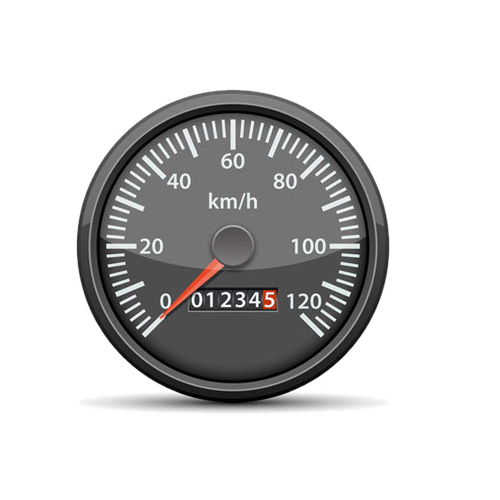
Distance Driven
- 3,378 miles driven = 1 metric ton of CO₂-eq (100-yr)
- 3,320 miles driven = 1 metric ton of CO₂-eq (20-yr)
Sources
Project Drawdown. (2025, December 23). The Drawdown Explorer: Mobilize Electric Cars. https://drawdown.org/explorer/mobilize-electric-cars
Data
Roberts, C., & Lam, J. (2025). Mobilize Electric Cars-Solution Assessment Spreadsheet. Zenodo. https://doi.org/10.5281/zenodo.15749957
Notes
Fuel combustion emissions values for gasoline vehicles (private vehicles with internal combustion engines) were calculated using Project Drawdown analysis for the Electric Cars solution (median values from multiple countries and sources).
Phones Charged
- 98,600 phones charged = 1 metric ton of CO₂-eq (100-yr)
- 97,800 phones charged = 1 metric ton of CO₂-eq (20-yr)
Sources
U.S. Environmental Protection Agency. (2025, April). Greenhouse gas equivalencies calculator: Calculations and references. https://www.epa.gov/energy/greenhouse-gas-equivalencies-calculator-calculations-and-references#smartphones
Data
Project Drawdown, Dioha, M., Gleeson, S., Hoff, M., Lam, J., Matthews, M., Smith, A. D., Swanson, C., Farac, N. F., Sweeney, A., Gerber, J., & Toensmeier, E. (2025). Methodology for Project Drawdown Solutions Assessments. Zenodo. https://doi.org/10.5281/zenodo.18037237
Notes
Based on the U.S. Department of Energy estimate for energy consumed to charge a common smartphone battery. Electricity equivalents are based on 2022 global production, not including transmission losses. Baseline electricity sector calculations from the Methodology for Project Drawdown Solutions Assessments.
Amount of Beef
- 24 pounds of beef = 1 metric ton of CO₂-eq (100-yr)
- 13.9 pounds of beef = 1 metric ton of CO₂-eq (20-yr)
Sources
Poore, J., & Nemecek, T. (2018). Reducing food’s environmental impacts through producers and consumers. Science, 360, 987–992. https://doi.org/10.1126/science.aaq0216
Notes
Based on Poore & Nemeck (2018); 92 kg CO₂‑eq per kg beef from beef herd (100-yr) using 27.9 for global warming potential (GWP); value rounded to two significant figures; 159 kg CO₂‑eq per kg beef from beef herd (20-yr) using 81.2 GWP; 20-yr value rounded to three significant figures.
Area of Protected Tropical Forest
- 0.67 hectares of tropical forest protected for 1 year = 1 metric ton of CO₂-eq (100-yr and 20-yr)
Sources
Project Drawdown. (2025, December 23). The Drawdown Explorer: Protect Forests. https://drawdown.org/explorer/protect-forests
Data
Driscoll, A., & Matthews, M. (2025). Protect Forests-Solution Assessment Spreadsheet (1.0). Zenodo. https://doi.org/10.5281/zenodo.15742160
Cups of Coffee
- 2,463 cups = 1 metric ton of CO₂-eq (100-yr and 20-yr)
Sources
Poore, J., & Nemecek, T. (2018). Reducing food’s environmental impacts through producers and consumers. Science, 360, 987–992. https://doi.org/10.1126/science.aaq0216
Notes
Based on Poore & Nemeck (2018); global value: 29 kg CO₂‑eq per kg coffee; 14 g coffee grounds per cup; no reported methane emissions.
Flights
- Economy class: 1.505 flights = 1 metric ton of CO₂-eq (100-yr)
- Economy class: 1.502 flights = 1 metric ton of CO₂-eq (20-yr)
- Business class: 0.799 flights = 1 metric ton of CO₂-eq (100-yr)
- Business class: 0.798 flights = 1 metric ton of CO₂-eq (20-yr)
Sources
Google. (2022, April). Travel impact model (TIM) [Computer software]. Retrieved February 20, 2026. https://travelimpactmodel.org/lookup/route
Gómez, D. R., Watterson, J. D., Americano, B. B., Ha, C., Marland, G., Matsika, E., Namayanga, L. N., Osman-Elasha, B., Kalenga Saka, J. D., & Treanton, K. (2006). Volume 2: Energy, Chapter 2: Stationary Combustion. In H.S. Eggleston, L. Buendia, K. Miwa, T. Ngara, and K. Tanabe (Eds), 2006 IPCC Guidelines for National Greenhouse Gas Inventories, Prepared by the National Greenhouse Gas Inventories Programme (pp. 2.1–2.47). https://www.ipcc-nggip.iges.or.jp/public/2006gl/pdf/2_Volume2/V2_2_Ch2_Stationary_Combustion.pdf
Notes
Does not include emissions from contrails. The emissions reported here are well-to-wake emissions, which means they include production, processing, and transport emissions for the aviation fuel, as well as emissions from fuel consumption. To get round-trip emissions per passenger, we took the sum of emissions from JFK to LAX (323.4 kg CO₂‑eq ) and LAX to JFK (340.9 kg CO₂‑eq ). The source model considers distance flown (including distance adjustment for estimated actual distance flown) and aircraft type, but does not factor in unknowns such as weather, speed, altitude, and actual flight route.
Economy class seats take up less space, which is why the emissions per passenger are lower.
According to the Intergovernmental Panel on Climate Change, default emissions factors from aviation or jet fuel are: 70,000 kg/TJ CO₂, 3 kg/TJ CH₄, and 0.6 kg/TJ N₂O . We assume the TIM model values are on a 100-yr basis, and the IPCC emission factors were used to convert to 20-yr emissions.
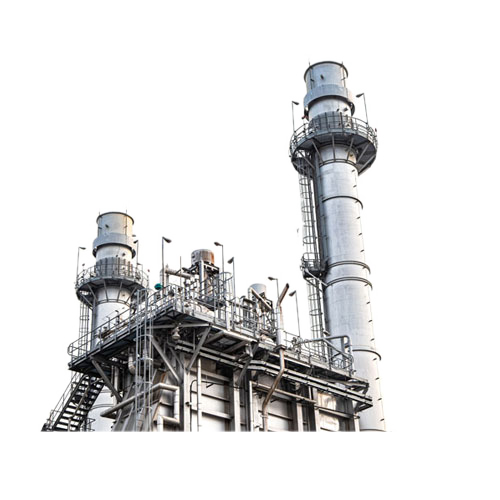
Natural Gas Power Plants
- 0.00000248996 power plants = 1 metric ton of CO₂-eq (100-yr)
- 0.00000248753 power plants = 1 metric ton of CO₂-eq (20-yr)
Sources
U.S. Environmental Protection Agency. (2025). eGRID2023 Unit, Generator, Plant, State, Balancing Authority Area, eGRID Subregion, NERC Region, U.S., Grid Gross Loss (%), and Demographic Data Files [Data set]. https://www.epa.gov/egrid/detailed-data
Notes
Using U.S. Environmental Protection Agency eGRID data (2023 U.S. data, released in 2025), 1,681 power plants were found to generate power using 95% or more gas in the U.S. in 2023. Considering CO₂, methane, and nitrous oxide emissions, these 1,681 plants cumulatively emitted 675.111 Mt CO₂‑eq (100-yr) or 675.771 Mt CO₂‑eq (20-yr) in 2023. See PLNT tab in eGRID, columns AU-AW. Per plant, this averages 0.402 Mt CO₂‑eq (100-yr) or 0.402 Mt CO₂‑eq (20-yr) annually.
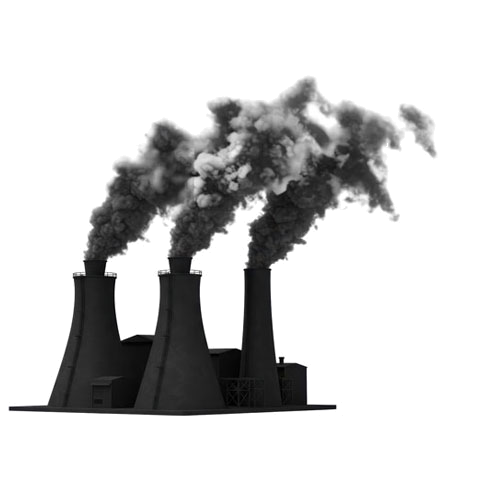
Coal Power Plants
- 0.0000002801833 power plants = 1 metric ton of CO₂-eq (100-yr)
- 0.0000002785092 power plants = 1 metric ton of CO₂-eq (20-yr)
Sources
U.S. Environmental Protection Agency. (2025). eGRID2023 Unit, Generator, Plant, State, Balancing Authority Area, eGRID Subregion, NERC Region, U.S., Grid Gross Loss (%), and Demographic Data Files [Data set]. https://www.epa.gov/egrid/detailed-data
Notes
Using EPA eGRID data (2023 U.S. data, released in 2025), 174 power plants were found to generate power using 95% or more coal in the U.S. in 2023. Considering CO₂, CH₄, and N₂O emissions, these 174 plants cumulatively emitted 620.947 Mt CO₂‑eq (100-yr) or 621.022 Mt CO₂‑eq (20-yr) in 2023. See PLNT tab in eGRID, columns AU-AW. Per plant, this averages 3.569 Mt CO₂‑eq (100-yr) or 3.591 Mt CO₂‑eq (20-yr) annually.
Golden Gate Bridge
- 0.00000945626477541371 GG bridge steel = 1 metric ton of CO₂-eq (100-yr and 20-yr)
Sources
International Energy Agency. (2023). Steel. https://www.iea.org/energy-system/industry/steel
World Book. (2017). Golden Gate Bridge at 80. https://www.worldbook.com/behind-the-headlines/Golden-Gate-Bridge-at-80?srsltid=AfmBOorxLhMO-2H3HVB5VwJ60iLxbUGK1MC4nqfzoLZpGncDKPwP2YCK
Notes
The International Energy Agency reports 1.41 t CO₂‑eq /t steel in 2021. The Golden Gate Bridge is made of approximately 75,000 metric tons of steel.
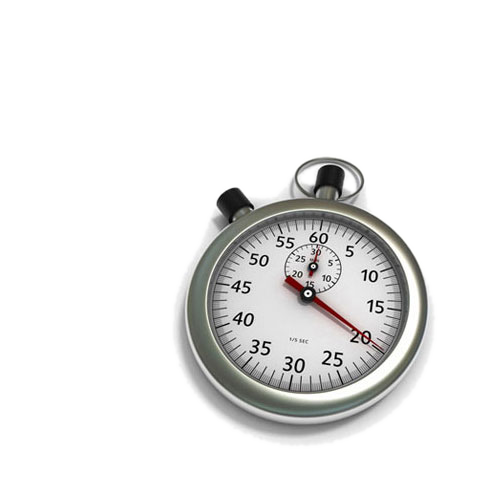
Time
- 1 second = 1937.82 metric tons of CO₂-eq (100-yr)
- 1 second = 2543.09 metric tons of CO₂-eq (20-yr)
Sources
Project Drawdown calculations based on:
European Commission Joint Research Centre (JRC) & International Energy Agency (IEA) (2025). Emissions Database for Global Atmospheric Research (EDGAR) Community GHG Database [Data set]. https://edgar.jrc.ec.europa.eu/dataset_ghg2025
Notes
Based on 2024 emissions. Global emissions calculated to be 61.279 Gt CO₂‑eq (100-yr) and 80.419 Gt CO₂‑eq (20-yr). Since 2024 was a leap year, there were 31,622,400 seconds.
United States
- 6,591,000,000 metric tons of CO₂-eq (100-yr)
- 8,351,000,000 metric tons of CO₂-eq (20-yr)
Sources
Project Drawdown calculations based on:
European Commission Joint Research Centre (JRC) & International Energy Agency (IEA) (2025). Emissions Database for Global Atmospheric Research (EDGAR) Community GHG Database [Data set]. https://edgar.jrc.ec.europa.eu/dataset_ghg2025
Notes
Based on 2024 emissions. U.S. emissions calculated to be 6.591 Gt CO₂‑eq (100-yr) and 8.351 Gt CO₂‑eq (20-yr).
China
- 14,988,000,000 metric tons of CO₂-eq (100-yr)
- 15,310,000,000 metric tons of CO₂-eq (20-yr)
Sources
Project Drawdown calculations based on:
European Commission Joint Research Centre (JRC) & International Energy Agency (IEA) (2025). Emissions Database for Global Atmospheric Research (EDGAR) Community GHG Database [Data set]. https://edgar.jrc.ec.europa.eu/dataset_ghg2025
Notes
Based on 2024 emissions. China emissions calculated to be 14.988 Gt CO₂‑eq (100-yr) and 15.310 Gt CO₂‑eq (20-yr).
India
- 5,679,000,000 metric tons of CO₂-eq (100-yr)
- 7,378,000,000 metric tons of CO₂-eq (20-yr)
Sources
Project Drawdown calculations based on:
European Commission Joint Research Centre (JRC) & International Energy Agency (IEA) (2025). Emissions Database for Global Atmospheric Research (EDGAR) Community GHG Database [Data set]. https://edgar.jrc.ec.europa.eu/dataset_ghg2025
Notes
Based on 2024 emissions. India emissions calculated to be 5.679 Gt CO₂‑eq (100-yr) and 7.378 Gt CO₂‑eq (20-yr).
Brazil
- 2,306,000,000 metric tons of CO₂-eq (100-yr)
- 3,508,000,000 metric tons of CO₂-eq (20-yr)
Sources
Project Drawdown calculations based on:
European Commission Joint Research Centre (JRC) & International Energy Agency (IEA) (2025). Emissions Database for Global Atmospheric Research (EDGAR) Community GHG Database [Data set]. https://edgar.jrc.ec.europa.eu/dataset_ghg2025
Notes
Based on 2024 emissions. Brazil emissions calculated to be 2.306 Gt CO₂‑eq (100-yr) and 3.508 Gt CO₂‑eq (20-yr).
Russia
- 2,606,000,000 metric tons of CO₂-eq (100-yr)
- 3,386,000,000 metric tons of CO₂-eq (20-yr)
Sources
Project Drawdown calculations based on:
European Commission Joint Research Centre (JRC) & International Energy Agency (IEA) (2025). Emissions Database for Global Atmospheric Research (EDGAR) Community GHG Database [Data set]. https://edgar.jrc.ec.europa.eu/dataset_ghg2025
Notes
Based on 2024 emissions. Russia emissions calculated to be 2.606 Gt CO₂‑eq (100-yr) and 3.386 Gt CO₂‑eq (20-yr).
Credits
Lead Researcher
- Sarah Gleeson, Ph.D.
Project Lead
- Skylar Knight
This tool was made possible with support from the University of San Francisco Computer Science Program and Hannah Fisher, director of digital strategy at Hard Refresh.