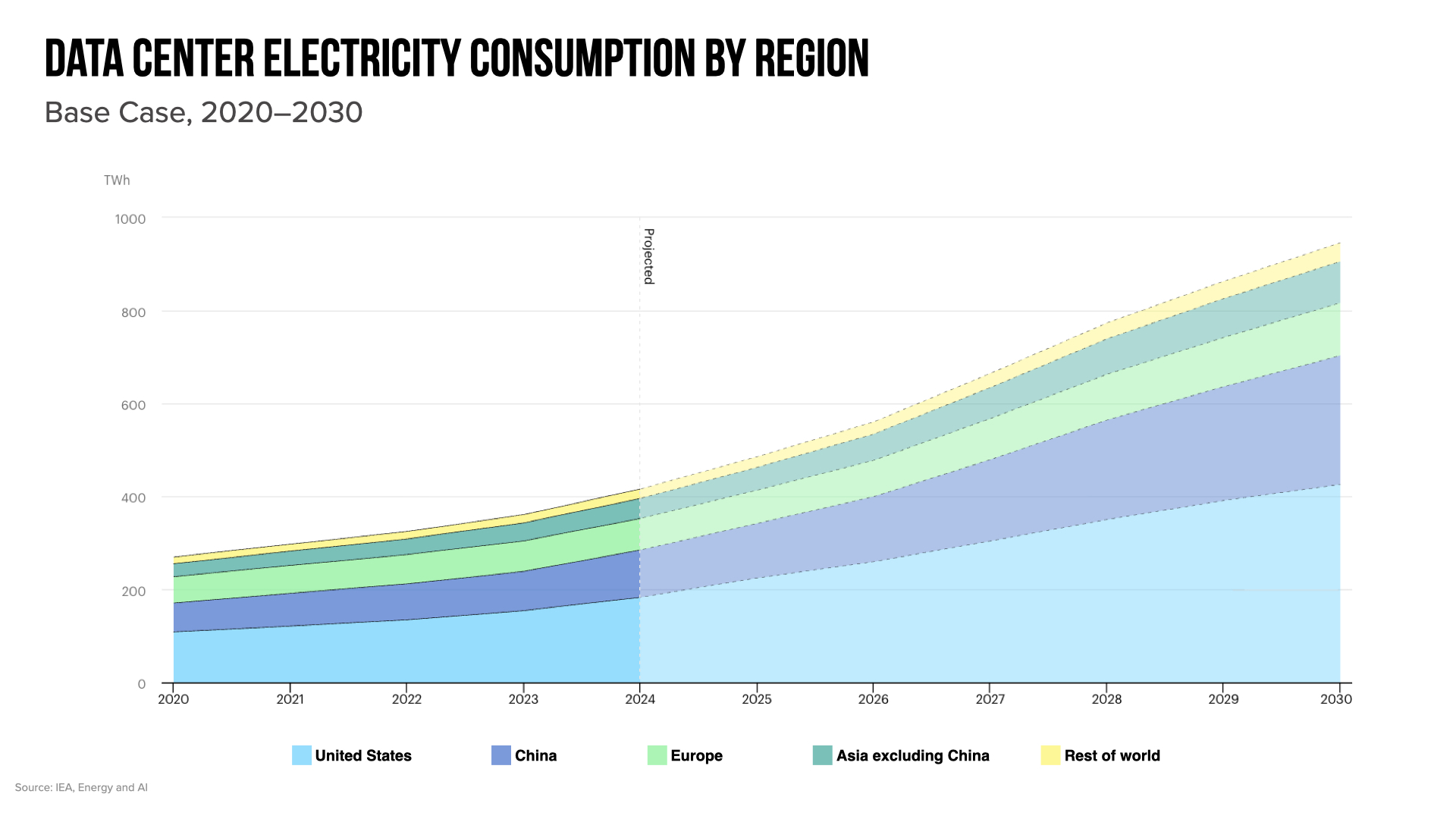
Here, we’ll look at data centers broadly, encompassing a variety of computing resources. We’ll also focus on data center growth in the United States, where I’m based, and where the International Energy Agency shows that data centers use more electricity than in any other country, though growth in other countries follows similar patterns.
Data centers have two big environmental impacts. First, they use a lot of power, with unique patterns of power usage based on the type of computing taking place. Second, the computer chips they hold require extensive cooling, and the most cost-effective way to cool them is to use a lot of water. And that’s in addition to the water the power generation facilities use to produce the electricity data centers use.
Data centers affect where electricity loads grow and how climate solutions in the electricity sector are adopted.
The electricity sector is preparing for more rapid load growth than anything we have seen since the 20th century. And they’re doing so with aging infrastructure, delays in connecting new resources, and the need to navigate a changing climate, which brings challenges such as weather extremes and reduced water supply. Keeping costs low and reliability high for consumers is a top priority, even where efforts focus on increasing the use of clean energy resources.
Companies site data centers based on their financial interests and in locations where it’s politically possible to stand them up quickly, not on where the most environmentally friendly power is generated. In fact, data centers tend to be located in places that have more climate pollution per kWh of electricity generated than the national average, and in places already experiencing water stress.