1. This is a critical moment for climate solutions funding.
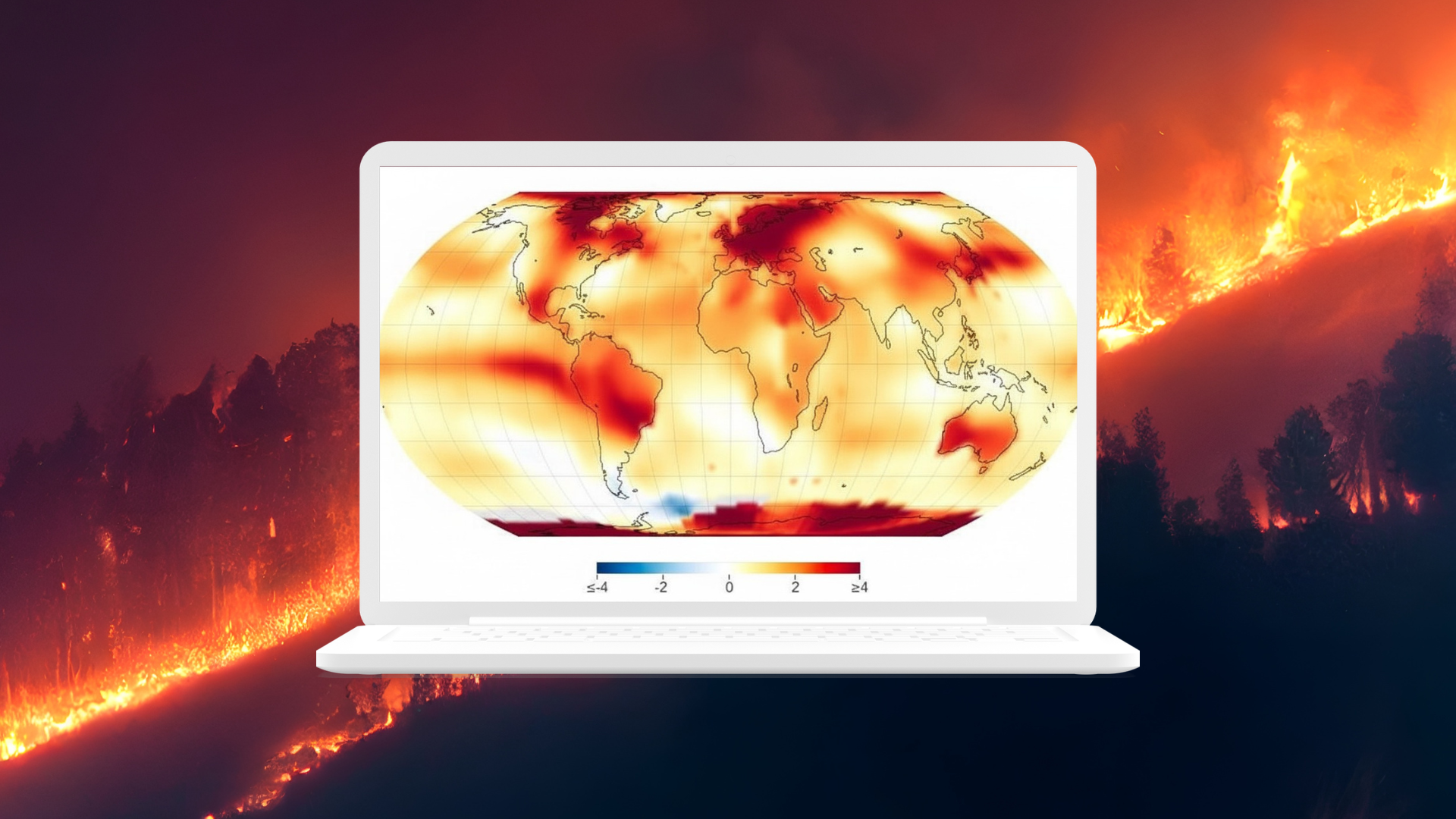
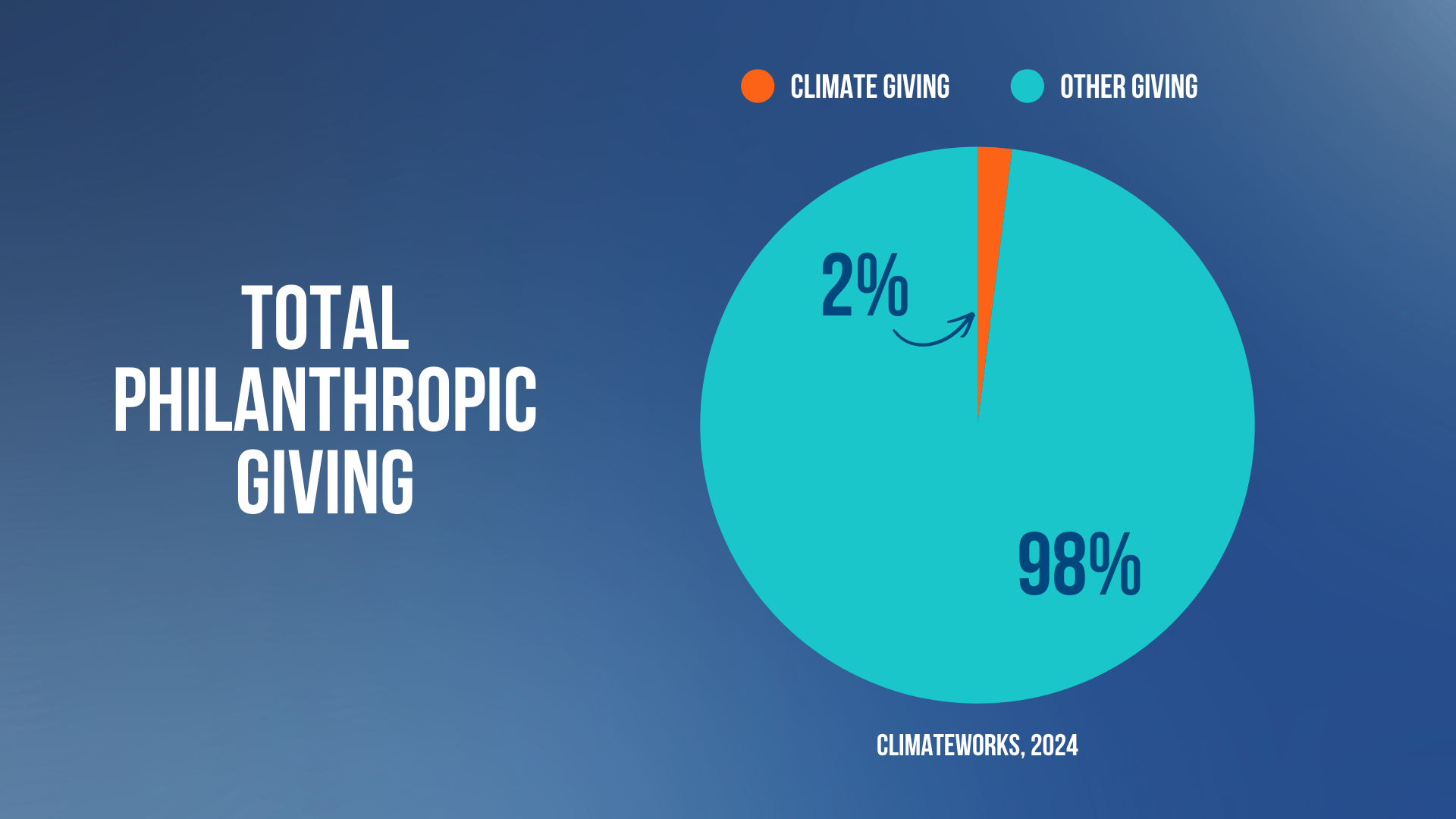
This is a decisive decade for climate progress. To meet the Paris Agreement goals, the world must cut greenhouse gas emissions 55% in less than 10 years. Yet a persistent gap remains between the capital needed and the capital actually being deployed. Astonishingly, only about 2% of philanthropy globally goes toward climate mitigation.
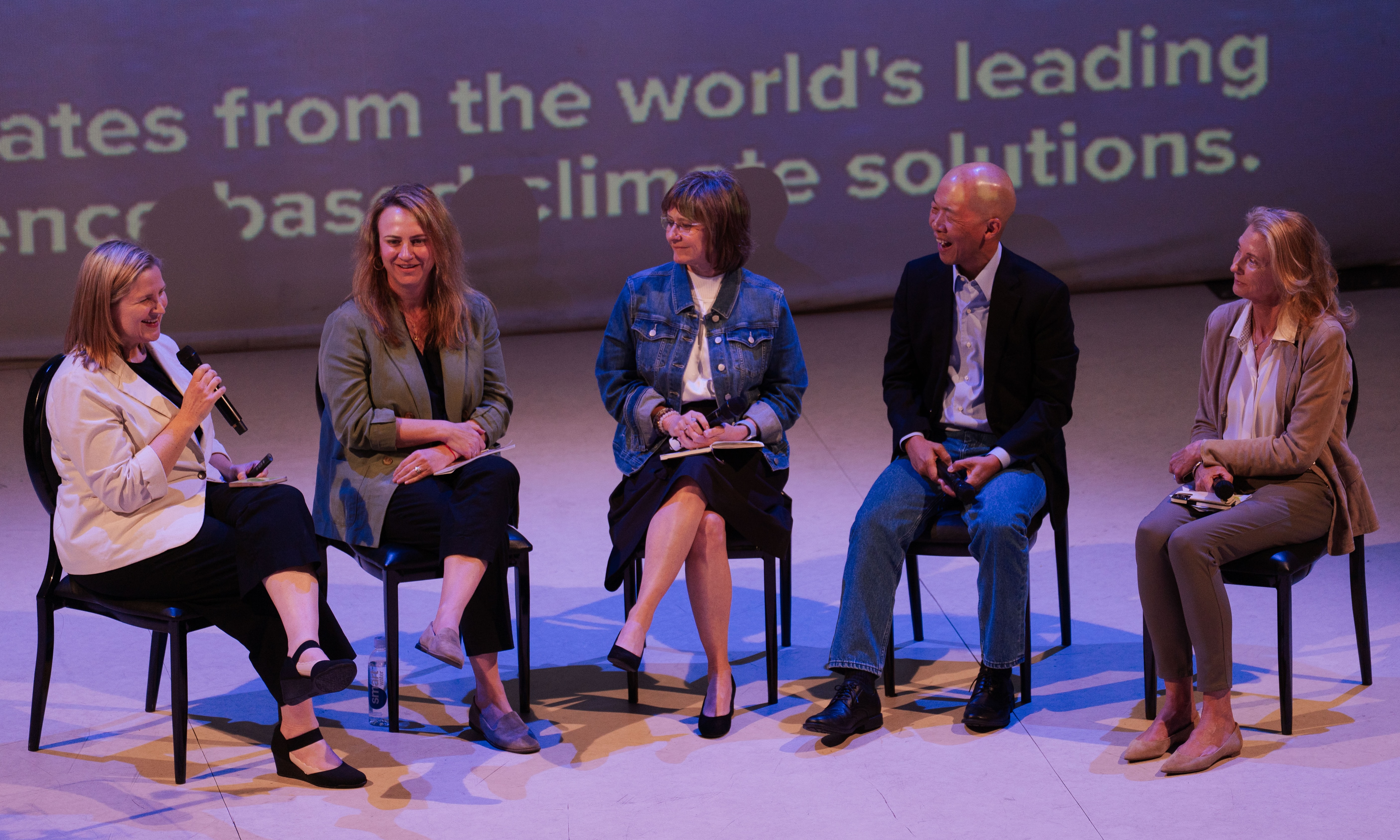
“Climate change is a threat multiplier, deepening crises and making them worse,” said Kitt. “Philanthropy is a solution multiplier.”
While total climate philanthropy appears to be on the rise, it remains far below what’s required to address the climate crisis. And the challenge isn’t merely the scale of capital, but also where the capital is directed.
Too often, funding flows toward the familiar, visible, or easily marketable, not necessarily toward what science tells us will have the greatest impact on climate change.
Philanthropic giving and impact investing can work in collaboration with other public and private sources of funding to increase the impact of climate mitigation. We can be far more strategic in both how and where capital is deployed to increase the speed and scale of climate solutions.
We know which climate solutions work, and we also know how we can strategically deploy them to provide maximum benefit. Let’s move capital to those areas first.
2. Science is available to guide capital decisions.
Science can help philanthropists and impact investors identify which climate solutions to prioritize, when and where, for rapid and effective progress.
Drawdown Explorer synthesizes the most comprehensive research into an easy-to-use resource for informing climate action. The platform helps decision-makers identify which interventions have the biggest opportunities to reduce and avoid emissions by categorizing each as Highly Recommended, Worthwhile, Keep Watching, or Not Recommended.
An example: Last year Project Drawdown released a high-profile report on reducing greenhouse gas emissions in Southeast Asia, A Drawdown Roadmap for Food, Agriculture, and Land Use in Southeast Asia. In collaboration with the Asia Philanthropy Circle (APC), this report leveraged Project Drawdown solutions and showcased how using time- and geography-specific data can inform tangible recommendations that create real and impactful benefits for the region. In Vietnam’s river deltas, geospatial analysis showed that periodically draining rice paddies can reduce emissions by 17 million metric tons annually without compromising yields.
3. TLC: Time, location, and co-benefits are key.
Climate investments can be far more strategic – and impactful – when we pay attention to time, location, and co-benefits.
- Time: Some solutions can act as “emergency brakes” to slow temperature rise in the short term and so compound impact over time. For instance, capital deployed right now focused on avoiding deforestation or rapidly reducing methane emissions can have have outsized impact, creating a runway to implement the full complement of solutions needed over time.
- Location: Capital deployed toward solutions in geographic “hot spots” can have disproportionately high impact. For instance, capital deployed for solar or other renewable energy sources can clean power grids dominated by coal far more efficiently in some geographies than others.
- Co-benefits: Co-benefits are climate solution advantages beyond greenhouse gas mitigation, such as job creation or enhanced ecosystem services. Philanthropists and impact investors interested in a wide range of social and ecological benefits can simultaneously mitigate climate change and support economic or ecological benefits. A solution such as protecting coastal wetlands not only sequesters carbon, but also generates valuable co-benefits such as protecting coastal communities from extreme weather events, providing employment opportunities, and improving food security and human health.