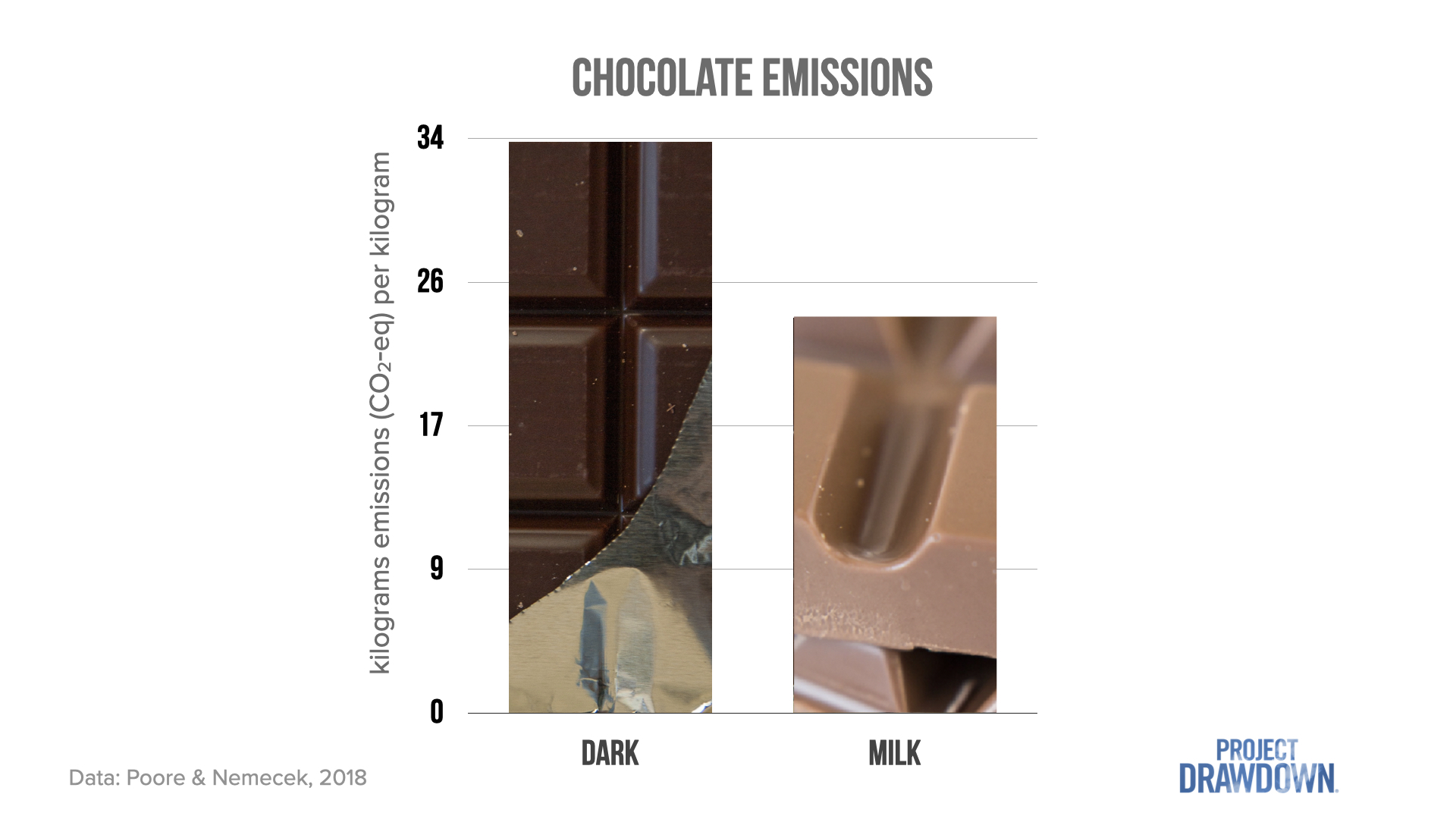
“There are a lot of nuances about the climate impact of milk chocolate versus dark chocolate,” says Joseph Poore, Ph.D., a researcher focused on the sustainability of global agriculture at the University of Oxford.
In 2018, Poore and colleague Thomas Nemecek published an analysis of data from nearly 40,000 farms and 1,600 food processors and retailers to determine the greenhouse gas emissions, land, and water involved in the production of 40 major food products. Their findings show that meat and dairy have an outsized impact on the climate and environment – especially beef and lamb. With respect to chocolate, cocoa and milk were the most egregious ingredients.
The study found that, on average (globally), milk production results in 3.2 kilograms of carbon dioxide equivalent (CO₂‑eq ) emissions per liter, with a range of about 2–5 kg CO₂‑eq. But the milk powder in chocolate is about 8 times the emissions intensity, by weight, of regular milk, bringing the per-kilogram emissions intensity up to about 25 kg CO₂‑eq. Even so, when we look at the total climate impact of chocolate production, on average, dark chocolate containing twice the amount of cocoa is 44% more emissions intensive than milk chocolate (Figure 1).
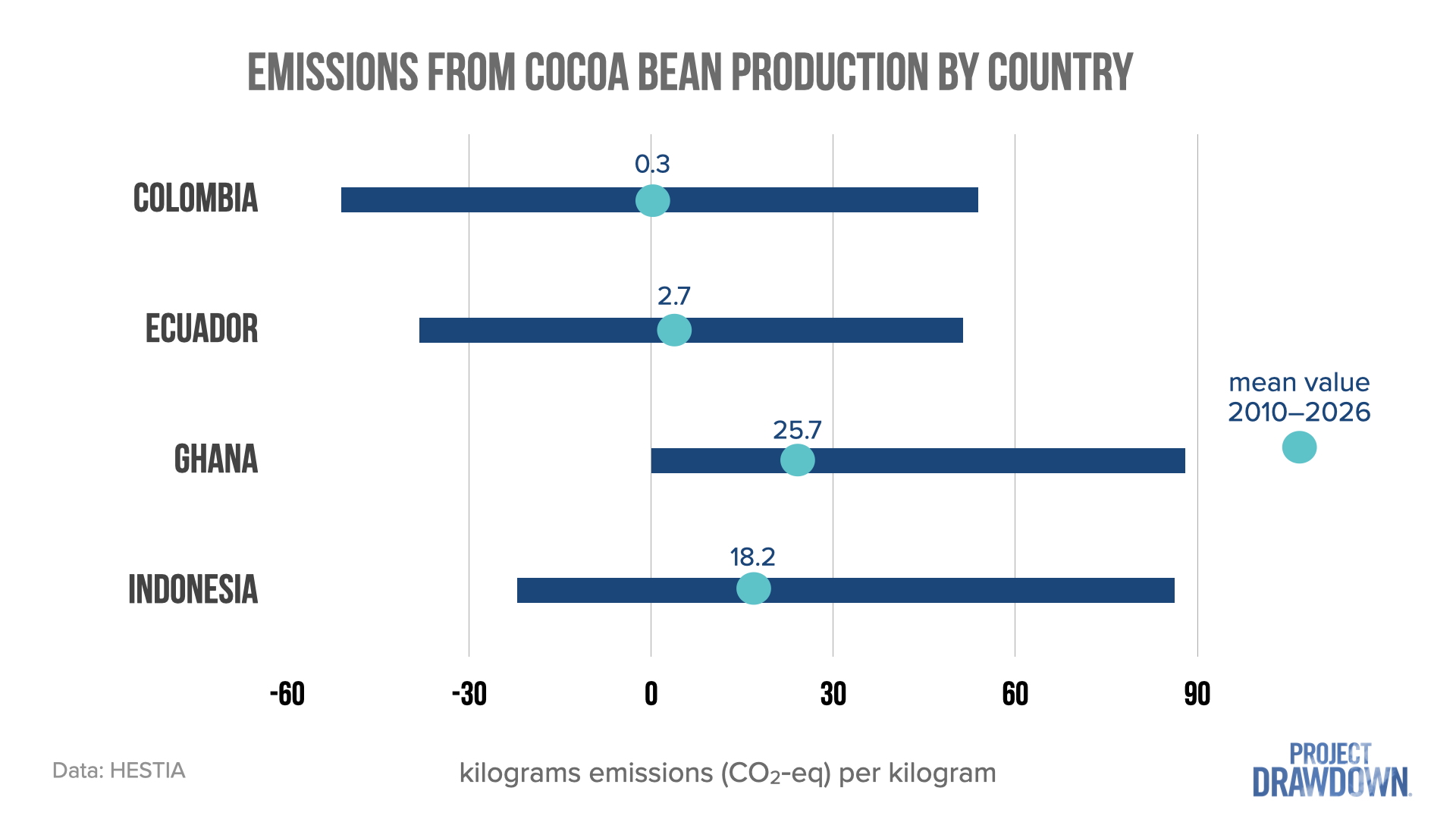
The climate impact of cocoa production, however, is even more variable than milk.
Globally, cocoa beans account for an average of 46 kilograms of CO₂‑eq emissions per kilogram – about half from deforestation. Poore notes that the distribution of emissions associated with this crop is hugely different depending on where it is sourced. “If cacao trees are planted on former cropland, cacao can even sequester carbon.”
Rather than cutting down trees to plant cacao, growers can plant the crop in the shaded understory of forests—a practice known as agroforestry. Planting cacao and other trees on degraded croplands can improve carbon sequestration while improving local incomes and food security. In Ecuador, for example, the Third Millenium Alliance is paying farmers to protect existing cloud forests and restore adjacent forests with native trees including cacao.