Data-driven climate action in America can make up for the Trump slump

How smarter prioritization of straightforward voluntary actions can slash 20% of global carbon emissions

Image
A graphic of a man installing solar panels with a blue star in the background

It’s been one year since Donald Trump was sworn in as president of the United States for the second time.

Since retaking the helm of both the world’s 2nd-largest emitter of greenhouse gases and the world’s 2nd-largest clean energy economy, the world has watched as his administration has taken actions to de-prioritize U.S. leadership and progress in wide-ranging sectors, including renewables, electric vehicles (EVs), and energy efficiency.

The passage and July 4th, 2025, signing of the One Big Beautiful Bill Act (OBBB) was perhaps the most notable such milestone, but certainly not the only one. Collectively, this administration’s efforts risk substantially slowing emissions progress in many fields, from clean energy to EVs.

But for advocates of climate and clean energy who don't want to lose momentum, there are still reasons for optimism and resolve, despite the recent headwinds.

Because the thing is, the game is not over yet. In fact, if merely those of us who are still interested in reducing emissions just acted a little more strategically, we alone could more than compensate for all this lost climate progress, without needing action from those who don’t care about climate. 

Let’s take a closer look at how the Trump administration’s shift in priorities might alter U.S. and global emissions trajectories. And how a small number of high-impact solutions, purely by voluntary actors who are already interested, could slash GHG emissions worldwide by an even larger amount.

How Trump 2.0 priorities and actions could shift U.S. emissions trends

Multiple analyses converge on substantial emissions impacts from Trump administration climate policy reversals. A recent Rhodium Group report examined the effect of regulatory rollbacks and the passage of the OBBB, finding that such shifts could result in an additional 315–574 million tonnes of annual emissions, or more than five cumulative gigatonnes over the next decade. Princeton University's REPEAT Project estimates the OBBB alone will add ~190 million tonnes annually by 2030 and 470 million tonnes by 2035. When compared to U.S. Paris Agreement targets, Carbon Brief calculated Trump's policy trajectory creates a 7 billion tonne gap through 2030.

Across these studies, the direct U.S. emissions impact ranges from roughly 3-7 Gt over the next 5-10 years. These estimates primarily focus on quantifiable policy rollbacks, but a comprehensive worst-case scenario, which includes a full IRA repeal, additional regulatory rollbacks, and indirect global effects, could potentially create a 15-20 Gt emissions gap.

Yet even in the face of the Trump administration’s rollback of climate policy, there are straightforward solutions the private sector can implement now that would make up that emissions difference. Passionate and effective climate action still exists in the United States, with the capacity to do much good. It can be found at the subnational and private sector levels.

Four ways U.S. and multinational companies could slash emissions without federal support

1. Build new renewables in better locations.

Last year, global annual investment in the low-carbon energy transition surpassed US$2 trillion for the first time, according to BloombergNEF. Fully two-thirds of last year’s US$3 trillion in total energy investment went to clean energy and other low-carbon technologies. China is building so many renewables so fast that it’s disrupting Central Asia’s natural gas markets. Worldwide, renewable energy accounted for 92% of new electricity generation in 2024. (The story is nearly identical for the U.S. power sector, too.) Voluntary corporate procurement has been an important part of that growth, too – corporate clean energy contracting reached record levels last year.

And here’s the big, beautiful thing: if we took all this ongoing investment purely from actors who are not backing away from clean energy, and merely targeted it toward better, smarter locations, we could unlock gigatonnes of additional emissions reductions. It’s a strategy called emissionality.
The political landscape has shifted, but our capacity for creating a positive climate impact has not.

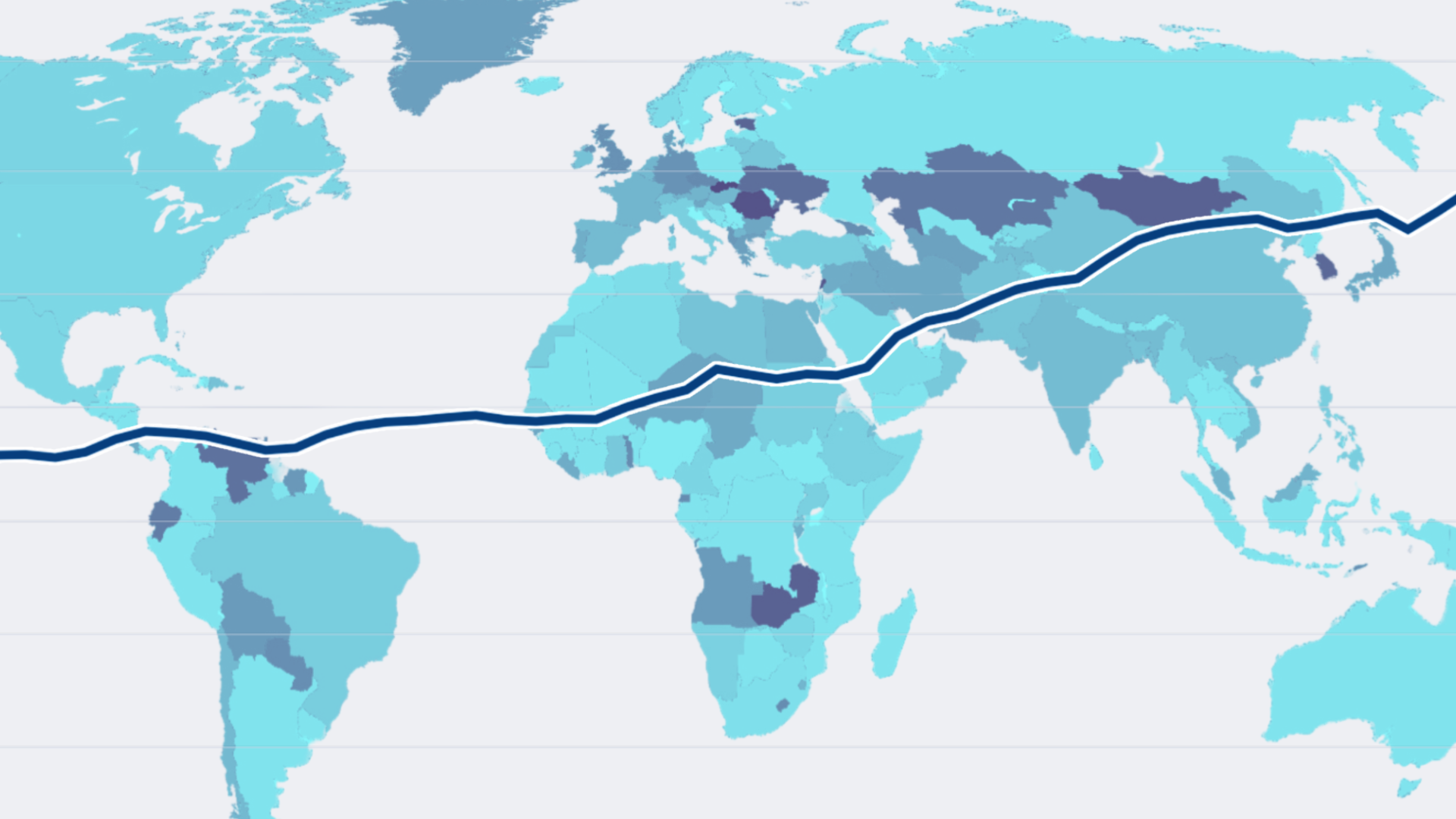
The concept is simple: rather than build new solar or wind capacity in places that already have a lot of existing solar or wind capacity, build those new renewables in places where the power grid still causes a lot of pollution from coal-fired power plants. In these strategic locations, each new megawatt of renewable energy has a magnified climate and emissions benefit because it displaces more dirty generation.

Based on WattTime analysis using U.S. Department of Energy data, this small but significant change to where new clean energy gets built could save an additional five gigatonnes of emissions annually, or more than 50 gigatonnes over the next decade. That’s huge. An annual five gigatonnes of avoided emissions is more than the total annual GHG emissions of India, the world’s third-largest emitter behind China and the U.S.

Project Drawdown’s recently launched Drawdown Explorer can help companies identify geographic “hotspots” for renewables and other climate solutions, showing where adoption has the most impact. Already, WattTime, Project Drawdown, and the Nature Conservancy have unveiled Carbon Treasure Map, which helps identify where in the world to build new renewable energy to have the greatest decarbonization benefit.

2. Use electricity at cleaner times.

Where new clean energy gets built matters, but so does when we use electricity. The carbon intensity of our power grids fluctuates all the time. Sometimes, coal-fired or natural gas power plants are the ones that answer the call for power. At other times, zero-emissions solar and wind are the key contributors. We can tap into this variability to avoid using electricity when it’s dirtier and prioritize using it when it’s cleaner.

With the right software and the right grid emissions signal, any flexible electricity demand can tap into this load shifting potential: EV charging, smart thermostats, commercial building energy management systems, data center compute workloads, and even smartphone charging. 

Hundreds of millions of devices around the world, from car companies like Toyota to thermostat companies like Nest to battery standards like California’s SGIP program, have already adopted this strategy. 

Based on WattTime analysis of U.S. Department of Energy data on future electricity demand patterns and grid emissions projections, simply implementing the same plan across major flexible load categories could avoid approximately 34 gigatonnes of CO₂ emissions over the next decade. The majority of this impact – approximately 3 gigatonnes annually by 2030 – comes from optimizing EV charging alone, which requires no behavior change from consumers, just smarter software in the charging equipment, the EVs, and/or the third-party charging apps that control the charge cycle.

3. Buy greener steel and aluminum.

The production of materials like steel and aluminum accounts for roughly 10% of global carbon emissions. What's remarkable is how much variation exists between producers – the cleanest steel mills emit up to 10 times less carbon per tonne of steel than the dirtiest ones.

Companies that purchase these materials have an immediate opportunity to reduce emissions simply by directing their procurement toward cleaner producers. Many of the world's lowest-carbon steel and aluminum facilities currently operate below capacity, meaning there's room to shift demand without building new infrastructure.

Based on an analysis of Climate TRACE data on global production facilities, strategically shifting procurement to cleaner suppliers could avoid approximately 12 gigatonnes of CO₂ emissions over the next decade. This approach requires no new technology development, no policy changes, and often no price premium – just better information about suppliers and intentional purchasing decisions.

4. Protect the most impactful forests.

Project Drawdown's analysis reveals that protecting one hectare of forest provides vastly different climate benefits depending on the biome: boreal forests yield roughly 0.3 tonnes CO₂‑equivalent per year per hectare, while subtropical forests deliver around 2.2 tonnes – more than seven times the impact. Yet current conservation efforts don't reflect this reality. Between 2020 and 2024, the world has added approximately 15.7 million hectares annually to protected status. However, the climate impact of these efforts could be dramatically amplified by prioritizing protection in high-carbon ecosystems. Under the Drawdown Explorer’s high adoption scenario, the 10-year emissions reduction potential for subtropical forest protection is nearly double that of boreal forest protection (4.8 Gt CO₂‑eq for subtropical forest protection compared to 2.5 Gt CO₂‑eq for boreal).* This, even though the area of subtropical forests we could conceivably protect is about a quarter of the size of boreal forests (219 million hectares of subtropical compared to 861 million hectares of boreal, over a decade). Of course, deciding exactly which forests to protect should and must take into account non-climate considerations, but this thought exercise shows how strategic deployment of climate solutions can multiply the impact on emissions.   

*Under the Drawdown Explorer high adoption scenarios based on Gt CO₂‑eq/yr (20-year basis)

The math of green optimism and action

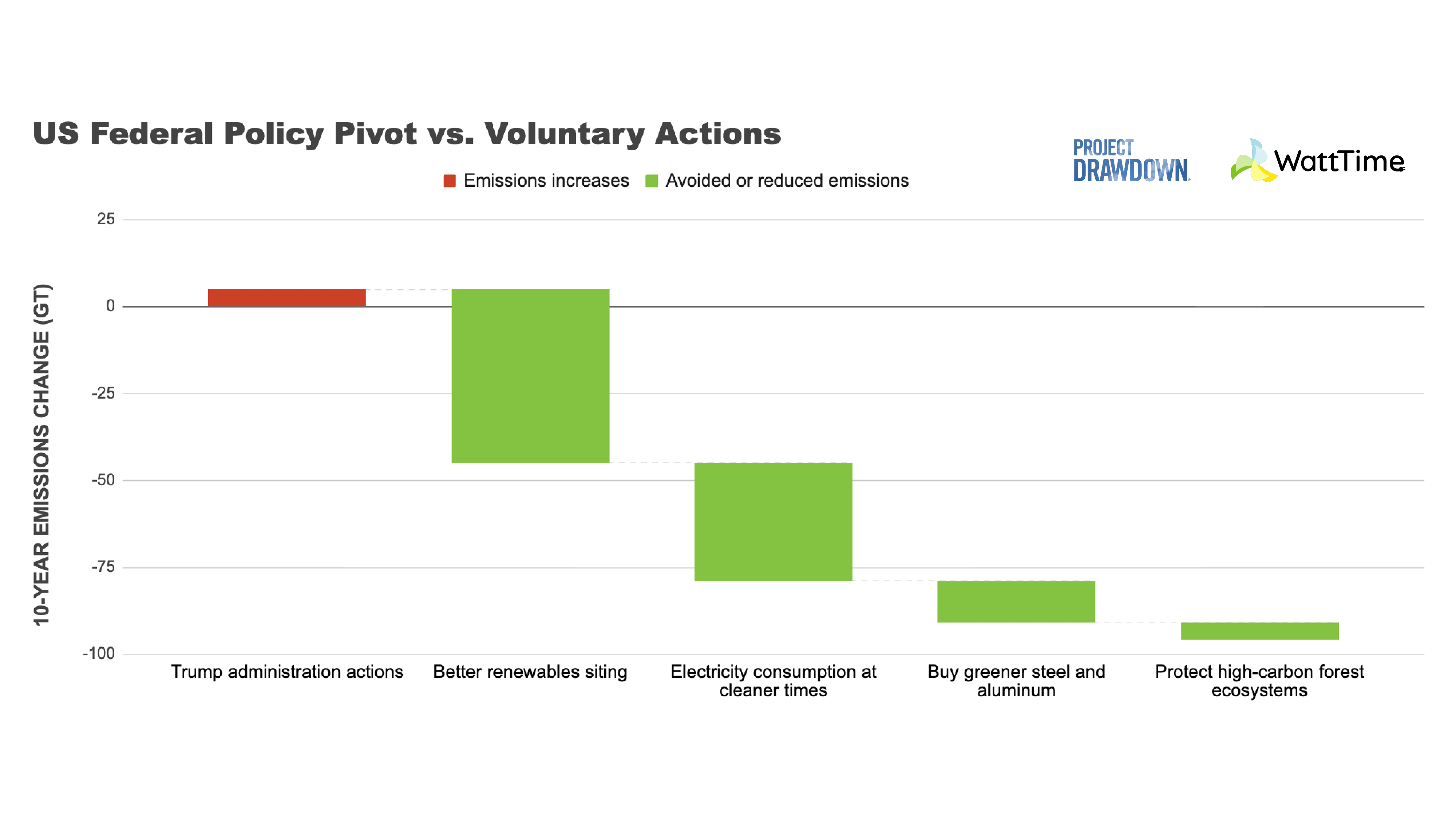
These four straightforward strategies alone could deliver approximately 100 gigatonnes of emissions reductions over the next decade if implemented – and they can be done today, with no government support. And there are others like them.

Image
A chart showing the potential emissions reduction impact of more strategic deployment of climate actions

This chart shows the potential avoided emissions impact of smarter deployment of proven solutions in power and industry. Targeting the highest impact forests would add to these totals, commensurate with adoption levels.

These solutions don't require wholesale system changes or massive new investments. They simply make existing energy development and use smarter through better data, software, and decision-making. Yes, it will be easier to make these shifts in some places and sectors more than others. But the bigger takeaway is that these strategies are possible.

These solutions also complement each other and can be implemented simultaneously. A company can optimize when its facilities use electricity while also choosing cleaner steel suppliers. An investor can focus on emissionality while also supporting technologies that automate emissions reductions. The combined effect creates a multiplier that far outweighs policy headwinds.

The political landscape has shifted, but our capacity for creating a positive climate impact has not. While the Trump administration may slow federal climate action, tools for substantial emissions reductions remain firmly in the hands of businesses, investors, and other non-federal actors. These solutions don't depend on which party holds power in Washington. And they represent immediate, practical pathways to continued climate progress regardless of the policy environment.

For organizations looking to maintain momentum on climate goals, the message is clear: focus on high-leverage actions within your control. By making smarter decisions about where, when, and how we use energy and materials, we collectively have the power to drive emissions reductions that far exceed whatever increases might result from this administration’s policy changes. In fact, implementing these strategies should be a no-regrets, no-brainer regardless of who sits in the White House, because this is about much more than just filling a gap or compensating for the current administration. It’s about showing leadership and moving our country – and the planet – forward faster, toward a cleaner, more prosperous future.


Jonathan Foley, Ph.D., is a climate scientist and the executive director of Project Drawdown, the world’s leading resource for climate solutions. 

Gavin McCormick is co-founder and executive director of WattTime and co-founder of Climate TRACE. 

Camille Fassett at WattTime and Skylar Knight at Project Drawdown contributed important analysis and perspective to this article.

About Project Drawdown
Project Drawdown is the world’s leading guide to science-based climate solutions. Our mission is to drive meaningful climate action around the world. A 501(c)(3) nonprofit organization, Project Drawdown is funded by individual and institutional donations.

About WattTime
WattTime is an environmental tech nonprofit that empowers all people, companies, policymakers, and countries to slash emissions and choose cleaner energy.

Drawdown Delivered

Join the 85,000+ subscribers discovering how to drive meaningful climate action around the world! Every other week, you'll get expert insights, cutting-edge research, and inspiring stories.

Receive biweekly email newsletter updates from Project Drawdown. Unsubscribe at any time.

Support Climate Action