Recently, my colleagues and I at Project Drawdown looked at some of the best ways to reduce greenhouse gas emissions from our diets. We calculated what would happen if consumers in high-income countries limited beef to one serving per week and replaced the excess beef with other tasty protein-rich foods. In other words, we asked how much beef is too much?
Beef is the Coal of the Food System
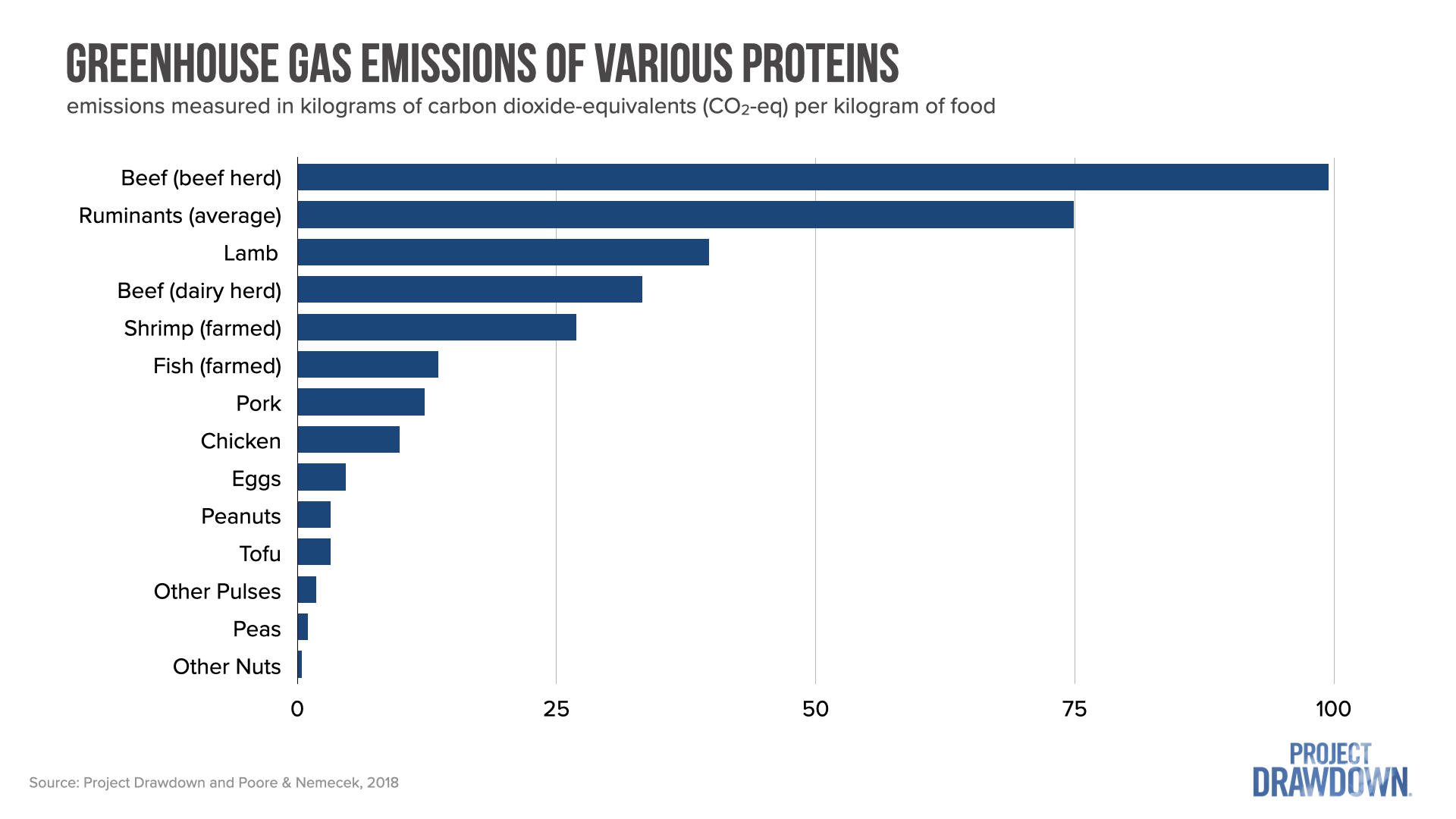
To put beef’s climate impact in perspective, burning a pound of coal – the dirtiest fossil fuel – emits about two to four pounds of greenhouse gas emissions. But consuming the same amount of beef generates a whopping 80 to 100 pounds of emissions.
But where does beef’s high emissions come from? It turns out it’s more carbon hoofprint than carbon footprint.
When beef cattle digest grasses and other feed in their multi-chambered stomachs, they produce a noxious greenhouse gas called methane. On a pound-for-pound basis, methane warms the planet about 80 times more than carbon dioxide in the short term. In addition, beef production requires a great deal of land. Land clearing and deforestation in tropical forests are primarily driven by cattle ranching and farming of animal feed crops.
Similar to coal, which produces an outsized environmental toll, the climate impact of beef production far exceeds the calories and protein we get from it. Red meat production, including beef, lamb, and pork, accounts for 30% of global food-related emissions but generates only 5% of dietary calories or 2% of the global protein supply.
In 2019, a team of nutrition and sustainability experts, called the EAT-Lancet Commission, came together to assess what a diet would look like that was healthy for both people and the planet. They conducted an extensive review of peer-reviewed scientific research on the health and environmental effects of various foods to come up with recommendations for what they, appropriately, dubbed the “planetary health diet.” One of their major findings was that unhealthy overconsumption of red meat is a leading driver of greenhouse gas emissions and deforestation while increasing the risk of diabetes and cardiovascular disease.
So what did they find for the other foods they looked at?
How Other Protein-rich Foods Stack Up
Chicken, fish, soybeans, peas, and nuts are all protein-rich foods. They contain about 16–20% protein by weight, but they also take much less of a toll on climate than beef. And for those increasing protein intake for resistance training, a high-protein plant-rich diet builds just as much muscle as an omnivorous one when daily protein consumption is matched.
Since beef has such a large climate impact, my colleagues and I estimated how much emissions could be reduced if people who eat more than one serving (0.22 pounds) of beef per week replaced their extra beef with these other protein-rich foods. The weighted average of the emissions of these other protein-rich foods (which was skewed by high consumption of chicken and fish), is equivalent to about 10 pounds of carbon dioxide per pound, or one-eighth that of beef.