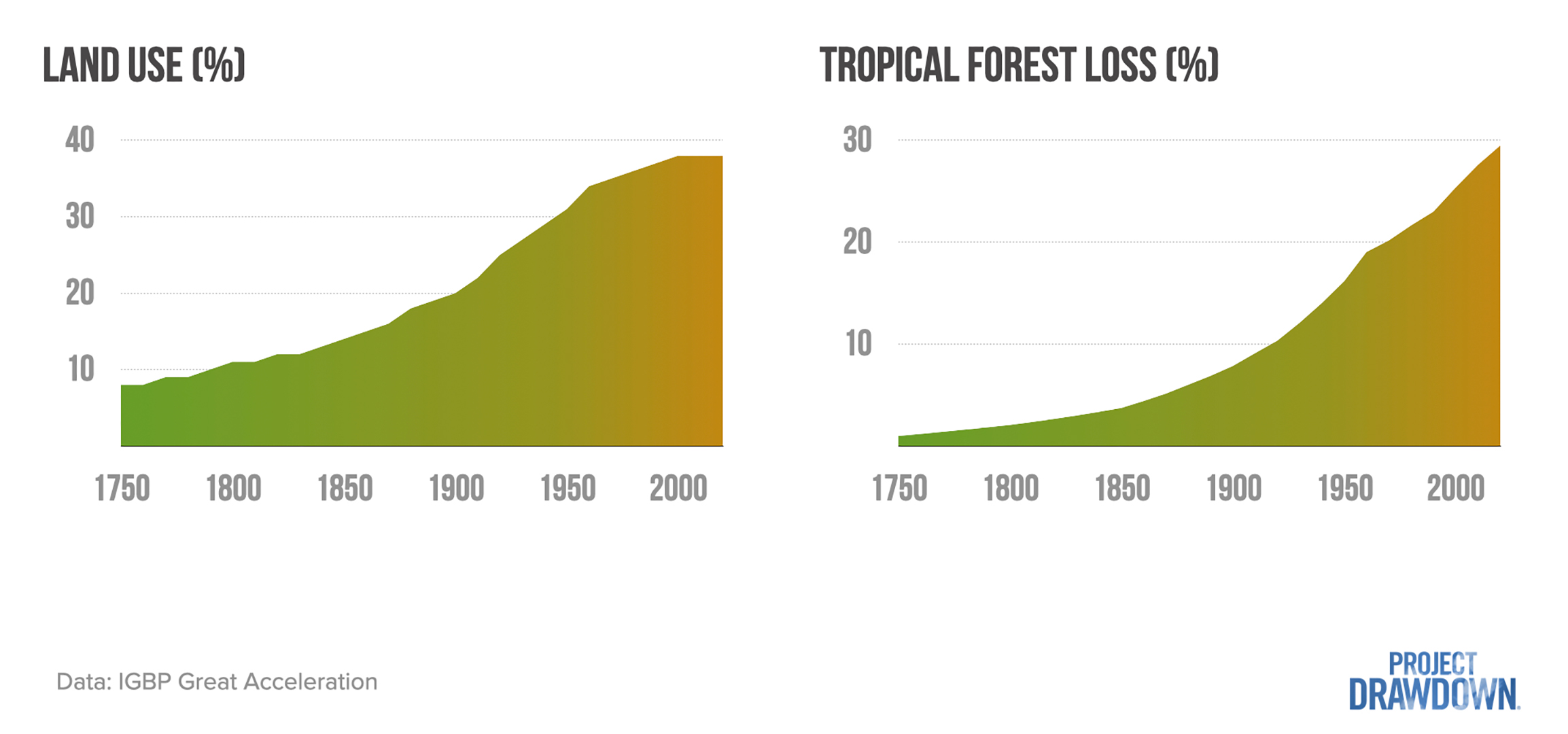
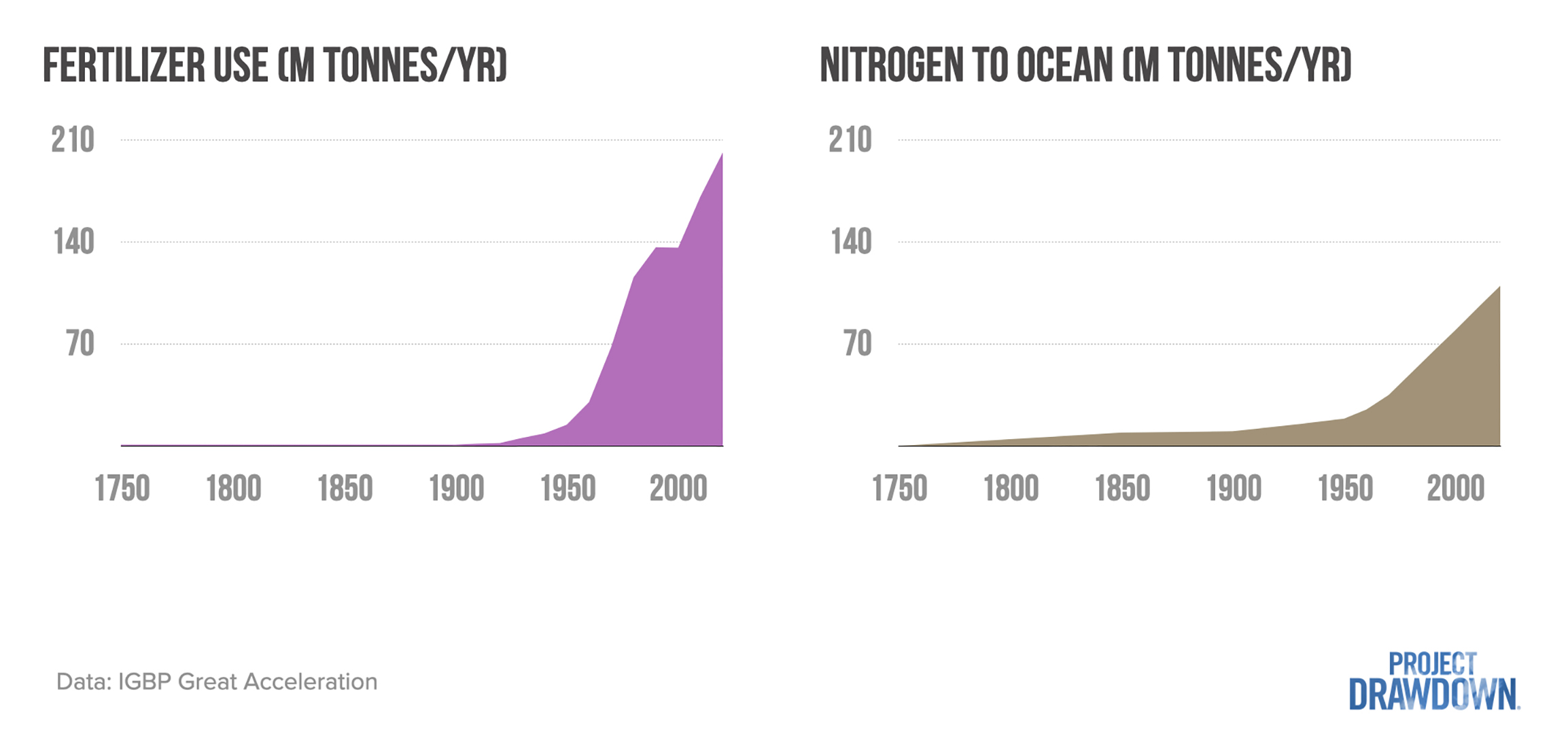
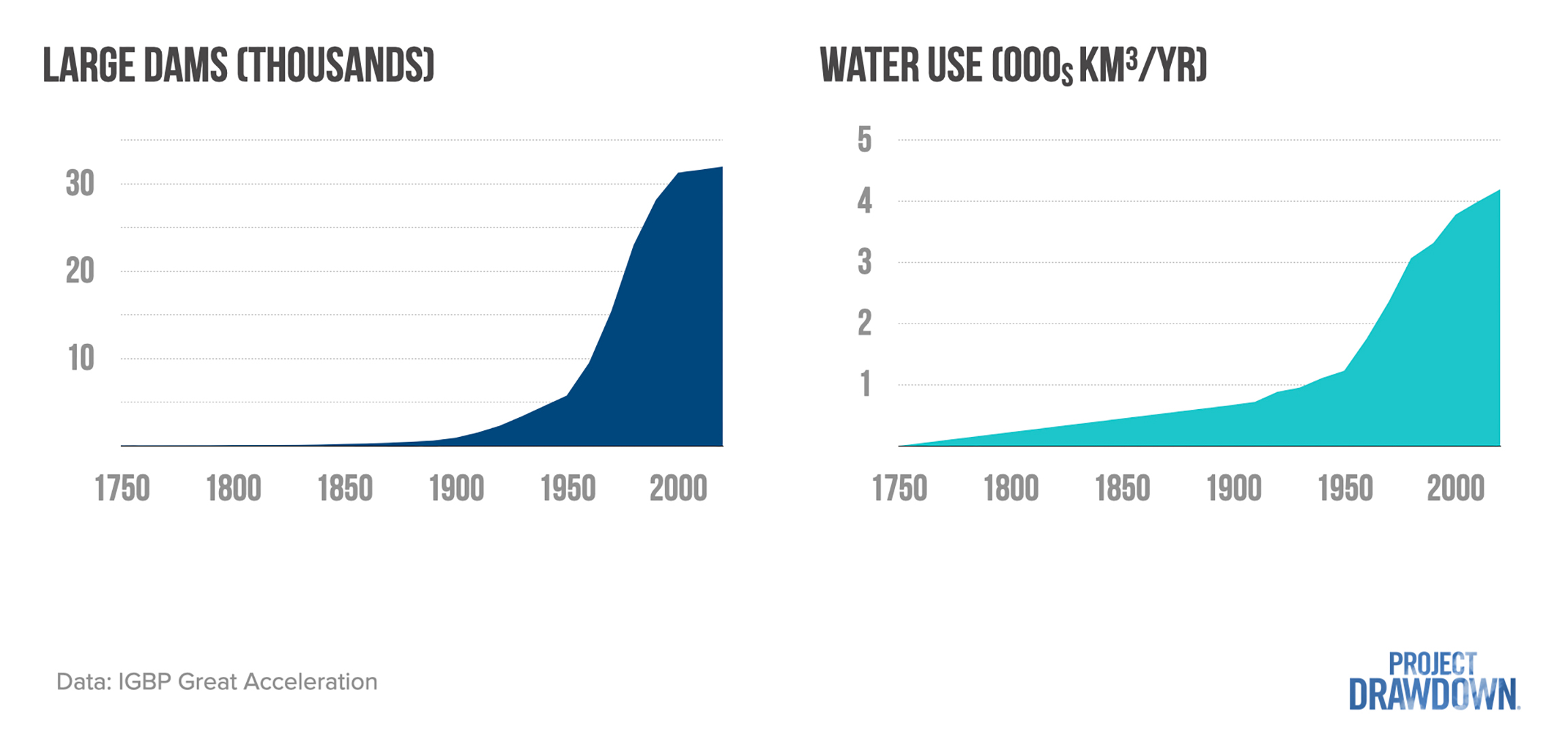
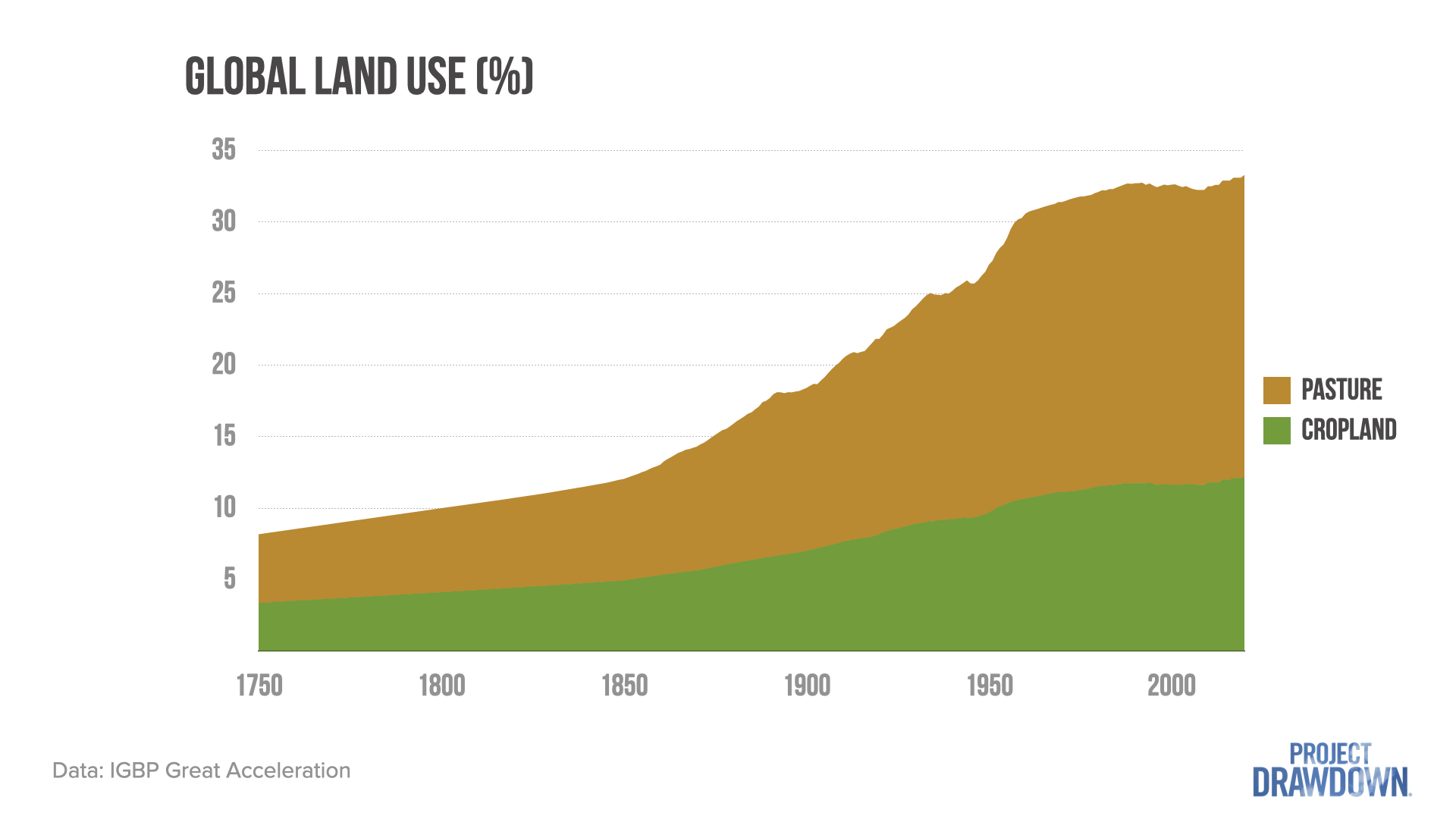
But starting in the 1960s, we witnessed a dramatic change in farming practices that disrupted this dynamic. The so-called Green Revolution used new industrial methods to grow more crops on each parcel of land with higher-yielding varieties and massive amounts of irrigation, fertilizer, and pesticides. As a result, the world’s agricultural production shifted from a long period of geographic expansion to an era of rapid industrial intensification.
Over the last several decades, the world dramatically increased food production by continuing (albeit at slower rates) to clear land for agriculture and massively increasing the use of chemicals, irrigation, and machines. Farming – and the environment – would never be the same.
In many ways, the story of agriculture and food has been one of success – at least at first glance. Agriculture allowed us to shift from hunter-gatherer societies to early settlements, cities, and, ultimately, to our modern global society. Humans – on the whole – now live longer, healthier lives. Plus, most of the world’s population has been freed from hunting and gathering food to focus on other pursuits, leading to accelerated development of arts, culture, science, and commerce. The success of our species is due, in part, to the success of agriculture.
But this success has come at a cost – a big one.
Agriculture’s Vast Footprint
Our agricultural practices are now so massive and unsustainable that they endanger the very environmental systems that sustain us. While we typically think of pipelines, smokestacks, and factories as the dominant drivers of environmental damage worldwide, agriculture is actually the biggest.
Consider the sheer size of agriculture’s geographic footprint and what this has cost the planet.
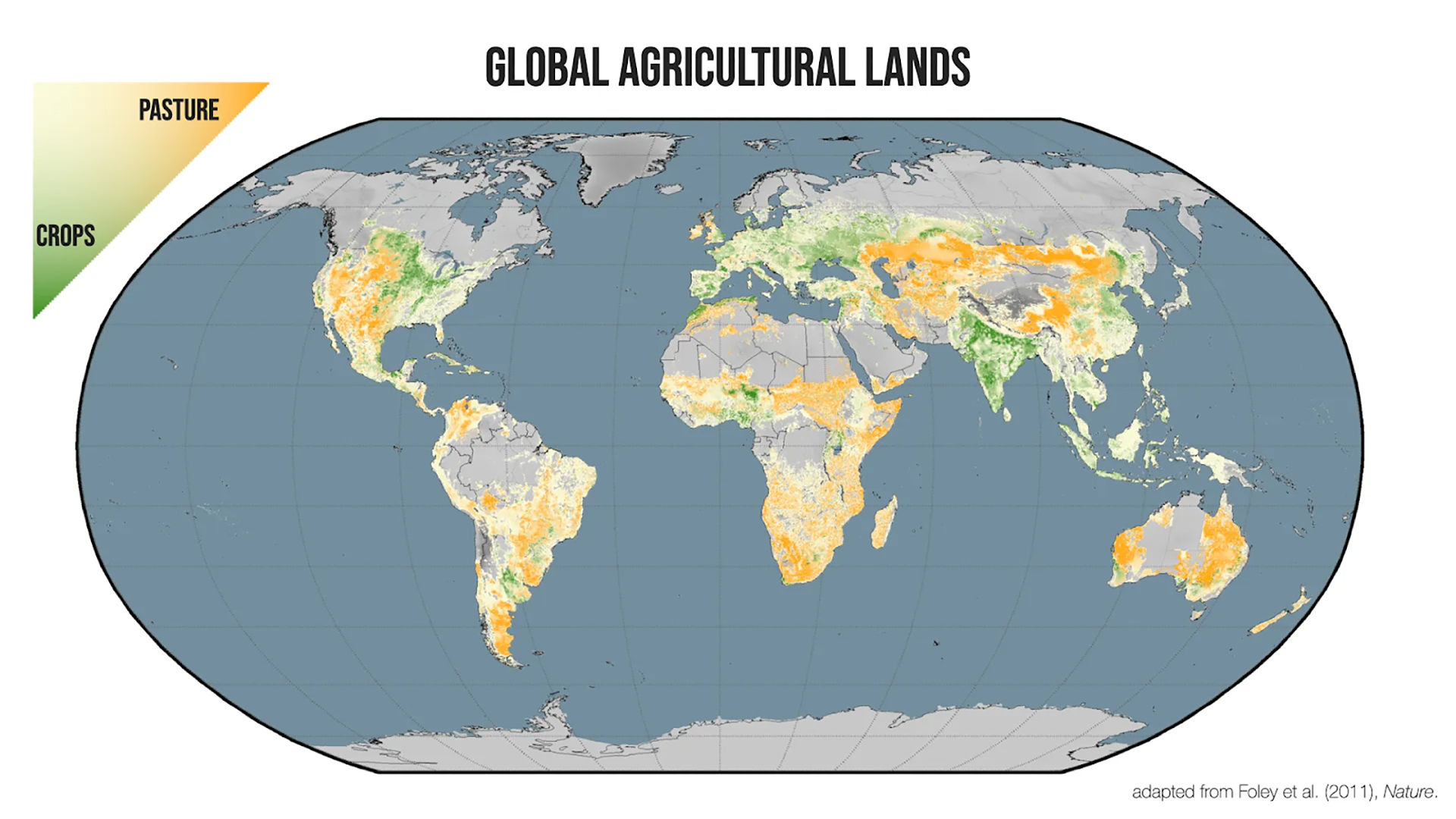
Today, over 16 million square kilometers of Earth’s land surface, an area roughly the size of South America, is used to grow crops, providing the world with various goods, including human food, animal feed, biofuels, fiber, seed, and industrial products. By mass, 62% of all crop production is human-consumable food, 35% is used for animal feed, and the remaining 3% is used for everything else.
A much larger area of land – roughly 34 million square kilometers, an area about the size of Africa – has been converted to pasture and rangeland for grazing animals. These grazing lands have replaced vast tracts of forest, savanna, and natural grassland, causing lasting ecological damage.
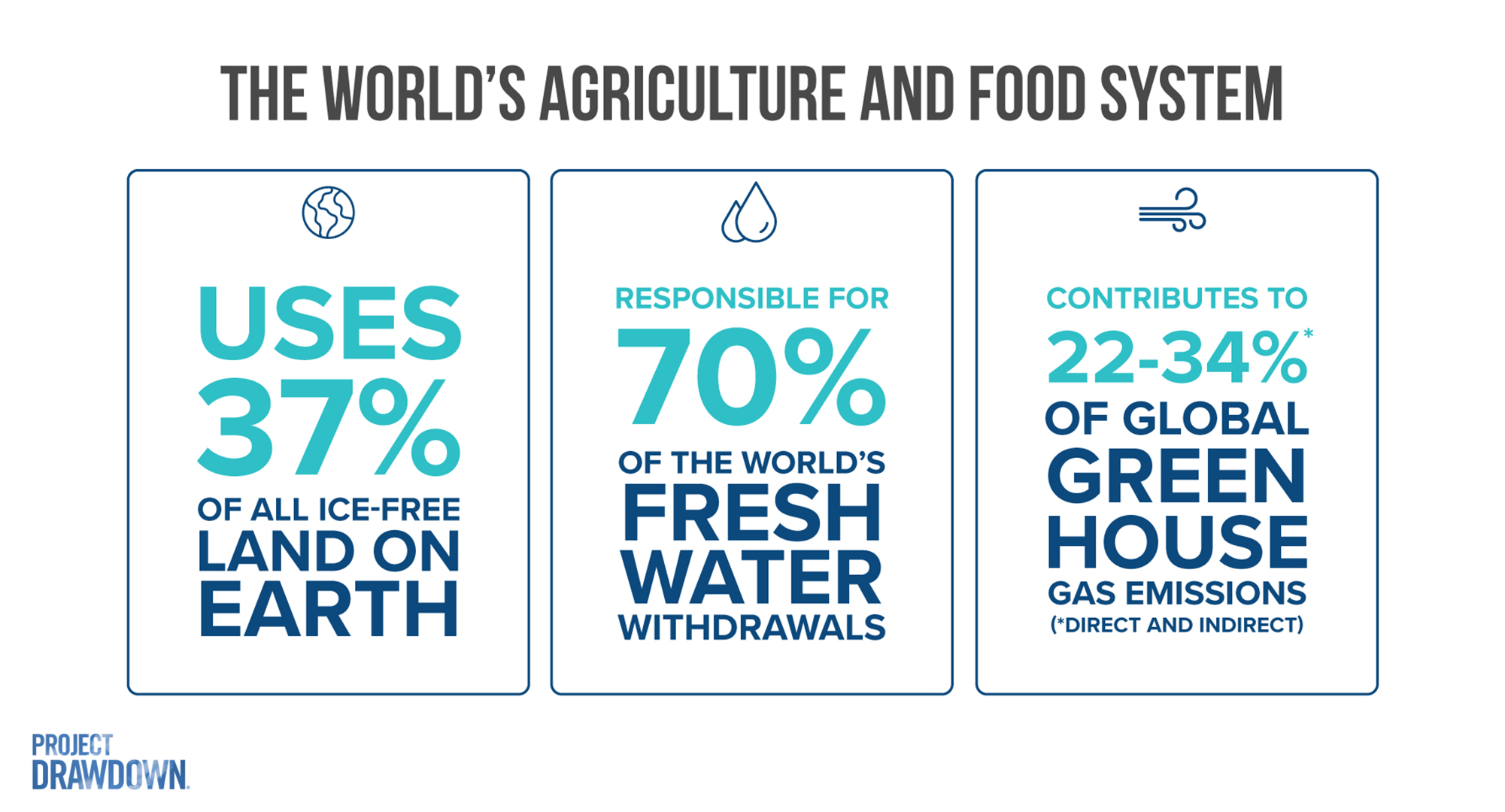
These croplands and grazing lands, taken together, cover a staggering 37% of Earth’s land surface – more than Asia and Europe combined.
Agriculture dominates Earth’s surface like nothing else. It’s bigger than forests (~31%), deserts and barren land (~19%), and wetlands (~6%). And it’s far more extensive than any other human-dominated landscape. In fact, all of the world’s cities, suburbs, and settlements cover only one to three percent of Earth’s land surface – far less than agriculture.
Simply put, no other ecosystem or human artifact can match the geographic footprint of agriculture.
Interestingly, most of our agricultural land is used for one thing – raising animals.
A whopping 75% of all agricultural land is used for grazing animals or growing animal feed, including most of the world’s corn and soybean production. Our intense consumption of meat and dairy products is by far the most significant driver of food’s enormous geographic footprint.
And agriculture’s massive footprint has severely disrupted the natural world.
Farming and the Loss of Nature
As our agricultural lands expanded, they wiped out vast areas of grassland, savanna, woodland, forest, and wetlands in their wake. They also extinguished the many creatures that lived there, causing the decline or extinction of countless species worldwide.
This isn’t an isolated phenomenon, impacting only a few remote wilderness areas. Agriculture has nearly erased entire biomes from the face of the Earth. Today, the prairies of North America and the Atlantic rainforests of Brazil are practically gone, almost entirely replaced by farmland. Other ecosystems – from cerrado in South America, forest in West Africa, and wetlands in Indonesia – are being cleared at alarming rates.
Altogether, agriculture has consumed more land – and driven more species and ecosystems to extinction – than any activity in human history. Nothing else – not timber, not mining, not urban sprawl, not even climate change – comes close.
Thirsty Crops and the Decline of Water
Agriculture also has a tremendous impact on our planet’s water resources, exceeding all other human actions.
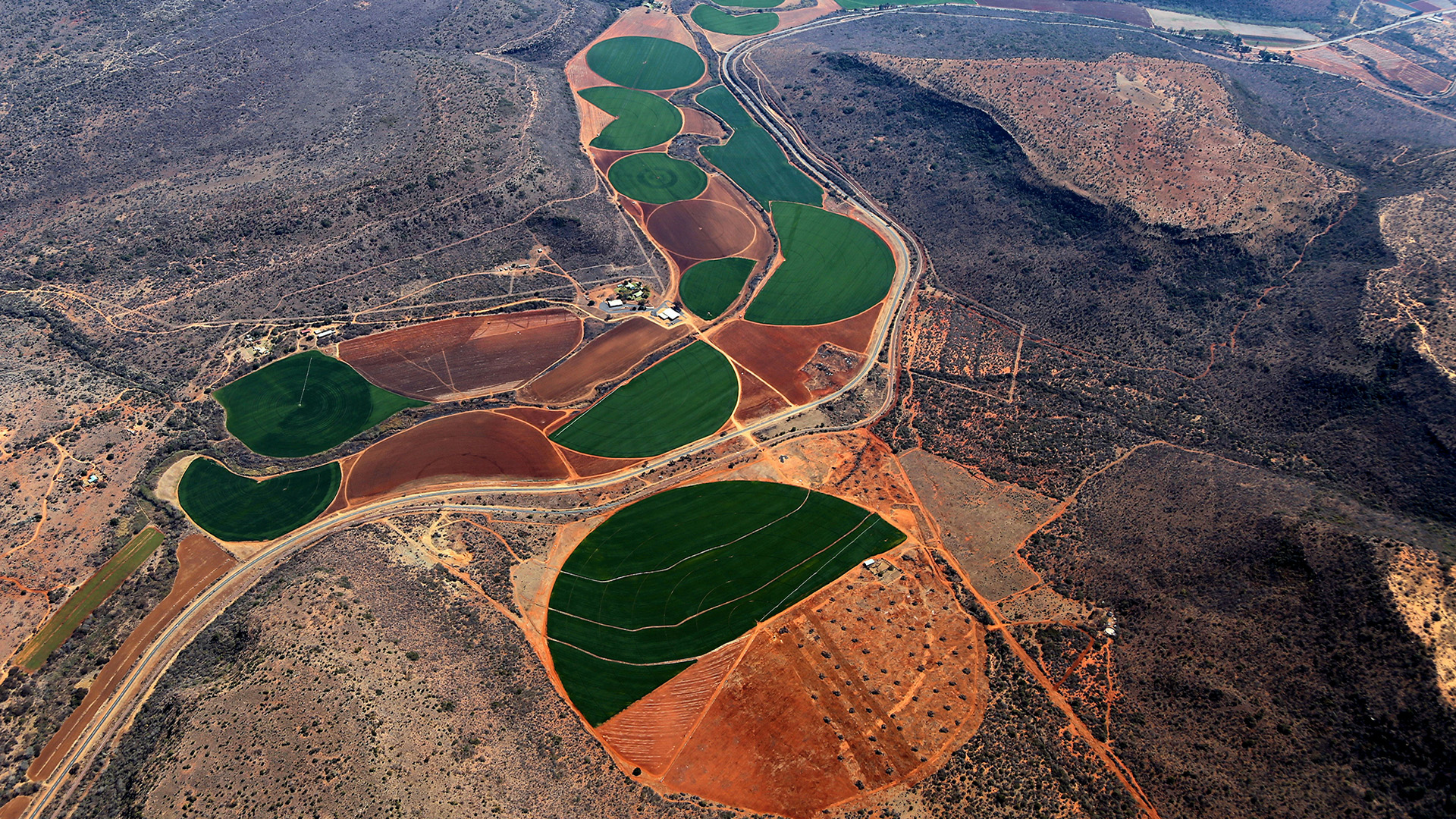
Irrigating farmland is responsible for a staggering 70% of the world’s freshwater use, draining groundwater, rivers, and lakes worldwide. That amounts to around 2,800 cubic kilometers of water per year, enough to fill the Grand Canyon two-thirds full. When counting the world’s “consumptive” water use, meaning the water is taken from natural sources and not returned to the same watershed, this figure climbs closer to 85%.
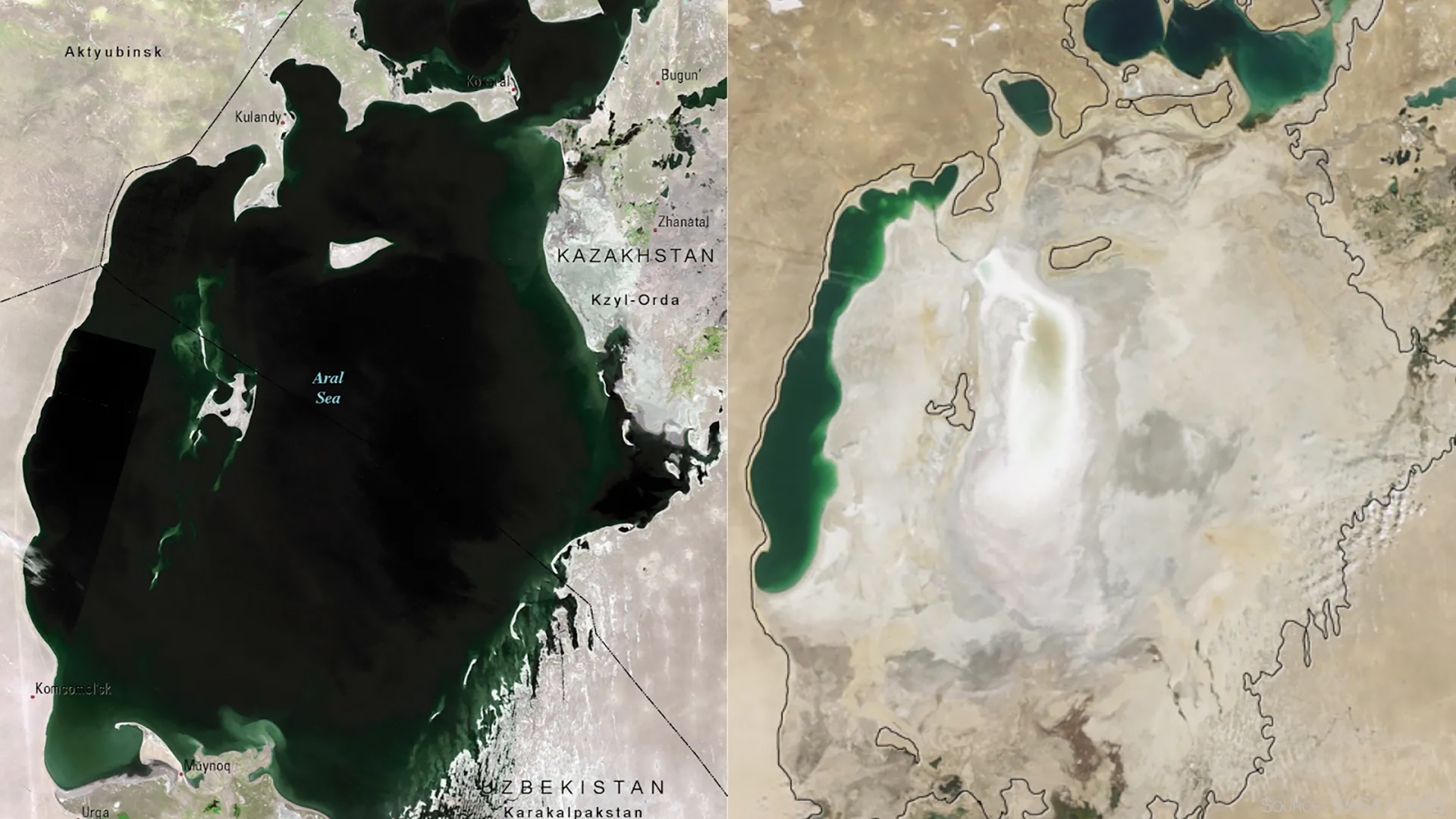
The high level of water use in agriculture is wildly unsustainable in many regions, taking far more than nature can replenish. This unslakable thirst has caused the near or total collapse of many rivers, lakes, and even inland seas across the world. The Colorado River, once among the mightiest in North America, rarely flows into the ocean today as the water is siphoned off to irrigate farmland, primarily for cattle and animal feed. Moreover, the Aral Sea, which straddled the border between present-day Kazakhstan and Uzbekistan, has virtually disappeared since its primary water sources were diverted to grow cotton in central Asia’s deserts.
Industrialized Farming and Increased Pollution
Industrialized farming has also been a significant source of pollution around the world, with the most salient impact coming from chemical fertilizers. Today, the use of fertilizers is so high that it has more than doubled the normal “background” flows of nitrogen and phosphorus across the Earth’s surface.
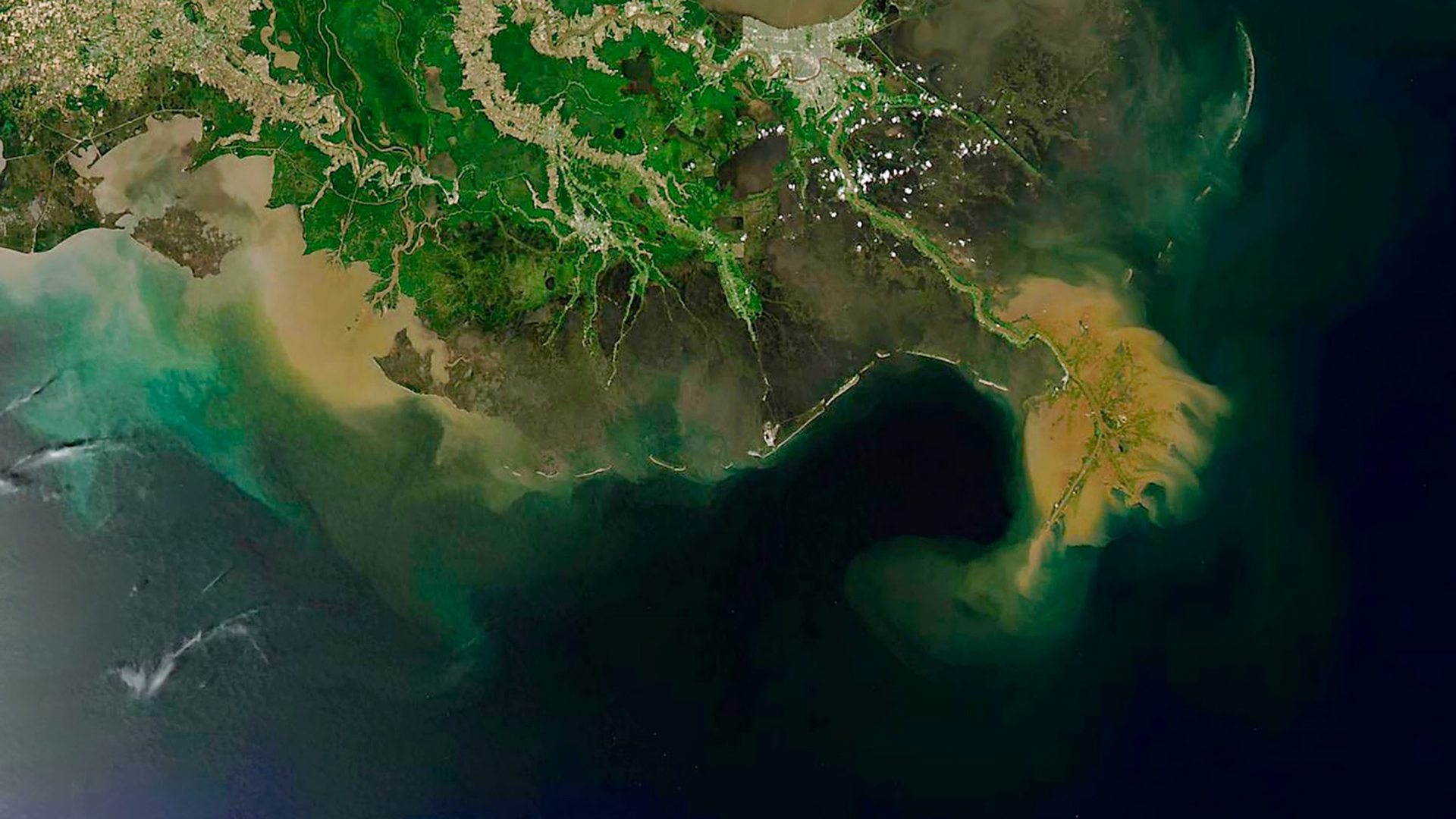
The worst effects of fertilizer use are felt not in the soil but in the waters of our planet. Excess nitrogen and phosphorus have polluted waterways worldwide, choking them with plant and algae growth. Such influxes can also severely degrade lakes, whole watersheds, and even our coastal oceans. The “Dead Zone” of the Gulf of Mexico, a near-shore stretch of water that can no longer sustain life due to a lack of oxygen, is caused by fertilizer runoff from Midwestern farms carried by the Mississippi River to sea. Other “dead zones” appear in nearly every coastal area downstream of industrialized agriculture.
The overuse of fertilizer is one of the most significant environmental issues on the planet, yet it garners little mainstream attention.
Agriculture Also Drives Climate Change
Beyond agriculture’s extraordinary impacts on land, biodiversity, water, and environmental pollution, farming practices are also a massive contributor to climate change.
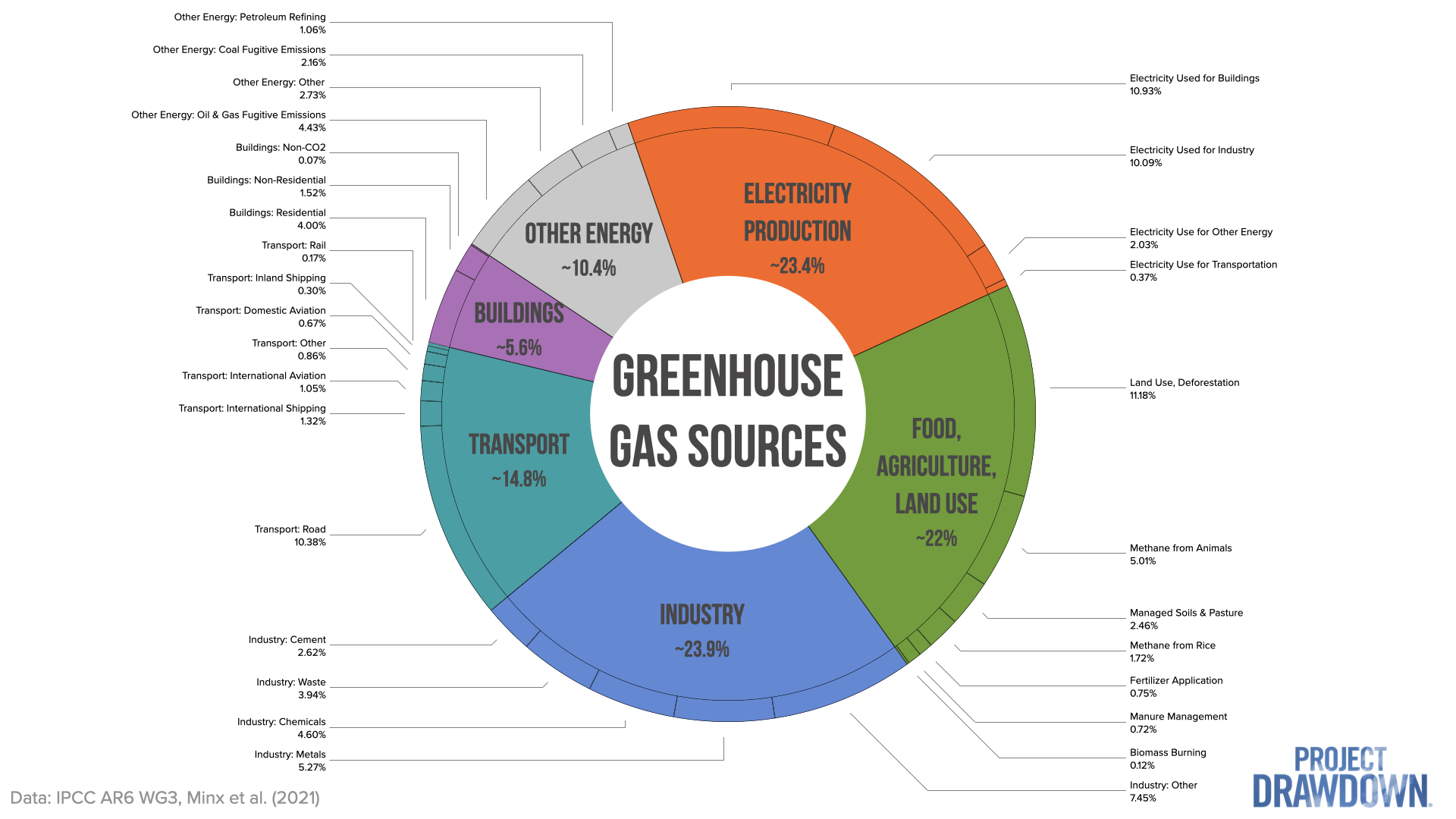
The biggest contributor of greenhouse gases from agriculture and the global food system is deforestation, as vast areas of tropical forest are cleared for animal pasture, soybeans (primarily for animal feed), and oil palm across the Amazon, Africa, and Indonesia. Deforestation accounts for roughly 10-11% of the world’s greenhouse gas emissions, rivaling the emissions of the entire United States economy. Yet many in the climate space have overlooked how saving the world’s tropical forests is a top-line climate solution.
Other agricultural practices, particularly raising cattle and, to a much smaller extent, growing rice, are a significant source of methane, a potent greenhouse gas that is many times more potent than carbon dioxide in the near term. Additionally, the overuse of fertilizers and manure can release nitrous oxide, another potent greenhouse gas, from the world’s agricultural soils into the atmosphere.
In all, agricultural practices and associated land use directly release about 22% of the world’s climate pollution, making it one of the biggest sources of greenhouse gases added to the atmosphere.
But those are just the direct emissions from food, agriculture, and land use. The entire food system, including transportation, packaging, refrigeration, cooking, and food waste releases even more. A recent study published in Nature Food shows that when those indirect emissions are included our food systems emit roughly one-third of global emissions.
So, if you want to address climate change, rethinking agriculture should be near the top of the list.
Looking Forward
Without a doubt, our agricultural practices and food systems are degrading the global environment, compromising our long-term future. Agriculture uses more land than anything we do. It is the biggest driver of species extinctions and ecosystem degradation. It is the single biggest user and polluter of water on the planet. And it is among the world’s most significant contributors to climate change.
And, yet, we all need to eat. We can’t simply decide to stop agriculture for the sake of the environment. Producing food at scale is perhaps the most important – and necessary – activity humans engage in. Without it, our modern civilization would cease to exist.
To ensure we survive and thrive, we must find ways to feed a growing world without ultimately destroying the planet that sustains us. This year, Project Drawdown will be taking a critical look at our planet’s food systems to help guide us toward that future, and we encourage you to follow along.
About the Author
Jonathan Foley, PhD, (@GlobalEcoGuy) is a climate scientist and the Executive Director of Project Drawdown, the world’s leading resource for climate solutions. These views are his own.
This piece was adapted, with permission, from a previous article by Foley on Medium.
About Project Drawdown
Project Drawdown is the world’s leading guide to science-based climate solutions. Our mission is to drive meaningful climate action around the world. A 501(c)(3) nonprofit organization, Project Drawdown is funded by individual and institutional donations.
This work is published under a Creative Commons CC BY-NC-ND 4.0 license. You are welcome to republish it following the license terms.