Six questions to supercharge climate philanthropy as we approach the Great Wealth Transfer

Image
A graphic of two people facing each other with a hand holding money in between them

Key Takeaways

  • Roughly US$124 trillion dollars will shift hands by 2048, with an estimated US$18 trillion for philanthropic causes
  • The Great Wealth Transfer could be transformative for climate action around the world – but only if giving is guided by science
  • Six questions focused on values, desired impacts, and science-based guidance can help supercharge climate philanthropy, ensuring every dollar makes as big of a difference as possible

The Great Wealth Transfer is underway, creating an entirely new generation of philanthropists.

As American baby boomers and others pass on accumulated assets to their heirs, about US$124 trillion in private wealth is expected to shift hands through 2048, with an estimated US$18 trillion going to philanthropic causes.

Research suggests Next Gen donors, as Gen X, Millennial, and Gen Z donors are known, are more likely to steer capital toward climate than previous generations. And, women are increasingly playing a leading role, often bringing more collaborative approaches that fund solutions at the intersection of several issues.

These emerging dynamics are encouraging, but we need to act quickly. To meet the Paris Agreement’s 1.5 °C goal – a goal some suggest is now implausible –  we’d need to cut greenhouse gas emissions by 55% compared to 2019 levels in less than 10 years. Every fraction of a degree increase we can prevent helps stem the tide of climate change-driven natural disasters, human suffering, economic losses , and ecosystem collapse we're already seeing.

That calls for fast, large-scale action.

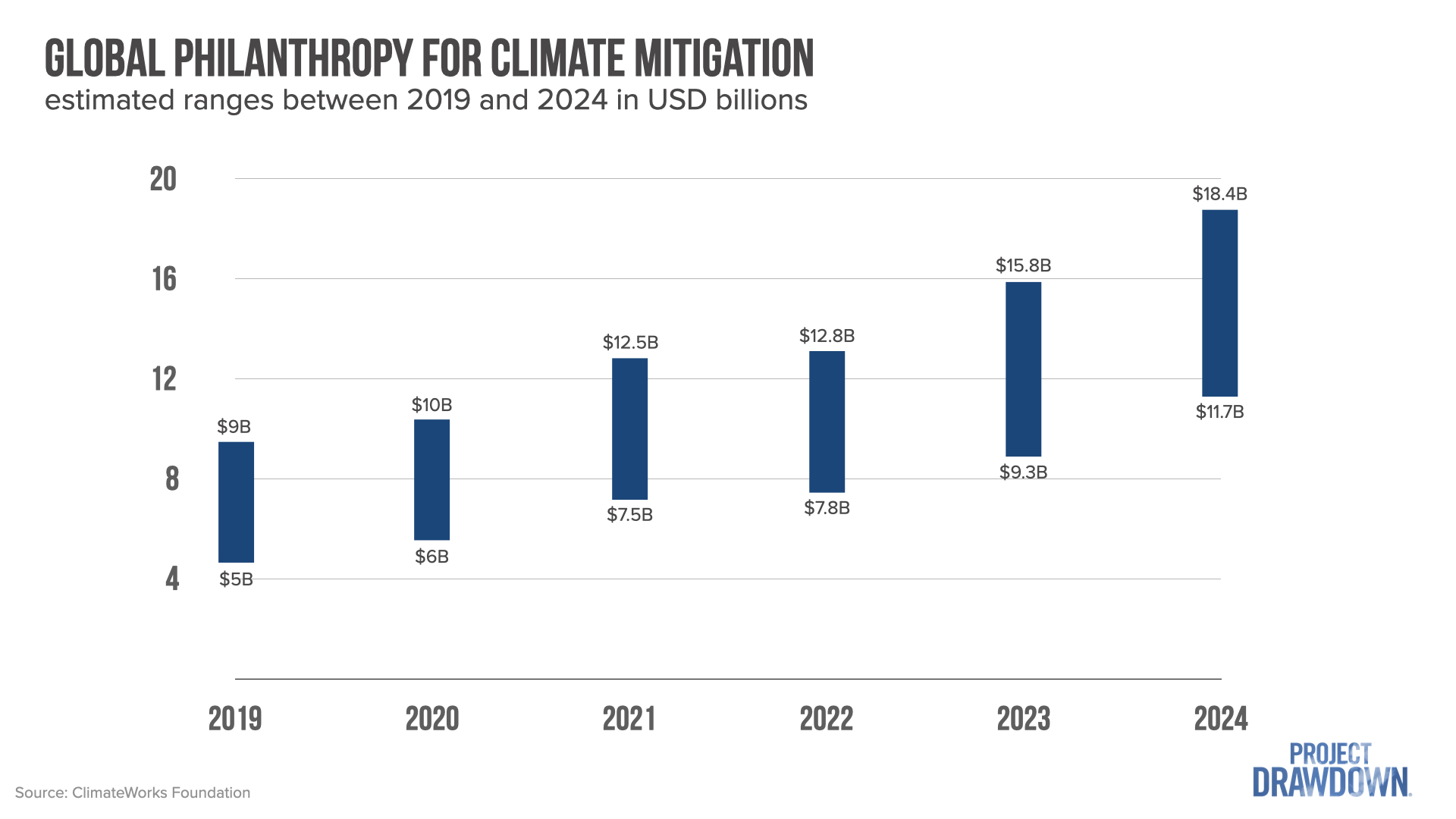
Currently, only about 2% of global philanthropic giving supports climate mitigation. But recently released research points to an encouraging upward trend. The sixth annual ClimateWorks Foundation analysis found record climate mitigation funding from global philanthropy in 2024, up around 30% to as much as US$18.4 billion compared to the year prior.

Image
A chart showing how philanthropic giving for climate mitigation has grown over the last six years

While this growth was substantial, far more capital is needed to address the scale of the challenge. The Great Wealth Transfer presents a potential influx of Next Gen capital and, therefore, a window of opportunity for the impact we need.

It’s not just about more capital, though. It’s also about more precise capital that follows the science.

Without deep science-based due diligence, even well-intentioned capital can flow toward solutions that may overpromise, underdeliver, or worse, cause harm to communities or the environment.

Six questions to help guide the way

If you’re a Next Gen philanthropist or a long-time funder looking to invest in climate solutions, here are six questions to help you make the most of every dollar you spend. 

We begin with you and your interests so that your investments align with your values and theory of change. If there is one thing to always remember, it is this: Centering science is imperative – at every step – to ensure your giving is grounded in fact and impact. 

These six questions can help you start your journey. But be sure to subscribe to the Project Drawdown newsletter where you’ll find additional guidance and support for philanthropists, impact investors, and others who want to use the power of capital to advance climate solutions.

1. What role are you inspired to play?  

Philanthropic capital can play different roles for different solutions – each of them important. Roles range from supporting early-stage R&D to on-the-ground project deployment of proven solutions, from advocating for specific policies to changing narratives from doom to possibility.

Here are four key roles to consider:

  • The Deployer: If you are drawn to funding proven, ready-to-scale projects on the ground now, this might be you. Project Drawdown’s Highly Recommended solutions, like protecting forests or deploying utility-scale solar power, are a great place to start. These are solutions that are ready, impactful, and scalable – they mostly just need deployment capital.
  • The Incubator: If you’re more patient with your capital and drawn to helping emerging solutions prove their promise before they are ready for scaling, this might be you. Investments fund further research to close scientific or economic data gaps and support pilot projects to validate readiness. Project Drawdown’s Keep Watching solutions, like deploying advanced geothermal energy or advancing cultivated meat, are a good place to start.
  • The Systems Changer: If you're driven to remove systems-level barriers so that proven solutions can be scaled more quickly, this could be you. Investments can help change laws, implement policies, build market governance systems, or finance structures. These efforts are needed for a wide range of solutions. For instance, philanthropic capital could help advocate for policies that incentivize the adoption of silvopasture.
  • The Capacity Builder: If you’re interested in building a broader movement of knowledge, advocacy, infrastructure, and technical skills that ultimately make scaling a solution possible, this could be you. For instance, workforce development programs and public awareness campaigns will both be critical to deploying and scaling onshore wind turbines.

2. If you are interested in a specific solution, does the science support it?

Before investing, it’s critical to vet the science behind the solution itself. The good news? Project Drawdown has already done much of the work for you. Our Drawdown Explorer analyzes more than 100 climate solutions – with more being added every week – to assess whether they are plausible, ready, proven, effective, impactful, risky, and cost-effective.

If a solution is Highly Recommended, the evidence is strong. These are, in the words of my colleague Christina Swanson, Ph.D., the known “high achievers.” Scientific research has proven they can work, are ready, have sufficient evidence, perform consistently, reduce or remove emissions enough to matter, don’t bring serious risks, and are relatively cheap. The Deployer role, with support from the Systems Changer and Capacity Builder roles, can help scale these.

This could be a once-in-a-generation alignment of capital, scientific knowledge, and philanthropic will.

If a solution is Keep Watching or Worthwhile, the science urges us to ask more questions.

Keep Watching solutions hold promise. They could work and don’t pose a serious risk, but they aren’t ready for large-scale deployment because the underlying science is uncertain, the technology is immature, the cost is still prohibitive, or the evidence base is too thin. We need more information. The Incubator role can help get it.

Worthwhile solutions can be worth investment in specific situations, and many offer important co-benefits. But they aren’t the highest achievers when looking at total global emissions impact. Investing in these may make sense only in specific situations.

If you find yourself interested in a Not Recommended solution, Project Drawdown research – and that of many of our peers – suggests you reconsider. They either aren’t plausible or are too risky.

3. What other needs or issues inspire you to act?

Nearly every climate mitigation solution generates co-benefits beyond emissions reductions. Supporting climate solutions often yields simultaneous improvements across health, equity, and nature. By supporting specific climate solutions, you can also support:

  • Climate adaptation co-benefits that address things like heat stress, wildfires, sea-level rise, and extreme weather events such as floods and droughts.
  • Human wellness co-benefits that relate to income and work, livelihoods, culture, food security, water and sanitation, energy availability, health, and equality.
  • Environmental co-benefits that include nature protection, animal well-being, land resources, water resources, and air quality.

The question is: which co-benefits matter most to you? Drawdown Explorer highlights the specific co-benefits generated for each climate solution.

4. Are there any regions in the world where you’d like to focus your capital?  

If you have an eye on investing in a specific place – perhaps where you live or somewhere else that holds deep meaning for you – it’s worth investigating how you can maximize your impact.

Where a solution is implemented can matter just as much as what the solution is. Some solutions, when deployed in strategic geographic hotspots, generate exponentially greater climate benefits.

For instance, protecting forests can be far more impactful when it’s implemented in specific locations with high concentrations of intact forest carbon, such as the Brazilian Amazon, Congo Basin, and Indonesia. 

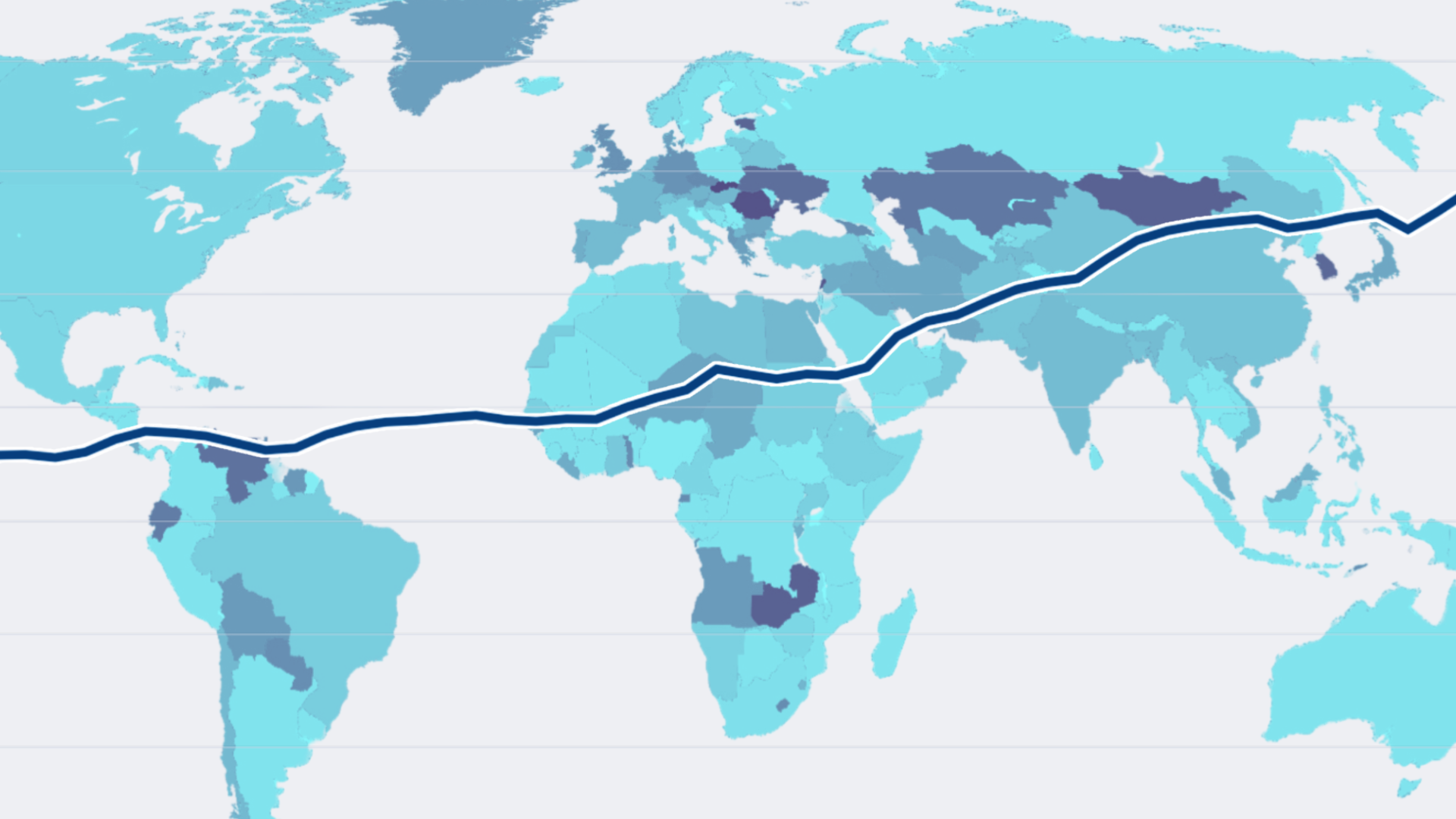
For many Highly Recommended solutions, the Drawdown Explorer provides detailed maps revealing answers to these questions:

  • In what regions of the world is this solution most effective at mitigating climate change?
  • Where is the solution adopted now? 
  • Where could it be best adopted in the future?
  • What are the best geographic targets for scaling this solution to maximize effectiveness and adoption potential?

5. Do you care how quickly the solution reduces or removes emissions?

Once deployed, some solutions reduce or remove emissions more immediately, while others have a larger cumulative impact over time.

US$18 trillion

The amount of capital expected to flow to philanthropic causes between 2025 and 2048 due to the Great Wealth Transfer

You can sort solutions in the Drawdown Explorer by speed of impact. Here’s what each means:

  • Emergency Brake solutions work the fastest by addressing short-lived climate pollutants, such as methane, or preventing the sudden release of carbon emissions. For instance, improving diets has a disproportionately fast impact by reducing methane emissions from livestock, while also preventing massive, sudden pulses of carbon dioxide released when forest land is cleared for grazing.
  • Gradual solutions offer steady beneficial emissions impacts year after year once they are implemented. Any clean energy replacement for fossil energy fits this category. For instance, electric vehicles replace dirty fossil fuel emissions each and every time they are used. Most solutions fit this gradual category.
  • Delayed solutions work the slowest but can offer robust results when they reach their full potential in the long run. For instance, restoring forests can take decades since trees take time to grow, delaying any initial burst of carbon sequestration. For this reason, protecting intact forests can provide more timely climate benefits than restoring degraded ones.

6. Are you interested in a specific sector?

Philanthropic capital plays more of a leading role in some sectors, including nature and food systems, while playing a supporting role in others, such as transportation and electricity, which often involve larger flows of private, institutional, and public capital.

If you’re most interested in cutting emissions, consider solutions in sectors like electricity, food and agriculture, transportation, buildings, and other energy. These sectors all work to cut emissions from happening in the first place.

For instance, in the electricity sector, deploying utility-scale solar power systems and onshore wind turbines reduces carbon emissions by providing renewable energy. In the food and agriculture sector, solutions such as improving diets by reducing meat consumption and offering other protein-rich foods, and reducing food loss and waste, reduce emissions across entire value chains, from production through consumption. And in the buildings sector, solutions like improving windows and glass by moving from single- to double-glazed windows cut emissions by minimizing the energy needed to heat and cool buildings.

There are also sectors working to remove carbon from the atmosphere that has already been emitted. For instance, in the nature-based carbon removal sector, restoring forests helps remove carbon from the atmosphere and sequester it.

If you have a specific sector of interest, you can search in the Drawdown Explorer by using the Filter by Sector drop-down menu.

A generational opportunity 

Whether you’re a current philanthropist or you’re part of the Next Gen, these questions can be a starting place for your climate action journey.

With US$18 trillion projected to soon enter charitable giving as part of the Great Wealth Transfer and a notable upward trend in philanthropy’s focus on climate mitigation solutions, the stakes are high, and the opportunity is historic.

Science can – and must – be a compass to help guide the way.

But following the science doesn’t mean abandoning what inspires you. When philanthropists lead with their passions, it’s often possible to align those interests with scientific priorities, making their giving more durable and impactful.

Trillions of dollars are about to move. This could be a once-in-a-generation alignment of capital, scientific knowledge, and philanthropic will. How we direct those dollars over the next decade will help shape the climate outcomes – and therefore the future – of the next century.

Stay tuned this fall for announcements about Drawdown Capital, a new program from Project Drawdown that will help supercharge the impact of climate capital!


About the Author
Amanda Bielawski, Ph.D., is Director of Global Strategic Partnerships at Project Drawdown, leading strategies to advance the most effective and innovative climate solutions across business, investing, and philanthropy. 

About Project Drawdown 
Project Drawdown is the world’s leading guide to science-based climate solutions. Our mission is to drive meaningful climate action around the world. A 501(c)(3) nonprofit organization, Project Drawdown is funded by individual and institutional donations. 

This work is published under a Creative Commons CC BY-NC-ND 4.0 license. You are welcome to republish it following the license terms.