Equal rights, opportunities, and treatment of all populations regardless of social, economic, cultural, and gender identities.

Icon

Improve Landfill Management

Image
Image
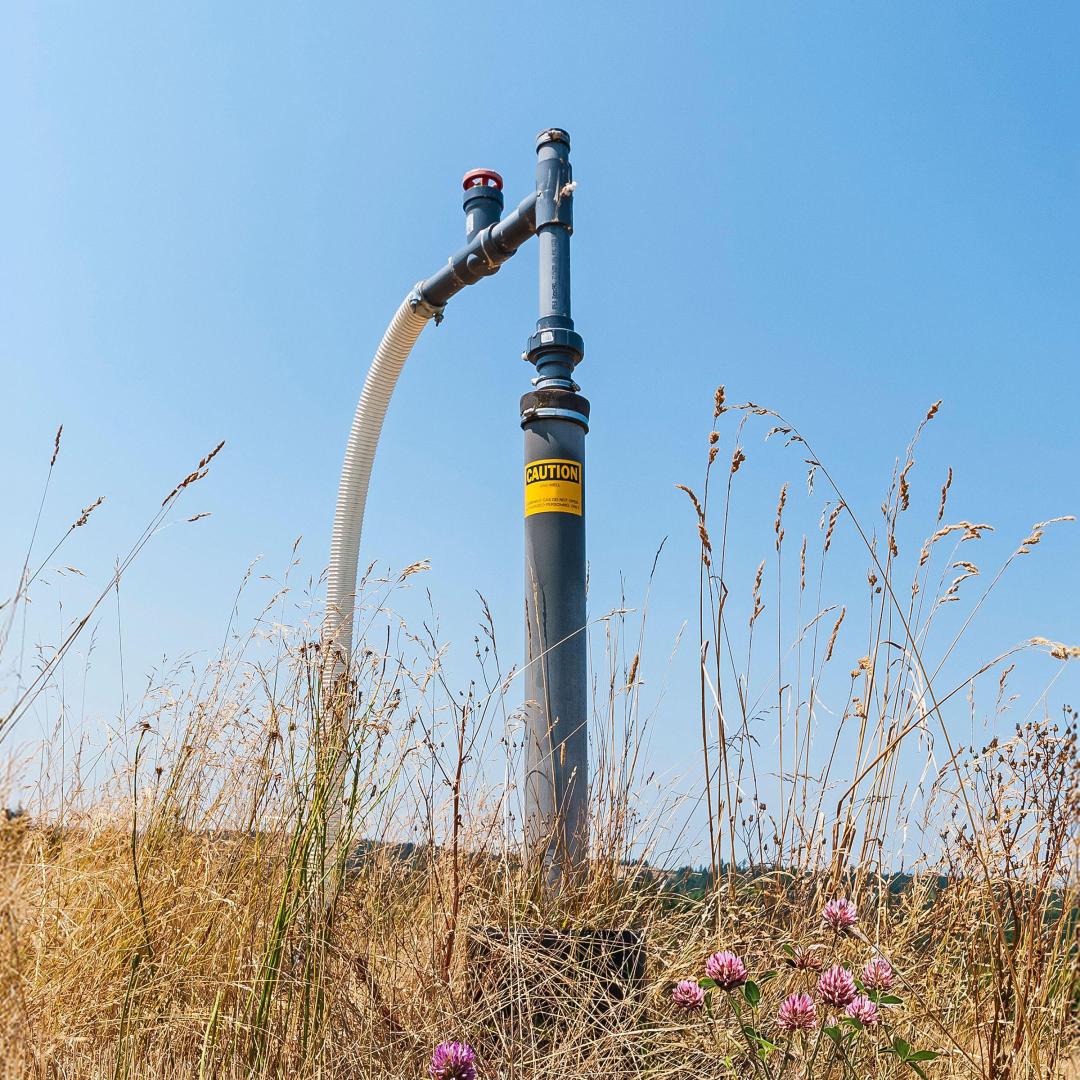
Methane tap valve from a landfill
Coming Soon
Off
Summary

Landfill management is the process of reducing methane emissions from landfill gas (LFG). As bacteria break down organic waste in an environment without oxygen, they produce methane and release it into the atmosphere if there are no controls in place. This solution focuses on two methane abatement strategies: 1) methane capture/use/destruction and 2) biocovers. When methane is used or destroyed it is converted into CO₂ (Garland et al., 2023).

Description for Social and Search
Improve Landfill Management is a Highly Recommended climate solution. It focuses on abating landfill methane through methane capture and biocovers.
Overview

Landfill management relies on several practices and technologies that prevent methane from being released into the atmosphere. When organic material is broken down, it creates LFG, which usually is half methane and half CO₂, and water vapor (U.S. Environmental Protection Agency [U.S. EPA], 2024a). Methane that is directly released into the atmosphere has a GWP of 81 over a 20-yr basis and a GWP of 28 over a 100-yr basis (Intergovernmental Panel on Climate Change [IPCC], 2023). This means methane is 81 times more effective at trapping heat than CO₂. Because methane is a short-lived climate pollutant that has a much stronger warming effect than CO₂ over a given time period, abating methane will have a relatively large near-term impact on slowing global climate change (International Energy Agency [IEA], 2023). LFG contains trace amounts of oxygen, nitrogen, sulfides, hydrogen, and other organic compounds that can negatively affect nearby environments with odors, acid rain, and smog (New York State Government, 2024).

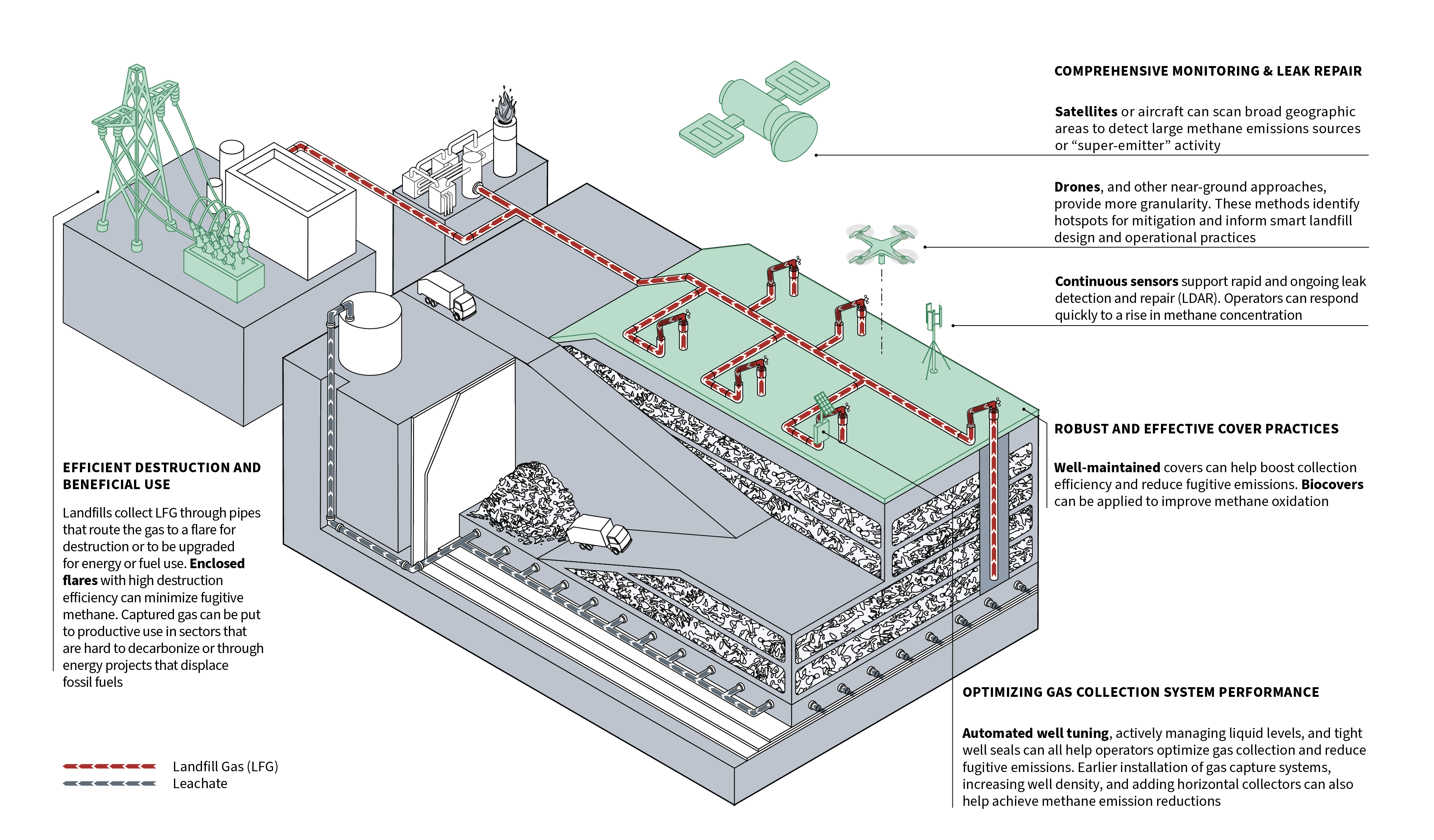
This solution focuses on two methane abatement strategies: 1) gas collection and control systems (GCCSs) and methane use/destruction, and 2) biocovers. Figure 1 illustrates in which parts of a landfill the strategies can be used (Garland et al., 2023).

GCCS and methane capture uses pipes to route LFG to be used as an energy source or to flare. The gas can be used on-site for landfill equipment or refined into biomethane and sold; unrefined LFG can also be sold to local utilities or industries for their own use. In areas where electricity generation is carbon intensive, the LFG can help to reduce local emissions by displacing fossil fuels. Methane that cannot be used for energy is burned in a flare during system downtime or at the end of the landfill life, when LFG production has decreased and collecting it no longer makes economic sense. High-efficiency (enclosed) flares have a 99% methane destruction rate. Open flares can be used but research from Plant et al. (2022) has found that the methane destruction rate in practice is much lower than the 90% value the U.S. EPA assumes. 

Biocovers are a type of landfill cover designed to promote bacteria that convert methane to CO₂ and water. Biocovers have an organic layer that provides an environment for the bacteria to grow and a gas distribution layer to separate the landfill waste from the organic layer. Non-biocover landfill covers – made with impermeable material like clay or synthetic materials – can also be used to prevent methane from being released. The methane oxidation from these covers will be minimal – they mostly serve to limit LFG from escaping – but they can then be used in conjunction with GCCS to improve gas collection. Landfills also use daily and interim landfill covers. It is important to note that studies on biocover abatement potential and cost are limited and biocovers may not be appropriate for all situations.

Leak Detection and Repair (LDAR) involves regularly monitoring for methane leaks and modifying or replacing leaking equipment. LDAR does not directly reduce emissions but is used to determine where to apply the above technology and practices and is considered a critical part of methane abatement strategies. Methane can be monitored through satellites, drones, continuous sensors, or on-site walking surveys (Carbon Mapper, 2024). LDAR is an important step in identifying where methane escapes from the gas collection infrastructure or landfill cover. Quick repairs help reduce GHG emissions while allowing more methane to be used for energy or fuel. The Appendix shows where methane can escape from landfills.

Figure 1. Areas where different on-site landfill methane abatement strategies can take place. Source: Garland et al. (2023)

Image
Landfill Methane: Key Problems and Solutions diagram

Source: Garland E., Alves O., Frankiewicz T., & Ayandele E. (2023). Mitigating landfill methane. RMI

Abichou, T. (2020). Using methane biological oxidation to partially finance sustainable waste management systems and closure of dumpsites in the Southern Mediterranean region. Euro-Mediterranean Journal for Environmental Integration. Link to source: https://doi.org/10.1007/s41207-020-00157-z 

Auth, K., & Kincer, J. (2022). Untangling ‘stranded assets’ and ‘carbon lock-in.’ Energy for Growth Hub. Link to source: https://energyforgrowth.org/article/untangling-stranded-assets-and-carbon-lock-in/ 

Ayandele, E., Bodas, J., Gautam, S., & Velijala, V. (2024c). Sustainable organic waste management: A playbook for Lucknow, India. RMI. Link to source: https://www.teriin.org/policy-brief/sustainable-organic-waste-management-playbook-lucknow-india 

Ayandele, E., Bodas, J., Krishnakumar, A., & Orakwe, L. (2024b). Mitigating methane emissions from municipal solid waste: A playbook for Lagos, Nigeria. RMILink to source: https://rmi.org/insight/waste-methaneassessment-platform/

Ayandele, E., Frankiewicz, T., & Garland, E. (2024a). Deploying advanced monitoring technologies at US landfills. RMI. Link to source: https://rmi.org/wp-content/uploads/dlm_uploads/2024/03/wasteMAP_united_states_playbook.pdf

Ayandele, E., Frankiewicz, T., & Wu, Y. (2024d). A playbook for municipal solid waste methane mitigation. RMI. Link to source: https://rmi.org/wp-content/uploads/dlm_uploads/2024/03/wastemap_global_strategy_playbook.pdf

Barton, D. (2020). Fourth five-year review report for Fresno municipal sanitary landfill superfund site Fresno county, California. U.S. Environmental Protection Agency. Link to source: https://semspub.epa.gov/work/09/100021516.pdf 

Brender, J. D., Maantay, J. A., Chakraborty, J. (2011). Residential proximity to environmental hazards and adverse health outcomes. American Journal of Public Health, 101(S1). Link to source: https://pmc.ncbi.nlm.nih.gov/articles/PMC3222489/pdf/S37.pdf 

Cai, B., Lou, Z., Wang, J., Geng, Y., Sarkis, J., Liu, J., & Gao, Q. (2018). CH4 mitigation potentials from China landfills and related environmental co-benefits. Science Advances, 4(7). Link to source: https://doi.org/10.1126/sciadv.aar8400 

Carbon Mapper (2024, March 28). Study finds landfill point source emissions have an outsized impact and opportunity to tackle U.S. waste methane. Link to source: https://carbonmapper.org/articles/studyfinds-landfill 

Casey, J. A., Cushing, L., Depsky, N., & Morello-Frosch, R. (2021). Climate justice and California's methane superemitters: Environmental equity assessment of community proximity and exposure intensity. Environmental Science & Technology, 55(21), 14746–14757. Link to source: https://doi.org/10.1021/acs.est.1c04328 

City of Saskatoon. (2023). Landfill gas collection & power generation system. Retrieved September 2, 2024. Link to source: https://www.saskatoon.ca/services-residents/power-water-sewer/saskatoon-light-power/sustainable-electricity/landfill-gas-collection-power-generation-system 

DeFabrizio, S., Glazener, W., Hart, C., Henderson, K., Kar, J., Katz, J., Pratt, M. P., Rogers, M., Ulanov, A., & Tryggestad, C. (2021). Curbing methane emissions: How five industries can counter a major climate threat. McKinsey Sustainability. Link to source: https://www.mckinsey.com/~/media/mckinsey/business%20functions/sustainability/our%20insights/curbing%20methane%20emissions%20how%20five%20industries%20can%20counter%20a%20major%20climate%20threat/curbing-methane-emissions-how-five-industries-can-counter-a-major-climate-threat-v4.pdf 

Dobson, S., Goodday, V., & Winter, J. (2023). If it matters, measure it: A review of methane sources and mitigation policy in Canada. International Review of Environmental and Resource Economics16(3-4), 309–429. Link to source: https://doi.org/10.1561/101.00000146

Fries, J. (2020, March 26). Unique landfill gas solution found. Penticton Herald. Link to source: https://www.pentictonherald.ca/news/article_874b5c9c-6fb5-11ea-87ce-2b2aedf77300.html 

Garland E., Alves O., Frankiewicz T., & Ayandele E. (2023). Mitigating landfill methane. RMILink to source: https://rmi.org/wp-content/uploads/dlm_uploads/2023/06/landfill_monitoring_memo_series.pdf 

Global Climate & Health Alliance. (2024). Methane & health. Retrieved September 24, 2024. Link to source: https://climateandhealthalliance.org/initiatives/methane-health/ 

Global Methane Initiative. (2022). Policy maker’s handbook for measurement, reporting, and verification in the biogas sector. Link to source: https://www.globalmethane.org/resources/details.aspx?resourceid=5182

Global Methane Initiative (2024). 2023 accomplishments in methane mitigation, recovery, and use through U.S.-supported international efforts. Link to source: https://www.epa.gov/gmi/us-government-global-methane-initiative-accomplishments 

Global Methane Pledge (2023). Lowering organic waste methane initiative (LOW-Methane). Retrieved March 6, 2025. Link to source: https://www.globalmethanepledge.org/news/lowering-organic-waste-methane-initiative-low-methane 

Gómez-Sanabria, A., & Höglund-Isaksson, L. (2024). A comprehensive model for promoting effective decision-making and sustained climate change stabilization for South Africa. International Institute for Applied Systems Analysis. Link to source: https://pure.iiasa.ac.at/id/eprint/19897/1/Final_Report_SAFR.pdf

Government of Canada. (2024). Canada gazette, part I, volume 158, number 26: Regulations respecting the reduction in the release of methane (waste sector). Retrieved September 2, 2024. Link to source: https://canadagazette.gc.ca/rp-pr/p1/2024/2024-06-29/html/reg5-eng.html 

Industrious Labs. (2024a). The hidden cost of landfills. Link to source: https://cdn.sanity.io/files/xdjws328/production/657706be7f29a20fe54692a03dbedce8809721e8.pdf 

Industrious Labs. (2024b). Turning down the heat: How the U.S. EPA can fight climate change by cutting landfill emissions. Link to source: https://cdn.sanity.io/files/xdjws328/production/b562620948374268b8c6da61ec1c44960a8d5879.pdf 

Intergovernmental Panel on Climate Change. (2023). Sixth assessment report (AR6). Link to source: https://www.ipcc.ch/assessment-report/ar6/ 

International Energy Agency. (2021). Global methane tracker 2021: Methane abatement and regulation. Link to source: https://www.iea.org/reports/methane-tracker-2021/methane-abatement-and-regulation 

International Energy Agency. (2023). Net zero roadmap: A global pathway to keep the 1.5℃ goal in reach - 2023 update. Link to source: https://www.iea.org/reports/net-zero-roadmap-a-global-pathway-to-keep-the-15-0c-goal-in-reach 

International Energy Agency. (2025). Methane tracker: Data tools. Link to source: https://www.iea.org/data-and-statistics/data-tools/methane-tracker 

IPCC (2006). 2006 IPCC guidelines for national greenhouse gas inventories volume 5 waste. Link to source: https://www.ipcc-nggip.iges.or.jp/public/2006gl/vol5.html   

Krause, M. Kenny, S., Stephensons, J. & Singleton, A (2023). Food waste management: Quantifying methane emissions from landfilled food waste. U.S. Environmental Protection Agency. Link to source: https://www.epa.gov/system/files/documents/2023-10/food-waste-landfill-methane-10-8-23-final_508-compliant.pdf

Malley, C. S., Borgford-Parnell, N. Haeussling, S., Howard, L. C., Lefèvre E. N., & Kuylenstierna J. C. I. (2023). A roadmap to achieve the global methane pledge. Environmental Research: Climate, 2(1). Link to source: https://doi.org/10.1088/2752-5295/acb4b4 

Martin Charlton Communications. (2020). Features: Landfill biocovers. APEGS. Link to source: https://www.apegs.ca/features-landfill-biocovers 

Martuzzi, M., Mitis, F., & Forastiere, F. (2010). Inequalities, inequities, environmental justice in waste management and health. European Journal of Public Health, 20(1), 21–26. Link to source: https://doi.org/10.1093/eurpub/ckp216 

MethaneSAT. (n.d.). Solving a crucial climate challenge. Retrieved September 2, 2024. Link to source: https://www.methanesat.org/satellite/ 

Nesser, H., Jacob, D. J., Maasakkers, J. D., Lorente, A., Chen, Z., Lu, X., Shen, L., Qu, Z., Sulprizio, M. P., Winter, M., Ma, S., Bloom, A. A., Worden, J. R., Stavins, R. N., & Randles, C. A. . (2024). High-resolution US methane emissions inferred from an inversion of 2019 TROPOMI satellite data: Contributions from individual states, urban areas, and landfills. Atmospheric Chemistry and Physics24, 5069–5091. Link to source: https://doi.org/10.5194/acp-24-5069-2024 

New York State Government. (2024). Important things to know about landfill gas. Retrieved September 3, 2024. Link to source: https://www.health.ny.gov/environmental/outdoors/air/landfill_gas.htm 

Nisbet, E. G., Fisher, R. E., Lowry, D., France, J. L., Allen, G., Bakkaloglu, S., Broderick, T. J., Cain, M., Coleman, M., Fernandez, J., Forster, G., Griffiths, P. T., Iverach, C. P., Kelly, B. F. J., Manning, M. R., Nisbet-Jones, P. B. R., Pyle, J. A., Townsend-Small, A., al-Shalaan, A., Warwick, N., & Zazeri, G. (2020). Methane mitigation: Methods to reduce emissions,on the path to the Paris agreement. Review of Geophysics, 58(1). Link to source: https://doi.org/10.1029/2019RG000675 

Ocko, I. B., Sun, T., Shindell, D., Oppenheimer, M. Hristov, A. N., Pacala, S. W., Mauzerall, D. L., Xu, Y. & Hamburg, S. P. (2021). Acting rapidly to deploy readily available methane mitigation measures by sector can immediately slow global warming. Environmental Research, 16(5). Link to source: https://doi.org/10.1088/1748-9326/abf9c8 

Olaguer, E. P. (2021). The potential ozone impacts of landfills. Atmosphere, 12(7), 877. Link to source: https://doi.org/10.3390/atmos12070877 

Plant, G., Kort, E. A., Brandt, A. R., Chen, Y., Fordice, G., Negron, A. M. G., Schwietzke, S., Smith, M., & Zavala-araiza, D. (2022). Estimates of solid waste disposal rates and reduction targets for landfill gas emissions. Science, 377(6614), 1566–1571. Link to source: https://doi.org/10.1126/science.abq0385 

Powell J. T., Townsend, T. G., & Zimmerman, J. B. (2015). Estimates of solid waste disposal rates and reduction targets for landfill gas emissions. Nature Climate Change6, 162-165. Link to source: https://www.nature.com/articles/nclimate2804

Raniga, K., (2024). Waste Sector: Estimating CH4 Emissions from Solid Waste Disposal Sites [Data set]. WattTime, Climate TRACE Emissions Inventory. Retrieved April 21, 2025, from Link to source: https://climatetrace.org

SaveOnEnergy. (2024). Landfills: The truths about trash dumps by the numbers. Retrieved September 2, 2024, from Link to source: https://www.saveonenergy.com/resources/landfill-statistics/ 

Scarapelli, T. R., Cusworth, D. H., Duren, R. M., Kim, J., Heckler, J., Asner, G. P., Thoma, E., Krause, M. J., Heins, D., & Thorneloe, S. (2024). Investigating major sources of methane emissions at US landfills. Environmental Science & Technology58(29). Link to source: https://doi.org/10.1021/acs.est.4c07572

Scharff, H. Soon, H., Taremwa, S. R., Zegers, D., Dick, B., Zanon, T. V. B., & Shamrock, J. (2023). The impact of landfill management approaches on methane emissions. Waste Management & Research. Link to source: https://doi.org/10.1177/0734242X231200742 

Scheutz, C., Pedersen, R. B., Petersen, P. H., Jørgensen, J. H. B., Ucendo, I. M. B., Mønster, J. G., Samuelsson, J., Kjeldsen, P. (2014). Mitigation of methane emission from an old unlined landfill in Klintholm, Denmark using a passive biocover system. Waste Management34(7), 1179–1190. Link to source: https://doi.org/10.1016/j.wasman.2014.03.015 

Siddiqua, A., Hahladakis, J.N. & Al-Attiya, W.A.K.A. (2022). An overview of the environmental pollution and health effects associated with waste landfilling and open dumping. Environmental Science and Pollution Research 29, 58514–58536 Link to source: https://doi.org/10.1007/s11356-022-21578-z 

Sperling Hansen Associates (2020). 7 Mile landfill operational biocover study. Link to source: https://www.rdmw.bc.ca/media/2020%2003%2017%207Mile%20Landfill%20Operational%20Biocover%20Study.pdf 

Stern, J. C., Chanton, J., Ahicou, T., Powelson, D., Yuan, L., Escoriza, S. & Bogner, J.. (2007). Use of a biologically active cover to reduce landfill methane emissions and enhance methane oxidation. Waste Management 27(9), 1248–1258. Link to source: https://doi.org/10.1016/j.wasman.2006.07.018 

Stone, E. (2023, September 7). Landfills: 'Zombie' landfills emit tons of methane decades after shutting down. Here's why that's a big problem. LAist. Link to source: https://laist.com/news/climate-environment/zombie-landfills-emit-tons-of-methane-decades-after-shutting-down-heres-why-thats-a-big-problem 

Sweeptech. (2022). What is a landfill site’s environmental impact?. Retrieved March 7, 2025, from Link to source: https://www.sweeptech.co.uk/what-is-a-landfill-site-and-how-does-landfill-impact-the-environment/#:~:text=The%20average%20size%20of%20a,for%20these%20massive%20waste%20dumps

Tangri, N. (2010). Respect for recyclers: Protecting the climate through zero waste. Gaia. Link to source: https://www.no-burn.org/wp-content/uploads/2021/11/Respect-for-Recyclers-English_1.pdf 

Towprayoon, S., Ishigaki, T., Chiemchaisri, C., & Abdel-Aziz, A. O. (2019). Chapter 3: Solid waste disposal. In 2019 refinement to the 2006 IPCC guidelines for national greenhouse gas inventories. International Panel on Climate Change. Link to source: https://www.ipcc-nggip.iges.or.jp/public/2019rf/pdf/5_Volume5/19R_V5_3_Ch03_SWDS.pdf

Trashcans Unlimited. (2022). Biggest landfill in the world. Retrieved March 7, 2025. Link to source: https://trashcansunlimited.com/blog/biggest-landfill-in-the-world/ 

UN Environment Program. (2021). Global methane assessment: Benefits and costs of mitigating methane emissions. Link to source: https://www.unep.org/resources/report/global-methane-assessment-benefits-and-costs-mitigating-methane-emissions 

U.S. Environmental Protection Agency. (2019). Global non-CO2 greenhouse gas emission projections & mitigation 2015–2050. Link to source: https://www.epa.gov/ozone-layer-protection/transitioning-low-gwp-alternatives-residential-and-commercial-air

U.S. Environmental Protection Agency. (2024a). Basic information about landfill gas. Retrieved September 2, 2024. Link to source: https://www.epa.gov/lmop/basic-information-about-landfill-gas 

U.S. Environmental Protection Agency. (2024b). Benefits of landfill gas energy projects. Retrieved September 23, 2024. Link to source: https://www.epa.gov/lmop/benefits-landfill-gas-energy-projects 

U.S. Environmental Protection Agency. (2025). Accomplishments of the landfill methane outreach program. Retrieved March 5, 2025. Link to source: https://www.epa.gov/lmop/accomplishments-landfill-methane-outreach-program 

Van Dingenen, R., Crippa, M., Maenhout, G., Guizzardi, D., & Dentener, F. (2018). Global trends of methane emissions and their impacts on ozone concentrations. European Commission. Link to source: https://op.europa.eu/en/publication-detail/-/publication/c40e6fc4-dbf9-11e8-afb3-01aa75ed71a1/language-en 

Vasarhelyi, K. (2021, April 15). The hidden damage of landfills. University of Colorado Boulder. Link to source: https://www.colorado.edu/ecenter/2021/04/15/hidden-damage-landfills#:~:text=The%20average%20landfill%20size%20is,liners%20tend%20to%20have%20leaks 

Waste Today. (2019, June 26). How landfill covers can help improve operations. Retrieved April 13, 2025, from Link to source: https://www.wastetodaymagazine.com/news/interim-daily-landfill-covers/ 

Zhang, T. (2020, May 8). Landfill earth: A global perspective on the waste problem. Universitat de Barcelona. Link to source: https://diposit.ub.edu/dspace/bitstream/2445/170328/1/Landfill%20Eart.%20A%20Global%20Perspective%20on%20the%20Waste%20Problem.pdf 

Credits

Lead Fellow

  • Jason Lam

Contributors

  • Yusuf Jameel, Ph.D.

  • Daniel Jasper

  • James Gerber, Ph.D.

  • Alex Sweeney

Internal Reviewers

  • Erika Luna

  • Paul C. West, Ph.D.

  • Amanda D. Smith, Ph.D.

  • Aiyana Bodi

  • Hannah Henkin

  • Ted Otte

Effectiveness

According to the IPCC, preventing 1 Mt of emitted methane avoids 81.2 Mt CO₂‑eq on a 20-yr basis and 27.9 Mt CO₂‑eq on a 100-yr basis (Smith et al., 2021, Table 1). If the methane is burned (converted into CO₂), the contribution to GHG emissions is still less than that of methane released directly into the atmosphere. Methane abatement can immediately limit future global climate change because of methane’s outsized impact on global temperature change, especially when looking at a 20-yr basis.

left_text_column_width

Table 1. Effectiveness at reducing emissions.

Unit: t CO₂‑eq/Mt of methane abated

100-yr GWP 27,900,000
Left Text Column Width
Cost

To abate 1 Mt of methane, GCCS and methane capture have an initial cost of around US$410 million, an operating cost of roughly US$191 million, and revenue in the neighborhood of US$383 million. The net savings over a 30-yr amortization period is US$179 million. This means capturing and selling landfill methane will be a net economic gain for most landfill operators. We included LDAR operating costs in the overall operating costs for GCCS and methane use/destruction, although LDAR can be used prior to installation or with other strategies such as biocovers. We split the median costs for GCCS and methane use/destruction between 20-yr and 100-yr GWP (Table 2a).

Biocovers have an initial cost to abate 1 Mt of methane around US$380 million, operating costs of roughly US$0.4 million, and revenue of about US$0 million, and an overall net cost over a 30-yr amortization period of US$13 million. This means that using biocovers to abate landfill methane has a net cost. If a carbon credit system is in place, biocovers can recoup the costs or generate profits. Biocovers are reported to have lower installation and operation costs than GCCS because they are simpler to install and maintain, and can be used where local regulations might limit a landfill operator’s ability to capture and use methane (Fries, 2020). Table 2b shows that the median costs for biocovers are split between 20-yr and 100-yr GWP.

We found very limited data for the baseline scenario, which follows current practices without methane abatement. We considered the baseline costs to be zero for initial costs, operational costs, and revenue because landfills without management – such as open landfills or sanitary landfills with no methane controls – release methane as part of their regular operations, do not incur added maintenance or capital costs, and lack any energy savings from capturing and using methane.

Few data were available to characterize the initial costs of implementing landfill methane capture. We referenced reports from Ayandele et al. (2024a), City of Saskatoon (2023), DeFabrizio et al. (2021), and Government of Canada (2024), but the context and underlying assumptions costs were not always clear. 

Landfills are typically 202–243 ha (Sweeptech, 2022); however, the size can vary greatly, with the world’s largest landfill covering 890 ha (Trashcans Unlimited, 2022). Because larger landfills make more methane, facility size helps determine which methane management strategies make the most sense. We assumed the average landfill covered 243 ha when converting costs to our common unit

Data on revenues from the sale of collected LFG are also limited. We found some reports of revenue generated at a municipal level or monetized benefits from GHG emission reductions priced according to a social cost of methane or carbon credit system (Abichou, 2020; Government of Canada, 2024). These values may not apply at a global scale, especially when the credits are supported by programs such as the United States’ use of Renewable Identification Numbers.

left_text_column_width

Table 2. Cost per unit climate impact.

Unit: 2023 US$/t CO₂‑eq

Median (100-yr basis) -6.42
Median (20-yr basis) -2.21

Unit: 2023 US$/t CO₂‑eq

Median (100-yr basis) 0.47
Median (20-yr basis) 0.16
Left Text Column Width
Methods and Supporting Data

Methods and Supporting Data

Learning Curve

Landfill GCCSs are mature; we do not foresee declining implementation costs for these solutions due to extensive use of the same installation equipment and materials in other industries and infrastructure. Automation of GCCS settings and monitoring may improve efficiencies, but installation costs will stay largely the same. 

Landfill covers are a mature technology, having been used to control odors, fires, litter, and scavenging since 1935 (Barton, 2020). Biocover landfill cover costs could decrease as recycled organic materials are increasingly used in their construction. It is not clear how the cost of biocovers might decrease as adoption grows. 

Though LDAR might provide gains around efficiencies, little research offers insights here.

left_text_column_width
Speed of Action

Speed of action refers to how quickly a climate solution physically affects the atmosphere after it is deployed. This is different from speed of deployment, which is the pace at which solutions are adopted.

At Project Drawdown, we define the speed of action for each climate solution as emergency brake, gradual, or delayed.

Improve Landfill Management is an EMERGENCY BRAKE climate solution. It has the potential to deliver a more rapid impact than gradual and delayed solutions. Because emergency brake solutions can deliver their climate benefits quickly, they can help accelerate our efforts to address dangerous levels of climate change. For this reason, they are a high priority.

left_text_column_width
Caveats

Approximately 61% of methane generated from food waste happens within 3.6 years of being landfilled (Krause, et al., 2023). In the United States, the EPA requires GCCS to be installed after five years of the landfill closing, meaning that much of the food waste methane will evade GCCS before it is installed (Industrious Labs, 2024b). In contrast, biocovers can quickly (up to three months) reduce methane emissions once the bacteria have established (Stern et al., 2007). GCCS and biocovers should be installed as soon as possible to capture as much of the early methane produced from food waste. Due to unstable methane production during early- and end-of-life gas production, low-calorific flares or biocovers may be needed to destroy any poor-quality gas that has collected. Strategies that prevent organic waste from being deposited at landfills are captured in other Project Drawdown solutions: Deploy Methane Digesters, Increase Composting, and Reduce Food Loss & Waste.

The effectiveness of landfill management depends on methane capture and destruction efficiency. The U.S. EPA previously assumed methane capture efficiency to be 75% and then revised it to 65%; however, the actual recovery rate in the United States is closer to 43% (Industrious Labs, 2024b). 

Our assessment does not include the impact of the CO₂ created from the destruction of methane.

left_text_column_width
Current Adoption

We found little literature quantifying the current adoption of LFG methane abatement. We estimate that methane capture/use/destruction accounts for approximately 1.6 Mt/yr of abated global methane. 

We did not find unaggregated data about current adoption of biocovers or global data for landfill methane abatement that we could use to allocate the contribution to each landfill methane abatement strategy. A large portion of data for current adoption is from sources focused on landfills in the United States. Around 70 Mt of methane is currently being emitted globally from landfills in 2024 (IEA, 2025; Ocko et al., 2021). 

Table 3a shows the statistical ranges among the sources we found for current adoption of methane capture/use/destruction. We were not able to find sources measuring the current adoption of biocovers and the amount of methane abated and therefore report it as not determined (Table 3b)."

The U.S. EPA’s Landfill Methane Outreach Program helps reduce methane emissions from U.S. landfills. The program has worked with 535 of more than 3,000 U.S. landfills (U.S. EPA, 2024; Vasarhelyi, 2021). Global Methane Initiative (GMI) members abated 4.7 Mt of methane from 2004 to 2023 (GMI, 2024). Because GMI members cover only 70% of human-caused methane emissions overall – including wastewater and agricultural emissions this is an overestimate of current landfill methane abatement. Holley et al. (2024) determined that while some methane abatement was occuring in Mexico, only 0.13 Mt of methane was abated from 2018 to 2020, which is about 12% of Mexico’s 2021 solid waste sector methane emissions. India and Nigeria recently installed some methane capture/use/destruction systems, but these are excluded from our analysis due to unclear data (Ayandele et al., 2024b; Ayandele et al., 2024c). Industrious Labs (2024b) found that GCCS were less common than expected – the U.S. EPA assumes a 75% gas recovery rate for well-managed landfills. A study on Maryland landfills found that only half had GCCS in place, with an average collection efficiency of 59% (Industrious Labs, 2024b). 

left_text_column_width

Table 3. Current (2023) adoption level.

Unit: Mt/yr methane abated

25th percentile 1.26
Mean 1.64
Median (50th percentile) 1.59
75th percentile 2.00

Unit: Mt/yr methane abated

25th percentile not determined
Mean not determined
Median (50th percentile) not determined
75th percentile not determined
Left Text Column Width
Adoption Trend

Few studies explicitly quantify the adoption of methane abatement technologies over time; we estimated the adoption trend to be 0.22 Mt/yr of methane abated – mainly from methane capture/use/destruction. We were not able to find unaggregated data for the adoption trend of biocovers, so we estimated adoption from the U.S. EPA (2024), GMI (2024), Industrious Labs (2024b), and Van Dingenen et al. (2018). The U.S. EPA (2024) provided adoption data for a limited number of U.S. landfills that showed increasing methane abatement 2000–2013, a plateau 2013–2018, and slower progress 2018–2023 (Figure 2).

left_text_column_width

GMI (2024) show a gradual increase in methane abatement 2011–2022. However, these data do not differentiate landfill methane abatement from other abatement opportunities, and even include wastewater systems and agriculture. When the GMI (2024) data are used to estimate adoption trends, they result in an overestimate. Van Dingenen et al. (2018) attributed a decreasing trend in landfill methane emissions 1990–2012 to landfill regulations implemented in the 1990s. Table 4a shows statistical ranges among the sources we found for the adoption trend of landfill methane strategies. Due to a lack of sources, we assume a zero value for the adoption trend of biocovers (and the amount of methane abated) as shown in Table 4b.

left_text_column_width

Table 4. 2011–2022 adoption trend.

Unit: Mt/yr methane abated

25th percentile 0.05
Mean 0.38
Median (50th percentile) 0.22
75th percentile 0.54

Unit: Mt/yr methane abated

25th percentile 0
Mean 0
Median (50th percentile) 0
75th percentile 0
Left Text Column Width
Adoption Ceiling

GCCS and methane capture have an estimated adoption ceiling of 70 Mt/yr of methane abated based on the IEA’s (2025) estimate for methane emissions from the landfill waste sector. We assumed that current landfill methane emissions would remain the same into the future with no changes in waste produced or waste diversion employed.

Biocovers have an estimated adoption ceiling of 70 Mt/yr of methane based on the IEA’s (2025) estimate for methane emissions from the landfill waste sector. We assumed that current landfill methane emissions would remain the same into the future with no changes in waste produced or waste diversion employed.

The maximum possible abatement of LFG methane critically depends on the efficiency of the abatement technology; Powell et al. (2015) found that closed landfills (those not actively receiving new waste) were 17% more efficient than open landfills. Even so, research from Nesser et al. (2024) found that the gas capture efficiency among United States landfills was significantly lower than U.S. EPA assumptions – closer to 50% rather than 75%. Industrious Labs (2024b) found that landfill methane emissions could be reduced by up to 104 Mt of methane 2025–2050. Using biocovers and installing GCCS earlier (with consistent operation standards) may help reduce emissions throughout the landfill’s lifespan. Tables 5a and 5b show the adoption ceiling for GCCS and methane use/destruction strategies, and for biocovers when used separately.

left_text_column_width

Table 5. Adoption ceiling.

Unit: Mt/yr methane abated

Median (50th percentile) 70

Unit: Mt/yr methane abated

Median (50th percentile) 70
Left Text Column Width
Achievable Adoption

The amount of methane that can be abated from landfills is highly uncertain due to the difficulty in quantifying where and how much methane is emitted and how much of those emissions can be abated. 

GCCS and methane capture strategies have an achievable adoption range of 5–35 Mt/yr of methane (Table 6a). These values are aligned with estimates from DeFabrizio et al. (2021) and Scharff et al. (2023) for landfill methane abatement. 

Biocovers have an achievable adoption range of 35–57 Mt/yr of methane (Table 6b). This value is aligned with estimates of biocover gas destruction efficiency from Duan et al. (2022) and Scheutz et al. (2014). 

The use of these methane abatement strategies would still release around 13–65 Mt/yr of methane into the atmosphere (IEA, 2025). The amount of methane abated from both GCCS and methane use/destruction strategies and biocovers will vary with what kind of waste reduction and organic diversion is used (which can increase or decrease depending on the amount of organics sent to landfills). 

We referenced CCAC (2024), U.S. EPA (2011), Fries (2020), Industrious Labs (2024b), Lee et al. (2017), and Sperling Hansen (2020) when looking at the achievable adoption for global landfill methane abatement. Several resources focused on landfills in Canada, Denmark, South Korea, and the United States. We based the adoption achievable for biocovers only on sources that include the percentage of gas capture (destruction) efficiency over landfill sites. We exclude studies that include the percentage of biogas oxidized because they focus on specific areas where biocovers were applied. It is important to note that biocovers do not capture methane – they destroy it through methane oxidation. In addition, biocovers’ gas capture efficiency will not reach its optimal rate until the bacteria establishes. It may take up to three months (Stern et al., 2007) for methane oxidation rates to stabilize, and – because environmental changes can impact the bacteria’s methane oxidation rate – the value presented here likely overestimates biocover methane abatement potential in practice. Stern et al. (2007) found that biocovers can be a methane sink and oxidation rates of 100% have been measured at landfills. 

Few studies have examined how methane abatement is affected when all strategies are combined. A single landfill’s total methane abatement would likely increase with each added strategy, the total methane abatement is not expected to be additive between the strategies. For example, If a GCCS system can capture a large portion of LFG methane, then adding a biocover to the same landfill will play a reduced role in methane abatement. The values presented do not consider which geographies are best suited for specific methane abatement strategies. Compared with reality, those values may appear generous. 

Long-term landfill methane abatement will be necessary to manage emissions from previously deposited organic waste. Strong regulations for waste management can encourage methane abatement strategies at landfills and/or reduce the amount of organics sent their way. The infrastructure for these methane abatement strategies can still be employed in geographies without strong regulations. Tables 6a and 6b show the statistical low and high achievable ranges for GCCS and methane use/destruction strategies and for biocovers (when used separately) based on different reported sources for adoption ceilings.

left_text_column_width

Table 6. Range of achievable adoption levels.

Unit: Mt/yr methane abated

Current adoption 1.60
Achievable – low 4.50
Achievable – high 34.78
Adoption ceiling 69.56

Unit: Mt/yr methane abated

Current adoption not determined
Achievable – low 35.13
Achievable – high 57.04
Adoption ceiling 69.56
Left Text Column Width

Landfill methane abatement has a high potential for climate impact. 

GCCS and methane capture strategies can significantly reduce landfill GHG emissions (Table 7a).

Biocovers can be a useful strategy for controlling LFG methane (Table 7b) because they can oxidize methane in areas where GCCS and methane use/destruction strategies are not applicable. In addition, this strategy can help destroy methane missed from GCCS and even remove methane from the atmosphere (Stern et al., 2007). The lower cost for installation and operation when compared to installing GCCS systems and increased applicability at landfills large and small are encouraging factors for broadening their use around the world. 

LDAR can help identify methane leaks,allowing for targeted abatement (Industrious Labs, 2024a). 

Research has not quantified how methane abatement is affected by combining these strategies. We anticipate that the total methane abatement would increase with each additional strategy, but we do not expect them to be additive. The general belief is that biocovers are useful for reducing methane emissions in areas where a GCCS cannot be installed and will also help to remove residual methane emissions from GCCS systems. If there is a large increase in waste diversion, the abatement potential could be 0.13–1.59 Gt CO₂‑eq/yr for landfill methane abatement (DeFabrizio et al, 2021; Duan et al., 2022). In this scenario there will also be reduced sources of revenue due to lower LFG methane production affecting the economics.

UNEP (2021) underscored the need for additional methane measures to stay aligned with 1.5 °C scenarios. Meeting these goals requires the implementation of landfill GCCS and biocovers as well as improved waste diversion strategies – such as composting or reducing food loss and waste – to reduce methane emissions. The amount of landfill methane available to abate will grow or shrink depending on the amount of organic waste sent to landfills. Previously deposited organic waste will still produce methane for many years and will still require methane abatement.

left_text_column_width

Table 7. Climate impact at different levels of adoption.

Unit: Gt CO₂‑eq/yr, 100-yr basis

Current adoption 0.04
Achievable – low 0.13
Achievable – high 0.97
Adoption ceiling 1.94

Unit: Gt CO₂‑eq/yr, 20-yr basis

Current adoption 0.13
Achievable – low 0.37
Achievable – high 2.82
Adoption ceiling 5.65

Unit: Gt CO₂‑eq/yr, 100-yr basis

Current adoption not determined
Achievable – low 0.98
Achievable – high 1.59
Adoption ceiling 1.94

Unit: Gt CO₂‑eq/yr, 20-yr basis

Current adoption not determined
Achievable – low 2.85
Achievable – high 4.63
Adoption ceiling 5.65
Left Text Column Width
Additional Benefits

Income and Work

Generating electricity from LFG can create local jobs in drilling, piping, design, construction, and operation of energy projects. In the United States, LFG energy projects can create 10–70 jobs per project (EPA, 2024b).

Health

Landfill emissions can contribute to health issues such as cancer, respiratory and neurological problems, low birth weight, and birth defects (Brender et al., 2011; Industrious Labs, 2024a; Siddiqua et al. 2022). By reducing harmful air pollutants, capturing landfill methane emissions minimizes the health risks associated with exposure to these toxic landfill compounds. Capturing LFG can reduce malodorous landfill emissions – pollutants such as ammonia and hydrogen sulfide – that impact human well-being (Cai et al., 2018).

Equality

Landfill management practices that reduce community exposure to air pollution have implications for environmental justice (Casey et al., 2021). A large review of waste sites in the United States and Europe found that landfills are disproportionately located near low-income communities and near neighborhoods with racially and ethnically marginalized populations (Marzutti et al., 2010). Reducing disproportionate exposures to air pollution from landfills may reduce poor health outcomes in surrounding communities (Brender et al., 2011).

Air Quality

Using LFG for energy in place of other non-renewable sources – such as coal or fuel oil – reduces emissions of air pollutants such as sulfur dioxide, nitrogen oxides, and particulate matter (EPA, 2024b; Siddiqua et al., 2022). Untreated LFG is also a source of volatile organic compounds (VOCs) in low concentrations. Capturing and burning LFG to generate electricity reduces the hazards of these air pollutants. Methane emissions can contribute to landfill fires, which pose risks to the health and safety of nearby communities by releasing black carbon and carbon monoxide (Global Climate & Health Alliance [GCHA], 2024). Reducing landfill fires by capturing methane can also help improve local air quality. Landfill methane emissions can contribute to ozone pollution, particularly when other non-methane ozone precursors are present (Olaguer, 2021). 

left_text_column_width
Risks

GCCS can be voluntarily implemented with sufficient methane generated by the landfill and favorable natural gas prices, but when natural gas prices are low, it makes less economic sense (IEA, 2021). There is also a risk of encouraging organics to be sent to landfills in order to maintain methane capture rates. Reducing the amount of waste made in the first place will allow us to better utilize our resources and for the organic waste that is created; it can be better served with waste diversion strategies such as composting or methane digesters. 

Without policy support, regulation, carbon pricing mechanism, or other economic incentives – biocover adoption may be limited by installation costs. Some tools (like the United Nations’ clean development mechanism) encourage global landfill methane abatement projects. There have been criticisms of this mechanism’s effectiveness for failing to support waste diversion practices and focusing solely on GCCS and incinerator strategies (Tangri, 2010). Collected LFG methane can be used to reduce GHG emissions for hard to abate sectors but continued reliance on methane for industries where it is easier to switch to clean alternatives could encourage new natural gas infrastructure to be built which risks becoming a stranded asset and locking infrastructure to emitting forms of energy (Auth & Kincer, 2022).

left_text_column_width
Interactions with Other Solutions

Reinforcing

Landfill management can have a reinforcing impact on other solutions that reduce the amount of methane released to the atmosphere. By using strategies like GCCS, methane destruction, and LDAR, the landfill waste sector can help demonstrate the effectiveness and economic case for abating methane. This would build momentum for widespread adoption of methane abatement because successes in this sector can be leveraged in others as well. For example, processes and tools for identifying methane leaks are useful beyond landfills; LDAR as a key strategy for identifying methane emissions can be applied and studied more widely.

left_text_column_width

Competing

Landfill management can have a competing impact with solutions that provide clean electricity. Capturing methane uses natural gas infrastructure and can reduce the cost of using methane and natural gas as a fuel source. As a result, it could prolong the use of fossil fuels and slow down the transition to clean electricity sources.

left_text_column_width

Reducing the release of landfill methane will mean that solutions which divert organic waste from landfills will be less effective relative to landfill disposal.

left_text_column_width
Dashboard

Solution Basics

Mt methane abated

t CO₂-eq (100-yr)/unit
2.79×10⁷
units/yr
Current 1.59 04.534.78
Achievable (Low to High)

Climate Impact

Gt CO₂-eq (100-yr)/yr
Current 0.04 0.130.97
US$ per t CO₂-eq
-6
Emergency Brake

CH₄, N₂O, BC

Solution Basics

Mt methane abated

t CO₂-eq (100-yr)/unit
2.79×10⁷
units/yr
Current Not Determined 035.1357.04
Achievable (Low to High)

Climate Impact

Gt CO₂-eq (100-yr)/yr
Current Not Determined 0.981.59
US$ per t CO₂-eq
0
Emergency Brake

CH₄, N₂O, BC

Trade-offs

Landfill management strategies outlined in this solution can help to reduce methane emissions that reach the atmosphere. However, the methane used as fuel or destroyed will still emit GHGs. Strategies to capture CO₂ emissions from methane use will be needed to avoid adding any GHG emissions to the atmosphere. Research on this topic takes global methane emissions from landfills in 2023, and assumes they were fully combusted and converted to CO₂ emissions.

left_text_column_width
Mt CO2–eq/yr
< 0.5
0.5–1
1–3
3–5
> 5

Annual emissions from solid waste disposal sites, 2024

Landfills release methane when organic material breaks down. Globally, municipal solid waste was responsible for about 70 Mt out of the 354 Mt of anthropogenic methane emissions in 2024. This methane contributed 18% of total anthropogenic methane emissions in 2024, and is equivalent to 1,941 Mt CO2-eq based on a 100-year time scale.

Raniga, K., (2024). Waste sector: Estimating CH4 emissions from solid waste disposal sites [Data set]. WattTime, Climate TRACE Emissions Inventory. Retrieved April 21, 2025 from Link to source: https://climatetrace.org

International Energy Agency. (2025). Global methane tracker 2025: Data tools. Link to source: https://www.iea.org/data-and-statistics/data-tools/methane-tracker

Mt CO2–eq/yr
< 0.5
0.5–1
1–3
3–5
> 5

Annual emissions from solid waste disposal sites, 2024

Landfills release methane when organic material breaks down. Globally, municipal solid waste was responsible for about 70 Mt out of the 354 Mt of anthropogenic methane emissions in 2024. This methane contributed 18% of total anthropogenic methane emissions in 2024, and is equivalent to 1,941 Mt CO2-eq based on a 100-year time scale.

Raniga, K., (2024). Waste sector: Estimating CH4 emissions from solid waste disposal sites [Data set]. WattTime, Climate TRACE Emissions Inventory. Retrieved April 21, 2025 from Link to source: https://climatetrace.org

International Energy Agency. (2025). Global methane tracker 2025: Data tools. Link to source: https://www.iea.org/data-and-statistics/data-tools/methane-tracker

Maps Introduction

Methane emissions from landfills can vary geographically (IPCC, 2006) since rates of organic matter decomposition and methane generation depend on climate. In practice, however, landfill management has a more significant impact on related emissions and is correlated with country income levels.  

Many high-income countries have landfills that are considered sanitary landfills (where waste is covered daily and isolated from the environment) and have high waste collection rates. Basic covers are placed on the landfills to reduce the risk of odor, scavenging, and wildlife accessing the waste, and regulations are in place to manage and capture LFG emissions. These landfills are better prepared to install GCCS and methane use/destruction infrastructure than are other landfills. 

For landfills in low- and middle-income countries, existing waste management practices and regulations vary widely. In countries such as the Dominican Republic, Guatemala, and Nigeria, waste may not be regularly collected; when it is, it is often placed in open landfills where waste lies uncovered, as documented by Ayandele et al. (2024d). This can harm the environment by attracting scavengers and pest animals to the landfill. When this occurs, methane is more easily released to the atmosphere or burned as waste. the latter process creates pollutants that impact the nearby environment and generate additional GHG emissions.

Overall, managing methane emissions from landfills can be improved everywhere. In high-income countries, stronger regulations can ensure the methane generated from landfills is captured with GCCS and used or destroyed. In low- and middle-income countries, regular waste collection and storage of waste in sanitary landfills need to be implemented first before GCCS technology can be installed. Biocovers can be used around the world but may have the most impact in low- and middle-income countries that lack the expertise or infrastructure to effectively use GCCS methane use or destruction strategies (Ayandele et al., 2024d).

Action Word
Improve
Solution Title
Landfill Management
Classification
Highly Recommended
Lawmakers and Policymakers
  • Set standards for landfill emissions and goals for reductions.
  • Improve LDAR and emissions estimates by setting industry standards and investing in public research.
  • Mandate early installation of landfill covers and/or GCCSs for new landfills; mandate immediate installation for existing landfills.
  • Set standards for landfill covers and GCCS.
  • Invest in infrastructure to support biogas production and utilization.
  • Regulate industry practices for timely maintenance, such as wellhead turning and equipment monitoring.
  • Set standards for methane destruction, such as high-efficiency flares.
  • Conduct or fund research to fill the literature gap on policy options for landfill methane.
  • Reduce public food waste and loss, invest in infrastructure to separate organic waste before reaching the landfill (see Reduce Food Loss and Waste, Increase Composting, and Deploy Methane Digesters solutions).

Further information:

Practitioners
  • Improve LDAR at landfills for surface and fugitive emissions.
  • Install landfill biocovers as well as GCCSs.
  • Invest in infrastructure to support biogas production and utilization.
  • Ensure timely maintenance, such as wellhead turning and equipment monitoring.
  • Improve methane destruction practices, such as using high-efficiency flares.
  • Set goals to reduce landfill methane emissions from operations and help set regional, national, international, and industry reduction goals.
  • Conduct, contribute to, or fund research on technical solutions (e.g., regional abatement strategies) and policy options for landfill methane.
  • Separate food and organic waste from non-organic waste to create separate disposal streams (see Reduce Food Loss & Waste, Increase Centralized Composting, and Deploy Methane Digesters solutions).

Further information:

Business Leaders
  • Contract with waste collection facilities that utilize methane reduction strategies such as landfill covers, GCCSs, and robust monitoring systems.
  • Require suppliers to meet standards for low-carbon waste management.
  • If your company participates in the voluntary carbon market, fund high-integrity projects that reduce landfill emissions.
  • Proactively collaborate with government and regulatory actors to support policies that abate landfill methane.
  • Reduce your company’s food waste and loss (see Reduce Food Loss & Waste, Increase Centralized Composting, and Deploy Methane Digesters solutions).

Further information:

Nonprofit Leaders
  • Contract with waste collection facilities that utilize methane reduction strategies such as landfill covers, GCCSs, and robust monitoring systems.
  • Assist with monitoring and estimating landfill emissions.
  • Help design policies and regulations that support landfill methane abatement.
  • Publish research on policy options for landfill methane abatement.
  • Join or support efforts such as the Global Methane Alliance.
  • Encourage policymakers to create ambitious targets and regulations.
  • Pressure landfill companies and operators to improve their practices.
  • Reduce your organization’s food waste and loss, separate organic waste from other forms, and compost organic waste (see Reduce Food Loss & Waste, Increase Centralized Composting, and Deploy Methane Digesters solutions).

Further information:

Investors
  • Contract with waste collection facilities that utilize methane reduction strategies such as landfill covers, GCCSs, and robust monitoring systems.
  • Invest in projects that abate landfill methane emissions.
  • Pressure and influence private landfill operators within investment portfolios to implement methane abatement strategies, noting that some strategies, such as selling captured methane, can be sources of revenue and add value for investors.
  • Pressure and influence other portfolio companies to incorporate waste management and landfill methane abatement into their operations and/or net-zero targets.
  • Provide capital for nascent or regional landfill methane abatement technologies and LDAR instruments.
  • Seek impact investment opportunities, such as sustainability-linked loans in entities that set landfill methane abatement targets.
  • Reduce your company’s food waste and loss, separate organic waste from other forms, and compost organic waste (see Reduce Food Loss & Waste, Increase Centralized Composting, and Deploy Methane Digesters solutions).

Further information:

Philanthropists and International Aid Agencies
  • Contract with waste collection facilities that utilize methane reduction strategies such as landfill covers, GCCSs, and robust monitoring systems.
  • Provide capital for methane monitoring, de-risking, and abatement in the early stages of implementing landfill methane reduction technologies.
  • Support global, national, and local policies that reduce landfill methane emissions.
  • Support accelerators or multilateral initiatives like the Global Methane Hub.
  • Explore opportunities to fund landfill methane abatement strategies such as landfill covers, GCCSs, proper methane destruction, monitoring technologies, and other equipment upgrades.
  • Advance awareness of the air quality, public health, and climate benefits of landfill methane abatement.
  • Reduce your organization’s food waste and loss, separate organic waste from other forms, and compost organic waste (see Reduce Food Loss & Waste, Increase Centralized Composting, and Deploy Methane Digesters solutions).

Further information:

Thought Leaders
  • If applicable, contract with waste collection facilities that utilize methane reduction strategies such as landfill covers, GCCSs, and robust monitoring systems.
  • Provide technical assistance (e.g., monitoring and reporting landfill emissions) to businesses, government agencies, and landfill operators working to reduce methane emissions.
  • Help design policies and regulations that support landfill methane abatement.
  • Educate the public on the urgent need to abate landfill methane.
  • Join or support joint efforts such as the Global Methane Alliance.
  • Advocate to policymakers for more ambitious targets and regulations for landfill emissions.
  • Pressure landfill operators to improve their practices.
  • Reduce your food waste and loss, separate organic waste from other forms, and compost organic waste (see Reduce Food Loss & Waste, Increase Centralized Composting, and Deploy Methane Digesters solutions).

Further information:

Technologists and Researchers
  • Develop new LDAR technologies that reduce cost and required capacity.
  • Develop new biocover technologies sensitive to regional supply chains and/or availability of materials.
  • Improve methane destruction practices to reduce CO₂ emissions.
  • Research and improve estimates of landfill methane emissions.
  • Create new mechanisms to reduce public food waste and loss, and separate organic waste from landfill waste (see Reduce Food Loss & Waste, Increase Centralized Composting, and Deploy Methane Digesters solutions).

Further information:

Communities, Households, and Individuals
  • If possible, contract with waste collection facilities that utilize methane reduction strategies such as landfill covers, GCCSs, and robust monitoring systems.
  • If harmful landfill management practices impact you, document your experiences.
  • Share documentation of harmful practices and/or other key messages with policymakers, the press, and the public.
  • Advocate to policymakers for more ambitious targets and regulations for landfill emissions.
  • Support public education efforts on the urgency and need to address landfill methane.
  • Reduce your food waste and loss, separate organic waste from other forms, and compost organic waste (see Reduce Food Loss & Waste, Increase Centralized Composting, and Deploy Methane Digesters solutions).

Further information:

Evidence Base

Consensus of effectiveness in abating landfill methane emissions: High

There is a high consensus that methane abatement technologies are effective; they can often be deployed cost effectively with an immediate mitigating effect on climate change. 

Though many strategies are universally agreed-upon as effective, waste management practices vary between countries from what we found in our research. China, India, and the United States are the three largest G20 generators of municipal solid waste, though much of the data used in our assessment are from Western countries (Zhang, 2020). Ocko et al. (2021) found that economically feasible methane abatement options (including waste diversion) could reduce 80% of landfill methane emissions from 2020 levels by 2030. Methane abatement can reduce methane emissions from existing organic waste – which Stone (2023) notes can continue for more than 30 years. 

Scharff et al. (2023) found capture efficiencies of 10–90% depending on the LFG strategy used. They compared passive methods, late control of the landfill life, and early gas capture at an active landfill. The U.S. EPA (Krause et al., 2023) found that 61% of methane generated by food waste – which breaks down relatively quickly – evades gas capture systems at landfills. This illustrates how early installation of these capture systems can greatly help reduce the total amount of methane emitted from landfills. The U.S. EPA findings also highlight the potential impact of diverting organic waste from landfills, preventing LFG from being generated in the first place. 

Ayandele et al. (2024c) found that the working face of a landfill can be a large source of LFG and suggest that timely landfill covers – biocover-style or otherwise – can reduce methane released; timing of abatement strategies is important. Daily and interim landfill covers can prevent methane escape before biocovers are installed. 

Biocovers have a reported gas destruction rate of 26–96% (U.S. EPA, 2011; Lee et al., 2017). They could offer a cost-effective way to manage any LFG that is either missed by GCCS systems or emitted in the later stages of the landfill when LFG production decreases and is no longer worth capturing and selling (Martin Charlton Communications, 2020; Nisbet et al., 2020; Sperling Hansen Associates, 2020). Biocovers can also be applied soon after organic waste is deposited at a landfill as daily or interim covers where it is not as practical to install GCCS infrastructure and gas production has not yet stabilized (Waste Today, 2019). Scarapelli et al. (2024) found in the landfills they studied that emissions from working faces are poorly monitored and 79% of the observed emissions originated from landfill work faces. Covering landfill waste with any type of landfill cover (biocover or not), will reduce the work face emissions. 

LDAR can reduce landfill methane emissions by helping to locate the largest methane leaks and so allowing for more targeted abatement strategies. LDAR can also help identify leaks in landfill covers or in the GCCS infrastructure (Industrious Labs, 2024a). 

The results presented in this document summarize findings from 24 reviews and meta-analyses and 26 original studies reflecting current evidence from six countries, Canada, China, Denmark, Mexico, South Korea, and the United States, and from sources examining global landfill methane emissions. We recognize this limited geographic scope creates bias, and hope this work inspires research and data sharing on this topic in underrepresented regions.

left_text_column_width
Appendix

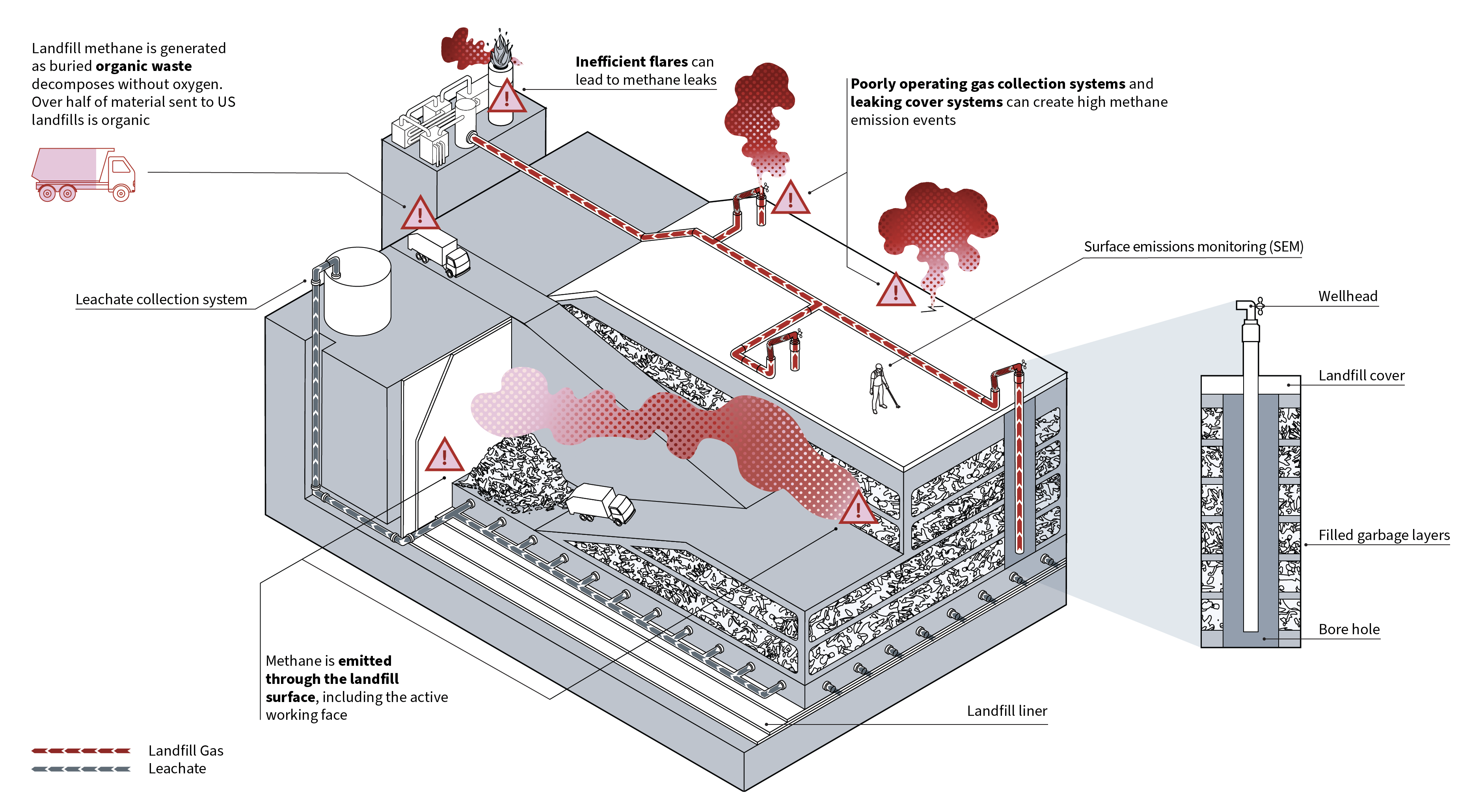
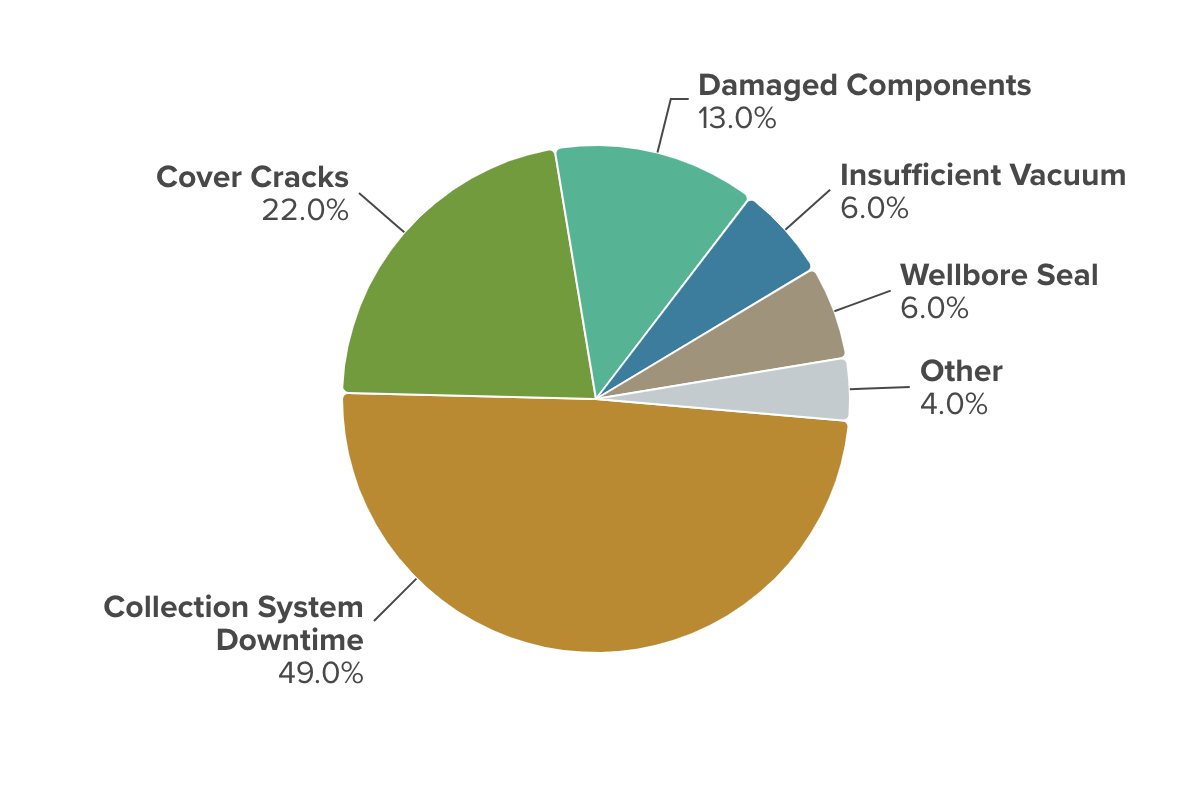
The following figures provide examples of where methane can escape from landfills and where sources of emissions have been found. This shows the difficulty in identifying where methane emissions are coming from and the importance of well maintained infrastructure to ensure methane is being abated.

left_text_column_width

Figure A1. Sources of methane emissions at landfills. Source: Garland et al. (2023).

Image
Diagram of landfill components and emissions sources

Source: Garland E., Alves O., Frankiewicz T., & Ayandele E. (2023). Mitigating landfill methane. RMILink to source: https://rmi.org/wp-content/uploads/dlm_uploads/2023/06/landfill_monitoring_memo_series.pdf 

Enable Download
On

Figure A2. Source of methane leaks at landfills. Source: Ayandele et al. (2024a).

Image
Pie chart

Source: Ayandele, E., Frankiewicz, T., & Garland, E. (2024a). Deploying advanced monitoring technologies at US landfills. RMI

Enable Download
On
Updated Date

Deploy Clean Cooking

Sector
Buildings
Image
Image
Family cooking on a clean stove indoors
Coming Soon
Off
Summary

We define the Deploy Clean Cooking solution as the use of cleaner cooking fuels (liquid petroleum gas, natural gas, electricity, biogas, and ethanol) in place of polluting fuels such as wood, charcoal, dung, kerosene, and coal, and/or the use of efficient cookstove technologies (together called cleaner cooking solutions). Replacing unclean fuel and cookstoves with cleaner approaches can drastically reduce GHG emissions while offering health and biodiversity benefits.

Description for Social and Search
Deploy Clean Cooking is a Highly Recommended climate solution. Cleaner cooking can reduce GHG emissions while offering health and biodiversity benefits, too.
Overview

Worldwide, cooking is responsible for an estimated 1.7 Gt CO₂‑eq/yr (100-yr basis), (World Health Organization [WHO], 2023), or almost 3% of annual global emissions. Most of these emissions come from burning nonrenewable biomass fuels. Only the CO₂‑eq on a 100-yr basis is reported here due to lack of data on the relative contributions of GHGs. The International Energy Agency (IEA, 2023a) states that 2.3 billion people in 128 countries currently cook with coal, charcoal, kerosene, firewood, agricultural waste, or dung over open fires or inefficient cookstoves because they do not have the ability to regularly cook using cleaner cooking solutions. Even when sustainably harvested, biomass fuel is not climate neutral because it emits methane and black carbon (Smith, 2002).

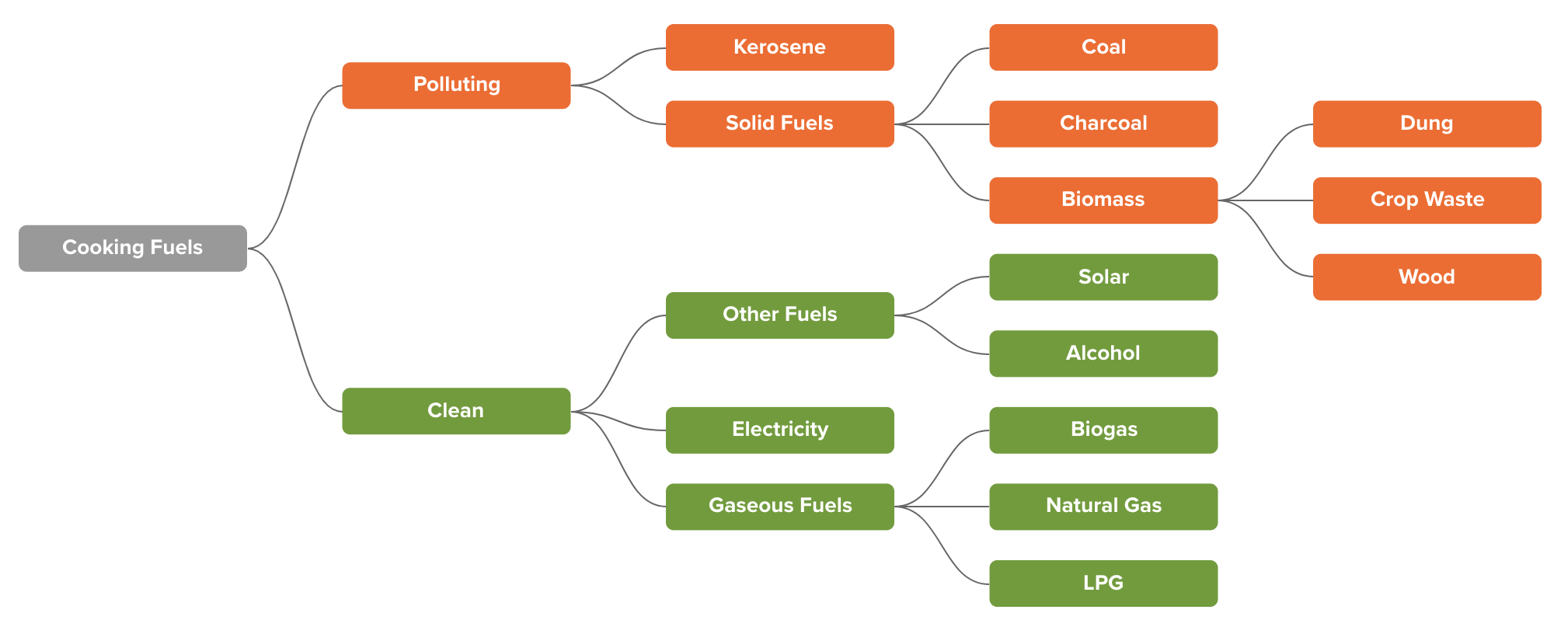
Clean cooking (Figure 1) reduces GHG emissions through three pathways: 

Improving Efficiency

Traditional biomass or charcoal cookstoves are less than 15% efficient (Khavari et al., 2023), meaning most generated heat is lost to the environment rather than heating the cooking vessel and food. Cleaner fuels and technologies can be many times more efficient, using less energy to prepare meals than traditional fuels and cookstoves (Kashyap et al., 2024). 

Reducing Carbon Intensity

Cleaner fuels have lower carbon intensity, producing significantly fewer GHG emissions per unit of heat generated than conventional fuels. Carbon intensity includes CO₂, methane, and nitrous oxide as well as black carbon. For instance, charcoal cookstoves emit approximately 572 kg CO₂‑eq /GJ of heat delivered for cooking (Cashman et al., 2016). In contrast, liquefied petroleum gas (LPG) and biogas emit about 292 and 11 kg CO₂‑eq /GJ, respectively (Cashman et al., 2016) and, excluding the embodied carbon, stoves that heat with electricity generated from renewable energy sources such as solar, wind, or hydroelectric have zero emissions.

Reducing Deforestation

Cleaner cooking also helps mitigate climate change by reducing deforestation (Clean Cooking Alliance [CCA], 2023) and associated GHG emissions. 

Figure 1. Classification of household cooking fuels as clean (green) and polluting (orange). Adapted from Stoner et al. (2021).

Image
Tree diagram listing types of fuels.

Source: Stoner, O., Lewis, J., Martínez, I. L., Gumy, S., Economou, T., & Adair-Rohani, H. (2021). Household cooking fuel estimates at global and country level for 1990 to 2030. Nature communications12(1), 5793.https://www.nature.com/articles/s41467-021-26036-x

Afrane, G., & Ntiamoah, A. (2011). Comparative life cycle assessment of charcoal, biogas, and liquefied petroleum gas as cooking fuels in Ghana. Journal of Industrial Ecology15(4), 539–549. Link to source: https://onlinelibrary.wiley.com/doi/abs/10.1111/j.1530-9290.2011.00350.x

Afrane, G., & Ntiamoah, A. (2012). Analysis of the life-cycle costs and environmental impacts of cooking fuels used in Ghana. Applied energy98, 301–306. Link to source: https://www.sciencedirect.com/science/article/abs/pii/S0306261912002590

Anenberg, S. C., Balakrishnan, K., Jetter, J., Masera, O., Mehta, S., Moss, J., & Ramanathan, V. (2013). Cleaner cooking solutions to achieve health, climate, and economic cobenefits. Link to source: https://pubs.acs.org/doi/10.1021/es304942e

Bailis, R., Drigo, R., Ghilardi, A., & Masera, O. (2015). The carbon footprint of traditional woodfuels. Nature Climate Change5(3), 266–272. Link to source: https://www.nature.com/articles/nclimate2491

Bensch, G., Jeuland, M., & Peters, J. (2021). Efficient biomass cooking in Africa for climate change mitigation and development. One Earth4(6), 879–890. Link to source: https://www.cell.com/one-earth/pdf/S2590-3322(21)00296-7.pdf

Bennitt, F. B., Wozniak, S. S., Causey, K., Burkart, K., & Brauer, M. (2021). Estimating disease burden attributable to household air pollution: new methods within the Global Burden of Disease Study. The Lancet Global Health9, S18. Link to source: https://doi.org/10.1016/S2214-109X(21)00126-1

Bergero, C., Gosnell, G., Gielen, D., Kang, S., Bazilian, M., & Davis, S. J. (2023). Pathways to net-zero emissions from aviation. Nature Sustainability6(4), 404–414. Link to source: https://www.nature.com/articles/s41893-022-01046-9

​​Biswas, S., & Das, U. (2022). Adding fuel to human capital: Exploring the educational effects of cooking fuel choice from rural India. Energy Economics, 105, 105744. Link to source: https://doi.org/10.1016/j.eneco.2021.105744 

Cabiyo, B., Ray, I., & Levine, D. I. (2020). The refill gap: clean cooking fuel adoption in rural India. Environmental Research Letters16(1), 014035. Link to source: https://iopscience.iop.org/article/10.1088/1748-9326/abd133

Cashman, S., Rodgers, M., & Huff, M. (2016). Life-cycle assessment of cookstove fuels in India and China. US Environmental Protection Agency, Washington, DC. EPA/600/R-15/325. Link to source: https://cleancooking.org/wp-content/uploads/2021/07/496-1.pdf

Clean Cooking Alliance (CCA). (2023). Accelerating clean cooking as a nature-based solution. Link to source: https://cleancooking.org/reports-and-tools/accelerating-clean-cooking-as-a-nature-based-climate-solution/

Clean Cooking Alliance. (2022). Clean cooking as a catalyst for sustainable food systemsLink to source: https://cleancooking.org/wp-content/uploads/2023/11/CCA_Clean-Cooking-as-a-Catalyst-for-Sustainable-Food-Systems.pdf

Climate & Clean Air Coalition. (2024). Nationally determined contributions and clean cooking. Link to source: https://www.ccacoalition.org/resources/nationally-determined-contributions-and-clean-cooking

Choudhuri, P., & Desai, S. (2021). Lack of access to clean fuel and piped water and children’s educational outcomes in rural India. World Development, 145, 105535. Link to source: https://doi.org/10.1016/j.worlddev.2021.105535 

Dagnachew, A. G., Lucas, P. L., van Vuuren, D. P., & Hof, A. F. (2018). Towards universal access to clean cooking solutions in sub-Saharan Africa. PBL Netherlands Environmental Assessment Agency. Link to source: https://www.pbl.nl/uploads/default/downloads/pbl-2019-clean-cooking-solutions-sub-saharan-africa_3421_0.pdf

Down to Earth. (2022). Ujjwala: Over 9 million beneficiaries did not refill cylinder last year, Centre admits. Retrieved June 20, 2024, from Link to source: https://www.downtoearth.org.in/energy/ujjwala-over-9-million-beneficiaries-did-not-refill-cylinder-last-year-centre-admits-84130

Energy Sector Management Assistance Program. (2023). Building evidence to unlock impact finance : A field assessment of lean cooking co-benefits for climate, health, and gender. Retrieved September 13, 2024, from Link to source: https://www.esmap.org/Building_Evidence_To_unloc_Impact_Finance_Benefits

Fullerton, D. G., Bruce, N., & Gordon, S. B. (2008). Indoor air pollution from biomass fuel smoke is a major health concern in the developing world. Transactions of the Royal Society of Tropical Medicine and Hygiene, 102(9), 843–851. Link to source: https://doi.org/10.1016/j.trstmh.2008.05.028 

Garland, C., Delapena, S., Prasad, R., L'Orange, C., Alexander, D., & Johnson, M. (2017). Black carbon cookstove emissions: A field assessment of 19 stove/fuel combinations. Atmospheric Environment169, 140–149. Link to source: https://doi.org/10.1016/j.atmosenv.2017.08.040

Gill-Wiehl, A., Kammen, D. M., & Haya, B. K. (2024). Pervasive over-crediting from cookstove offset methodologies. Nature Sustainability7(2), 191–202. Link to source: https://doi.org/10.1038/s41893-023-01259-6 

International Energy Agency. (2022). Africa energy outlook. Link to source: https://www.iea.org/reports/africa-energy-outlook-2022/key-findings

International Energy Agency. (2023a). A vision for clean cooking access for all. Link to source: https://iea.blob.core.windows.net/assets/f63eebbc-a3df-4542-b2fb-364dd66a2199/AVisionforCleanCookingAccessforAll.pdf 

International Energy Agency. (2023b). Electricity market report. Link to source: https://www.iea.org/reports/electricity-market-report-update-2023

Intergovernmental Panel on Climate Change. (2022). Climate change 2022: mitigation of climate change. Contribution of the Working Group III to the sixth assessment report of the Intergovernmental Panel on Climate Change. Link to source: https://www.ipcc.ch/report/ar6/wg3/

Jameel, Y., Patrone, C. M., Patterson, K. P., & West, P. C. (2022). Climate-poverty connections: Opportunities for synergistic solutions at the intersection of planetary and human well-being. Link to source: https://drawdown.org/publications/climate-poverty-connections-report

Jewitt, S., Atagher, P., & Clifford, M. (2020). “We cannot stop cooking”: Stove stacking, seasonality and the risky practices of household cookstove transitions in Nigeria. Energy Research & Social Science61, 101340. Link to source: https://www.sciencedirect.com/science/article/pii/S2214629619304700?via%3Dihub

Johnson, E. (2009). Charcoal versus LPG grilling: a carbon-footprint comparison. Environmental Impact Assessment Review29(6), 370–378. Link to source: https://www.sciencedirect.com/science/article/abs/pii/S0195925509000420

Kashyap, S. R., Pramanik, S., & Ravikrishna, R. V. (2024). A review of energy-efficient domestic cookstoves. Applied Thermal Engineering, 236, 121510. Link to source: https://doi.org/10.1016/j.applthermaleng.2023.121510

Kapsalyamova, Z., Mishra, R., Kerimray, A., Karymshakov, K., & Azhgaliyeva, D. (2021). Why energy access is not enough for choosing clean cooking fuels? Evidence from the multinomial logit model. Journal of Environmental Management290, 112539. Link to source: https://www.sciencedirect.com/science/article/pii/S0301479721006010

Khavari, B., Ramirez, C., Jeuland, M., & Fuso Nerini, F. (2023). A geospatial approach to understanding clean cooking challenges in sub-Saharan Africa. Nature Sustainability6(4), 447–457. Link to source: https://www.nature.com/articles/s41893-022-01039-8

Lacey, F. G., Henze, D. K., Lee, C. J., van Donkelaar, A., & Martin, R. V. (2017). Transient climate and ambient health impacts due to national solid fuel cookstove emissions. Proceedings of the National Academy of Sciences114(6), 1269–1274. Link to source: https://www.pnas.org/doi/full/10.1073/pnas.1612430114

Lansche, J., & Müller, J. (2017). Life cycle assessment (LCA) of biogas versus dung combustion household cooking systems in developing countries–a case study in Ethiopia. Journal of cleaner production165, 828–835. Link to source: https://www.sciencedirect.com/science/article/abs/pii/S0959652617315597

Lee, M., Chang, J., Deng, Q., Hu, P., Bixby, H., Harper, S., ... & Liu, J. (2024). Effects of a coal to clean heating policy on acute myocardial infarction in Beijing: a difference-in-differences analysis. The Lancet Planetary Health8(11), e924–e932. Link to source: https://doi.org/10.1016/S2542-5196(24)00243-2

Mazorra, J., Sánchez-Jacob, E., de la Sota, C., Fernández, L., & Lumbreras, J. (2020). A comprehensive analysis of cooking solutions co-benefits at household level: Healthy lives and well-being, gender and climate change. Science of The Total Environment707, 135968. Link to source: https://www.sciencedirect.com/science/article/abs/pii/S0048969719359637

Po, J. Y. T., FitzGerald, J. M., & Carlsten, C. (2011). Respiratory disease associated with solid biomass fuel exposure in rural women and children: Systematic review and meta-analysis. Thorax, 66(3), 232–239. Link to source: https://doi.org/10.1136/thx.2010.147884 

Rosenthal, J., Quinn, A., Grieshop, A. P., Pillarisetti, A., & Glass, R. I. (2018). Clean cooking and the SDGs: Integrated analytical approaches to guide energy interventions for health and environment goals. Energy for Sustainable Development42, 152–159. Link to source: https://www.sciencedirect.com/science/article/pii/S0973082617309857

Shankar, A. V., Quinn, A. K., Dickinson, K. L., Williams, K. N., Masera, O., Charron, D., ... & Rosenthal, J. P. (2020). Everybody stacks: Lessons from household energy case studies to inform design principles for clean energy transitions. Energy Policy141, 111468. Link to source: https://doi.org/10.1016/j.enpol.2020.111468

Simkovich, S. M., Williams, K. N., Pollard, S., Dowdy, D., Sinharoy, S., Clasen, T. F., ... & Checkley, W. (2019). A systematic review to evaluate the association between clean cooking technologies and time use in low-and middle-income countries. International journal of environmental research and public health16(13), 2277. Link to source: https://www.mdpi.com/1660-4601/16/13/2277

Singh, P., Gundimeda, H., & Stucki, M. (2014). Environmental footprint of cooking fuels: a life cycle assessment of ten fuel sources used in Indian households. The International Journal of Life Cycle Assessment19, 1036–1048. Link to source: https://link.springer.com/article/10.1007/s11367-014-0699-0

Smith, K. R. (2002). In praise of petroleum? Science298(5600), 1847–1847. DOI: 10.1126/science.298.5600.1847

Stoner, O., Lewis, J., Martínez, I. L., Gumy, S., Economou, T., & Adair-Rohani, H. (2021). Household cooking fuel estimates at global and country level for 1990 to 2030. Nature communications12(1), 5793. Link to source: https://www.nature.com/articles/s41467-021-26036-x

World Bank. (2018). A recipe for protecting the Democratic Republic of Congo’s tropical forests. Retrieved January 16, 2025, from Link to source: https://www.worldbank.org/en/news/feature/2018/01/24/a-recipe-for-protecting-the-democratic-republic-of-congos-tropical-forests

World Bank. (2020). Energy Sector Management Assistance Program. (2020). The state of access to modern energy cooking services. Link to source: https://www.worldbank.org/en/topic/energy/publication/the-state-of-access-to-modern-energy-cooking-services

World Bank. (2023). Moving the needle on clean cooking for all. Retrieved September 13, 2024, from Link to source: https://www.worldbank.org/en/results/2023/01/19/moving-the-needle-on-clean-cooking-for-all

World Health Organization. (2025). Proportion of population with primary reliance on clean fuels and technologies. Retrieved May 1, 2025, from Link to source: https://www.who.int/data/gho/data/themes/air-pollution/household-air-pollution 

World Health Organization. (2023). Achieving universal access and net-zero emissions by 2050: a global roadmap for just and inclusive clean cooking transition. Link to source: https://www.who.int/publications/m/item/achieving-universal-access-by-2030-and-net-zero-emissions-by-2050-a-global-roadmap-for-just-and-inclusive-clean-cooking-transition

World Health Organization. (2024a). WHO publishes new global data on the use of clean and polluting fuels for cooking by fuel type. Retrieved June 17, 2024, from Link to source: https://www.who.int/news/item/20-01-2022-who-publishes-new-global-data-on-the-use-of-clean-and-polluting-fuels-for-cooking-by-fuel-type#:~:text=As%20of%202021%2C%202.3%20billion,%2D%20and%20middle%2Dincome%20countries.

World Health Organization. (2024b). Household air pollution. Retrieved June 17, 2024, from Link to source: https://www.who.int/news-room/fact-sheets/detail/household-air-pollution-and-health

Credits

Lead Fellow

  • Yusuf Jameel, Ph.D.

Contributors

  • Ruthie Burrows, Ph.D.

  • James Gerber, Ph.D.

  • Yusuf Jameel, Ph.D.

  • Daniel Jasper

  • Heather McDiarmid, Ph.D.

  • Amanda D. Smith, Ph.D.

  • Alex Sweeney

Internal Reviewers

  • Aiyana Bodi

  • Hannah Henkin

  • Megan Matthews, Ph.D.

  • Ted Otte

  • Amanda D. Smith, Ph.D.

  • Christina Swanson, Ph.D.

Effectiveness

The climate impact of cleaner cooking depends on which fuel and technology is being replaced and what is replacing it. The WHO (2023) categorizes cooking fuels as clean, transitional, or polluting based primarily on health impacts. Clean fuels include solar, electric, biogas, LPG, and alcohols, while kerosene and unprocessed coal are polluting fuels. Biomass cooking technologies may be classified as clean, transitional, or polluting depending on the levels of fine particulate matter and carbon monoxide produced. Switching from traditional cookstoves (polluting) to improved cookstoves (transitional) can reduce emissions 20–40%, while switching to an LPG or electric cookstove can reduce emissions more than 60% (Johnson, 2009). Not including the embodied carbon, switching completely to solar-powered electric cookstoves can reduce emissions 100%.

We estimated the effectiveness of cleaner cooking by calculating the reduction in GHG emissions per household switching to cleaner cooking solutions per year (Table 1). Our analysis of national, regional, and global studies suggested that switching to cleaner fuels and technologies can reduce emissions by 0.83–3.4 t CO₂‑eq /household/yr (100-yr basis), including CO₂, methane, black carbon, and sometimes other GHGs. The large range is due to varying assumptions. For example, the IEA arrived at 3.2 t CO₂‑eq /household/yr (100-yr basis) by assuming that >50% of the households switched to electricity or LPG. In comparison, Bailis et al. (2015) assumed a switch from unclean cookstoves to improved biomass cookstoves, resulting in an emissions reduction of only 0.98 t CO₂‑eq /household/yr (100-yr basis).

left_text_column_width

Table 1. Effectiveness at reducing GHG emissions of switching from unclean cooking fuels and technologies to cleaner versions.

Unit: t CO-eq/household switching to cleaner cooking solutions/yr, 100-yr basis

25th percentile 1.5
Mean 2.2
Median (50th percentile) 2.3
75th percentile 3.1
Left Text Column Width

While we calculated a median reduction of 2.3 t CO₂‑eq /household switching to cleaner cooking solutions/yr (100-yr basis), the actual reduction per household might be lower because households often stack cleaner cooking fuel with unclean fuel. This could result from multiple socioeconomic factors. For instance, a household may primarily rely on LPG as its main cooking fuel but occasionally turn to firewood or kerosene for specific dishes, price fluctuation, or fuel shortages (Khavari et al., 2023). In rural areas, cleaner fuels and traditional biomass (e.g., wood or dung) are used together to cut costs or due to personal preferences.

left_text_column_width
Cost

People can obtain traditional unclean fuels and traditional woodstoves for little or no cost (Bensch et al., 2021; Kapsalyamova et al., 2021). Our analysis estimated the cost of woodstoves at US$1.50/household and the monetary cost of biomass fuel at US$0.00/household/yr. Over the two-yr lifespan of a woodstove, the net annualized cost is US$0.75/household/yr. While collecting this fuel might be free, it contributes to poverty because households can spend one to three hours daily collecting fuelwood. This can contribute to children, especially girls, missing school (Jameel et al., 2022). 

We estimated the median upfront cost of transitioning from primarily unclean cooking fuels and technology to cleaner cooking to be approximately US$58/household, with stoves lasting 3–10 years. However, the range of annual costs is large because several cleaner cooking technologies have significant variations in price, and cleaner fuel cost is even more variable. Our analysis showed a median annual fuel cost of US$56/household/yr with costs ranging from savings of US$9/household/yr when buying less biomass for more efficient biomass stoves to costs of US$187/household/yr for LPG. We estimated that over a five-year lifespan, cleaner cooking solutions have a net cost of US$64/household/yr.

Our analysis may overestimate operational costs due to a lack of data on biomass and charcoal costs. The IEA (2023a) estimates that an annual investment of US$8 billion is needed to supply cleaner cookstoves, equipment, and infrastructure to support a transition to cleaner cooking. This translates to US$17/household/yr. 

The IEA (2023) assumes improved biomass and charcoal cookstoves are predominantly adopted in rural areas while LPG and electric stoves are adopted in urban regions because, in LMICs, economic and infrastructure challenges can limit access to LPG and electricity in rural areas. If every household were to switch exclusively to modern cooking (e.g., LPG and electricity), the cost would be much higher. The World Bank estimates the cost of implementing these solutions to be US$1.5 trillion between 2020 and 2030 or ~US$150 billion/yr over the next 10 years. This translates into an average cost of US$214/household/yr (World Bank, 2020). 

left_text_column_width

The median cost per unit of climate impact was US$28/t CO₂‑eq (100-yr basis, Table 2), obtained by taking the difference between median cost of cooking with polluting sources and the cost of adopting cleaner fuel, then dividing by the median reduction per household (Table 1). Beyond climate benefits, cleaner cooking offers significant other benefits (discussed below). While the median cost presented here is a reasonable first-order estimate, the actual cost of GHG reduction will depend upon several factors, including the type of stove adopted, stove usage, fuel consumption, and scale of adoption. 

left_text_column_width
Methods and Supporting Data

Methods and Supporting Data

Learning Curve

Deploying cleaner cooking is a mature technology, and prices are unlikely to decrease in high-income countries where cleaner cooking fuels and technologies have been completely adopted. Nonetheless, the high cost of cleaner cooking technologies and the fluctuating prices of cleaner cooking fuel have been among the main impediments in the transition of households experiencing poverty away from unclean fuels and technologies. For example, recent price surges in Africa rendered LPG unaffordable for 30 million people (IEA, 2022). Electricity prices have also fluctuated regionally. In Europe and India, prices were higher in 2023 than in 2019 (IEA, 2023b). In contrast, U.S. electricity prices have remained stable over the past five years, while China experienced an 8% decrease.

left_text_column_width
Speed of Action

Speed of action refers to how quickly a climate solution physically affects the atmosphere after it is deployed. This is different from speed of deployment, which is the pace at which solutions are adopted.

At Project Drawdown, we define the speed of action for each climate solution as emergency brake, gradual, or delayed.

Deploy Clean Cooking is an EMERGENCY BRAKE climate solution. It has the potential to deliver a more rapid impact than gradual and delayed solutions. Because emergency brake solutions can deliver their climate benefits quickly, they can help accelerate our efforts to address dangerous levels of climate change. For this reason, they are a high priority.

left_text_column_width
Caveats

Households may continue using unclean cooking fuel and technologies alongside cleaner fuels and technologies (referred to as stacking). The data on cleaner cooking are typically measured as the number of households primarily relying on cleaner cooking fuel. This fails to capture the secondary fuel source used in the household. A review from LMICs revealed that stacking can range from low (28%) to as high as 100%, which would mean that every household is simultaneously using cleaner and unclean fuel (Shankar et al., 2020). This can happen due to factors like an increase in the cost of cleaner cooking fuel, cooking preference, unavailability of cleaner fuel, and unfamiliarity with cleaner cooking technologies. Stacking is challenging to avoid, and there is a growing realization from cleaner cooking practitioners of the need for cleaner approaches, even when multiple stoves are used. For example, electric stoves can be supplemented with LPG or ethanol stoves.

Permanence

There are significant permanence challenges associated with cleaner cooking. Households switch back from cleaner cooking fuels and technologies to unclean fuels and technologies (Jewitt et al., 2020). 

Finance

Finance is vital to supercharge adoption of cleaner cooking. Investment in the cleaner cooking sector remains significantly below the scale of the global challenge, with current funding at approximately US$130 million. This is many times lower than the amount needed each year to expand adoption of cleaner cooking solutions for the 2.4 billion people who still rely on polluting fuels and technologies (CCA 2023). At the current business-as-usual adoption rate, limited by severe underfunding, more than 80% of the population in sub-Saharan Africa will continue to rely on unclean fuels and technologies in 2030 (Stoner et al., 2021)

Climate funding, developmental finance, and subsidies have made some progress in increasing adoption of cleaner cooking. For instance, the World Bank invested more than US$562 million between 2015 and 2020, enabling 43 million people across 30 countries to adopt cleaner cooking solutions (ESMAP, 2023; World Bank, 2023). However, the emissions reductions these programs achieve can be overestimated. A recent analysis (Gill-Wiehl et al., 2024) found that 26.7 million clean cooking offset credits in reality only amounted to about 2.9 million credits. This discrepancy underscores the urgent need for updated methodologies and standards to accurately estimate emissions reductions and the cost of reduction per t CO₂‑eq (100-yr basis). 

left_text_column_width
Current Adoption

The WHO (2025) estimated that 74% of the global population in 2022 used cleaner cooking fuels and technologies. This translates to 1.2 billion households using cleaner cooking (Table 2) and 420 million households that have yet to switch to clean cooking solutions (Table 6). The adoption of cleaner cooking is not evenly spread across the world. On the higher end of the spectrum are the Americas and Europe, where, on average, more than 93% of people primarily rely on cleaner cooking fuels and technologies (WHO, 2025). On the lower end of the spectrum are sub-Saharan countries such as Madagascar, Mali and Uganda, where primary reliance on cleaner cooking fuel and technologies is <5%. While current adoption represents households that enjoy cleaner cooking today, our analysis for achievable adoption and adoption ceiling focuses on quantifying households that currently use traditional cooking methods and can switch to cleaner cooking. 

To calculate climate impact of this solution, we defined the adoption unit as households switching to clean cooking after 2022. For this reason, current adoption in Table 6 and the solution summaries is not determined.

left_text_column_width

Table 2. Current adoption level (2022).

Unit: households using cleaner cooking solutions

Mean 1,200,000,000
Left Text Column Width
Adoption Trend

Global adoption of cleaner cooking fuel and technologies as the primary source of cooking increased from 61% of the population in 2013 to 74% in 2023 (WHO, 2025). This translates to roughly 21 million households adopting cleaner cooking technologies/yr (Table 3). This uptake, however, is not evenly distributed (see Maps section above).

Large-scale adoption across China, India, and Indonesia has driven the recent increase. Between 2011 and 2021, use of cleaner fuels and technologies as the primary means of cooking rose from 61% to 83% of the population in China. In India, adoption expanded from 38% to 71%, and in Indonesia, it increased from 47% to 87% (WHO, 2024a). In contrast, primary reliance on cleaner cooking in sub-Saharan Africa only increased from 12% in 2010 to 16% in 2020 (Stoner et al., 2021). 

Based on the existing policies, population growth, and investments, more than 75% of the sub-Saharan African population will use unclean cooking fuels and technologies in 2030 (Stoner et al., 2021). In Central and Southern Asia, about 25% of the population will use unclean cooking fuels and technologies by 2030 (Stoner et al., 2021).

left_text_column_width

Table 3. Adoption trend (2013–2023).

Unit: households switching to cleaner cooking solutions/yr

Mean 21,000,000
Left Text Column Width
Adoption Ceiling

The World Bank (2020) estimated that universal adoption of modern energy cooking services by 2030 is possible with an annual investment of US$148–156 billion, with 26% of the investment coming from governments and development partners, 7% from private investment, and 67% from households. Universal adoption and use of cleaner fuels and technologies is possible with an investment of US$8–10 billion/yr (IEA, 2023a; World Bank, 2020). We therefore set the adoption ceiling at 100% of households adopting and using cleaner cooking solutions, which entails 420 million households switching from unclean solutions (Table 4).

left_text_column_width

Table 4. Cleaner cooking adoption ceiling: upper limit for new adoption of cleaner cooking solutions.

Unit: households switching to cleaner cooking solutions

Mean 420,000,000
Left Text Column Width
Achievable Adoption

Universal adoption and use of cleaner cooking solutions is achievable before 2050 (Table 5). This is because if the current adoption trend continues, all households that currently use unclean cooking fuels and technologies will have switched to using cleaner versions by 2043. 

China, India, and Indonesia have shown that it is possible to rapidly expand adoption with the right set of policies and investments. In Indonesia, for example, use of cleaner cooking solutions increased from 9% of the population to 89% between 2002 and 2012 (WHO, 2025). 

left_text_column_width

Table 5. Range of achievable adoption levels.

Unit: households switching to cleaner cooking solutions

Current adoption Not determined
Achievable – low 420,000,000
Achievable – high 420,000,000
Adoption ceiling 420,000,000
Left Text Column Width

Cooking from all fuel types is responsible for approximately 1.7 Gt CO₂‑eq (100-yr basis) emissions every year (WHO, 2023), on par with global emissions from the aviation industry (Bergero et al., 2023). Unclean cooking fuels and technologies are also the largest source of black carbon (Climate & Clean Air Coalition, 2024), a short-lived climate pollutant with a GWP several hundred times higher than CO₂ that contributes to millions of premature deaths yearly (Garland et al., 2017). 

The actual reduction in climate impact will depend upon the mix of cleaner fuel and technologies that replace unclean fuel. The IEA (2023a) estimates that if the cleanest cooking fuels and technologies (e.g., electric and LPG) are adopted, emissions could be reduced by 1.5 Gt CO₂‑eq/yr (100-yr basis) by 2030. In contrast, a greater reliance on improved cookstoves as cleaner cooking solutions will result in lower emissions reductions. The WHO (2023) estimates that much of the shift by 2030 will involve using improved biomass and charcoal cookstoves, especially in rural areas, reducing emissions 0.6 Gt CO₂‑eq/yr (100-yr basis) by 2030 and ~1.6 CO₂‑eq/yr (100-yr basis) by 2050, closely matching the IEA estimate.

According to our analysis, deploying cleaner cooking can reduce emissions by 0.98 Gt CO₂‑eq/yr (100-yr basis) between now and 2050 (Table 6). Our emissions reduction estimates are lower than those of the IEA because we do not assume that the shift to cleaner cooking will be dominated by LPG and renewables.

left_text_column_width

Table 6. Climate impact at different levels of adoption.

Unit: Gt CO-eq/yr, 100-yr basis

Current adoption Not determined
Achievable – low 0.98
Achievable – high 0.98
Adoption ceiling 0.98
Left Text Column Width
Additional Benefits

Income and Work

Simkovich et al. (2019) found that time gained by switching to cleaner fuel can increase daily income by 3.8–4.7%. Their analysis excludes the expenses related to fuel, as well as the costs associated with delivery or transportation for refilling cleaner fuel. Mazorra et al. (2020) reported that if 50% of the time saved from not gathering firewood were redirected to income-generating activities, it could lead to an estimated annual income increase of approximately US$125 (2023 dollars) in the Gambia, US$113 in Guinea-Bissau, and US$200 in Senegal. Health and Air Quality

Health

Unclean cooking fuels and technologies produce household air pollution (HAP), with smoke and fine particulates sometimes reaching levels up to 100 times acceptable limits, particularly in poorly ventilated spaces (WHO, 2024b). HAP is linked to numerous health issues, such as stroke, ischemic heart disease, chronic obstructive pulmonary disease, lung cancer, and poor birth outcomes (Jameel et al., 2022). It accounts for more than 3.2 million early deaths annually (WHO, 2024b). In 2019, it accounted for over 4% of all the deaths globally (Bennitt et al., 2021). The World Bank (2020) estimated that the negative health impact of unclean cooking fuels and technologies is valued at US$1.4 trillion/yr. Globally, switching to cleaner fuels and technologies could prevent 21 million premature deaths from 2000–2100 (Lacey et al., 2017). A recent study offered empirical evidence of potential cardiovascular benefits stemming from household cleaner energy policies (Lee et al., 2024).

Equality

Unclean cooking disproportionately impacts women and children who are traditionally responsible for collecting fuelwood or biomass. Typically, they spend an hour every day collecting solid fuel; however, in some countries (e.g., Senegal, Niger, and Cameroon), daily average collection time can exceed three hours (Jameel et al., 2022). Time-saving cooking fuels are associated with more education in women and children (Biswas & Das, 2022; Choudhuri & Desai, 2021) and can additionally promote gender equity through economic empowerment by allowing women to pursue additional employment opportunities (CCA, 2023). In conflict zones, adoption of cleaner fuels and technologies has been shown to reduce gender-based violence (Jameel et al., 2022). Finally, cleaner cooking fuels can improve health equity as women are disproportionately exposed to indoor air pollution generated from cooking (Fullerton et al., 2008; Po et al., 2011). 

Nature Protection

The unsustainable harvest of wood for cooking fuel has led to deforestation and biodiversity loss in regions such as South Asia and sub-Saharan Africa (CCA, 2022). East African nations, including Eritrea, Ethiopia, Kenya, and Uganda, are particularly affected by the rapid depletion of sustainable wood fuel resources. In the Democratic Republic of the Congo, 84% of harvested wood is charcoal or firewood (World Bank, 2018). Switching to cleaner cooking fuels and technologies can reduce deforestation and protect biodiversity (Anenberg et al., 2013; CCA, 2022; Dagnachew et al., 2018).

left_text_column_width
Risks

The expensive nature of cleaner cooking presents a significant barrier to adoption. Households that have recently transitioned to cleaner cooking face a high risk of defaulting back to unclean fuels and technologies. For example, among the households that received free LPG connection as a part of the Pradhan Mantri Ujjwala Yojana in India, low-income households reverted to unclean fuels and technologies during extensive periods of refill gaps (Cabiyo et al., 2020). In total, 9 million recipients could not refill their LPG cylinders even once in 2021–22 due to high LPG costs and other factors (Down to Earth, 2022).

Beyond the cost, there is an adjustment period for the households adopting the cleaner cooking solution, which includes familiarizing themselves with the technology and fostering cultural and behavioral changes, including overcoming biases and adopting new habits.

left_text_column_width
Interactions with Other Solutions

Reinforcing

This solution also decreases the demand for wood and waste biomass. Because the total projected demand for wood and waste biomass across climate solutions exceeds the supply, reducing demand from clean cooking will help the following solutions increase their potential adoption by increasing the availability of raw agricultural waste and other biomass:

left_text_column_width
Dashboard

Solution Basics

household switching to cleaner cooking

t CO₂-eq (100-yr)/unit/yr
01.52.3median
units
Current Not Determined 04.2×10⁸4.2×10⁸
Achievable (Low to High)

Climate Impact

Gt CO₂-eq (100-yr)/yr
Current 0 0.980.98
US$ per t CO₂-eq
27
Emergency Brake

CO₂, CH₄, BC

Trade-offs

Switching to electric cooking will meaningfully reduce GHG emissions only if the grid is powered by clean energy. A life-cycle assessment of cooking fuels in India and China (Cashman et al., 2016) showed that unclean cooking fuels such as crop residue and cow dung had a lower carbon footprint than electricity because in these countries >80% of the electricity was produced by coal and natural gas

LPG has been the leading cleaner fuel source replacing unclean cooking fuel globally (IEA, 2023a). The IEA (2023a) estimated that 33% of households transitioning to cleaner cooking fuels and technologies will do so using LPG to transition. Because LPG is a fossil fuel, increased reliance can hinder or slow the transition from fossil fuels

left_text_column_width
% population
0–15
15–30
30–45
45–60
60–75
75–100
No data

Percentage of country population relying primarily on clean cooking technologies, 2023

Access to clean cooking technology – and the benefits it confers – varies widely around the world.

World Health Organization (2026). Proportion of population with primary reliance on clean fuels and technologies for cooking (%) [Data set]. The Global Health Observatory Indicators. Retrieved January 7, 2026 from Link to source: https://www.who.int/data/gho/data/indicators/indicator-details/GHO/gho-phe-primary-reliance-on-clean-fuels-and-technologies-proportion 

% population
0–15
15–30
30–45
45–60
60–75
75–100
No data

Percentage of country population relying primarily on clean cooking technologies, 2023

Access to clean cooking technology – and the benefits it confers – varies widely around the world.

World Health Organization (2026). Proportion of population with primary reliance on clean fuels and technologies for cooking (%) [Data set]. The Global Health Observatory Indicators. Retrieved January 7, 2026 from Link to source: https://www.who.int/data/gho/data/indicators/indicator-details/GHO/gho-phe-primary-reliance-on-clean-fuels-and-technologies-proportion 

Maps Introduction

The Deploy Clean Cooking solution applies to geographies where low-cost, inefficient, and polluting cooking methods are common. Sub-Saharan Africa is the overwhelming target, with only 23% of the population relying on clean cooking technologies (WHO, 2025). 

There are significant correlations between the lack of clean cooking solutions and levels of extreme poverty (World Bank, 2024). The financial cost of clean fuel and cookstoves is a significant barrier to adoption (WHO, 2023).  

Some of the key benefits of deploying clean cooking will vary based on geography and landscape. For instance, freeing up time spent collecting firewood will be more notable in areas with less dense forest, since people in such locations would have to travel farther to harvest wood (Khavari et al., 2023).

Barriers to the adoption of clean cooking can also vary with geography. Examples noted by Khavari et al. (2023) include robustness of supply chains, which can be influenced by population density and road networks.

Action Word
Deploy
Solution Title
Clean Cooking
Classification
Highly Recommended
Lawmakers and Policymakers
  • Prioritize the issue at the national level to coordinate policy, coordinate resources, and ensure a robust effort.
  • Create a dedicated coordinating body across relevant ministries, agencies, and sectors.
  • Create subsidies and fuel price caps, and ban unclean cooking fuels and technologies.
  • Remove taxes and levies on clean-cooking stoves.
  • Create dedicated teams to deliver cleaner cooking equipment.
  • Run public education campaigns appropriate for the context
Practitioners
  • Serve as a clean cooking ambassador to raise awareness within your industry and community.
  • Participate in training programs.
  • Develop feedback channels with manufacturers to enhance design and overcome local challenges.
  • Restaurant owners and cooks can adopt clean cooking in their kitchens to reduce emissions, lower costs, and improve worker health and safety. 
Business Leaders
Nonprofit Leaders
  • Ensure operations use clean cooking methods.
  • Educate the public on the benefits of clean cooking, available options, and applicable incentive programs.
  • Advocate to policymakers on issues such as targeted subsidies and providing government support.
  • Educate investors and the business community on local needs and market trends. 
Investors
Philanthropists and International Aid Agencies
  • Distribute cleaner cooking equipment and fuel.
  • Work with local policymakers to ensure that recipient communities can maintain fuel costs over the long term (possibly through fuel subsidies).
  • Provide grants to businesses in this sector.
  • Fund education campaigns appropriate for the context.
  • Advance political action through public-private partnerships such as the CCA
Thought Leaders
  • Educate the public on the health, gender, climate, and environmental impacts of unclean cooking and the benefits of cleaner cooking.
  • Hone your message to fit the context and share through appropriate messengers and platforms.
  • Use mechanisms to promote trust, such as working with local health-care workers or other respected professionals. 
Technologists and Researchers
  • Develop regional-specific technology that uses local sources of energy, such as biogas or high-efficiency charcoal.
  • Create technology that works with the local environment and economy and has reliable supply chains.
Communities, Households, and Individuals
  • Learn about the benefits and harms associated with unclean fuels and technologies.
  • Identify the right technology to purchase by considering the availability and affordability of fuels; practicality of the equipment in producing the quantity, quality, and type of preferred food, and ease of use. 
Evidence Base

There is a strong consensus on the effectiveness of cleaner cooking as a climate solution. Research over the past two decades (e.g., Anenberg et al., 2013; Mazorra et al., 2020; Rosenthal et al., 2018) has supported the contention that replacing solid fuel cooking with cleaner fuel reduces GHG emissions. 

There is high agreement and robust evidence that switching cooking from unclean fuels and technologies to cleaner alternatives such as burning LPG or electric stoves offers health, air quality, and climate change benefits (Intergovernmental Panel on Climate Change [IPCC], 2022).

The IPCC (2022) identified unclean fuels such as biomass as a major source of short-lived climate pollutants (e.g., black carbon, organic carbon, carbon monoxide, and methane) and switching to cleaner fuels and technologies can reduce the emission of short-lived climate pollutants.

Regional and country-level analyses provide additional evidence of the efficacy of cleaner cooking solutions. Khavari et al. (2023) reported that in sub-Saharan Africa, replacing unclean solid fuels with cleaner cooking could reduce GHG emissions by 0.5 Gt CO₂‑eq/yr (100-yr basis). Life cycle assessments comparing different cooking fuels and technologies (Afrane & Ntiamoah, 2011; Afrane & Ntiamoah, 2012; Lansche & Müller, 2017; Singh et al., 2014) also have shown that cleaner cooking fuels and technologies emit less GHG per unit of energy delivered than unclean fuels.

The IEA estimated that switching completely to clean cooking fuels and technologies by 2030 would result in a net reduction of 1.5 Gt CO₂‑eq/yr (100-yr basis) by 2030 (IEA, 2023a). 

The results presented in this document summarize findings from five reviews and meta-analyses and 23 original studies and reports reflecting current evidence from 13 countries, primarily in sub-Saharan Africa. We recognize this limited geographic scope creates bias, and hope this work inspires research and data sharing on this topic in underrepresented regions.

left_text_column_width
Updated Date
Subscribe to Equality