Access to electricity and clean cooking fuels.

Icon

Deploy Distributed Solar PV

Sector
Electricity
Image
Image
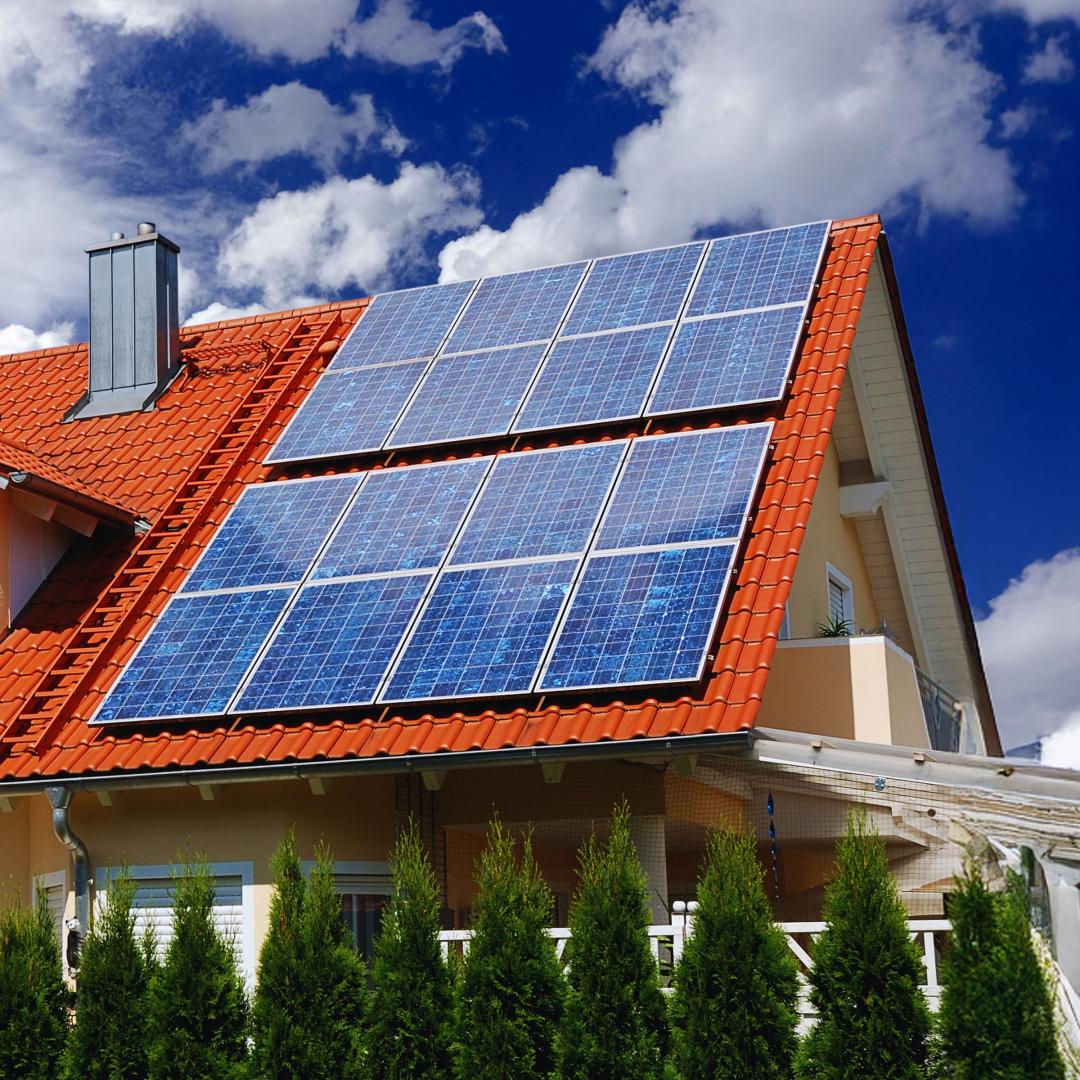
Solar panels on house roof
Coming Soon
On
Summary

Distributed solar photovoltaic (PV) systems are small-scale solar PV systems – usually under 1 MW, and installed near the point of use, such as on homes, businesses, or local facilities – that generate electricity for on-site consumption or local grid supply. This solution reduces reliance on centralized fossil-fuel power, cutting GHG emissions and minimizing transmission losses. There are various configurations of distributed solar PV systems; our analysis includes residential systems on homes, commercial and industrial (C&I) systems on businesses or institutions, and mini-grid solar PV systems, which are often coupled with storage.

Description for Social and Search
The Deploy Distributed Solar PV solution is coming soon.
Overview

An estimated 23% of GHG emissions on a 100-yr basis comes from electricity generation annually (Clarke et al., 2022). In 2022, more than 60% of global electricity generation came from fossil fuel–based energy sources (International Energy Agency [IEA], 2024a). Since solar is a clean and renewable resource, distributed solar PV does not contribute to GHG emissions or air pollution while generating electricity. Deploy Distributed Solar PV reduces the need for electricity generation from fossil fuels, which reduces emissions of CO₂ as well as smaller amounts of methane and nitrous oxide

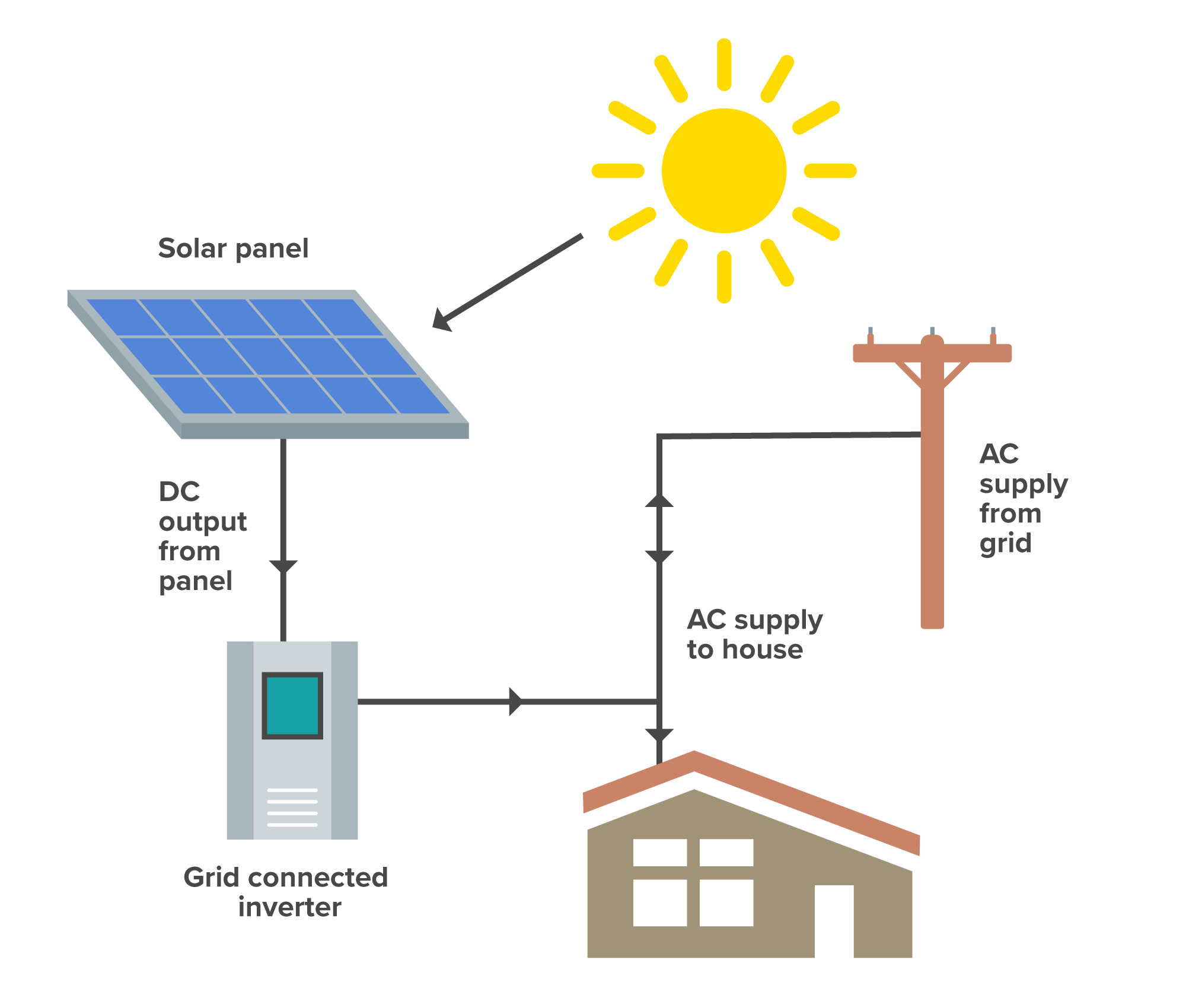
Distributed solar PV systems are decentralized energy systems that generate electricity from sunlight at or near the point of use. These systems are commonly installed on residential, commercial, and institutional rooftops, converting solar radiation directly into usable electricity through PV cells. These cells are grouped into modules, which in turn form panels and arrays (DOE, n.d.) that deliver electricity to consumers (Figure 1). Their modular nature allows flexible system sizing, making distributed solar PV well-suited to varying energy demands, rooftop space, and financial capacity. Distributed solar PV systems are typically installed and operated by homeowners, businesses, municipalities, and third-party service providers. 

Figure 1. Distributed solar PV systems are commonly installed on residential, commercial, and institutional rooftops, converting solar radiation directly into usable electricity. Photovoltaic cells are grouped into modules, which in turn form panels and arrays that deliver electricity to consumers for on-site use. In some cases, excess generation can be exported to the grid. Modified Engineering Discoveries (n.d.).

Image
Diagram showing solar photovoltaic on a grid system

Source: Engineering Discoveries. (n.d.). Solar power plant main components, working, advantages and disadvantages.

The primary climate benefit of distributed solar PV is the reduction of CO₂ emissions. By generating zero-emissions electricity on-site, these systems displace electricity that would otherwise be supplied by fossil fuel–based grid power and reduce demand on electricity transmission from power plants to consumers. In doing so, distributed solar PV also avoids upstream emissions of methane and nitrous oxide associated with the extraction, transportation, and combustion of fossil fuels.

A significant number of distributed solar PV systems supply electricity directly to the buildings where they are installed, which offsets grid demand and lowers electricity bills for PV owners. In some cases, excess generation can be exported to the grid, contributing to the broader renewable electricity mix and reducing peak loads and system cost (Rahdan et al., 2024). Distributed solar PV systems therefore provide both emissions reductions and grid benefits (Tran et al., 2023; Uzum et al., 20210; Z. Zhang et al., 2023, 2025). 

Although distributed solar PV systems typically have lower capacity factors than utility-scale solar systems, they require less land, avoid transmission losses, and enable clean electricity access in urban, peri-urban, and rural areas. Implementation is primarily led by households, small businesses, public entities, and local developers. Governments and utilities often provide incentives such as subsidies, feed-in tariffs, or tax credits to stimulate deployment. Continued cost declines – especially in balance-of-system (BoS) and soft costs like labor and permitting – are expected to increase adoption. Distributed solar PV offers a scalable, low-carbon electricity solution that supports both climate mitigation and energy equity.

Abel, D., Holloway, T., Harkey, M., Rrushaj, A., Brinkman, G., Duran, P., Janssen, M., & Denholm, P. (2018). Potential air quality benefits from increased solar photovoltaic electricity generation in the Eastern United States. Atmospheric Environment175, 65–74. Link to source: https://doi.org/10.1016/j.atmosenv.2017.11.049

Alboaouh, K. A., & Mohagheghi, S. (2020). Impact of rooftop photovoltaics on the distribution system. Journal of Renewable Energy1, Article 4831434. Link to source: https://doi.org/10.1155/2020/4831434

Al-Hanoot, A. K., Mokhlis, H., Mekhilef, S., Alghoul, M., Shareef, H., & Samatar, A. M. (2024). Distributed PV systems in Saudi Arabia: Current status, challenges, and prospects. Energy Strategy Reviews55, Article 101535. Link to source: https://doi.org/10.1016/J.ESR.2024.101535

Barbose, G. L., Darghouth, N. R., O’Shaughnessy, E., & Forrester, S. (2023). Tracking the sun: Pricing and design trends for distributed photovoltaic systems in the United States [PowerPoint slides]. Link to source: https://eta-publications.lbl.gov/sites/default/files/5_tracking_the_sun_2023_report.pdf

Bistline, J. E. T., & Watten, A. (2025). Emissions reductions of rooftop solar are overstated by approaches that inadequately capture substitution effects. Nature Climate Change15, 1173–1175. Link to source: https://doi.org/10.1038/s41558-025-02459-y

Biswas, A., Qiu, M., Braun, D., Dominici, F., & Mork, D. (2025). Quantifying effects of solar power adoption on CO2 emissions reduction. Science Advances11(31), Article eadq5660. Link to source: https://doi.org/10.1126/sciadv.adq5660

Buonocore, J. J., Hughes, E. J., Michanowicz, D. R., Heo, J., Allen J. G., & Williams, A. (2019). Climate and health benefits of increasing renewable energy deployment in the United States. Environmental Research Letters14(11), Article 114010. Link to source: https://doi.org/10.1088/1748-9326/ab49bc 

Candelise, C., Saccone, D., & Vallino, E. (2021). An empirical assessment of the effects of electricity access on food security. World Development141, Article 105390. Link to source: https://doi.org/10.1016/j.worlddev.2021.105390

Clarke, L., Wei, Y.-M., De La Vega Navarro, A., Garg, A., Hahmann, A. N., Khennas, S., Azevedo, I. M. L., Löschel, A., Singh, A. K., Steg, L., Strbac, G., & Wada, K. (2022). Energy systems. In P. R. Shukla, J. Skea, R. Slade, A. Al Khourdajie, R. van Diemen, D. McCollum, M. Pathak, S. Some, P. Vyas, R. Fradera, M. Belkacemi, A. Hasija, G. Lisboa, S. Luz, & J. Malley (Eds.), Climate change 2022: Mitigation of climate change. Contribution of working group III to the sixth assessment report of the intergovernmental panel on climate change (pp. 613–746). Cambridge University Press. Link to source: https://doi.org/10.1017/9781009157926.008 

Cook, T., Shaver, L., & Arbaje, P. (2018). Modeling constraints to distributed generation solar photovoltaic capacity installation in the US Midwest. Applied Energy210, 1037–1050. Link to source: https://doi.org/10.1016/J.APENERGY.2017.08.108

Cubi, E., Zibin, N. F., Thompson, S. J., & Bergerson, J. (2016). Sustainability of rooftop technologies in cold climates: Comparative life cycle assessment of white roofs, green roofs, and photovoltaic panels. Journal of Industrial Ecology20(2), 249–262. Link to source: https://doi.org/10.1111/JIEC.12269

de La Beaumelle, N. A., Blok, K., de Chalendar, J. A., Clarke, L., Hahmann, A. N., Huster, J., Nemet, G. F., Suri, D., Wild, T. B., & Azevedo, I. M. L. (2023). The global technical, economic, and feasible potential of renewable electricity. Annual Review of Environment and Resources48, 419–449. Link to source: https://doi.org/10.1146/annurev-environ-112321-091140 

Deng, Y. Y., Haigh, M., Pouwels, W., Ramaekers, L., Brandsma, R., Schimschar, S., Grözinger, J., & de Jager, D. (2015). Quantifying a realistic, worldwide wind and solar electricity supply. Global Environmental Change31, 239–252. Link to source: https://doi.org/10.1016/j.gloenvcha.2015.01.005 

U.S. Department of Energy. (n.d.). Photovoltaic cell and module design. Retrieved September 23, 2025, from Link to source: https://www.energy.gov/eere/solar/photovoltaic-cell-and-module-design 

Dioha, M. O. (2025). How can we finance a fair energy transition in Africa? Project Drawdown. Link to source: https://drawdown.org/insights/how-can-we-finance-a-fair-energy-transition-in-africa 

DNV. (2024). Energy transition outlook 2024 [PowerPoint slides]. Link to source: https://brandcentral.dnv.com/original/gallery/10651/files/original/5c2470ac-597c-43f9-87dd-4e6b238d7845.pdf

Dong, C., Nemet, G., Gao, X., Barbose, G., Sigrin, B., & O’Shaughnessy, E. (2023). Machine learning reduces soft costs for residential solar photovoltaics. Scientific Reports13(1), Article 7213. Link to source: https://doi.org/10.1038/s41598-023-33014-4 

Dong, D., Emem, O., Liu, L., Sen, B., Rasmussen, K., Edomah, N., Musango, J. K., Baninla, Y., Sergienko, O., & Liu, G. (2025). Solar photovoltaic development in West Africa will face million-ton waste challenges, and off-grid systems will dominate. Environmental Science & Technology59(39), 21102–21116. Link to source: https://doi.org/10.1021/acs.est.5c06339 

Dupont, E., Koppelaar, R., & Jeanmart, H. (2020). Global available solar energy under physical and energy return on investment constraints. Applied Energy257, Article 113968. Link to source: https://doi.org/10.1016/j.apenergy.2019.113968 

Elshurafa, A. M., Albardi, S. R., Bigerna, S., & Bollino, C. A. (2018). Estimating the learning curve of solar PV balance–of–system for over 20 countries: Implications and policy recommendations. Journal of Cleaner Production196, 122–134. Link to source: https://doi.org/10.1016/j.jclepro.2018.06.016 

Engineering Discoveries. (n.d.). Solar power plant main components, working, advantages and disadvantages. Retrieved April 23, 2026, from Link to source: https://engineeringdiscoveries.com/solar-power-plant-main-components-working-advantages-and-disadvantages 

ESMAP. (2022). Mini grids for half a billion people: Market outlook and handbook for decision makersLink to source: https://openknowledge.worldbank.org/server/api/core/bitstreams/32287154-1ccb-46ce-83af-08facf7a3b49/content

Gadzanku, S., Kramer, A., & Smith, B. L. (2023). An updated review of the solar PV installation workforce literature (Report No. NREL/TP-7A40-83652). National Renewable Energy Laboratory. Link to source: https://www.nrel.gov/docs/fy23osti/83652.pdf  

Gagnon, P., & O’Shaughnessy, E. (2024). Consequential analysis of the greenhouse gas emissions impacts of actions that influence the electric grid: The theory and practice of using marginal emissions rates (Report No. NREL/TP-6A40-91580). National Renewable Energy Laboratory. Link to source: https://www.nrel.gov/docs/fy25osti/91580.pdf 

Gallagher, C. L., & Holloway, T. (2020). Integrating air quality and public health benefits in U.S. decarbonization strategies. Frontiers in Public Health8, Article 563358. Link to source: https://doi.org/10.3389/fpubh.2020.563358 

Galvan, E., Mandal, P., & Sang, Y. (2020). Networked microgrids with roof-top solar PV and battery energy storage to improve distribution grids resilience to natural disasters. International Journal of Electrical Power & Energy Systems123, Article 106239. Link to source: https://doi.org/10.1016/j.ijepes.2020.106239 

Gautier, A., & Jacqmin, J. (2020). PV adoption: The role of distribution tariffs under net metering. Journal of Regulatory Economics57(1), 53–73. Link to source: https://doi.org/10.1007/s11149-019-09397-6 

Gan, Y., Elgowainy, A., Lu, Z., Kelly, J. C., Wang, M., Boardman, R. D., & Marcinkoski, J. (2023). Greenhouse gas emissions embodied in the U.S. solar photovoltaic supply chain. Environmental Research Letters18(10), Article 104012. Link to source: https://doi.org/10.1088/1748-9326/ACF50D 

Gibon, T., Menacho, A. H., & Guiton, M. (2021). Life cycle assessment of electricity generation options [Report]. United Nations Economic Commission for Europe. Link to source: https://unece.org/sites/default/files/2021-11/LCA_final.pdf

International Energy Agency. (2023). Solar PV power capacity in the net zero scenario, 2015-2030Link to source: https://www.iea.org/data-and-statistics/charts/solar-pv-power-capacity-in-the-net-zero-scenario-2015-2030 

International Energy Agency. (2024a). World energy balances [Data product]. Link to source: https://www.iea.org/data-and-statistics/data-product/world-energy-balances 

International Energy Agency. (2024b). World energy outlook 2024Link to source: https://www.iea.org/reports/world-energy-outlook-2024

International Energy Agency PVPS. (2022). Environmental life cycle assessment of electricity from PV systems [Fact sheet]. Link to source: https://iea-pvps.org/wp-content/uploads/2022/11/Fact-Sheet-IEA-PVPS-T12-23-LCA-update-2022.pdf

Impram, S., Varbak Nese, S., & Oral, B. (2020). Challenges of renewable energy penetration on power system flexibility: A survey. Energy Strategy Reviews31, Article 100539. Link to source: https://doi.org/10.1016/J.ESR.2020.100539

International Renewable Energy Agency. (2020). Renewable power generation costs in 2019 [Report]. Link to source: https://www.irena.org/-/media/Files/IRENA/Agency/Publication/2020/Jun/IRENA_Power_Generation_Costs_2019.pdf

International Renewable Energy Agency, & International Labour Organization. (2024). Renewable energy and jobs: Annual review 2024 [Report]. Link to source: https://www.irena.org/Publications/2024/Oct/Renewable-energy-and-jobs-Annual-review-2024 

Jacobson, M. Z., Delucchi, M. A., Bauer, Z. A. F., Goodman, S. C., Chapman, W. E., Cameron, M. A., Bozonnat, C., Chobadi, L., Clonts, H. A., Enevoldsen, P., Erwin, J. R., Fobi, S. N., Goldstrom, O. K., Hennessy, E. M., Liu, J., Lo, J., Meyer, C. B., Morris, S. B., Moy, K. R., … Yachanin, A. S. (2017). 100% clean and renewable wind, water, and sunlight all-sector energy roadmaps for 139 countries of the world. Joule1(1), 108–121. Link to source: https://doi.org/10.1016/J.JOULE.2017.07.005

Joshi, S., Mittal, S., Holloway, P., Shukla, P. R., Ó Gallachóir, B., & Glynn, J. (2021). High resolution global spatiotemporal assessment of rooftop solar photovoltaics potential for renewable electricity generation. Nature Communications12(1), Article 5738. Link to source: https://doi.org/10.1038/s41467-021-25720-2

Jhunjhunwala, A., & Kaur, P. (2018). Solar energy, DC distribution, and microgrids: Ensuring quality power in rural India. IEEE Electrification Magazine6(4), 32–39. Link to source: https://doi.org/10.1109/MELE.2018.2871277 

Kannan, N., & Vakeesan, D. (2016). Solar energy for future world: A review. Renewable and Sustainable Energy Reviews62, 1092–1105. Link to source: https://doi.org/10.1016/j.rser.2016.05.022 

Kazemian, A., & Xiang, C. (2025). Synergizing photovoltaic-thermal systems with green roofs: A pathway to enhanced urban sustainability and energy efficiency. Renewable and Sustainable Energy Reviews222, Article 116002. Link to source: https://doi.org/10.1016/J.RSER.2025.116002

Kumar, A., Ferdous, R., Luque-Ayala, A., McEwan, C., Power, M., Turner, B., & Bulkeley, H. (2019). Solar energy for all? Understanding the successes and shortfalls through a critical comparative assessment of Bangladesh, Brazil, India, Mozambique, Sri Lanka and South Africa. Energy Research & Social Science48, 166–176. Link to source: https://doi.org/10.1016/j.erss.2018.10.005 

Lazard. (2024). Levelized cost of energy version 17.0Link to source: https://www.lazard.com/media/xemfey0k/lazards-lcoeplus-june-2024-_vf.pdf

Leite, N. H., Guzman Lascano, C. P., Valente Morais, H. G., & Pereira da Silva, L. C. (2024). Impact of the net-metering policies on solar photovoltaic investments for residential scale: A case study in Brazil. Renewable Energy231, Article 120788. Link to source: https://doi.org/10.1016/J.RENENE.2024.120788

Lukanov, B. R., & Krieger, E. M. (2019). Distributed solar and environmental justice: Exploring the demographic and socio-economic trends of residential PV adoption in California. Energy Policy134, Article 110935. Link to source: https://doi.org/10.1016/J.ENPOL.2019.110935

Mahn, D., Best, R., Wang, C., & Abiona, O. (2024). What drives solar energy adoption in developing countries? Evidence from household surveys across countries. Energy Economics138, Article 107815. Link to source: https://doi.org/10.1016/J.ENECO.2024.107815

Maka, A. O. M., & Alabid, J. M. (2022). Solar energy technology and its roles in sustainable development. Clean Energy6(3), 476–483. Link to source: https://doi.org/10.1093/ce/zkac023 

Masson, G., de l’Epine, M., & Kaizuka, I. (2024). Trends in photovoltaic applications 2024 (Report IEA PVPS T1-43:2024). International Energy Agency PVPS. Link to source: https://iea-pvps.org/wp-content/uploads/2024/10/IEA-PVPS-Task-1-Trends-Report-2024.pdf

Masson, G., Van Rechem, A., de l’Epine, M., & Jäger-Waldau, A. (2025). Snapshot of global PV markets 2025. International Energy Agency PVPS. Link to source: https://iea-pvps.org/wp-content/uploads/2025/04/Snapshot-of-Global-PV-Markets_2025.pdf

Millstein, D., Wiser, R., Bolinger, M., & Barbose, G. (2017). The climate and air-quality benefits of wind and solar power in the United States. Nature Energy2(9), Article 17134. Link to source: http://dx.doi.org/10.1038/nenergy.2017.134

Millstein, D., O'Shaughnessy, E., & Wiser, R. (2024). Climate and air quality benefits of wind and solar generation in the United States from 2019 to 2022. Cell Reports Sustainability1(6), Article 100105. Link to source: https://doi.org/10.1016/j.crsus.2024.100105 

Mini-Grids Partnership. (2024). State of the global mini-grids market report. Link to source: https://minigrids.org/wp-content/uploads/2024/08/SOTM-Report-2024_EN_vFc.pdf

National Renewable Energy Laboratory. (2018). Valuing the resilience provided by solar and battery energy storage systems (Report No. NNREL/BR-6A20-70679). Link to source: https://docs.nrel.gov/docs/fy18osti/70679.pdf

National Renewable Energy Laboratory. (2014). Distributed solar PV for electricity system resiliency (Report No. NREL/BR-6A20-62631). Link to source: https://docs.nrel.gov/docs/fy15osti/62631.pdf 

International Energy Agency, & Nuclear Energy Agency. (2020). Projected costs of generating electricityLink to source: https://www.oecd-nea.org/upload/docs/application/pdf/2020-12/egc-2020_2020-12-09_18-26-46_781.pdf

Oliva, E. J. D., & Atehortua Santamaria, R. (2025). Decoding solar adoption: A systematic review of theories and factors of photovoltaic technology adoption in households of developing countries. Sustainability17(12), Article 5494. Link to source: https://doi.org/10.3390/su17125494 

Ovaere, M., Bolinger, B., & Gillingham, K. (2020). The value of distributed solar: Evidence from a field experiment. Yale School of the Environment. Link to source: https://resources.environment.yale.edu/gillingham/ValueofDistributedSolar.pdf

Pehl, M., Arvesen, A., Humpenöder, F., Popp, A., Hertwich, E. G., & Luderer, G. (2017). Understanding future emissions from low-carbon power systems by integration of life-cycle assessment and integrated energy modelling. Nature Energy2(12), 939–945. Link to source: https://doi.org/10.1038/s41560-017-0032-9

Peters, I. M. (2025). Strategic global deployment of photovoltaic technology: Balancing economic capacity and decarbonization potential. Advances in Atmospheric Sciences42, 261–268. Link to source: https://doi.org/10.1007/s00376-024-4176-9

Philipps, S., & Warmuth, W. (2025). Photovoltaics report. Fraunhofer Institute for Solar Energy Systems and PSE Projects GmbH. Link to source: https://www.ise.fraunhofer.de/en/publications/studies/photovoltaics-report.html

Rahdan, P., Zeyen, E., Gallego-Castillo, C., & Victoria, M. (2024). Distributed photovoltaics provides key benefits for a highly renewable European energy system. Applied Energy360, Article 122721. Link to source: https://doi.org/10.1016/J.APENERGY.2024.122721

Ramasamy, V., Zuboy, J., Feldman, D., Narayanaswami, M., Woodhouse, M., & Margolis, R. (2025). Documenting 15 years of reductions in U.S. solar photovoltaic system costs (Report No. NREL/TP-7A40-92536). National Renewable Energy Laboratory. Link to source: https://docs.nrel.gov/docs/fy25osti/92536.pdf 

Roux, A., & Shanker, A. (2018). Net metering and PV self-consumption in emerging countries (Report IEA-PVPS T9-18:2018). International Energy Agency PVPS. Link to source: https://iea-pvps.org/wp-content/uploads/2020/01/T9_NetMeteringAndPVDevelopmentInEmergingCountries_EN_Report.pdf

Saha, S. K. (2025). Empowering rural South Asia: Off-grid solar PV, electricity accessibility, and sustainable agriculture. Applied Energy377, Article 124639. Link to source: https://doi.org/10.1016/j.apenergy.2024.124639 

Schlömer, S., Bruckner, T., Fulton, L., Hertwich, E., McKinnon, A., Perczyk, D., Roy, J., Schaeffer, R., Sims, R., Smith, P., & Wiser, R. (2014). Annex III: Technology-specific cost and performance parameters. In O. Edenhofer, R. Pichs-Madruga, Y. Sokona, E. Farahani, S. Kadner, K. Seyboth, A. Adler, I. Baum, S. Brunner, P. Eickemeier, B. Kriemann, J. Savolainen, S. Schlömer, C. von Stechow, T. Zwickel, & J. C. Minx (Eds.), Climate change 2014: Mitigation of climate change. Contribution of working group III to the fifth assessment report of the intergovernmental panel on climate change. Cambridge University Press. Link to source: https://www.ipcc.ch/site/assets/uploads/2018/02/ipcc_wg3_ar5_annex-iii.pdf 

Sengupta, M., Habte, A., Wilbert, S., Gueymard, C., Remund, J., Lorenz, E., van Sark, W., & Jensen, A. R. (2024). Best practices handbook for the collection and use of solar resource data for solar energy applications: Fourth edition 2024. International Energy Agency PVPS. Link to source: https://dx.doi.org/10.69766/ENEH5295

Sexton, S. E., Kirkpatrick, A. J., Harris, R., & Muller, N. Z. (2018). Heterogeneous environmental and grid benefits from rooftop solar and the costs of inefficient siting decisions (NBER Working Paper No. 25241). National Bureau of Economic Research. Link to source: https://www.nber.org/papers/w25241 

Shahsavari, A., & Akbari, M. (2018). Potential of solar energy in developing countries for reducing energy-related emissions. Renewable and Sustainable Energy Reviews90, 275–291. Link to source: https://doi.org/10.1016/J.RSER.2018.03.065

Shakeel, S. R., Yousaf, H., Irfan, M., & Rajala, A. (2023). Solar PV adoption at household level: Insights based on a systematic literature review. Energy Strategy Reviews50, Article 101178. Link to source: https://doi.org/10.1016/J.ESR.2023.101178

Smith, B. L., Sekar, A., Mirletz, H., Heath, G., & Margolis, R. (2024). An updated life cycle assessment of utility-scale solar photovoltaic systems installed in the United States (Report No. NREL/TP-7A40-87372). National Renewable Energy Laboratory. Link to source: https://www.nrel.gov/docs/fy24osti/87372.pdf

Solano, J. C., Brito, M. C., & Caamaño-Martín, E. (2018). Impact of fixed charges on the viability of self-consumption photovoltaics. Energy Policy122, 322–331. Link to source: https://doi.org/10.1016/J.ENPOL.2018.07.059

Soto, E. A., Andrea Hernandez-Guzman, A., Vizcarrondo-Ortega, A., McNealey, A., & Bosman, L. B. (2022). Solar energy implementation for health-care facilities in developing and underdeveloped countries: Overview, opportunities, and challenges. Energies15(22), Article 8602. Link to source: https://doi.org/10.3390/en15228602 

Tamimi, B., Canizares, C., & Bhattacharya, K. (2013). System stability impact of large-scale and distributed solar photovoltaic generation: The case of Ontario, Canada. IEEE Transactions on Sustainable Energy4(3), 680–688. Link to source: https://doi.org/10.1109/TSTE.2012.2235151

Tran, T. S., Vu, M. P., Pham, M.-H., Nguyen, P.-H., Nguyen, D.-T., Nguyen, D.-Q., Tran, A. T., & Dang, H.-A. (2023). Study on the impact of rooftop solar power systems on the low voltage distribution power grid: A case study in Ha Tinh province, Vietnam. Energy Reports10, 1151–1160. Link to source: https://doi.org/10.1016/J.EGYR.2023.07.048

Truitt, S., Elsworth, J., Williams, J., Keyser, D., Moe, A., Sullivan, J., & Wu, K. (2022). State-level employment projections for four clean energy technologies in 2025 and 2030 (Report No. NREL/TP-5500-81486). National Renewable Energy Laboratory. Link to source: https://www.nrel.gov/docs/fy22osti/81486.pdf

Ukoba, K., Yoro, K. O., Eterigho-Ikelegbe, O., Ibegbulam, C., & Jen, T. C. (2024). Adaptation of solar energy in the Global South: Prospects, challenges and opportunities. Heliyon10(7), Article e28009. Link to source: https://doi.org/10.1016/j.heliyon.2024.e28009 

Uzum, B., Onen, A., Hasanien, H. M., & Muyeen, S. M. (2021). Rooftop solar PV penetration impacts on distribution network and further growth factors—A comprehensive review. Electronics, 10(1), Article 55. Link to source: https://doi.org/10.3390/ELECTRONICS10010055

Vaishnav, P., Horner, N., & Azevedo, I. L. (2017). Was it worthwhile? Where have the benefits of rooftop solar photovoltaic generation exceeded the cost? Environmental Research Letters12(9), Article 094015. Link to source: https://iopscience.iop.org/article/10.1088/1748-9326/aa815e 

Venkatachalam, S. deve, Al Nadabi, A., Al Shukaili, A. A., Hinai, A. S. A., Shuaili, A. S. A., & Shukaili, I. said A. (2025). Performance and suitability analysis of rooftop solar PV in Oman: A case study of university branches. Heliyon11(4), Article e42578. https://doi.org/10.1016/j.heliyon.2025.e42578

Wiser, R., Millstein, D., Mai, T., Macknick, J., Carpenter, A., Cohen, S., Cole, W., Frew, B., & Heath, G. (2016). The environmental and public health benefits of achieving high penetrations of solar energy in the United States. Energy113, 472–486. Link to source: https://doi.org/10.1016/j.energy.2016.07.068 

World Bank Group. (2024). Off-grid solar market trend report 2024Link to source: https://www.esmap.org/sites/default/files/esmap-files/2024-Off-Grid-Solar-Market-Trends-Report.pdf

Yang, J., Li, X., Peng, W., Wagner, F., & Mauzerall, D. L. (2018). Climate, air quality and human health benefits of various solar photovoltaic deployment scenarios in China in 2030. Environmental Research Letters13(6), Article 064002. Link to source: https://doi.org/10.1088/1748-9326/aabe99 

Zhang, A. H., & Sirin, S. M. (2024). Overall review of distributed photovoltaic development in China: Process, dynamic, and theories. Global Sustainability7, Article e28. Link to source: https://doi.org/10.1017/SUS.2024.33

Zhang, Z., Chen, M., Zhong, T., Zhu, R., Qian, Z., Zhang, F., Yang, Y., Zhang, K., Santi, P., Wang, K., Pu, Y., Tian, L., Lü, G., & Yan, J. (2023). Carbon mitigation potential afforded by rooftop photovoltaic in China. Nature Communications14(1), Article 2347. Link to source: https://doi.org/10.1038/S41467-023-38079-3

Zhang, Z., Qian, Z., Chen, M., Zhu, R., Zhang, F., Zhong, T., Lin, J., Ning, L., Xie, W., Creutzig, F., Tang, W., Liu, L., Yang, J., Pu, Y., Cai, W., Pu, Y., Liu, D., Yang, H., Su, H., … Yan, J. (2025). Worldwide rooftop photovoltaic electricity generation may mitigate global warming. Nature Climate Change15(4), 393–402. Link to source: https://doi.org/10.1038/S41558-025-02276-3 

Credits

Lead Fellow

  • Michael Dioha, Ph.D.

Contributors

  • Ruthie Burrows, Ph.D.

  • James Gerber, Ph.D.

  • Daniel Jasper

  • Megan Matthews Ph.D.

  • Alex Sweeney

Internal Reviewers

  • James Gerber, Ph.D.

  • Amanda D. Smith, Ph.D.

  • Al-Amin Bugaje, Ph.D.

Effectiveness

Based on IEA World Energy Balances, global emissions from electricity generation accounted for an estimated 530 kg CO₂‑eq /MWh (540 kg CO₂‑eq /MWh, 20-yr basis; IEA, 2024a; see Methodology: Appendix A for calculation details). To convert from MWh to MW, we used the median global average capacity factor for distributed solar PV of 14% (Jacobson et al., 2017). Distributed solar PV is estimated to reduce emissions by 650 t CO₂‑eq /MW/yr (660 t CO₂‑eq /MW/yr, 20-yr basis; Table 1).

Table 1. Effectiveness at reducing emissions.

Unit: t CO₂‑eq /MW installed capacity/yr, 100-yr basis

Estimate 650
Left Text Column Width

We assumed that newly installed distributed solar PV displaces an equivalent MWh of the global electricity grid mix. We then assumed the reduction in emissions from additional distributed solar PV capacity was equal to emissions (per MWh) from the 2023 global electricity grid mix (IEA, 2024a). Since new distributed solar PV does not displace an equivalent MWh of the global grid mix, actual avoided emissions will depend on conditions of the local grid at a particular time and place, including the level of solar already deployed, regional solar radiation, and grid carbon intensity. As a result, our global effectiveness estimate may differ significantly from regional estimates. Studies in the United States show that for 2007–2015, avoided emissions from solar were approximately 0.5 t CO₂ /MWh (613 t CO₂ /MW/yr; Millstein et al., 2017), and a 15% increase in deployment avoided 8.54 Mt CO₂ /yr (Biswas et al., 2025). For regions that rely heavily on fossil-fuel generators for electricity generation, widespread adoption of distributed solar PV could cut emissions much more than estimated here (Sustainable Energy for All, 2024). 

Distributed solar PV systems have no operational emissions and low life-cycle GHG footprints. We excluded carbon payback time and embodied life-cycle emissions from manufacturing, transport, installation, and end-of-life processing in our estimates of effectiveness and climate impacts. Life-cycle emissions of rooftop solar PV systems were 25.5–42.9 g CO₂‑eq /kWh, depending on the module technology used (IEA-PVPS, 2022). This is significantly lower than fossil fuel–based electricity generation, which can exceed 1,000 g CO₂‑eq /kWh (Gibon et al., 2021).

Cost

We estimated a mean levelized cost of electricity (LCOE) for distributed solar PV of US$145/MWh based on two key industry reports (International Renewable Energy Agency [IRENA], 2020; NEA & IEA, 2020; see Methodology: Appendix A for details). LCOE values represent the average cost of producing one MWh of electricity over the operational lifetime of a power plant, allowing investors to compare their expected revenue to a standard set of costs. International agencies have used this cost metric to estimate total costs of power generation technologies, incorporating installed capital costs, operation and maintenance, project lifespan, and energy output.

While distributed solar PV generally carries a higher cost per MWh than utility-scale solar (IRENA, 2020), rapid declines in cost have been observed across rooftop and mini-grid markets. Residential rooftop PV systems, for instance, saw their average LCOE drop from US$0.301/kWh (US$301/MWh) in 2010 to US$0.063/kWh (US$63/MWh) in 2019 – a 79% reduction driven by falling module prices, better installation methods, and policy support (IRENA, 2020). Similarly, commercial-scale rooftop PV (≤500 kW) achieved its lowest country-level LCOEs – of US$0.062/kWh (US$62/MWh) in India, and US$0.064/kWh (US$64/MWh) in China – during the same period (IRENA, 2020).

Methods and Supporting Data

Methods and Supporting Data

Learning Curve

Distributed solar PV exhibits a pronounced learning curve, most clearly reflected in the steady decline of solar module prices as global deployment expands. The median learning rate for PV modules is estimated at 34%, meaning module prices fall by roughly one-third with every doubling of installed capacity (Table 2). Significant economies of scale over the past decade have driven an even steeper learning rate of 42% (Masson et al., 2024). Similarly, a historical assessment (Philipps & Warmuth , 2025) found that module prices have decreased by 25.7% per doubling over the past 44 years, reinforcing the scale-driven cost reduction dynamics in the distributed solar market. Our estimated learning rate is based on trends of the past decade, while a longer historical estimate would reveal lower learning rates.

Table 2. Learning rate: drop in cost per doubling of the installed solution base, 2010–2023.

Unit: %

25th percentile 30
Mean 34
Median (50th percentile) 34
75th percentile 38
Left Text Column Width

Looking forward, the pace of module cost decline is expected to slow somewhat. According to the DNV 2024 Energy Transition Outlook (DNV, 2024), the current global learning rate for module costs is about 26%, but projections suggest this rate will slow to around 17% by 2050 as cost components stabilize and the largest gains from scaling are realized. 

In addition to modules, distributed solar PV costs are significantly influenced by BoS components, which include inverters, racking, labor, permitting, and customer acquisition. While these costs are more localized and less exposed to global manufacturing dynamics, they have also followed a learning trajectory. Elshurafa et al. (2018) analyzed BoS costs across more than 20 countries and found a global learning curve of 89%, corresponding to a BoS learning rate of 11%. This is lower than the module rate but nonetheless meaningful – especially in markets where soft costs dominate. 

In the United States, residential distributed solar PV system costs fell 76% between 2010 and 2024, while commercial rooftop PV system costs declined 84% during the same period (Ramasamy et al., 2025). These reductions reflect improvements in module efficiency, digital tools for system design and sales, streamlined installation, and, in some regions, lower permitting and inspection costs.

Still, challenges remain. In mature distributed markets such as the United States, costs other than hardware – such as labor, permitting, interconnection fees, and customer acquisition – continue to account for the majority of overall system prices (Barbose et al., 2023; Dong et al., 2023). 

Speed of Action

The term speed of action refers to how quickly a climate solution physically affects the atmosphere after it is deployed. This is separate from the speed of deployment, which is the pace at which solutions are adopted.

At Project Drawdown, we define the speed of action for each climate solution as emergency brake, gradual, and delayed.

Deploy Distributed Solar PV is a GRADUAL climate solution. It has a steady, linear impact on the atmosphere. As installed capacity of distributed solar PV increases over time, emissions from electricity generation are expected to decrease, assuming solar and other renewables displace fossil fuel sources.

Caveats

One limitation is our assumption that each additional MWh from distributed solar PV displaces an equivalent MWh from the grid. In practice, without net metering or export compensation, generation from distributed systems may not be fully recognized or integrated into the grid – meaning those MWh might not contribute to net electricity flows or emissions displacement. In such cases, any solar output not exported to the grid cannot contribute to grid-level emissions benefits. Owners of distributed solar PV systems are eligible to claim renewable energy certificates (RECs), but if they don’t do so, their utility may instead claim the RECs on their behalf without reducing emissions from their electricity generation. While RECs are used most widely in the United States, this additionality concern could impact any international energy market that also has tradable renewable energy certificates (NREL, 2015). 

Our definition of distributed solar PV includes both rooftop systems and mini-grids, many of which are coupled with battery storage. However, our aggregated analysis does not fully differentiate between these diverse configurations, nor does it account for their varying operational patterns, grid interactions, or backup roles. These differences are important but difficult to capture within the scope of this analysis. Consequently, the results presented should be interpreted as a high-level approximation rather than a detailed assessment of all distributed solar PV system types.

Distributed solar PV implementation comes with several limitations and uncertainties. One concern is whether new installations meaningfully reduce emissions. In regions where the electricity grid is already low-carbon or underused, adding distributed solar may have limited climate impact.

The long-term impact of distributed solar also depends on system reliability, maintenance, and policy stability. Poorly maintained systems may underperform and sudden policy changes – such as the removal of net metering or the elimination of tax credits – can reduce uptake (Gautier & Jacqmin, 2020; Leite et al., 2024; Venkatachalam et al., 2025). In many low-income regions specifically, high up-front costs, limited access to financing, and insufficient technical capacity can hinder large-scale adoption (Ukoba et al., 2024). Even when demand exists in these regions, supply chain limitations, lack of skilled labor, and inconsistent regulatory frameworks may slow progress.

Technical challenges also arise with increasing deployment. Variability in distributed solar PV generation can lead to voltage instability in distribution networks (Cook et al., 2018; Impram et al., 2020; Tamimi et al., 2013), especially when systems are not paired with smart inverters or batteries. Although emissions from manufacturing and disposal of solar PV panels are relatively lower than those from fossil fuel power, they are not zero. Another technical caveat is the growing concern of e-waste, particularly for off-grid and rural PV deployments. A recent prospective material flow analysis across 15 West African countries estimates that cumulative PV waste could reach 2.3 to 7.8 Mt by 2050, with about 70% originating from off-grid systems (D. Dong et al., 2025).

Current Adoption

We estimated current adoption of distributed solar PV based on IEA reports (IEA, 2023; Masson et al., 2024). As of 2023, the global installed capacity for distributed solar PV reached approximately 708,000 MW (Table 3). Although we used 2023 as our baseline for current adoption, an estimated additional 182,100 MW of distributed solar PV capacity was installed in 2024 – bringing the global total to 890,400 MW (IEA, 2023).

Table 3. Current adoption level, 2023.

Unit: MW installed capacity

25th percentile 702,000
Mean 708,000
Median (50th percentile) 708,000
75th percentile 715,000
Left Text Column Width

From 2011–2016, the global distributed solar PV market remained relatively stable, with annual installations ranging between 16 and 19 GW (Masson et al., 2024). This trend shifted significantly when China expanded its domestic distributed solar PV sector, implementing policy and infrastructure measures that nearly doubled market capacity between 2016 and 2018. By 2023, global distributed solar PV installations had reached 189.0 GW – up from 177.7 GW in 2022 (Masson et al., 2024). In recent years, many countries, particularly in Europe, have adopted collective and distributed self-consumption models as a new framework for residential and commercial electricity customers. This approach increases access to self-generated renewable electricity, even for consumers unable to install their own PV systems. 

Off-grid solar PV applications are expanding too, primarily driven by rural electrification efforts across Asia, Africa, and parts of South America (World Bank Group, 2024). In many remote areas, especially in Africa and Asia, off-grid and mini-grid systems with storage serve as viable alternatives to grid extension or as interim solutions before future grid connections. For further details, see the Geographic Guidance section.

Adoption Trend

Based on the IEA’s solar PV power capacity in the Net Zero Scenario (IEA, 2024), we calculated the global adoption trend by summing global adoption for each year 2015–2023 and taking the year-to-year difference. Comparing year-to-year global adoption, the median global adoption trend was adding 54,000 MW/yr of installed capacity, but expansion was unevenly distributed geographically (Table 4, Figure 1).

Figure 2. Global adoption of distributed solar PV, 2015–2023.

Source: International Energy Agency. (2023). Solar PV power capacity in the Net Zero Scenario, 2015-2030. License: CC BY 4.0

Enable Download
Off

Table 4. Adoption trend, 2015–2023.

Unit: MW installed capacity/yr

25th percentile 40,300
Mean 72,400
Median (50th percentile) 54,000
75th percentile 80,800
Left Text Column Width

Global distributed solar PV deployment more than sextupled between 2015 and 2023, growing from 116 GW to 695 GW of installed capacity (Figure 2; IEA, 2023). Growth in the mid-2010s was relatively moderate, with yearly additions rising gradually from 19 GW in 2016 to 45 GW by 2019. However, a notable acceleration began after 2020. Annual capacity additions jumped from 63 GW in 2020 to 192 GW in 2023 – more than tripling in just three years (IEA, 2023). This surge reflects growing policy support, cost declines, and higher demand for behind-the-meter solar solutions. The rolling trendline since 2015 now averages 72 GW/yr, nearly double the average before 2020. This trend is likely to continue as distributed solar PV continues to gain ground in both developed and emerging markets.

Adoption Ceiling

The adoption ceiling for distributed solar PV is determined by the global technical potential of rooftop surfaces, parking structures, and other built environments suitable for solar PV deployment. Unlike utility-scale systems that require dedicated land, distributed solar PV leverages existing infrastructure – primarily the rooftops of residential, commercial, and government buildings.

Estimates of the technical potential for distributed solar PV vary considerably across the literature, reflecting differences in study period, system types included, and methodological approaches. Despite these variations, recent global assessments converge on the view that rooftop and other distributed solar PV systems offer substantial potential, though they are constrained by surface area availability and system efficiencies. A meta-analysis by de La Beaumelle et al. (2023) reported rooftop solar PV technical potential ranging from 6 PWh/yr to 69 PWh/yr, with a median of 15.8 PWh/yr and an average of 21.1 PWh/yr (de La Beaumelle et al., 2023). Another study estimated the global net energy potential from rooftop PV at 7.81 PWh/yr for residential rooftops and 8.02 PWh/yr for commercial rooftops. Similarly, Deng et al. (2015) estimated the global technical potential of rooftop PV systems at 33.6 PWh/yr, with an additional 25 PWh/yr from building facades (Deng et al., 2015), while Joshi et al. (2021) identified approximately 0.2 million km2 of suitable rooftop area from 130 million km2 of global land surface, corresponding to an estimated electricity generation potential of 27 PWh/yr (Joshi et al., 2021).

Key constraints to distributed solar PV adoption include rooftop suitability (such as shading, tilt, and orientation), grid integration, permitting hurdles, and up-front costs (Sengupta et al., 2024 Masson et al., 2025). While these barriers may limit near-term deployment, innovations like building-integrated photovoltaics, virtual net metering, and smart inverters offer pathways to expand deployment. For this analysis, we adopt a global median estimate of 17.4 million MW installed capacity as the adoption ceiling for distributed solar PV (Table 5).

Table 5. Adoption ceiling: upper limit for adoption.

Unit: MW installed capacity

25th percentile 12,400,000
Mean 23,400,000
Median (50th percentile) 17,400,000
75th percentile 28,500,000
Left Text Column Width
Achievable Adoption

The IEA’s World Energy Outlook (WEO) 2024 presented several scenarios that explored future energy pathways under different assumptions about policies, technologies, and markets. For this analysis, we defined the adoption achievable range for distributed solar PV based on the Stated Policies Scenario (STEPS) and the Announced Pledges Scenario (APS) (IEA, 2024b). However, the WEO does not explicitly distinguish between distributed and utility-scale solar PV in its projections. To bridge this gap, we conducted a simple linear projection using historical deployment trends to estimate the likely share of distributed solar PV within total solar PV capacity. Our analysis suggests that by 2050, distributed solar PV could represent approximately 26% of all solar PV deployment. This finding is consistent with IRENA’s REmap analysis, which projects that utility-scale systems will account for 60–80% of global solar PV capacity by mid-century (IRENA, 2019). Accordingly, for our study we assume that 26% of the IEA’s projected solar PV deployment in 2050 will come from distributed solar PV systems. This provides a reasonable basis for estimating achievable adoption, while aligning with both historical patterns and complementary international assessments.

Achievable – Low

The low achievable adoption level is based on STEPS, which reflects the current trajectory of distributed solar PV expansion under existing and announced policies. In this scenario, assuming utility-scale projects account for 26% of total solar PV capacity, global capacity is projected to grow about sixfold, from 708,000 MW in 2023 to approximately 4.30 million MW by 2050 (Table 6). This corresponds to an average compound annual growth rate (CAGR) of 7.3%.

Table 6. Range of achievable adoption levels.

 Unit: MW installed capacity

Current adoption 708,000
Achievable – low 4,300,000
Achievable – high 5,300,000
Adoption Ceiling 17,400,000
Left Text Column Width

Achievable – High

The high achievable adoption level is based on APS, which assumes the same policy framework as STEPS, plus full realization of announced national energy and climate targets, including net-zero commitments supported by stronger clean energy investments. Under this scenario, distributed solar PV capacity is projected to increase approximately sevenfold from 708,000 MW in 2023 to approximately 5.30 million MW by 2050 (Table 6), requiring a CAGR of 8% over the same period.

Using our adoption ceiling of 17.4 million MW, the current adoption of distributed solar PV constitutes approximately 4.1% of its technical potential. The achievable adoption range, as calculated, is 24.8–30.3% of this potential.

Based on baseline global adoption and effectiveness, we estimated the current total climate impact of distributed solar PV to be approximately 0.46 Gt CO₂‑eq (0.47 Gt CO₂‑eq , 20-yr basis) of reduced emissions per year (Table 7). We estimated future climate impacts using the emissions from the 2023 baseline electricity grid; actual emissions reductions could differ depending on how the emissions intensity of electricity generation changes over time. 

Table 7. Climate impact at different levels of adoption.

Unit: Gt CO₂‑eq/yr, 100-yr basis

Current adoption 0.46
Achievable – low 2.8
Achievable – high 3.5
Adoption Ceiling 11
Left Text Column Width

Climate impacts are highly uncertain.They will vary depending on actual emissions intensity, as well as future development of electricity grids, markets and policies, and enabling technologies, like batteries. As solar and other renewables grow to represent an increasingly high percentage of power generation sources, grid emissions are expected to decrease (DNV, 2024; IEA, 2024b), so the climate impacts presented here are likely overestimates. Additionally, in regions with significant solar radiation where utility-scale solar PV is competitive, increased adoption of distributed solar PV could displace utility-scale PV without reducing emissions (Bistline & Watten, 2025). Assuming the existing and announced policies of countries around the world for distributed solar PV installation are backed with adequate provisions for implementation, global adoption could reach 4 million MW by 2050 – resulting in an increased emissions reduction of approximately 2.8 Gt CO₂‑eq/yr (2.9 Gt CO₂‑eq , 20-yr basis). Assuming full realization of all national energy and climate targets (including net-zero commitments) with the support of stronger clean energy investments, distributed solar PV adoption could reach 5 million MW by 2050, which would lead to an estimated 3.5 Gt CO₂‑eq (3.5 Gt CO₂‑eq , 20-yr basis) of reduced emissions per year. 

We based the adoption ceiling solely on the technical potential of distributed solar PV, while neglecting social and economic constraints and realistic scenarios of future power demand (Dioha et al, 2025). Distributed solar PV installed capacity is unlikely to reach 17 million MW, but if current grid emissions remained constant while capacity increased, GHG emission reductions would be approximately 11 Gt CO₂‑eq/yr (11 Gt CO₂‑eq , 20-yr basis). This maximum is unrealistic as a forward-looking climate impact because it treats grid carbon intensity as permanently fixed at 2023 levels and ignores future decarbonization and corresponding decreases in marginal avoided emissions.

Additional Benefits

Income and Work

Solar PV can have a positive effect on the economy because it accounts for 44% of renewable energy jobs globally and is the fastest-growing sector of renewable energy employment (IRENA, 2024). In the United States as of 2021, solar PV employed about 250,000 full-time workers, mainly in the installation, project development, and manufacturing sectors (Gadzanku et al., 2023). The National Renewable Energy Laboratory (NREL) projected that about 509,000–757,000 jobs for both utility- and distributed-scale solar PV will be added by 2030 in the United States (Truitt et al., 2022).

Factors such as local policies that allow for net metering, tax credits, weather, and the price of electricity can determine individual cost benefits and payback periods of distributed solar (Sexton et al., 2018; Vaishnav et al., 2017). After the initial investment, consumers see savings in their monthly electricity bills (NREL, 2018).

Distributed solar PV can provide access to electricity in rural areas of low- and middle-income countries (Kumar et al., 2019). Enhanced access to electricity in these countries can foster economic development of agricultural communities and increase farmer incomes (Candelise et al., 2021; Saha, 2025).

Food Security

Improved electricity access through distributed solar PV can also enhance food production and ensure resilience of agricultural systems in low- and middle-income countries (Ukoba et al., 2024). Improved electricity access strengthens food security by providing refrigeration for perishable food, ensuring higher food quality, and reducing food loss (Candelise et al., 2021; Ukoba et al., 2024).

Energy Availability

Distributed solar PV can provide electricity to households and communities where expanding grid electricity would prove too expensive or physically inaccessible (Kannan & Vakeesan, 2016; Kumar et al., 2019; Maka & Alabid, 2022). Using distributed mini-grids as a source of electricity is especially applicable to low- and middle-income countries with abundant solar resources (Maka & Alabid, 2022). For example, distributed rooftop solar has been an important source of electricity access in Bangladesh, where rooftop PV systems provide electricity to about 12% of the population (Kumar et al., 2019).

Health

Improvements in air quality offer health benefits from reduced air pollution exposure, including reduced premature mortality. The magnitude and distribution of these benefits depend on the local electricity grid mix, the fuels used to generate electricity, and atmospheric conditions that determine how far pollutants travel from emission sources (Buonocore et al., 2019). Regions with a higher proportion of coal-powered electricity generation will often see more health benefits (Buonocore et al., 2019). These health benefits often translate into cost savings associated with reductions in hospital admissions, improved respiratory and cardiovascular conditions, and work and school days that might have otherwise been missed due to illness (Millstein et al., 2017; Wiser et al., 2016). A study of the health benefits of distributed solar PV in eastern China found that reductions in air pollution were linked to a 1.2% decrease in air pollution–related premature mortality (Yang et al., 2018). Distributed solar PV can provide electricity to power electric cookstoves, which can reduce morbidities linked to poor indoor air quality (Jhunjhunwala & Kaur, 2018).

Increasing energy availability through distributed solar PV has important implications for health-care delivery in rural communities in low- and middle-income countries. By providing electricity access to health clinics located in hard-to-reach areas, mini-grid or rooftop PV systems can improve health services (Maka & Alabid, 2022; Soto et al., 2022; Ukoba et al., 2024). Electricity is essential for health-care services such as lighting during procedures, refrigeration of vaccines, sterilization of devices, and medical imaging, which can impact infection rates, neonatal mortality, and surgical outcomes (Soto et al., 2022). PV systems can deliver stable electricity to health clinics in low- and middle-income countries, which often experience power outages due to grid instability or natural disasters (Soto et al., 2022). 

Extreme Weather Events

Rooftop PV systems and mini-grids have the potential to supply electricity when the grid is unstable, improving resilience during or after extreme weather events (Galvan et al., 2020; NREL, 2014).

Air Quality

Solar PV reduces air pollutants released from fossil-fuel energy generation, thereby avoiding the emission of pollutants such as nitrogen oxides, sulfur dioxide, and PM2.5 associated with burning coal and natural gas (Abel et al., 2018; Millstein et al., 2024; Millstein et al., 2018; Wiser et al., 2016). The amount and type of air pollutants avoided will vary regionally depending on the fossil fuel type that PV displaces (Gallagher & Holloway, 2020). For example, since coal has different emissions than gas, regions with higher levels of coal-powered electricity will experience different air quality benefits than regions with more gas-powered electricity (Millstein et al., 2018). Pollutants can be transported for long distances depending on meteorological conditions, so air pollution benefits can be widespread (Millstein et al., 2024).

Risks

A significant risk of implementing distributed solar PV involves changes or instability in policy, especially pertaining to compensation schemes such as net metering and feed‑in tariffs. The economic viability of rooftop solar systems often hinges on favorable tariff or compensation rules; when these policies are reduced or withdrawn, investment returns drop markedly. For example, a report from IEA‑PVPS shows that many emerging economies have laws enabling net metering, but suffer from delays in implementation or weak compensation levels, which limit residential uptake of rooftop PV systems under self‑consumption policies (Roux & Shanker, 2018).

Another risk is the structure of electricity rates and fixed charges. A study of the impact of fixed charges on the viability of self‑consumption found that high fixed or volumetric charges in retail tariffs can dramatically reduce the financial benefit of self‑consumed PV generation, particularly when surplus PV electricity exported to the grid receives little or no compensation (Solano et al., 2018). These risks combine to lower the real output and emissions reduction potential of distributed PV. When policies incentivize self-consumption rather than exporting electricity to the grid, a greater proportion of the PV-generated electricity is used; however, policies that reduce the financial benefit of PV generation can stymie adoption.

Interactions with Other Solutions

Reinforcing

Increased availability of renewable energy from distributed solar PV helps reduce emissions from the electricity grid as a whole. Reduced emissions from the electricity grid leads to lower downstream emissions for solutions that rely on electricity use from the grid. Deploying distributed solar PV also supports increased integration of offshore and onshore wind turbines by diversifying the renewable energy mix, and can alleviate reliability challenges associated with variability in wind alone. Increasing deployment of variable renewable sources like solar PV can also drive procurement of firm baseload power in the form of geothermal and hydropower sources.

Electrification of transportation will be more beneficial in reducing global emissions if the underlying electricity generation mix includes a higher proportion of non-emitting power sources. 

Competing

Distributed solar PV can compete with utility-scale solar PV, agrivoltaics, and wind energy for policy attention, subsidies, and grid access. Additionally, when many distributed solar PV systems are installed, they generate power during the day when the sun is shining. This can lower electricity prices at those times because solar power is cheap to produce. As a result, utility-scale solar PV and agrivoltaic power plants can earn less money from selling electricity.

Dashboard

Solution Basics

MW installed capacity

t CO₂-eq (100-yr)/unit/yr
650
units
Current 708,000 04.3×10⁶5.3×10⁶
Achievable (Low to High)

Climate Impact

Gt CO₂-eq (100-yr)/yr
Current 0.46 2.83.5
Gradual

CO₂ , CH₄, N₂O, BC

Trade-offs

Implementing distributed solar PV involves several trade-offs. Embodied emissions from module manufacturing, transport, installation, and decommissioning are estimated at 10–36 g CO₂‑eq /kWh or approximately 2–8% of typical grid electricity emissions (~530 g CO₂‑eq /kWh), which implies over 90% net savings per kWh generated (Schlömer et al., 2014; Smith et al., 2024). Manufacturing using coal-intensive grids increases embodied emissions, highlighting the necessity of decarbonizing supply chains (Gan et al., 2023; Pehl et al., 2017). These emissions could reduce the net climate benefit, especially when displacing grid electricity from other renewables. 

The temporal variability of solar energy also creates trade-offs. When demand peaks in evening hours, non-solar energy sources ramp up generation, which could lead to increases in marginal emissions (Gagnon & O’Shaughnessy, 2025). In regions with high solar deployment, increased adoption of distributed solar PV could displace utility-scale solar generation, since both operate diurnally, resulting in no net reduction in grid emissions (Bistline & Watten, 2025). However, adoption of distributed solar can be very beneficial in low- and middle-income countries, as well as in places where utility-scale projects face interconnection constraints, permitting issues, or other challenges that limit adoption (Zhang et al., 2025). 

Another trade-off arises when limited rooftop space is used for PV infrastructure instead of alternative uses, such as cool or green roofs, or cooling/HVAC systems, which could offer thermal insulation or carbon sequestration benefits (Cubi et al., 2016; Kazemian & Xiang, 2025). 

Action Word
Deploy
Solution Title
Distributed Solar PV
Classification
Highly Recommended
Lawmakers and Policymakers
  • Set ambitious long-term renewable energy goals and incorporate them into national climate plans and multilateral agreements; design national electrification guidelines for technicians to enable renewable energy goals.
  • Ensure regulatory frameworks around solar are strong and enforced, while also being accessible and timely; coordinate solar power policies horizontally (e.g., across agencies) and vertically (e.g., across subnational, national, and international efforts); seek to align social and environmental safeguards and streamline permitting processes.
  • Streamline regulations such as permitting for renewable energy projects, including both distributed solar and mini-grids; standardize documents for regular engagements, such as templates for power purchase agreements.
  • Provide incentives to consumers, such as subsidies (especially to reduce up-front cost), feed-in tariffs, tax credits, grants, waived grid connection fees, and forgivable or concessional loans; simultaneously allow for grid injections and net-metering schemes; ensure policies and incentives are long term and will remain stable for at least five years; use similar financial incentives for supporting equipment manufacturers, such as those that produce batteries and inverters.
  • Offer incentives such as subsidies and tax credits to manufacturers, operators, developers, and other relevant actors; as the market matures and becomes competitive, gradually reduce these incentives to create long-term market stability.
  • Develop building codes and regulations to incentivize efficiency and self-consumption of PV-generated electricity, especially among new construction; require PV-ready buildings and infrastructure.
  • Implement carbon taxes and remove subsidies from fossil-fuel infrastructure; redirect those funds into renewable energy financing.
  • Implement or strengthen renewable portfolio standards, clean energy standards, or other similar policy mechanisms with carve-outs for distributed solar.
  • Consider using green bonds to finance mini-grids and/or de-risk markets.
  • Invest in and subsidize improvements to grid integration and flexibility, storage, and infrastructure to manage variable generation; deploy smart-grid technologies.
  • Work with industry to diversify supply chains; design incentives and policies to stimulate local or regional production and advance R&D for solar and related equipment such as batteries.
  • Earmark a percentage of financial incentives for low- and middle-income communities and/or countries; if relevant, provide technology transfers and capacity building in low- and middle-income countries.
  • Improve labor- and human-rights laws and standards around solar PV supply chains; enforce standards within industry – particularly for the extraction and use of critical minerals and panel manufacturing.
  • Ensure regulations allow for a variety of development models, such as build-own-operate, public-private partnerships, utility models, energy communities, and cooperatives.
  • Ensure strong quality control requirements for all stages of deployment, including resource extraction, manufacturing, installation, maintenance, and end-of-life service; create certification programs for each stage of the process.
  • Require or encourage manufacturers to provide minimum warranties; establish an independent grievance system to resolve customer disputes and help foster trust in the industry.
  • To the extent possible, regulate and standardize distributed panel components with the aim of facilitating self-installation and ensuring safety. 
  • Work with the private sector to develop workforce training programs; ensure capacity development for all stages of deployment, including end-of-life services; create certifications for the full spectrum of roles.
  • Ensure strong regulations are in place for end-of-life services; enact Extended Producer Responsibility (EPR) for manufacturers; work with industry to foster a market for used, refurbished, and recycled panels.
  • Join, create, or participate in public-private partnerships dedicated to de-risking markets, deployment, technology transfers, education, and other relevant areas.
  • Establish one-stop-shop educational programs that use online and in-person methods to educate industry and the public on regulations, benefits of solar, best practices for development, and other relevant information; ensure the material is both appropriate and sufficient for local contexts, paying particularly close attention to language barriers. 

Further information:

Practitioners
  • Conduct careful planning for installation, ensuring that panel tilt, maintenance, and shading are evaluated based on local climatic conditions and are accounted for properly.
  • Conduct regular maintenance and cleaning to enhance cost efficiency and energy savings, especially in arid climates.
  • Utilize geospatial and satellite data to gather information on landscape, market dynamics, and initial customer base.
  • When cost-effective, employ building-integrated photovoltaics, net metering/billing, batteries, and smart inverters.
  • Utilize pay-as-you-go, energy-as-a-service, and other financial models that offset high up-front costs for residential and off-grid customers.
  • Take advantage of government incentives such as subsidies, feed-in tariffs, auctions, tax credits, and contracts for difference; as the market matures and becomes competitive, seek to gradually reduce reliance on these incentives to create long-term market stability.
  • Offer periodic site visits and maintenance services; facilitate reselling of PV systems on the secondhand market
  • Design distributed solar PV and mini-grid systems to be compatible with the main grid, even in areas far from the main grid, so as to allow for future connection. 
  • Consider providing feed-in tariffs or other financial incentives if they are not provided by the government; consider lease-to-own models.
  • Investigate using green bonds to finance public projects and mini-grids, or to de-risk markets.
  • Work with regulators and other industry leaders to standardize distributed panel components with the aim of facilitating self-installation and ensuring safety. 
  • Invest in strengthening grid integration and improving flexibility through expanded energy storage, upgraded infrastructure, and deployment of smart grid technologies to effectively manage variable renewable generation.
  • Reduce soft costs of customer acquisition with prediction models that use machine learning classifiers like XGBoost, which are trained on widely available socioeconomic data to identify households likely to adopt PV.
  • When developing mini-grids, work directly with the community as well as nonprofits and relevant businesses (such as appliance retailers) to help educate the community on the mini-grid’s capabilities and how to choose suitable appliances.
  • Work with the public sector to diversify supply chains; take advantage of incentives and policies that stimulate local or regional production and advance R&D.
  • Ensure supply chains comply with international labor and human rights laws and standards, particularly for the extraction of critical minerals, and panel manufacturing.
  • Seek to decarbonize the full life cycle – including supply chains, production, installation, recycling, and disposal – as much as possible.
  • Ensure strong quality control for all stages of deployment, including resource extraction, manufacturing, installation, maintenance, and end-of-life service.
  • Work with the public sector and private organizations to develop workforce training programs; ensure capacity development for all stages of deployment, including end-of-life services.
  • Adhere to regulations regarding end-of-life servicing; adopt extended producer responsibility and high-integrity end-of-life servicing standards if no policy framework exists.
  • Invest directly into, and help develop, recycling infrastructure for solar panels.
  • Participate in voluntary agreements with government bodies to increase policy support for solar capacity and power generation.
  • Stay abreast of, and engage with, changing policies, regulations, zoning laws, tax incentives, and related developments to help remove commercial barriers.
  • Join, create, or participate in public-private partnerships dedicated to deployment, technology transfers, education, de-risking markets, and other relevant areas.

Further information:

Business Leaders
  • Set ambitious long-term renewable energy goals and incorporate them into corporate net-zero strategies.
  • Install distributed solar panels when possible, focusing on available rooftops and parking lots.
  • Support long-term, stable contracts (e.g., Purchase Power Agreements) that de-risk investment in solar technologies and incentivize local supply chain development.
  • Take advantage of government incentives such as tax credits, if possible; seek to gradually reduce reliance on these incentives to create long-term market stability.
  • Invest in companies that produce, deploy, or provide end-of-life servicing for solar panels; seek to diversify and localize supply chains.
  • Invest in R&D and related technology, such as batteries.
  • Support workforce development programs, offer employee scholarships, and/or sponsor training for careers in solar power; ensure capacity development for all stages of deployment, including end-of-life services.
  • Offer pro bono business advice or general support for community solar projects, such as community-shared and cooperative business models.
  • Join, create, or participate in public-private partnerships dedicated to deployment, technology transfers, education, de-risking markets, and other relevant areas.

Further information:

Nonprofit Leaders
  • Install distributed solar panels when possible, focusing on available rooftops and parking lots.
  • Advocate for ambitious long-term national goals on solar and renewable energy; advocate to incorporate them into national climate plans and multilateral agreements; request national electrification guidelines for technicians.
  • Operate or help with equipment testing and certification systems, market information disclosures, and onsite supervision.
  • Conduct open-access research to improve the performance of solar PVs, forecasting, and related technologies.
  • Work with industry and government officials to help develop regulations and standards for distributed panel components, with the aim of facilitating self-installation and ensuring safety. 
  • Advocate for strong regulatory frameworks that are also accessible and timely; recommend coordinated solar power policies, both horizontally (e.g., across agencies) and vertically (e.g., across subnational, national, and international efforts); help align social and environmental safeguards and a streamlined permitting processes.
  • Call for government incentives for consumers such as subsidies (especially to reduce up-front cost), feed-in tariffs, tax credits, grants, waived grid connection fees, and forgivable or concessional loans; help ensure regulations allow for grid injections and net-metering schemes; advocate for long-term policies and incentives that will remain stable for at least five years; call for similar financial incentives for supporting equipment manufacturers, such as those that produce batteries and inverters.
  • Urge governments to provide incentives – such as subsidies, feed-in tariffs, auctions, tax credits, and contracts for difference – to manufacturers, operators, developers, and other relevant actors; recommend gradual reductions of these incentives to create long-term market stability.
  • Campaign for public investments in improvements to grid integration and flexibility, storage, and infrastructure to manage variable generation.
  • Call for a percentage of public financing to be earmarked for low- and middle-income communities and/or countries.
  • Help improve enforcement of labor and human rights laws and standards around solar PV supply chains – particularly for the extraction and use of critical minerals.
  • Help create or support community solar projects using a variety of models, such as build-own-operate, public-private partnerships, utility models, energy communities, and cooperatives.
  • Create resources and/or standards to improve quality control for all stages of deployment, including resource extraction, manufacturing, installation, maintenance, and end-of-life service; create and/or administer certification programs for each stage of the process.
  • Work with the public and private sectors to develop workforce training programs; ensure capacity development for all stages of deployment, including end-of-life services.
  • Urge governments and industry to adopt strong regulations for end-of-life services; call for extended producer responsibility; work with industry to foster a market for used, refurbished, or recycled panels.
  • Advocate for carbon taxes and the removal of subsidies from fossil-fuel infrastructure; recommend those funds be redirected into renewable energy.
  • Join, create, or participate in public-private partnerships dedicated to deployment, technology transfers, education, de-risking markets, and other relevant areas.
  • Establish one-stop-shop educational programs that use online and in-person methods to educate industry and the public on regulations, benefits of solar, best practices for development, and other relevant information; ensure the material is sufficient and appropriate for local contexts, paying particularly close attention to language barriers. 

Further information:

Investors
  • Offer low-interest loans and concessional financing for manufacturers, customers, developers, operators, and recyclers.
  • Invest directly in the development of mini-grid projects.
  • Invest in companies that produce, deploy, or provide end-of-life servicing for solar panels; seek to diversify and localize supply chains.
  • Invest in supporting infrastructures such as utility companies, grid development, and access roads.
  • Invest in green bonds and/or explore blended finance structures to mobilize capital for companies developing solar energy or supporting infrastructure.
  • Invest in the recycling infrastructure for solar panels and circular supply chains.
  • Invest in R&D, component technology, and related equipment, such as batteries.
  • Help de-risk energy transitions in low- and middle-income countries by offering low-interest loans, concessional financing, and/or, favorable terms.
  • Align investments with existing public-private partnerships, voluntary agreements, or voluntary guidance that may apply in the location of the investment.

Further information:

Philanthropists and International Aid Agencies
  • Provide catalytic financing for or help develop, distributed solar PV projects and mini-grids.
  • Award grants to enhance grid integration, flexibility, and reliability by supporting innovations in energy storage systems, advanced grid management, transmission infrastructure, and traditional infrastructure (such as access roads) that enable effective integration of solar PV generation.
  • Work with other philanthropies, investors, and implementers to develop standardized reporting mechanisms and create monitoring and evaluation frameworks.
  • Allow for extended program timelines to allow for mini-grid sector development and cost recovery. 
  • Support the development of component technology and related equipment, such as batteries.
  • Award grants to improve recycling infrastructure for solar panels, and build circular supply chains.
  • Facilitate partnerships to share solar technology and best practices between established and emerging markets, promoting energy equity and access.
  • Foster cooperation and technology transfer between low- and middle-income countries with emerging solar sectors.
  • Advocate for ambitious long-term national goals on solar and renewable energy; advocate to incorporate them into national climate plans and multilateral agreements; request national electrification guidelines for technicians.
  • Operate, fund, or support equipment testing and certification systems, and market information disclosures.
  • Conduct open-access research to improve the performance of solar PVs, forecasting, and related technologies.
  • Work with industry and government officials to help develop regulations and standards for distributed panel components, with the aim of facilitating self-installation and ensuring safety. 
  • Advocate for strong regulatory frameworks that are also accessible and timely; recommend coordinated solar power policies, both horizontally (e.g., across agencies) and vertically (e.g., across subnational, national, and international efforts); help align social and environmental safeguards and a streamlined permitting processes.
  • Advocate for a percentage of public financing to be earmarked for low- and middle-income communities and/or countries.
  • Help improve enforcement of labor and human-rights laws and standards around solar PV supply chains – particularly for the extraction and use of critical minerals.
  • Help create or support community solar projects using a variety of models, such as build-own-operate, public-private partnerships, utility models, energy communities, and cooperatives.
  • Create resources and/or standards to improve quality control for all stages of deployment, including resource extraction, manufacturing, installation, maintenance, and end-of-life service; create and/or administer certification programs for each stage of the process.
  • Work with the public and private sectors to develop workforce training programs; ensure capacity development for all stages of deployment, including end-of-life services.
  • Urge governments and industry to adopt strong regulations for end-of-life services; call for extended producer responsibility; work with industry to foster a market for used, refurbished, or recycled panels.
  • Join, create, or participate in public-private partnerships dedicated to deployment, technology transfers, education, de-risking markets, and other relevant areas.
  • Establish one-stop-shop educational programs that use online and in-person methods to educate industry and the public on regulations, benefits of solar, best practices for development, and other relevant information; ensure the material is sufficient and appropriate for local contexts, paying particularly close attention to language barriers.

Further information:

Thought Leaders
  • Install solar panels at home, at the office, and/or at other properties; share your experience and tips with neighbors and the broader community.
  • Advocate for ambitious long-term national goals on solar and renewable energy; advocate to incorporate them into national climate plans and multilateral agreements; request national electrification guidelines for technicians.
  • Operate or help with equipment testing and certification systems, market information disclosures, and onsite supervision.
  • Conduct open-access research to improve the performance of solar PVs, forecasting, and related technologies.
  • Work with industry and government officials to help develop regulations and standards for distributed panel components, with the aim of facilitating self-installation and ensuring safety. 
  • Advocate for strong regulatory frameworks that are also accessible and timely; recommend coordinated solar power policies, both horizontally (e.g., across agencies) and vertically (e.g., across subnational, national, and international efforts); help align social and environmental safeguards and a streamlined permitting processes.
  • Call for government incentives for consumers such as subsidies (especially to reduce up-front cost), feed-in tariffs, tax credits, grants, waived grid connection fees, and forgivable or concessional loans; help ensure regulations allow for grid injections and net-metering schemes; advocate for long-term policies and incentives that will remain stable for at least five years; call for similar financial incentives for supporting equipment manufacturers, such as those that produce batteries and inverters.
  • Urge governments to provide incentives – such as subsidies, feed-in tariffs, auctions, tax credits, and contracts for difference – to manufacturers, operators, developers, and other relevant actors; recommend gradual reductions of these incentives to create long-term market stability.
  • Campaign for public investments in improvements to grid integration and flexibility, storage, and infrastructure to manage variable generation.
  • Advocate for a percentage of public financing to be earmarked for low- and middle-income communities and/or countries.
  • Help improve enforcement of labor and human-rights laws and standards around solar PV supply chains – particularly for the extraction and use of critical minerals.
  • Help create or support community solar projects using a variety of models, such as build-own-operate, public-private partnerships, utility models, energy communities, and cooperatives.
  • Advocate for strong regulations for end-of-life services; advocate for extended producer responsibility; work with industry to foster a market for used, refurbished, or recycled panels.
  • Advocate for carbon taxes and the removal of subsidies from fossil-fuel infrastructure; recommend those funds be redirected into renewable energy.
  • Join, create, or participate in public-private partnerships dedicated to deployment, technology transfers, education, de-risking markets, and other relevant areas.
  • Establish one-stop-shop educational programs that use online and in-person methods to educate industry and the public on regulations, benefits of solar, best practices for development, and other relevant information; ensure the material is sufficient and appropriate for local contexts, paying particularly close attention to language barriers. 

Further information:

Technologists and Researchers
  • Continue advancing the performance of monocrystalline and polycrystalline silicon cells.
  • Improve cooperation between building automation systems and monitoring and control of PV systems.
  • Investigate the ability of PV to assist in frequency regulation and other ancillary services to maintain grid stability as more renewables displace conventional power plants.
  • Develop a platform that provides up-to-date and publicly available data on mini-grid operations, related policies, technologies, standards, and other relevant information.
  • Advance energy-storage systems technologies, such as battery, hydrogen, and gravity-based.
  • Improve manufacturing efficiencies such as larger wafer formats, enhanced cell architectures, and advanced wafer-processing techniques.
  • Advance the use of AI or other technological means for predictive analytics, forecasting, and power system control.
  • Improve recycling infrastructure and scalable technologies to repair, reuse, or recover materials from solar panels.
  • Create more heat-tolerant PV technologies and systems to reduce heat exposure and/or absorption.
  • Create better protection and cleaning systems for PV to preserve functionality during extreme weather, and in extreme environments – especially deserts. 
  • Improve related mining technologies for critical minerals, making the extraction process safer, less disruptive to local communities and ecosystems, and less energy-intensive.
  • Develop ways of eliminating, reducing, reusing, and/or safely disposing of hazardous by-products of PV manufacturing.
  • Research factors that lead to community acceptance and the role of distributed solar in a fair and just energy transition. 

Further information:

Communities, Households, and Individuals
  • Install solar panels at home, at the office, and/or at other properties; share your experience and tips with neighbors and the broader community.
  • If your community is not connected to the main grid, consider developing a local mini-grid.
  • Conduct careful planning for installation, ensuring panel tilt, maintenance, and shading are evaluated based on local climatic conditions and are accounted for properly.
  • Conduct regular maintenance and cleaning to enhance cost efficiency and energy savings, especially in arid climates.
  • Help create or support community solar projects using a variety of models, such as build-own-operate, public-private partnerships, utility models, energy communities, and cooperatives.
  • If available, take advantage of government incentives such as subsidies, tax breaks, and forgivable or concessional loans for development.
  • Call for government incentives for consumers, if necessary, such as subsidies ( especially to reduce up-front cost), feed-in tariffs, tax credits, grants, waived grid connection fees, and forgivable or concessional loans; help ensure regulations allow for grid injections and net-metering schemes; advocate for long-term policies and incentives that will remain stable for at least five years; call for similar financial incentives for supporting equipment manufacturers, such as those that produce batteries and inverters.
  • Advocate for carbon taxes and the removal of subsidies from fossil-fuel infrastructure; recommend those funds be redirected into renewable energy.
  • Join, create, or participate in public-private partnerships dedicated to deployment, technology transfers, education, de-risking markets, and other relevant areas.
  • Participate in public awareness campaigns focused on solar projects; share information with your community and networks.

Further information:

Sources
Evidence Base

Level of consensusHigh

The scientific consensus surrounding distributed solar PV is strong in support of its emissions reduction potential, cost declines, and grid benefits, although nuances and regional gaps persist. Many studies have documented adoption drivers, grid impacts, performance constraints, and social equity issues, together forming a robust evidence base.

Distributed solar PV not only reduces emissions but also enhances local grid resilience, with one study demonstrating reductions in peak load and frequency interruptions (Ovaere et al., 2020). However, careful grid integration planning, smart inverter controls, and grid upgrades are required to avoid adverse effects because rooftop PV affects voltage quality, reverse power flow, frequency stability, and protection systems (Alboaouh & Mohagheghi, 2020). High penetration of rooftop PV can also lead to voltage issues and power disruptions, create protection coordination issues, and strain regional grid elements (Tran et al., 2023; Uzum et al., 2021). 

Broad solar adoption, including household-level PV, depends on many factors, including key determinants such as affordability, policy support, infrastructure, and social norms. This is especially true in developing countries (Oliva & Atehortua Santamaria, 2025; Shakeel et al., 2023). In China, distributed solar PV development is now shaped by subsidy phase-out and grid parity dynamics after a decade of evolving policy and finance mechanisms (A. H. Zhang & Sirin, 2024). However, regardless of the regional policy landscape, distributed rooftop systems face real-world performance losses due to shading, panel tilt, temperature, and maintenance constraints (Venkatachalam et al., 2025).

The literature strongly supports the notion that distributed solar PV is an effective and scalable mitigation option that can reduce emissions, improve grid reliability, and democratize energy access. There is high consensus on its value, especially when deployed with supportive policy, proper engineering, and system integration. However, unresolved issues remain around cost dynamics of non-hardware components, performance in fragile grids, and equity of deployment. For instance, studies on environmental justice point to lower PV uptake in disadvantaged communities despite high solar potential (Lukanov & Krieger, 2019).

The results discussed in our analysis draw on 10 reviews/meta-analyses, 44 research articles, and 31 institutional reports, covering evidence from different parts of the world, covering evidence primarily from North America, Europe, and Asia. Many low-income and off-grid regions remain underrepresented, limiting generalizability. Further empirical research in sub-Saharan Africa and Latin America is needed to understand distributed PV’s performance, policy interactions, and grid impacts in diverse contexts.

Updated Date
Subscribe to Energy availability