Produce Bio Oils

Image
Image
Peatland
Coming Soon
On
Description for Social and Search
Produce Bio Oils is a "Keep Watching" Drawdown Explorer solution.
Solution in Action
Speed of Action
Caveats
Risks
Consensus
Trade-offs
Action Word
Produce
Solution Title
Bio Oils
Classification
Keep Watching

Lawmakers and Policymakers

Practitioners

Business Leaders

Nonprofit Leaders

Investors

Philanthropists and International Aid Agencies

Thought Leaders

Technologists and Researchers

Communities, Households, and Individuals

Updated Date
Coming Soon Label
Coming Soon

Bury Biomass

Image
Image
Bio-blocks for storing carbon underground
Coming Soon
Off

Key Takeaways

  • Biomass burial stores plant matter (logs, woody residues, bio-blocks, etc.) using technologies and practices that keep the carbon it contains out of the atmosphere for >100 years.
  • Biomass burial has a huge potential for storing carbon (theoretically up to 37 ± 18 Gt CO₂‑eq/yr ); it also could be cheap (US$10–100/t CO₂ ).
  • Limited evidence on real-world efficacy prevents biomass burial from being a Highly Recommended climate solution. 
  • Regions with abundant woody debris are among those best suited for adopting biomass burial as a climate solution.
Summary

Biomass burial involves storing plant biomass, such as logs, woody debris, agricultural and forestry residues, and engineered bio-blocks, under conditions that prevent GHG-releasing decay – underground, above ground, or at ground level. Applications range from simple wood vaults buried underground to blocks of dried, compressed plant biomass sealed in impermeable barriers. Wood preservation and engineered storage systems provide evidence that biogenic carbon can be stored for >100 years when protected from decomposition. Early studies suggest meaningful storage potential, low cost, and scalability using existing technologies. However, field validation of durability is limited, permanence is uncertain, and effectiveness depends on moisture control and feedstock sourcing. Based on this assessment, we classify Bury Biomass as a solution to “Keep Watching.”

Description for Social and Search
Biomass burial has a huge potential for storing carbon and could be cheap, but limited evidence on real-world efficacy prevents it from being a Highly Recommended climate solution.
Overview

What is our assessment?

Burying biomass offers promise for long-lasting storage of already-captured biogenic carbon and could meaningfully scale using existing technologies and low-cost plant biomass. However, little is known about real-world performance over long time scales, effectiveness depends on storage conditions, and land use impacts remain uncertain. As a result, we will “Keep Watching” Bury Biomass as a climate solution. 

Plausible Could it work? Yes
Ready Is it ready? No
Evidence Are there data to evaluate it? Limited
Effective Does it consistently work? ?
Impact Is it big enough to matter? Yes
Risk Is it risky or harmful? No
Cost Is it cheap? Yes

What is it?

Biomass burial stockpiles plant matter in conditions that limit decomposition so the stored carbon cannot return to the atmosphere (Amelse, 2025). Approaches include simple terrestrial burial (wood vaults) and treated methods (bio-block encapsulation), with typical feedstocks of logs, forestry and agricultural residues, and other processed or unprocessed plant matter. 

Wood vaulting buries unprocessed, low-value woody biomass in clay-dense or powdery mineral soil, away from groundwater, while controlling conditions that could promote decay (Mohr, 2024). Mohr (2024) describes these vaults as “a layer cake of trees, gaps filled with dirt, and more trees stacked on top, finished off with a [layer] of topsoil.” Oxygen, water, and methane (biological activity) among the factors that are monitored. 

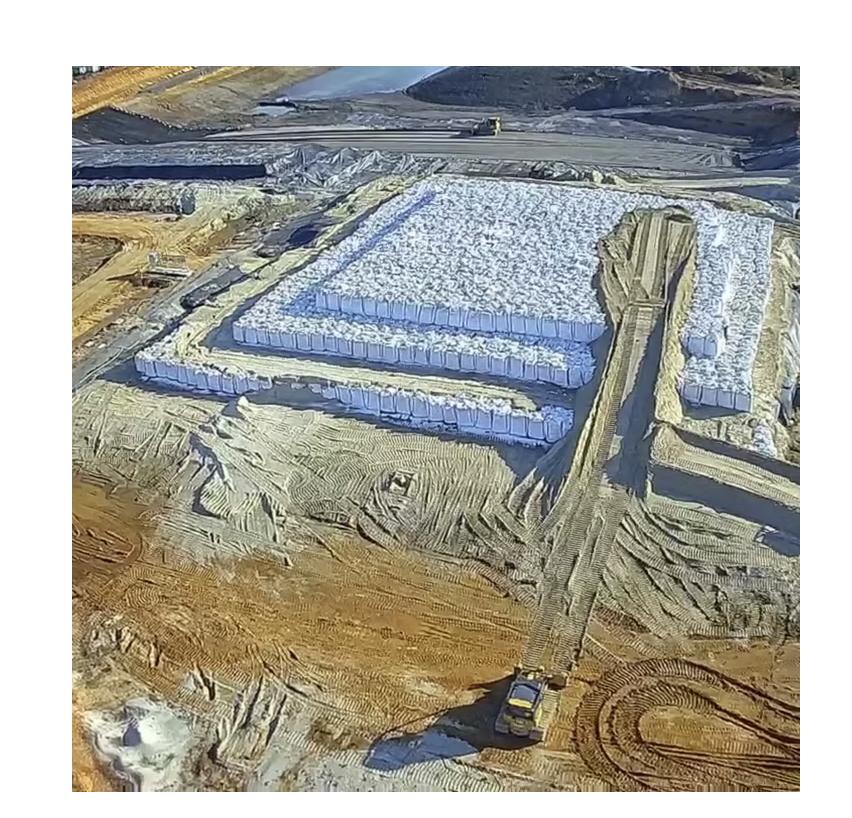
Bio-blocks are a more engineered form of biomass burial with added barriers that may improve durability. Plant residues are dried to moisture levels low enough to prevent rotting driven by microorganisms, mechanically compressed into dense blocks, and encased inside nonpolluting, multilayered barriers that keep out water and oxygen (Crotty et al., 2026; Yablonovitch & Deckman, 2023; Zeng et al., 2023). The barriers often combine nontoxic geomembranes made of high-density or linear low-density polyethylene liners, compacted clay layers, and polymeric sealants (Yablonovitch & Deckman, 2023). Once packaged, bio-blocks are buried in designated sites designed to keep the material dry and sealed for long-term carbon storage (Amelse, 2025). 

These approaches do not make carbon inert, but “lock” it into the organic matter. 

Does it work?

Biomass burial is a physically plausible means to durably store carbon captured by plants. Microbes cannot sustain metabolism when water activity is below 0.60, preventing biomass decomposition in dry, oxygen-deprived storage (Crotty et al., 2026; Yablonovitch & Deckman, 2023). Biomass burial’s net climate benefit depends on processing emissions, biomass type and source, site characteristics, and whether the buried biomass remains dry and intact. Effectiveness is supported by peer-reviewed studies, concept papers, life-cycle analyses, and reactor studies (Crotty et al., 2026; Johnson et al., 2025; Wang et al., 2011; Ximenes et al., 2019), with the strongest support for wood vaulting, engineered dry biomass storage, and landfill-style wood preservation (Crotty et al., 2026; Yablonovitch & Deckman, 2023; Zeng & Hausmann, 2022). A 3,775-year-old wood sample found 2 meters below ground had near-perfect preservation, with less than 5% of its carbon lost due to decay (Zeng et al., 2024). Other assessments by the Intergovernmental Panel on Climate Change (IPCC) suggest wood biomass burial could retain 99.9% of stored CO₂‑eq over a century (Gooding, 2023), and another study found anoxic biomass burial was more carbon-efficient than decomposition, pile burning, or biochar production (Clayton et al., 2026). 

Despite this, biomass burial is not yet a mature carbon storage strategy. It has little real-world validation beyond concept, operating guidance, and early implementation (Crotty et al., 2026; Zeng et al., 2023), requiring further study of decay and storage controls (Clayton et al., 2026). Currently, only a handful of companies use proprietary “bio-block” or “carbon-stiffened brick” methods to sequester atmospheric carbon (Scafidi & Denvir, 2026). 

Why are we excited?

Biomass burial is an inexpensive form of durable carbon storage that could be scaled up toward globally meaningful sequestration of atmospheric CO₂ (>0.1 Gt CO₂ /yr). According to one study, terrestrial photosynthesis removes six times more CO₂ each year than fossil-fuel burning emits (Zeng et al., 2024). Since most of that carbon would return to the atmosphere through biomass decomposition, storing some long term in designated sites is a major opportunity. A study in the United States estimated that about 415 Mt CO₂‑eq/yr is available for wood harvesting and storage from coarse woody debris (Hausmann et al., 2024). Broader wood-vaulting studies project gigaton-scale climate impacts, with wood burial having a theoretical ceiling of 37 ± 18 Gt CO₂‑eq/yr, a level far above any sustainable deployment, supported by an estimated ~238 Gt CO₂‑eq contained in coarse woody debris currently accumulated on forest floors worldwide (Zeng, 2008; Zeng & Hausmann, 2022; Zeng et al., 2024). Furthermore, drying and compacting biomass into bio-blocks is mechanically and practically straightforward with existing technologies. Cost is favorable for wood burial including bio-blocks, ranging from US$10–50/t CO₂ stored in most studies to as high as US$100/t CO₂ (Allen, 2025; Mohr, 2024; Johnson et al., 2025; Zeng & Hausmann, 2022), but this is based on estimates rather than commercialized outcomes. Biomass burial also provides simple, high verifiability.

Why are we concerned?

Biomass burial has several limitations as a viable climate solution, including possible concerns from large-scale deployment. Dry biomass storage systems fail if the barrier is breached and internal humidity rises enough to restart microbial activity and anoxic digestion of biomass, forming and leaking methane (Crotty et al., 2026; Johnson et al., 2025). This reversibility concern is highest for feedstocks with larger degradable fractions, such as agricultural residues, and lower for coarse woody debris (Crotty et al., 2026; Ximenes et al., 2019). Therefore, the durability of this type of carbon storage depends on sealing requirements, site selection, and gas monitoring (Zeng et al., 2023). 

Burying plant matter from forest floors can lead to forest nutrient depletion, habitat removal, and biomass diversion from better climate uses (Burns, 2025; Mohr, 2024). Permanence concerns include uncertain long-term barrier integrity (Crotty et al., 2026), the need for decades’ worth of monitoring to ensure stored carbon doesn’t leak (Crotty et al., 2026; Zeng et al., 2023), and potential soil-carbon release from excavating deep burial pits (Johnson et al., 2025; Zeng et al., 2023). For biomass burial to sustainably store carbon, the feedstocks are ideally sourced from low-conflict waste streams in limited amounts, protect soil health, and are evaluated for land use changes (Denvir & Leslie-Bole, 2025). 

Solution in Action

References

Allen, M. (2025, June 3). Bury it, don’t burn it: Turning biomass waste into a carbon solution. Physics World. Link to source: https://physicsworld.com/a/bury-it-dont-burn-it-turning-biomass-waste-into-a-carbon-solution/

Amelse, J. A. (2025). Terrestrial storage of biomass (biomass burial): A natural, carbon-efficient, and low-cost method for removing CO2 from air. Applied Sciences, 15(4), Article 2183. https://doi.org/10.3390/app15042183

Burns, W. (2025, June 3). Woody biomass burial. Illuminem. Link to source: https://illuminem.com/illuminemvoices/woody-biomass-burial 

Clayton, L. K., Wyckoff, A. S., & Crotty, S. M. (2026). Near-term, geospatial opportunity for biomass carbon storage to address the wildfire and climate crises. Science Advances, 12(35), Article eaee6185. Link to source: https://doi.org/10.1126/sciadv.aee6185

Crotty, S. M., Reiners, P. W., Clayton, L. K., Young, E., Jones, A., Cregger, M. A., Starace, A. K., & Harman-Ware, A. E. (2026). Nonenergy biomass carbon removal and storage (BiCRS): Assessing durability of nongaseous carbon products across terrestrial storage fates. Chemical Reviews, 126(8), 4375–4404. https://doi.org/10.1021/acs.chemrev.5c00618

Denvir, A., & Leslie-Bole, H. (2025). Biomass can fight climate change, but only if you do it right [Explainer]. World Resources Institute. Link to source: https://www.wri.org/insights/sustainable-biomass-carbon-removal 

Gooding, J. L. (2023). Geologic perspective for carbon sequestration by woody biomass burial. Science and Technology for Energy Transition, 78, Article 17. https://doi.org/10.2516/stet/2023014

Hausmann, H., Cai, Q., & Zeng, N. (2024). Quantification of biomass availability for wood harvesting and storage in the continental United States with a carbon cycle model. Carbon Balance and Management, 19(1), Article 34. https://doi.org/10.1186/s13021-024-00270-4

Johnson, D., Voorhis, J., & Porder, S. (2025). Life cycle emissions associated with vault storage of wood cleared for fire management in the Western United States. Carbon Balance and Management, 20(1), Article 26. https://doi.org/10.1186/s13021-025-00309-0

Mohr, K. (2024, July 23). ‘Wood vaulting’: A simple climate solution you’ve probably never heard of. Grist. Link to source: https://grist.org/solutions/wood-vaulting-carbon-storage-solution/  

Scafidi, A. I., & Denvir, A. (2026). Companies are finding new ways to use waste and fight climate change [Vignette]. World Resources Institute. Link to source: https://www.wri.org/insights/biomass-carbon-removal-storage-companies-fight-climate-change

Wang, X., Padgett, J. M., De la Cruz, F. B., & Barlaz, M. A. (2011). Wood biodegradation in laboratory-scale landfills. Environmental Science & Technology, 45(16), 6864–6871. https://doi.org/10.1021/es201241g

Ximenes, F. A., Björdal, C., Kathuria, A., Barlaz, M. A., & Cowie, A. L. (2019). Improving understanding of carbon storage in wood in landfills: Evidence from reactor studies. Waste Management, 85, 341–350. https://doi.org/10.1016/j.wasman.2019.01.004

Yablonovitch, E., & Deckman, H. W. (2023). Scalable, economical, and stable sequestration of agricultural fixed carbon. Proceedings of the National Academy of Sciences, 120(16), Article e2217695120. https://doi.org/10.1073/pnas.2217695120

Zeng, N. (2008). Carbon sequestration via wood burial. Carbon Balance and Management, 3(1), Article 1. https://doi.org/10.1186/1750-0680-3-1

Zeng, N., & Hausmann, H. (2022). Wood vault: Remove atmospheric CO2 with trees, store wood for carbon sequestration for now and as biomass, bioenergy and carbon reserve for the future. Carbon Balance and Management, 17(1), Article 2. https://doi.org/10.1186/s13021-022-00202-0

Zeng, N., Sanchez, D., Belmont, E., & Hausmann, H. (2023). Implementation guidance for wood harvesting and storage [Preprint]. arXiv. Link to source: https://doi.org/10.48550/arXiv.2309.06529 

Zeng, N., Zhao, X., Poisson, G., Clifford, B., Liu, Y., Liu, H., Meng, T., Picard, L., Zeng-Mariotti, E., Zaitchik, B., & Hu, L. (2024). 3775-year-old wood burial supports “wood vaulting” as a durable carbon removal method. Science, 385(6716), 1454–1459. https://doi.org/10.1126/science.adm8133

Credits

Lead Fellow

Nina-Francesca Farac, Ph.D.

Internal Reviewers

Sarah Gleeson, Ph.D.

Christina Swanson, Ph.D.

Speed of Action
Caveats
Risks
Consensus
Trade-offs
Action Word
Bury
Solution Title
Biomass
Classification
Keep Watching

Lawmakers and Policymakers

Practitioners

Business Leaders

Nonprofit Leaders

Investors

Philanthropists and International Aid Agencies

Thought Leaders

Technologists and Researchers

Communities, Households, and Individuals

Updated Date
Coming Soon Label
Coming Soon

Project Drawdown and climate scientist Kimberly Nicholas, Ph.D., introduce SHIFT, a science-based guide to individual climate action

“If you’ve ever asked yourself, ‘What can I personally do to stop climate change?’ this is the guide you’ve been looking for,” Nicholas says. “By sharing some basic information about who you are, SHIFT can help you identify evidence-based actions you can take today that not only reduce climate pollution, but lead to the high-impact, systemic changes necessary for a better, brighter future.”

Combining Nicholas’ pioneering work on individual climate action and Project Drawdown’s deep expertise on climate solutions, SHIFT is built around five distinct but interconnected “climate superpowers”: citizen, professional, investor, consumer, and role model. These roles reflect the different spheres of influence many people occupy in their daily lives. 

Whether advocating for policy, shifting workplace practices, aligning investments with climate-positive outcomes, changing how we travel, or building climate community and inspiring others, individuals can use the guide to identify the highest-leverage actions they can take. Each superpower is grounded in peer-reviewed research and supported by practical, actionable recommendations tailored to your individual conditions.

“When people search for what they can personally do about climate change, they’re all too often directed to clickbait or top ten lists based on global averages,” says Project Drawdown Executive Director Jonathan Foley, Ph.D. “But there is no one-size-fits-all approach to individual climate action. SHIFT is a step change in personalized guidance for climate actions that actually make a difference.” 

More than a checklist, SHIFT invites a change in mindset. Rather than prescribing generic behavior changes, the guide emphasizes agency, impact, and alignment with larger systems change. By connecting personal action with structural change, SHIFT helps people recognize that their choices, voices, and votes matter – not in isolation, but as part of a broad movement toward a fair and thriving world.

To register for Nicholas's Drawdown Ignite webinar, Individual Climate Action with Impact: Five Climate Superpowers to SHIFT the System, on September 17 at 1:00 p.m. ET, go here.

To learn more and #MakeSHIFTHappen, go to jointheshift.earth


Press Contact
Skylar Knight, skylar.knight@drawdown.org 
Interviews available upon request


About Kimberly Nicholas, Ph.D.
Kimberly Nicholas, Ph.D., is a climate and sustainability scientist at Lund University in Sweden. She has published over 55 articles on climate and sustainability in leading peer-reviewed journals; writes for publications such as Elle, The Guardian, Scientific American, and New Scientist; and is the author of Under the Sky We Make: How to be Human in a Warming World, and the monthly climate newsletter We Can Fix It. Born and raised on her family’s vineyard in Sonoma, California, she studied the effect of climate change on the California wine industry for her Ph.D. in Environment and Resources at Stanford University.

About Project Drawdown
Project Drawdown is the world’s leading guide to science-based climate solutions. By advancing our understanding of climate solutions, fostering bold climate leadership, and promoting new narratives and voices, we are helping the world stop climate change as quickly, safely, and equitably as possible. A 501(c)(3) nonprofit organization, Project Drawdown is funded by individual and institutional donations.

Image
A yellow graphic with several cartoon faces and text that reads 'SHIFT The Super High-Impact Initiative for Fixing Tomorrow'
Off

SHIFT is the go-to guide for climate-concerned individuals ready to take the most effective, science-backed personal climate action

September 9, 2025 – Around the world, people are increasingly looking to take climate action in their personal lives. But many were left wondering what actions have the biggest impact and truly move the needle on climate change – until now. In collaboration with Project Drawdown, leading climate scientist and best-selling author Kimberly Nicholas, Ph.D., has launched the Super High-Impact Initiative for Fixing Tomorrow, or SHIFT. SHIFT is a free web-based guide that connects climate-concerned individuals with the most effective, science-backed personal actions they can take.

Description for Social and Search
SHIFT is the go-to guide for climate-concerned individuals ready to take the most effective, science-backed personal climate action
Include in Home Insights and News Feed
On

Project Drawdown is headed to Climate Week NYC


Sunday, September 21

Project Dandelion: Women, Climate, and the Nature of Power
4:00–6:00 p.m. ET
The Rockefeller Foundation NYC Headquarters, 420 Fifth Avenue, New York, NY 10018

Project Dandelion will host an intimate circle of climate leaders, artists, and advocates to share provocations and perspectives from women advancing climate solutions and to create space for dialogue that challenges us to move beyond intention into action. Project Drawdown Managing Director Elizabeth Bagley, Ph.D., will join fellow women leaders to explore what becomes possible when ancestral wisdom meets intergenerational imagination and when feminist leadership lights the path forward. Project Dandelion is a coalition of visionary leaders actively imagining and building a more just and climate-safe world.

This session is private and by invitation only. To become a Dandelion and join the collective force of leaders committed to climate justice, please visit Project Dandelion’s website here. 


Tuesday, September 23 

Introducing Drawdown Explorer: The World’s Most Comprehensive Guide to Climate Solutions
9:25–9:50 a.m. ET
The Javits Center, 445 11th Ave. (Main Stage, Level 3), New York, NY 10001

Join Project Drawdown Executive Director Jonathan Foley, Ph.D., for the world premiere of Drawdown Explorer. This revolutionary, open-access online platform provides detailed, up-to-date intelligence on more than 100 climate solutions that, if scaled, can stop climate change. The Drawdown Explorer is what the climate movement has been missing: an all-encompassing platform using the best available data to provide decision-makers with actionable intelligence on the most effective climate solutions. Built upon trillions of data points and thousands of hours of analysis by scientific experts, the Drawdown Explorer represents a quantum leap in advancing climate solutions, ensuring that every dollar, every resource, and every moment moves us closer to a world without a climate crisis.

Register for The Nest Climate Campus here. Please note, this session will be recorded and shared online following Climate Week.


The Power of Women in Climate Science
11:30 a.m. –1:30 p.m. ET
Treehouse at Doris Duke Center, 444 Madison Avenue (10th floor), New York, NY 10022

Presented by the Doris Duke Foundation and Women & Allies in Climate, this luncheon will provide an engaging, intimate space specifically dedicated to climate science. Project Drawdown Managing Director Elizabeth Bagley, Ph.D., will be among the attendees at the luncheon, which will focus on exchanging groundbreaking ideas and fostering meaningful connections among women scientists and allies who are at the forefront of climate research, policy, and conservation. 

Together, attendees will delve into how to better support, empower, and amplify women’s leadership and contributions within climate science. Women globally are leading critical research, developing innovative technologies, and driving policies that address climate challenges, yet often face systemic barriers to accessing resources, visibility, and scalable support.

The luncheon is hosted by:

  • Hila Shamon, Deputy Executive Director of Science and Conservation, Duke Farms
  • Rebecca Benner, Managing Director for Climate Program, The Nature Conservancy

This session is private and by invitation only. To learn more about the Women & Allies in Climate Network, please visit the website here.


Wednesday, September 24 

Roots & Resilience: Seeding Women’s Leadership for a Thriving Planet
8:00–9:30 a.m. ET
The Javits Center, 445 11th Ave, New York, NY 10001

Project Drawdown Managing Director Elizabeth Bagley, Ph.D., will be joining a breakfast and networking event at The Nest Climate Campus featuring women leading innovative climate and nature finance solutions. At this event, attendees will hear from changemakers across philanthropy, policy, grassroots action, and investment – each driving bold, community-rooted change. After a short panel, participants will connect in small roundtables designed to spark meaningful conversation and collaboration.

Unfortunately, space is limited and tickets are no longer available.


Integrating Natural Climate Solutions into Renewable Energy Infrastructure: An Expert Visioning Session
12:00–3:00 PM ET
Register to See Address

In this limited-participation, roundtable discussion facilitated by Diane Pataki, Ph.D., Chief Scientist at the National Wildlife Federation, attendees will create space for frank dialogue and idea exchange, with Chatham House Rules. Participants, including Project Drawdown Managing Director Elizabeth Bagley, Ph.D., will share fresh ideas, form new connections, and build a sense of strategic priorities and opportunities for how we can unite across sectors and disciplines to ensure that progress on clean energy not only continues, but complements conservation and restoration of nature.

Apply here for approval to register for the event.


GIIN's Inaugural Climate Solutions Investing Roundtable: What Will a Below-2° Celsius Economy Require?
2:35-3:20 PM ET
Register to See Address

Project Drawdown Director of Global Strategic Partnerships Amanda Bielawski, Ph.D., will be joining the Global Impact Investing Initiative (GIIN) and more than 10 other experts for a roundtable event on effective climate solutions investing. This half-day event will bring together influential asset owners, investment managers, innovative climate solutions-focused organizations, and leading networks at the intersection of climate and finance. The roundtable will feature expert presentations, insightful panel conversations, sector-specific breakout discussions, and a closing networking reception.

To join the event waitlist, please register here.


Thursday, September 25 

Using Technology To Scale A Climate Solution With An Important Dual Mission: Helping To Ending Hunger While Reducing Methane Emissions
9:30–10:15 a.m. ET
The Javits Center, 445 11th Ave. (Main Stage, Level 3), New York, NY 10001
 

Nearly 40% of the annual food supply in the U.S. goes to waste, while at the same time, over 40 million Americans live in food-insecure households. It makes no sense. In this fireside chat, two visionaries, Project Drawdown Managing Director Elizabeth Bagley, Ph.D., and Joe Robbins, the Chief Product Officer of Food Rescue U.S., will discuss the significant impact keeping nutritious food out of landfills is having on mitigating climate change and feeding the food-insecure. Food recovery is a rewarding climate solution available to almost everyone, and it is a powerful way for employers to get their associates engaged in meaningful climate action. Technology can make it fast, easy, and super efficient.

Register for The Nest Climate Campus here. Please note, this session will be recorded and shared online following Climate Week.


Reimagine Food: Exploring the Intersection of Climate Change and our Global Food System
10:45–11:10 a.m. ET
The Javits Center, 445 11th Ave. (Main Stage, Level 3), New York, NY 10001

When we think of the causes of climate change, often the first thing that comes to mind is the use of fossil fuels for electricity production, transportation, or industry. At the same time, an equally significant, yet far less recognized, contributor to climate change often gets short shrift: the global food system. A whopping 22–33% of all greenhouse gas emissions come from the food, agriculture, and land use sector. To accelerate the adoption of science-based climate solutions in the sector, Project Drawdown has identified seven key areas where actors should focus their efforts. Join Executive Director Jonathan Foley, Ph.D., to learn more and get a sneak peek at a food campaign Project Drawdown will be launching later this year. 

Register for The Nest Climate Campus here. Please note, this session will be recorded and shared online following Climate Week.


Communicating Climate Solutions Mini-Summit
11:00 a.m.–2:00 p.m. ET
Register to See Address

​The climate crisis is a crisis of imagination. Too often, the narrative is dominated by fear and doom. This half-day brings together sound, story, and design to flip that script - amplifying solution-driven, hope-infused climate storytelling that inspires real change.

​By moving through three immersive experiences - listening to powerful narratives, learning how to tell solution-oriented stories, and creating your own climate solution posters - participants leave equipped to shift conversations and spark action in their communities. Featuring Project Drawdown Creative Lead Hannah Jurist-Schoen. 

To join the event, please register here.


Culture of Impact: How to Build High-Performing, Planet-Positive Organizations
4:30–5:30 p.m. ET
Hearst Tower, 300 W 57th Street, New York, NY 10019

​In today’s business landscape, HR, ESG, and finance leaders and executives are uniquely positioned to shape organizational culture in ways that deliver meaningful impact – not just for the bottom line, but for employees, communities, and the planet.

​Join Project Drawdown’s Aiyana Bodi in the LEED Platinum Certified Hearst Tower for an in-depth, solutions-focused conversation on how forward-thinking organizations are operationalizing purpose through policies, practices, and people strategies.

​You’ll hear how leaders are using proven frameworks – from B Lab’s updated standards for B Corps to best-in-class HR resources from I Hate it Here – to build high-performing, planet-positive organizations that attract talent, strengthen brand reputation, and drive long-term resilience.

​This event will explore:

  • ​How to align purpose, culture, and performance to create lasting impact
  • ​Practical strategies HR leaders can implement to operationalize sustainability and equity goals
  • ​Real-world examples of organizations leveraging frameworks to guide measurable change
  • ​The role of HR as a catalyst for both employee engagement and climate action

​Featured Speakers:

  • ​Hebba Youssef, Founder, I Hate it Here
  • ​Kylie Nealis, Senior Program Manager, Climate Justice, B Lab
  • ​Aiyana Bodi, Manager, Drawdown Labs @ Project Drawdown
  • ​Breene Murphy, President, Carbon Collective
  • ​Lizzy Kolar, CEO & Co-founder, Scope Zero
  • ​Special Guest from Hearst
  • ​And more to come!

​Be part of a conversation that’s reshaping the future of work. Walk away with practical strategies to align culture with purpose in ways that boost employee performance, strengthen retention, and deliver measurable impact.

To join the event, please register here. Note: A photo ID is required for building entry.


Saturday, September 27

Rewriting Narratives from Brick City to the World: Climate Solutions Rooted in Newark
3:00–4:00 p.m. ET
450 W 31st St 7th floor, New York, NY 10001

Newark, New Jersey, is often framed through a lens of deficit – yet its true story is one of power, resilience, and climate action. In this special session at Marketplace of the Future 2025, we go beyond the narratives of victimhood to uplift Newark’s frontline leadership and community-rooted climate solutions. This is not just a panel, it’s a call to reframe how we see climate justice and who we recognize as leaders. Through powerful storytelling, dynamic performance, and tangible solutions implemented by organizations on the ground, this session, hosted by Project Drawdown Director of Storytelling Matt Scott, explores how cities like Newark are lighting the path forward.

Participants include Drawdown's Neighborhood climate heroes Bilal Walker, Nathaly Agosto Filion, Anthony Diaz, and Christian Rodriguez, as well as Nicole Hewitt-Cabral of the City of Newark.

To join the event, please RSVP here.


We hope this lineup gets you as excited as we are about #ClimateWeekNYC, and we look forward to seeing you in person!


Image
An image of New York City with the Climate Week NYC logo and Project Drawdown logo overlaid
Off

This September, Project Drawdown will once again take part in Climate Week NYC – a global stage for bold ideas and urgent action on the climate crisis. 

Climate Week NYC has become one of the world’s premier annual climate gatherings and offers a critical space for accelerating progress. With more than 600 events across the city, inspiring leaders from government, business, tech, academia, and civil society will come together to spotlight solutions, share ideas, collaborate, and explore the investments needed to drive change. 

Project Drawdown will lead and participate in several events from September 22 to 27, including presenting at The Nest Climate Campus, among the largest and most impactful venues during Climate Week NYC. Over 9,400 climate leaders attended events at The Nest Climate Campus in 2024 – and 2025 is going to be more exciting than ever! 

Below is a rundown of where we will be in the city and how you can sign up to attend.

Description for Social and Search
Check out events featuring Project Drawdown experts at Climate Week NYC!
Include in Home Insights and News Feed
On
Subscribe to