What an apple rescue can teach us about the many benefits of reducing food waste

Image
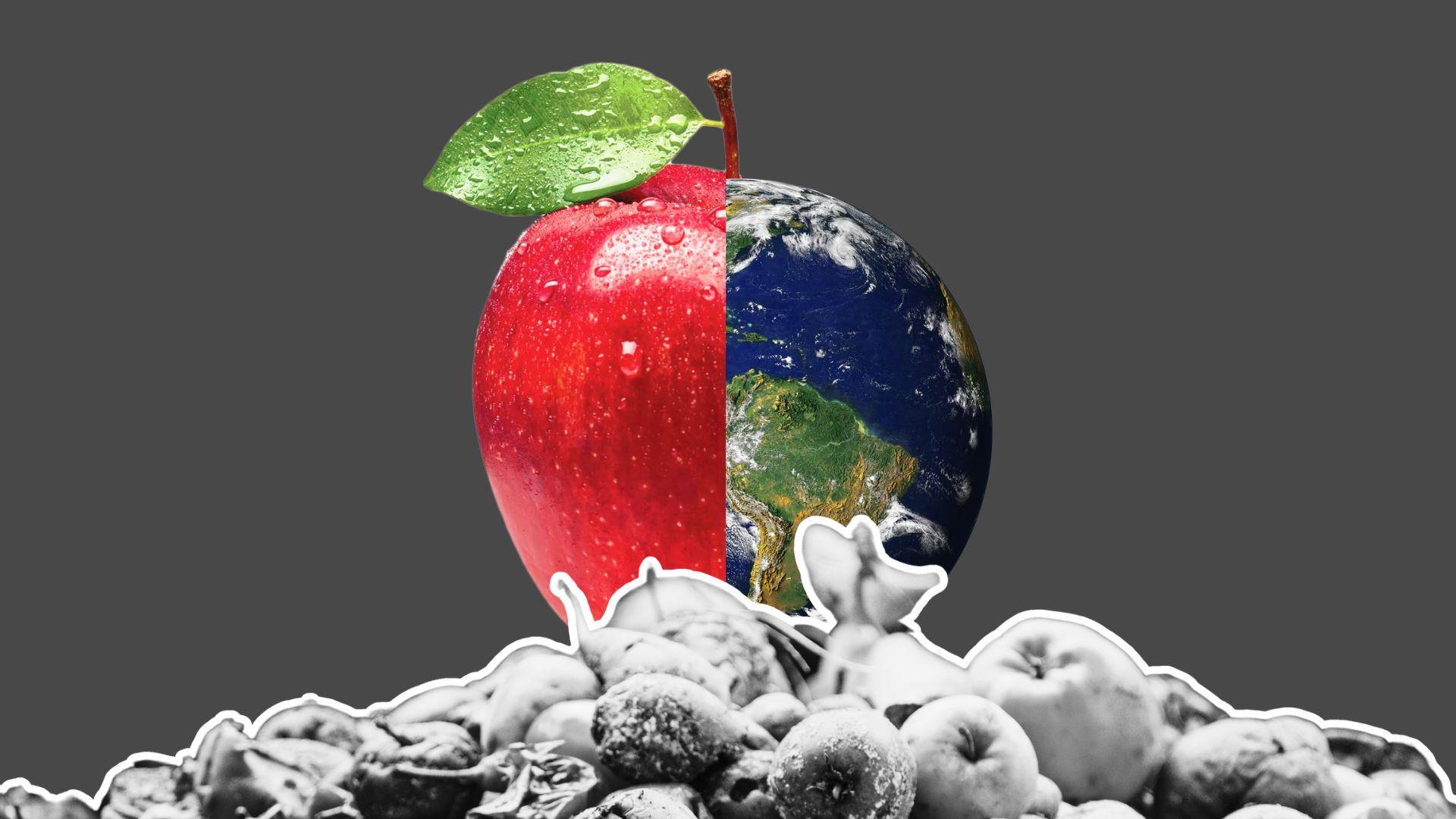
A graphic of a pile of food waste with an apple and earth rising from the pile

Key Takeaways

  • Rescuing food, from the farm to the fridge, can cut global greenhouse gas emissions by 8–10% – equivalent to the annual emissions of India. 
  • Since its founding in 2020, the non-profit Farmlink has rescued half a billion pounds of fresh produce and delivered it to communities facing hunger.
  • Rescuing food not only cuts methane emissions from landfills but saves the upstream emissions from on-farm production and food processing.

During the fall harvest season in 2023, Carla Kitchen was preparing her family farm to pick half a million pounds of apples. Kitchen usually sells apples from her 150-acre orchard in West Virginia to processors that make apple sauce, juice, and other products. But that year, processors turned her away.

“Imagine 80% of your income is sitting on the trees, and the processor tells you they don't want them. So what do you do?” Kitchen told NPR at the time.

Due to the bumper crop that year, processors canceled contracts with multiple orchards. Kitchen and ten other growers in West Virginia faced a dilemma: pay laborers to pick apples without a buyer or leave them to rot.  

Such scenarios are more common than you might think, and extend far beyond apples in Appalachia. An astonishing one-third of the world’s food is lost or wasted. This has staggering implications for the global food system – affecting agricultural production, trade patterns, commodity prices, and international food security. 

It also has major environmental consequences. Such high levels of food loss and waste require higher-than-needed levels of agricultural production, resulting in unnecessary land clearing, water consumption, chemical use, and greenhouse gas emissions – all for food that is never consumed.

Image
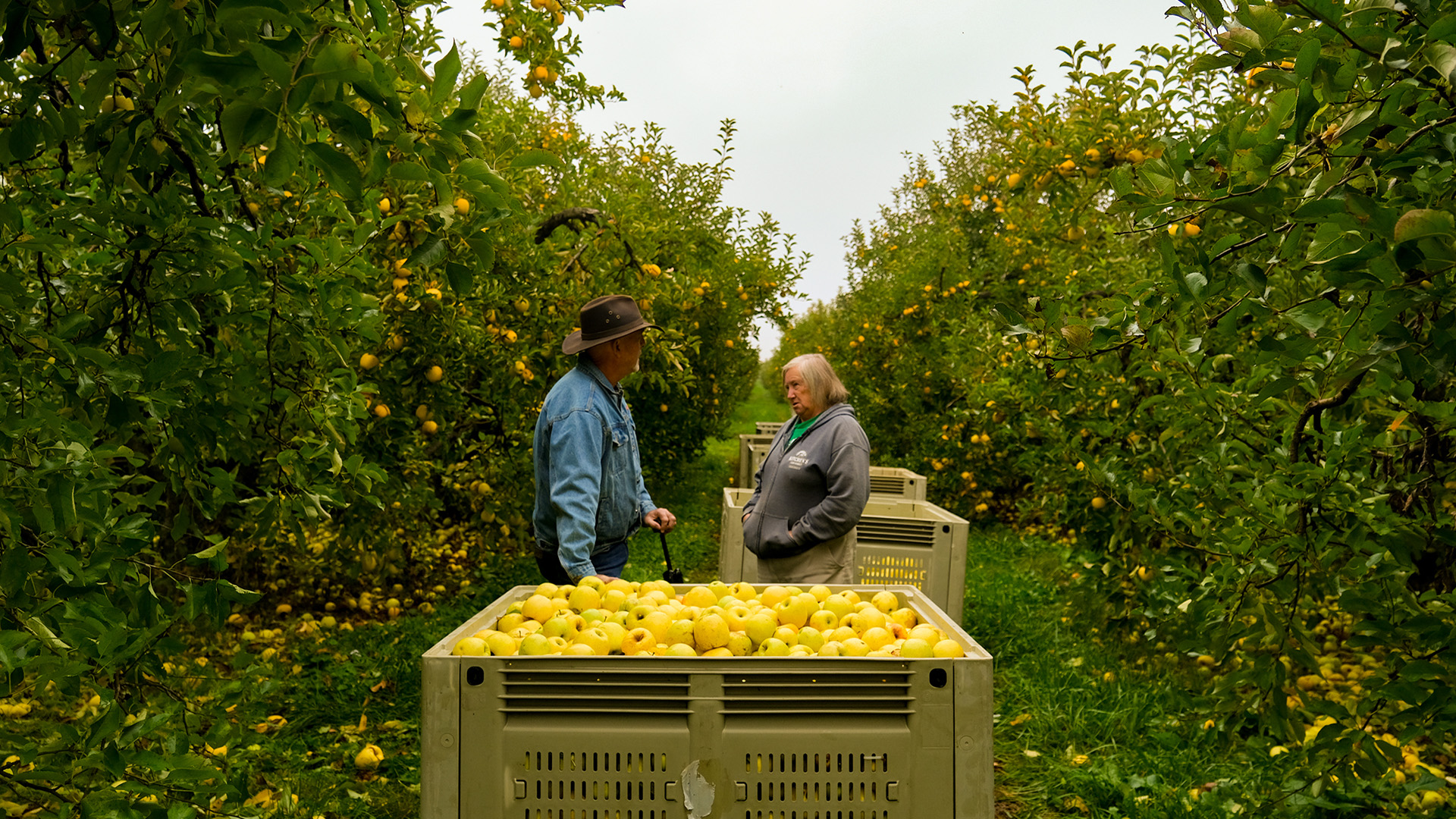
An image of two people in an apple orchard with a large pallet of apples in front of them

Carla Kitchen (right) on her family apple orchard during a bumper crop year that resulted in thousands of pounds of surplus apples. Image courtesy of The Farmlink Project

Rotting food also releases methane, further accelerating climate change. In fact, if food loss and waste were a country, it would be the third-largest polluter in the world, roughly tied with India at between 8–10% of annual greenhouse gas emissions.

Fortunately, instead of letting West Virginia’s apples rot on the tree in 2023, the United States Department of Agriculture (USDA) gathered funds to pay growers. However, the compensation wasn’t enough to cover all the costs of apple harvesting, packaging, transportation, and delivery; that's when The Farmlink Project was asked to help.

Launched in April 2020 in response to COVID-19 supply chain disruptions, Farmlink is a nonprofit that connects farmers who have surplus food to communities facing hunger. But even with, at the time, three years of experience rescuing food, moving millions of pounds of apples to where they’re needed in less than two months proved an immense challenge. Once Farmlink identifies surplus food, they must move quickly to coordinate transportation and distribution to ensure it reaches food banks and communities facing barriers to fresh, healthy food. The almost 14 million pounds of apples they rescued in West Virginia filled 300 trucks.

Image
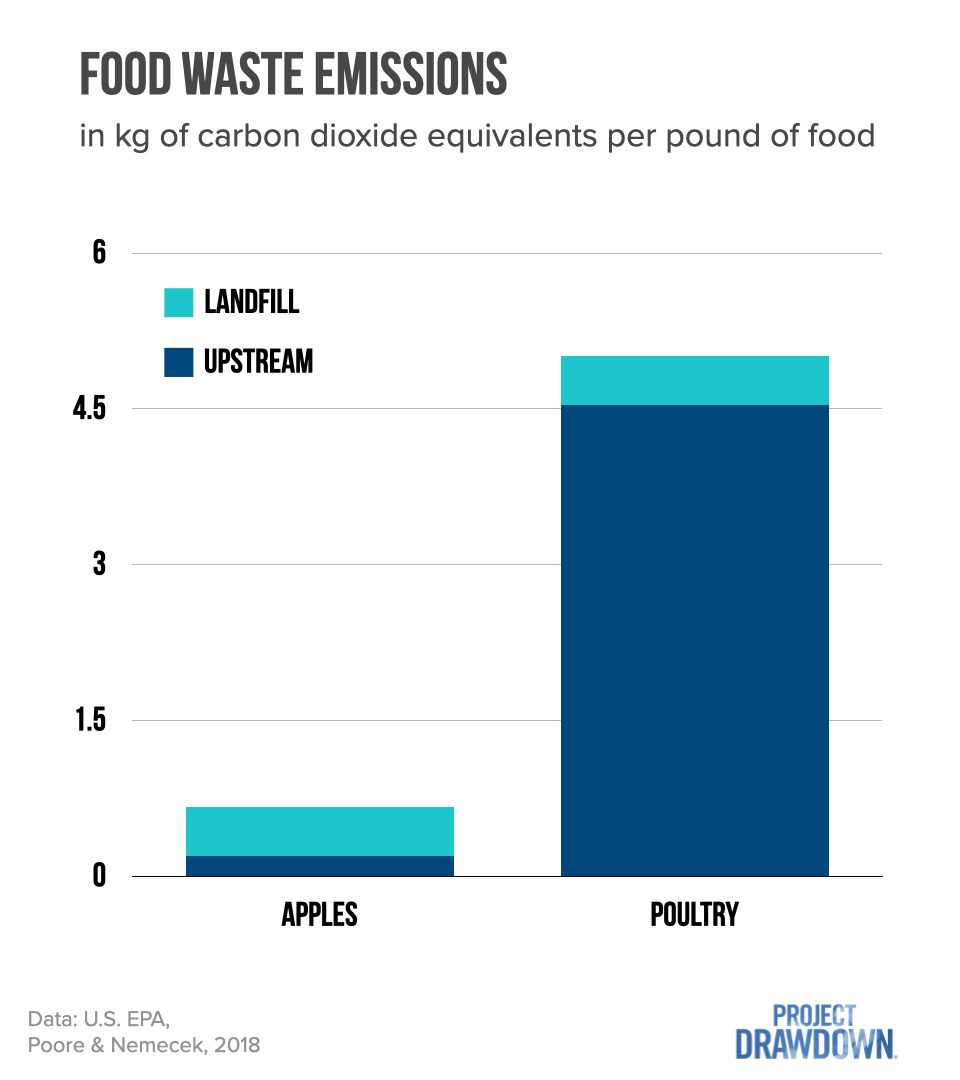
A chart showing the relative food waste emissions per pound from apples versus turkey

“The apple rescue is just one example of what we see nearly every week,” Farmlink Co-founder Aidan Reilly says. “Our work shows what is possible when the government, nonprofits, and farmers collaborate; tens of millions of pounds of fresh food delivered to people in need, American farmers are compensated, and methane emissions are prevented.” Since its founding, Farmlink has rescued and delivered half a billion pounds of fresh produce.

If those apples had ended up in a landfill, they would have released thousands of tons of methane – a potent greenhouse gas that generates more warming in the short term than carbon dioxide. For every pound of apples wasted, we could expect about 0.5 kilograms of CO₂‑equivalent greenhouse gas emissions to escape from landfills. And this doesn’t even count the emissions generated from producing apples in the first place. 

Not all food waste carries the same environmental burden. Foods with higher production footprints, such as meat and dairy, drive disproportionately large food loss and waste impacts.

Whereas wasted apple emissions rise to around 0.7 kg CO₂‑eq per pound when you take into account the emissions from growing and picking, turkey – one of the more environmentally friendly meats – comes in at a whopping 5 kg CO₂‑eq per wasted pound. That’s because it takes far more emissions by weight to raise the animal and grow its feed than to produce any fruit or vegetable.

Although wasting a pound of meat is more emissions-intensive than a pound of apples, Reilly says that what he sees at Farmlink, and in the U.S. broadly, is that fruit and vegetables are far more commonly wasted, which makes Farmlink's work transporting large volumes of fresh produce so critical. “It feels like low-hanging fruit, as it relates to tackling climate change and getting food to people in need,” Reilly said.

More food for families, less waste for farmers, and fewer emissions for all of us; how do you like them apples?


About the Author

Emily Cassidy is an environmental scientist and writer, with expertise in agriculture, ecology, and land use. As a research associate at Project Drawdown, Emily evaluates the emissions mitigation potential of climate solutions in the food system.

About Project Drawdown 

Project Drawdown is the world’s leading guide to science-based climate solutions. Our mission is to drive meaningful climate action around the world. A 501(c)(3) nonprofit organization, Project Drawdown is funded by individual and institutional donations. 

This work is published under a Creative Commons CC BY-NC-ND 4.0 license. You are welcome to republish it following the license terms.