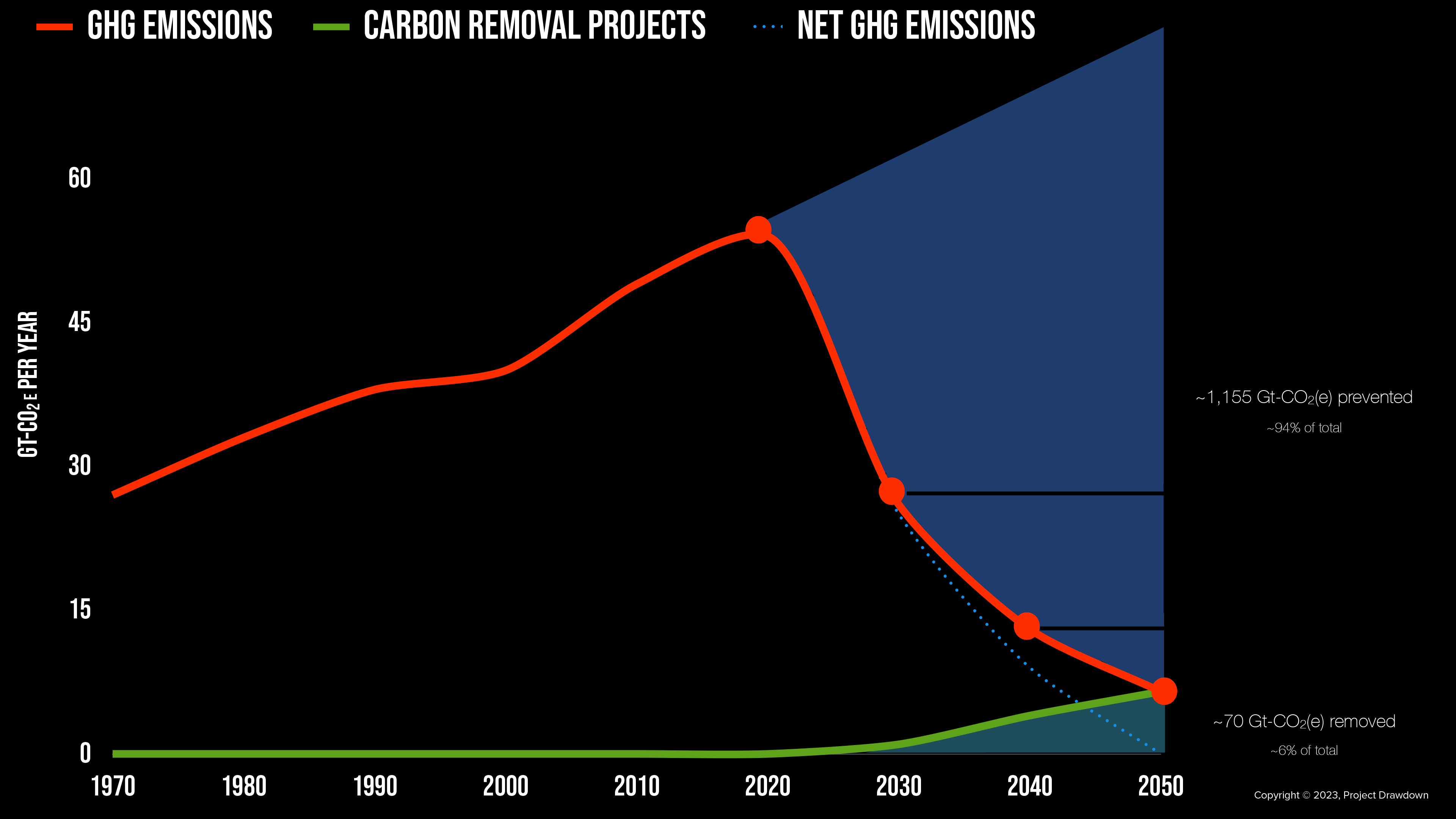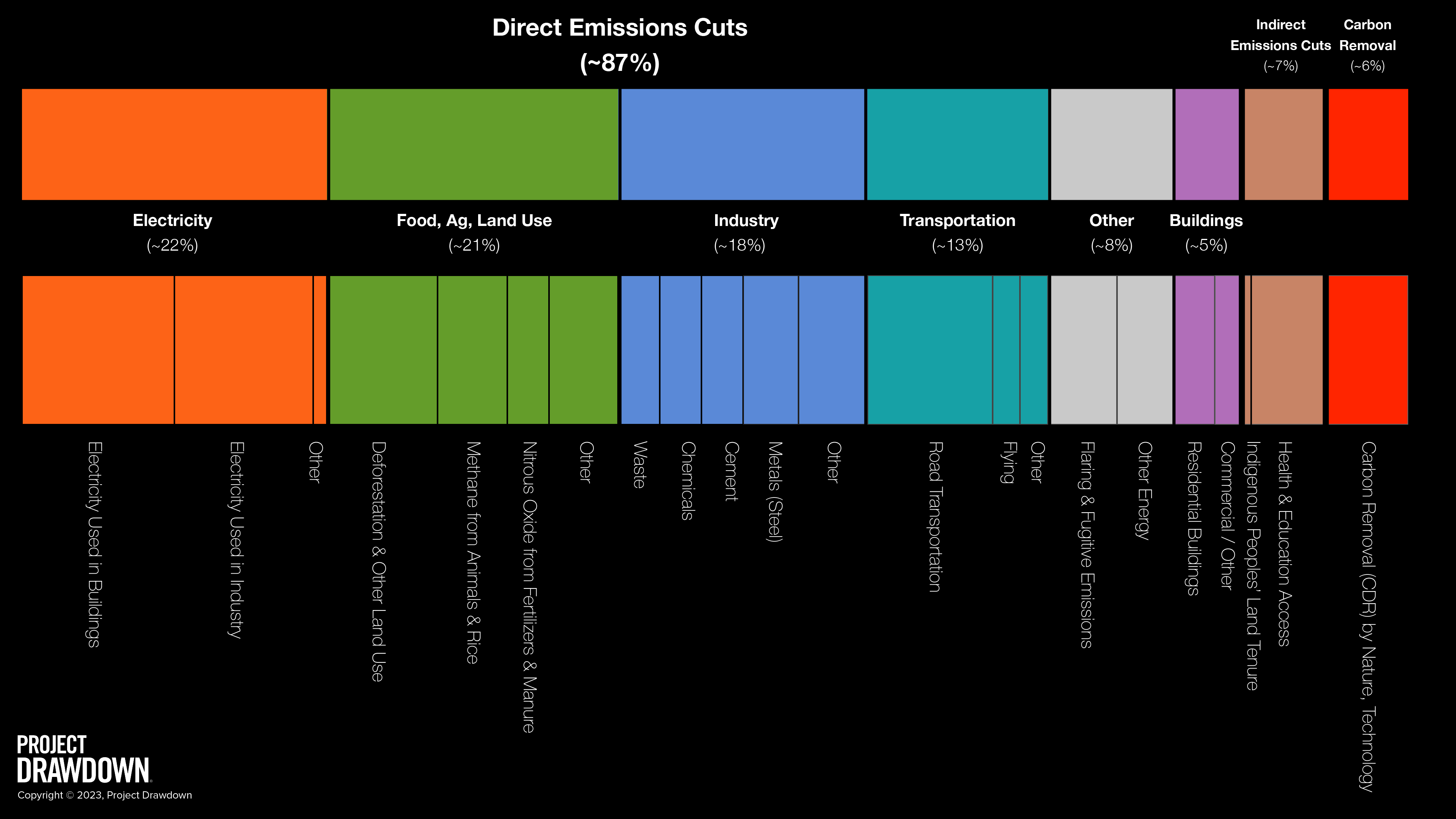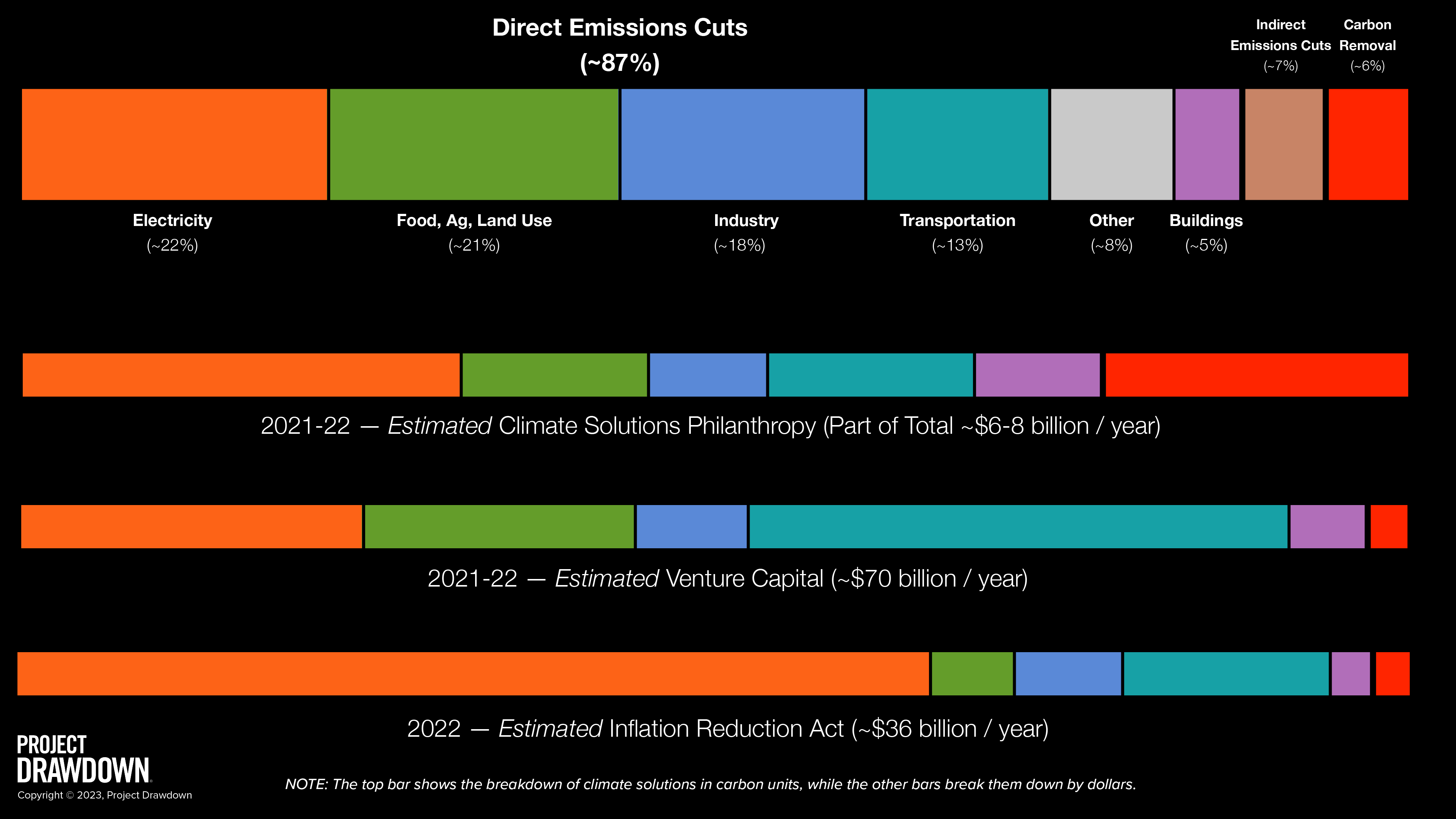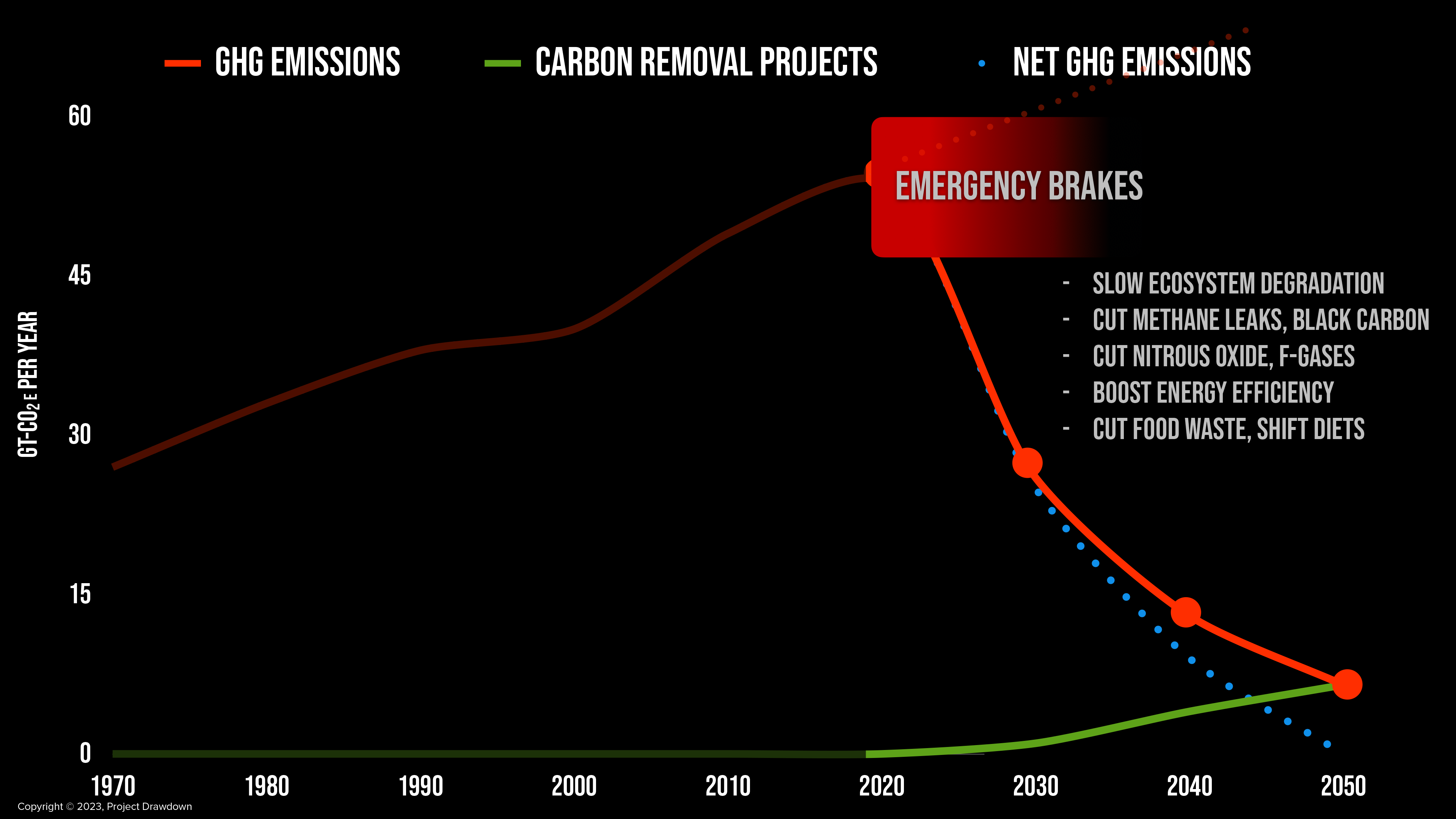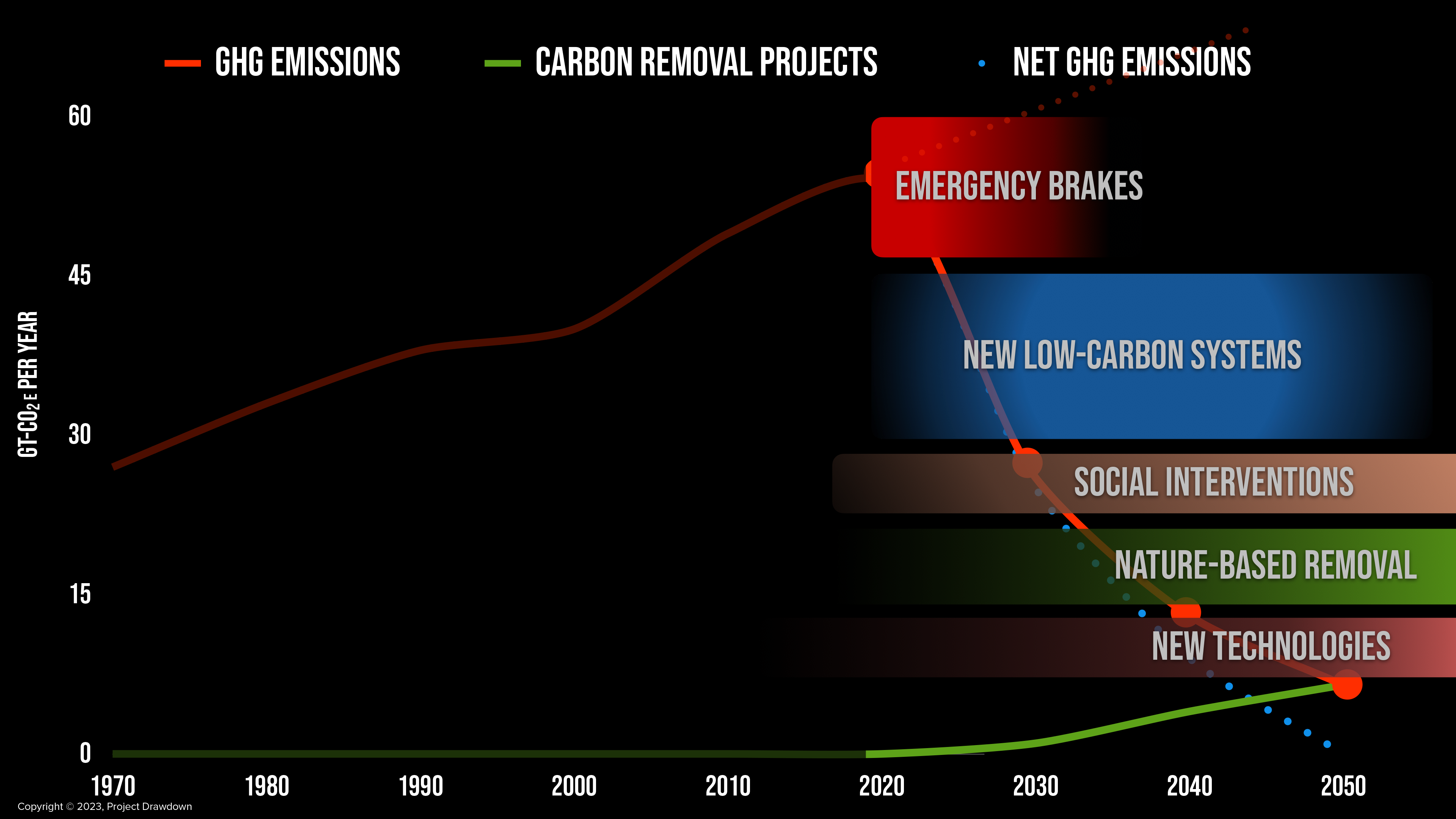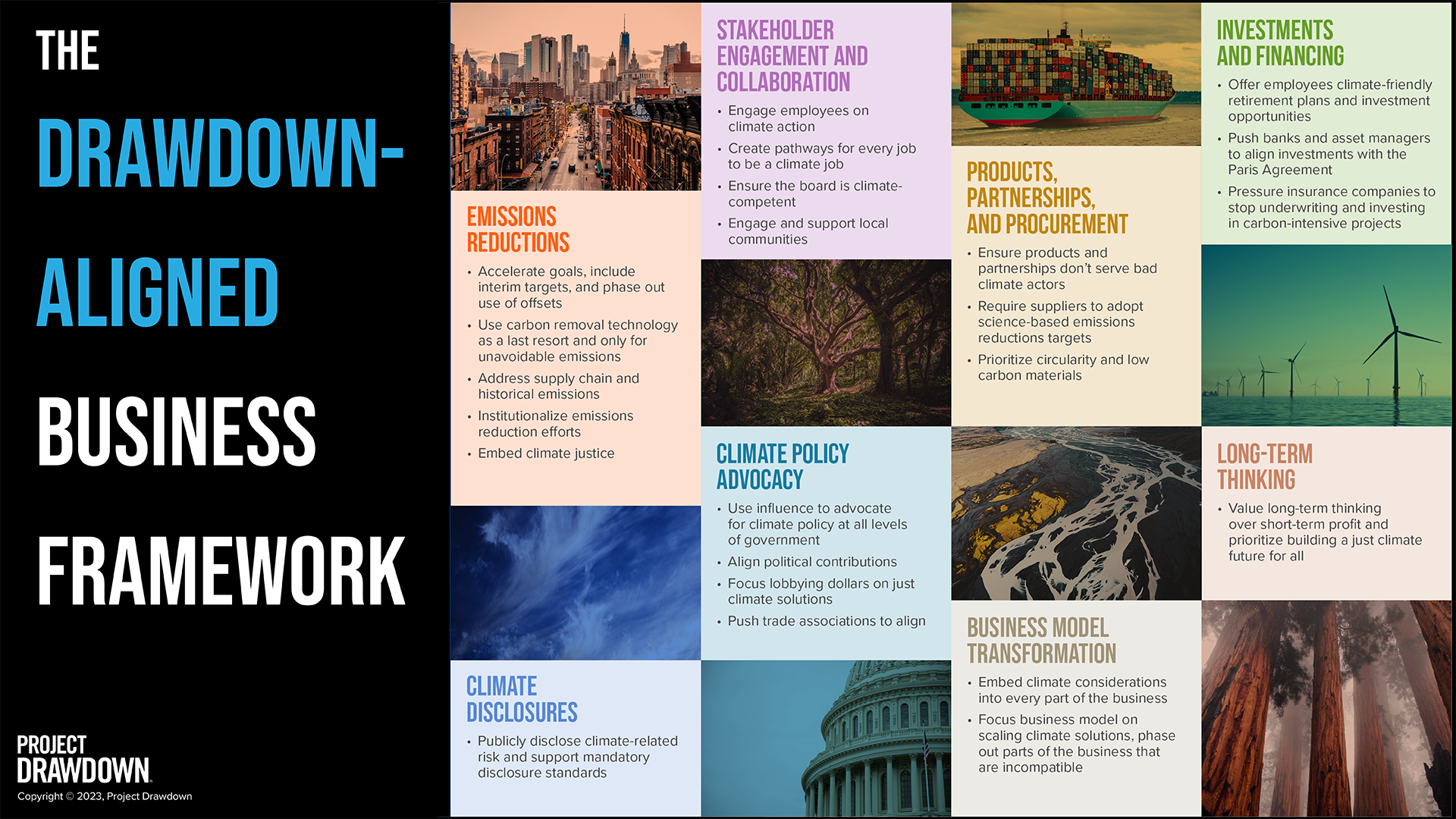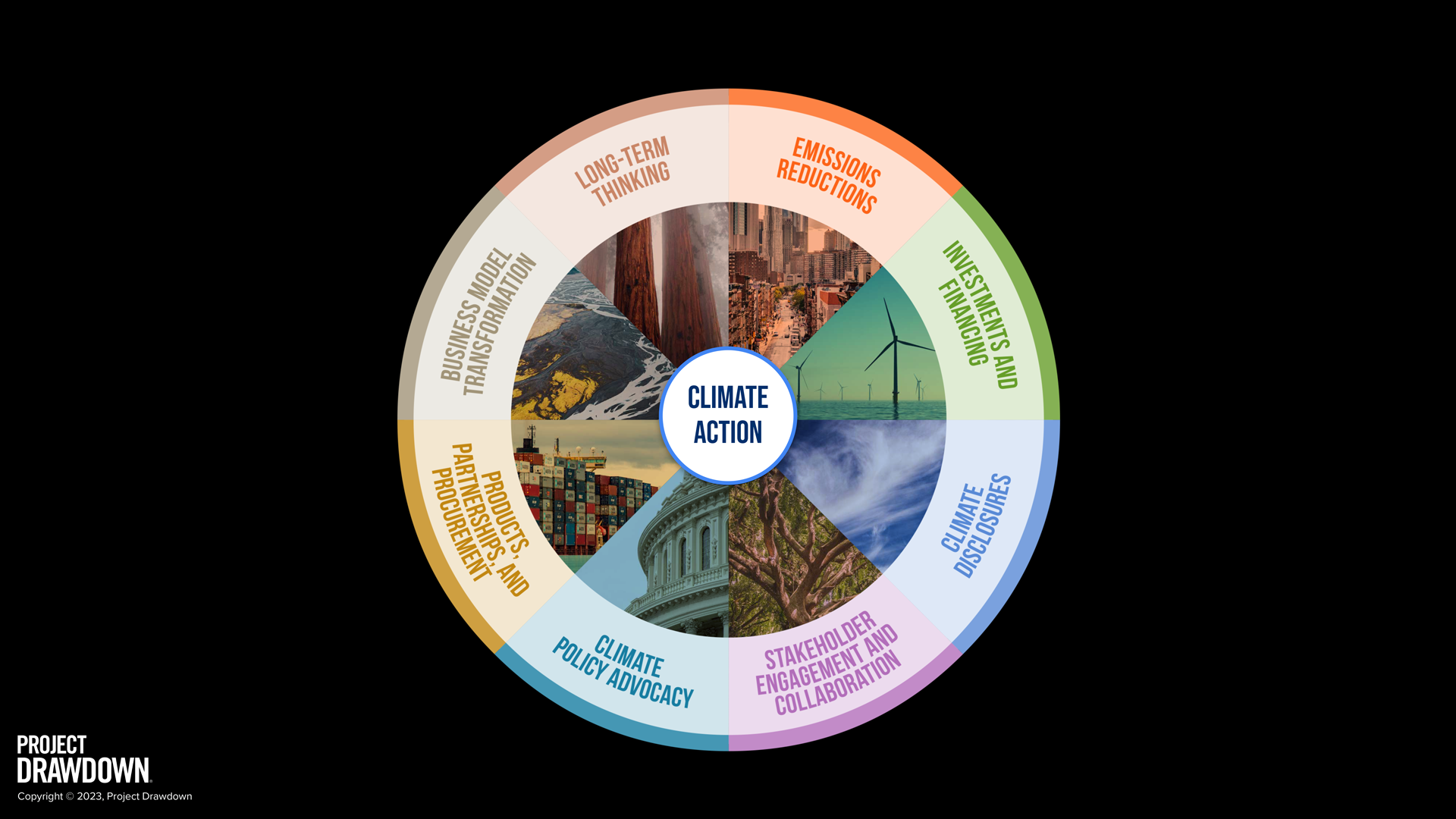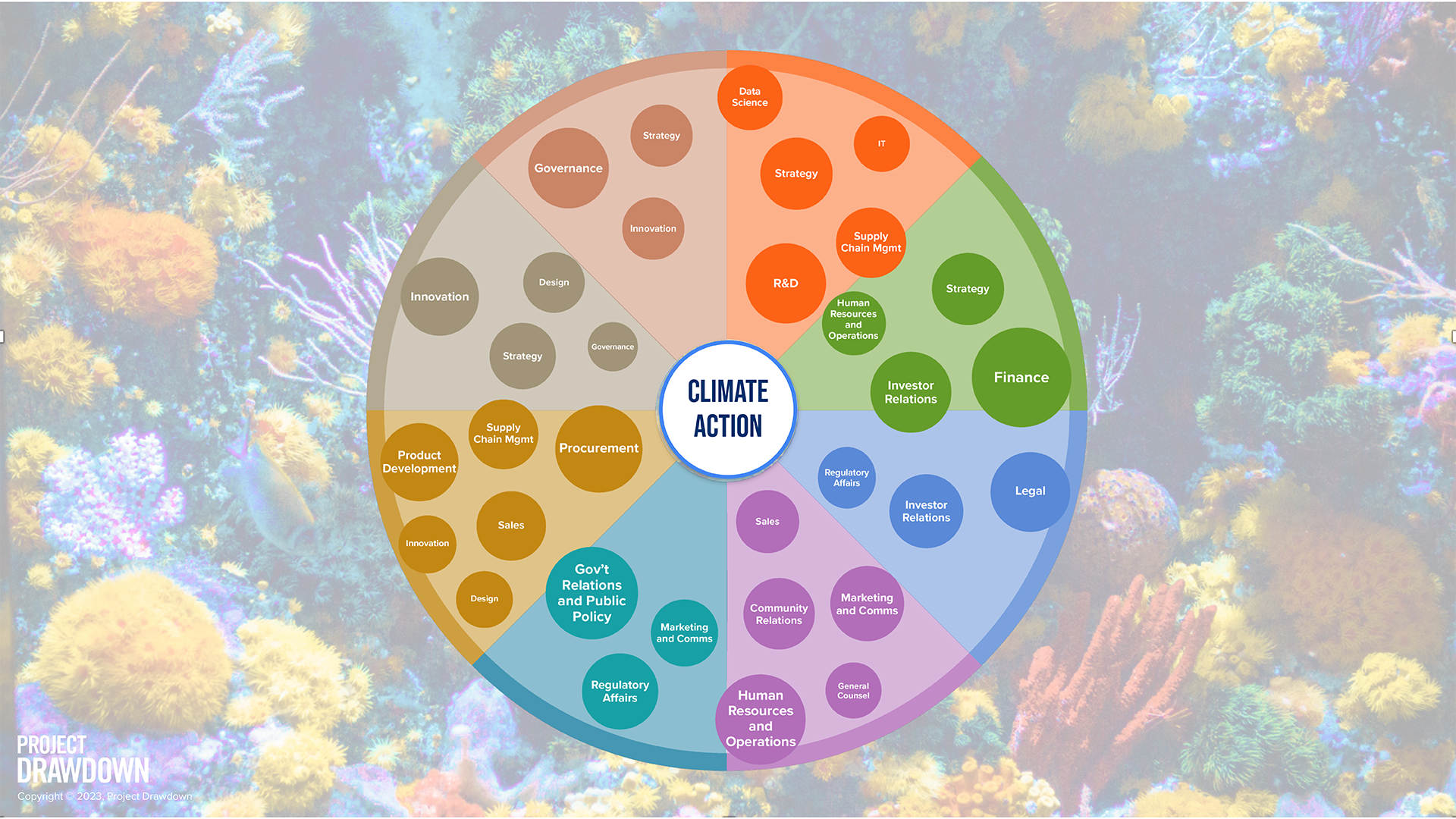
The Drawdown® Roadmap is a science-based strategy for accelerating climate solutions. It points to which climate actions governments, businesses, investors, philanthropists, community organizations, and others should prioritize to make the most of our efforts to stop climate change.
By showing how to strategically mobilize solutions across sectors, time, and place, engage the power of co-benefits, and recognize and remove obstacles, the Drawdown Roadmap charts a path to accelerate climate solutions before it’s too late.
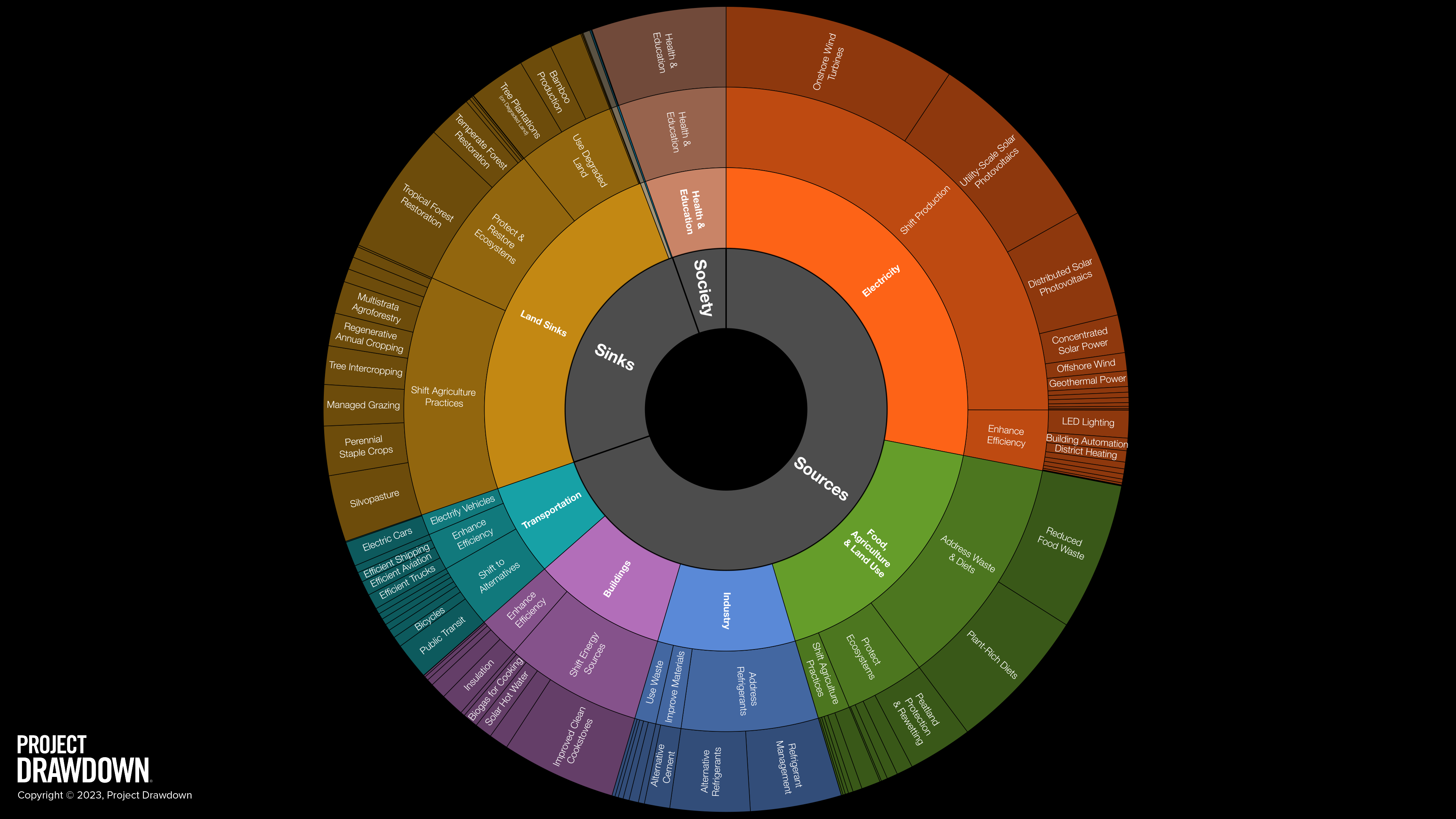
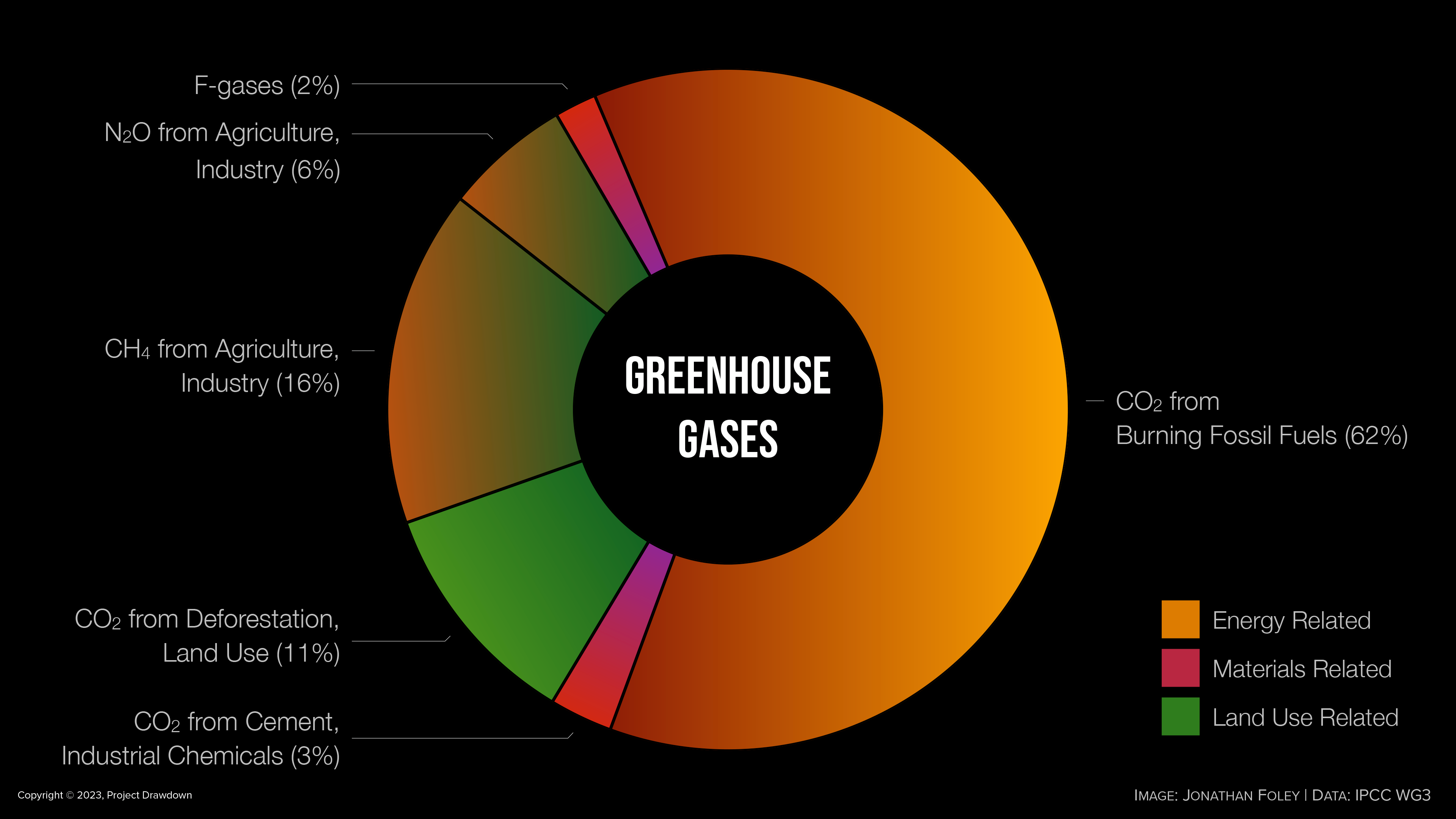
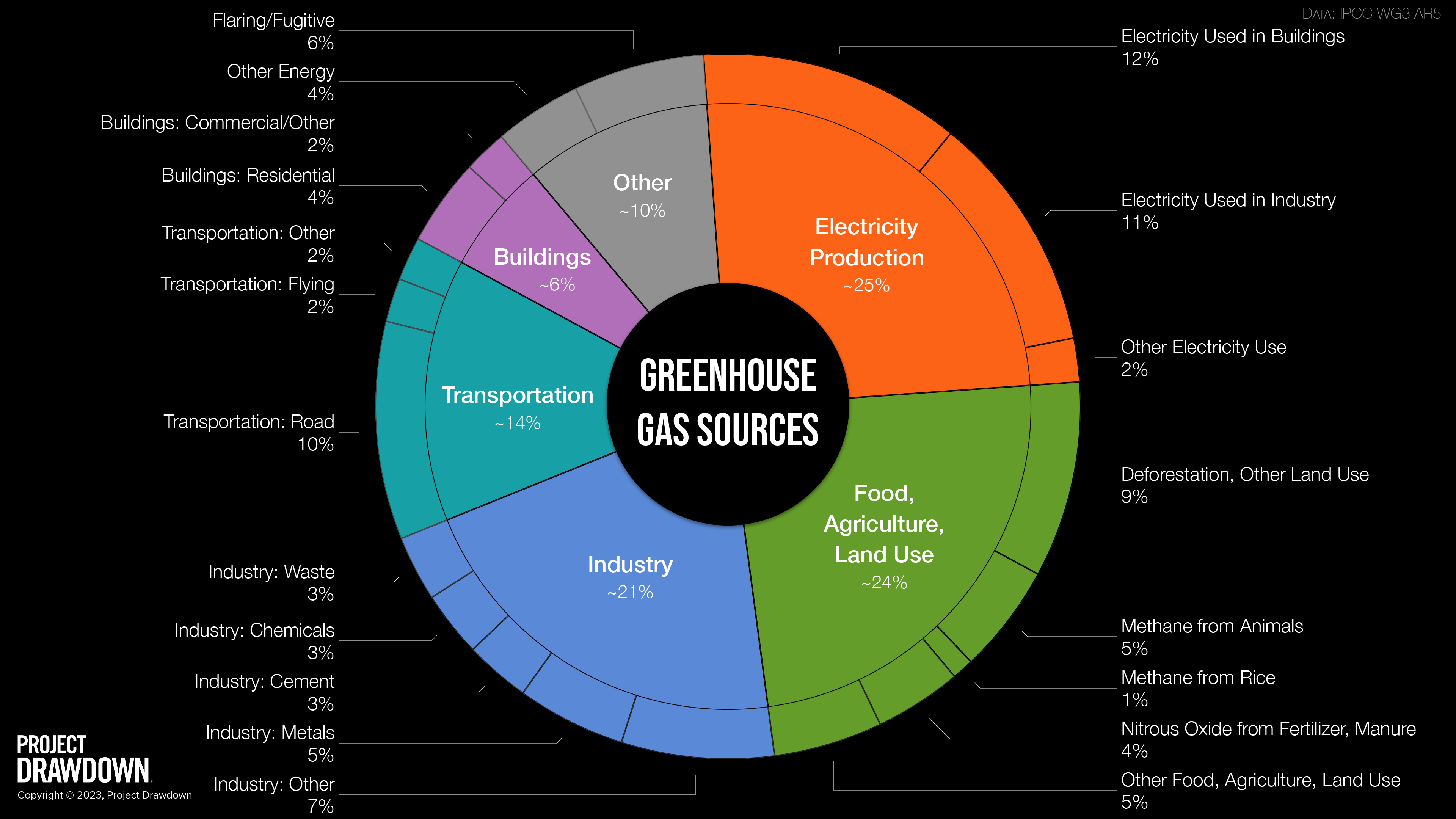
You are welcome to use the following key graphics from The Drawdown Roadmap for non-commercial purposes in presentations, reports, etc., with proper attribution. The Project Drawdown logo and copyright information on each graphic must be retained under all circumstances.
The Drawdown® Roadmap is a science-based strategy for accelerating climate solutions. It points to which climate actions governments, businesses, investors, philanthropists, community organizations, and others should prioritize to make the most of our efforts to stop climate change.
Your climate solutions journey begins now. Filled with the latest need-to-know science and fascinating insights from global leaders in climate policy, research, investment, and beyond, this video series is a brain-shift toward a brighter climate reality.
Climate Solutions 101 is the world’s first major educational effort focused solely on solutions. Rather than rehashing well-known climate challenges, Project Drawdown centers game-changing climate action based on its own rigorous scientific research and analysis. This course, presented in video units and in-depth conversations, combines Project Drawdown’s trusted resources with the expertise of several inspiring voices from around the world. Climate solutions become attainable with increased access to free, science-based educational resources, elevated public discourse, and tangible examples of real-world action. Continue your climate solutions journey, today.
Project Drawdown welcomes you to use and share unaltered information and materials created by Project Drawdown with proper attribution or citation. By using these materials, you signify your agreement to these terms of use. These materials are intended for educational purposes only.
Ryan Allard, PhD
Marcos Heil Costa, PhD
Jonathan Foley, Ph.D.
Lisa Graumlich, PhD
Jessica Hellmann, PhD
Tracey Holloway, PhD
Ramez Naam
Navin Ramankutty, PhD
Marshall Shepherd, PhD
Leah Stokes, PhD
Share Your Experience
Sign up to receive updates, provide ideas, and share how you will use Climate Solutions 101 in your classroom or community.
Enhanced geothermal energy is an emerging clean energy technology that harnesses the Earth’s subsurface heat to generate emissions-free baseload and dispatchable electricity. Unlike traditional geothermal systems that tap naturally occurring hot water or steam reservoirs, enhanced geothermal systems (EGS) use geological drilling and hydraulic fracturing to create artificial geothermal reservoirs through which they circulate water or other fluids. Accessible geothermal resources suitable for EGS occur across the globe and, if technology improvements continue, advanced geothermal, including EGS, could supply around 15% of the world’s electricity by 2050. However, to progress from pilot stage to commercialization, the industry needs more demonstration projects to address high upfront costs, technical challenges, and environmental and safety concerns, and to generate greater policy support to facilitate deployment. Based on our assessment, enhanced geothermal energy is a potentially high-impact climate solution that we will “Keep Watching."
Description for Social and Search
Enhanced geothermal energy is an emerging clean energy technology that harnesses the Earth’s subsurface heat to generate emissions-free baseload and dispatchable electricity.
Overview
What is our assessment?
Enhanced geothermal systems (EGS) are emerging as one of the most promising technologies for reliable, utility-scale, zero-carbon energy that can complement wind and solar and strengthen grid resilience. The technology, which is built on an existing base of technical and industrial expertise and capacity, is advancing rapidly through major R&D efforts and early commercial pilots. While large-scale deployment is still in its early stages and challenges remain around cost, execution, and social acceptance, we expect meaningful progress by the 2030s. For now, we will “Keep Watching” this solution.
Plausible
Could it work?
Yes
Ready
Is it ready?
No
Evidence
Are there data to evaluate it?
Limited
Effective
Does it consistently work?
Yes
Impact
Is it big enough to matter?
Yes
Risk
Is it risky or harmful?
No
Cost
Is it cheap?
No
What is it?
EGS are an energy technology that extracts heat from deep within the Earth’s crust to generate electricity. Unlike traditional geothermal systems that tap naturally occurring hot water or steam reservoirs, such as geysers or volcanic areas, EGS create artificial geothermal reservoirs by drilling into the earth, injecting and circulating water (or other fluids) through hot, dry rock formations, and then recovering the heated fluid or steam to generate electricity before reinjecting it back into the reservoir. Circulation of the water through the artificial reservoir can be in an open loop system, where the subsurface rocks are hydraulically fractured, or “fracked,” to increase permeability and allow water to flow between the injection well and the production well, or a closed loop system, where the water or other fluid is contained within pipes throughout the heat exchange circulation cycle. In addition to electricity, EGS can provide high-temperature heat for industrial processes or district heating, and enable geothermal energy storage by storing heat underground.
Does it work?
Electricity production by an enhanced geothermal power plant emits virtually no greenhouse gases. Analysis by the National Renewable Energy Laboratory showed that the median life cycle emissions from enhanced geothermal power plants was 32 g CO₂‑eq
/kWh, just 6% of the median life cycle emissions from a natural gas power plant, with most of the emissions generated during construction rather than operation. Geothermal energy has been used for more than a century, but EGS that use the horizontal drilling and hydraulic fracturing techniques developed by the oil and gas industry to access previously inaccessible underground heat resources are relatively new. To date, several small-scale and experimental EGS projects have successfully produced electricity, but no EGS plant has yet achieved full commercial operation at scale.
Why are we excited?
Enhanced geothermal energy systems are a potentially transformative climate solution for several reasons. First, they could massively expand clean energy availability. EGS can be deployed in almost any region with hot subsurface rocks. Experts estimate the Earth’s accessible geothermal resources are staggeringly large, and that tapping just 0.1% of the heat under our feet could meet global energy needs for millennia. If technology improvements continue, advanced geothermal, including EGS, could supply around 15% of the world’s electricity by 2050. Second, unlike solar and wind energy, enhanced geothermal power plants produce steady baseload power, dispatchable power, and even energy storage. Currently, coal and gas power plants are commonly used to provide stability and backup power to electricity grids around the world. EGS can provide the same energy benefits, complementing wind and solar energy by providing firm capacity and grid stability services to a renewable-heavy electricity grid, without the harmful climate impacts. Third, EGS plants have a relatively small land footprint and can potentially be sited near demand centers (including repurposing old fossil plant sites), improving energy security for regions with limited solar or wind resources.
Recent technological breakthroughs have improved the prospects for EGS. The application of horizontal drilling and hydraulic fracturing techniques has produced higher fluid flow rates and extended reservoir life. This has dramatically increased the heat extraction per well, overcoming previous limitations and boosting the energy output and economics of EGS. Industry reports show drilling rates in hot rock have increased by 300–500% in the last few years, slashing upfront costs. A recent U.S. Department of Energy report projects that the cost of next-generation geothermal projects, including EGS, will fall below that of other baseload power sources such as nuclear and natural gas with carbon capture and storage (CCS) by 2035. Other projections suggest that geothermal electricity could drop to around US$50/MWh by the 2030s, competitive with other renewables and nuclear. Finally, EGS leverage a skilled workforce and supply chain from the oil and gas sector. The necessary drilling rigs, subsurface imaging, and engineering expertise already exist, which could help scale up EGS faster than entirely new industries.
Why are we concerned?
Despite its promise, EGS face several challenges that temper its near-term prospects. To bridge the gap from pilot stage to commercialization, the industry needs more demonstration projects, case studies of success, and greater public trust. This is challenging because enhanced geothermal projects today have high upfront capital costs, primarily due to deep drilling and reservoir stimulation expenses, as well as high operational costs. Current EGS electricity is also far more expensive than conventional renewables, often hundreds of dollars per MWh. Until these costs decline, the industry may struggle to attract the investment financing needed to scale up. Moreover, the geological uncertainty in any given project is high because limited geophysical data in many regions makes it hard to pinpoint the best spots to drill. Developers must invest in exploration with no guarantee of finding an adequate resource, so early projects carry a significant risk of cost overruns.
Safety and environmental concerns also pose challenges. Currently, many EGS use hydraulic fracturing to create the heat exchange reservoirs and circulate fluid underground. In some types of geologies, this can trigger small earthquakes. Some EGS have been halted after local earthquakes caused alarm and minor damage. Because they use water and circulate hot brines, EGS could pose risks for groundwater contamination or water consumption in arid regions, although EGS designs that use closed-loop systems or non-potable water can avoid these problems. Finally, geothermal projects often face regulatory and logistical hurdles and lengthy permitting processes. In many countries, regulatory regimes and incentives have focused on solar, wind, and even nuclear, while geothermal energy (and especially EGS) has received comparatively little support. This means EGS developers may struggle with financing and grid access due to policy gaps or obstacles.
Horne, R., Genter, A., McClure, M., Ellsworth, W., Norbeck, J., & Schill, E. (2025). Enhanced geothermal systems for clean firm energy generation. Nature Reviews Clean Technology 2025 1:2, 1(2), 148–160. Link to source: https://doi.org/10.1038/S44359-024-00019-9
McKasy, M., Yeo, S. K., Zhang, J. S., Cacciatore, M. A., Allen, H. W., & Su, L. Y. F. (2025). Support for regulation of enhanced geothermal systems research: examining the role of familiarity, credibility, and social endorsement. Geothermal Energy, 13(1), 1–21. Link to source: https://doi.org/10.1186/S40517-025-00346-5
Nath, F., Mahmood, M. N., Ofosu, E., & Khanal, A. (2024). Enhanced geothermal systems: A critical review of recent advancements and future potential for clean energy production. Geoenergy Science and Engineering, 243, 213370. Link to source: https://doi.org/10.1016/J.GEOEN.2024.213370
As we approach the holidays, I can’t help but think about food.
My uncle’s green bean casserole, my new recipe for pomegranate-glazed sweet potatoes, the smell of sage, garlic, and rosemary wafting throughout the kitchen – every meal tells a story. For me, food is personal and emotional. It’s how I show love, how I connect with my culture, and, lately, it’s become a big part of how I think about taking climate action.
Join the 85,000+ subscribers discovering how to drive meaningful climate action around the world! Every other week, you'll get expert insights, cutting-edge research, and inspiring stories.
Receive biweekly email newsletter updates from Project Drawdown. Unsubscribe at any time.