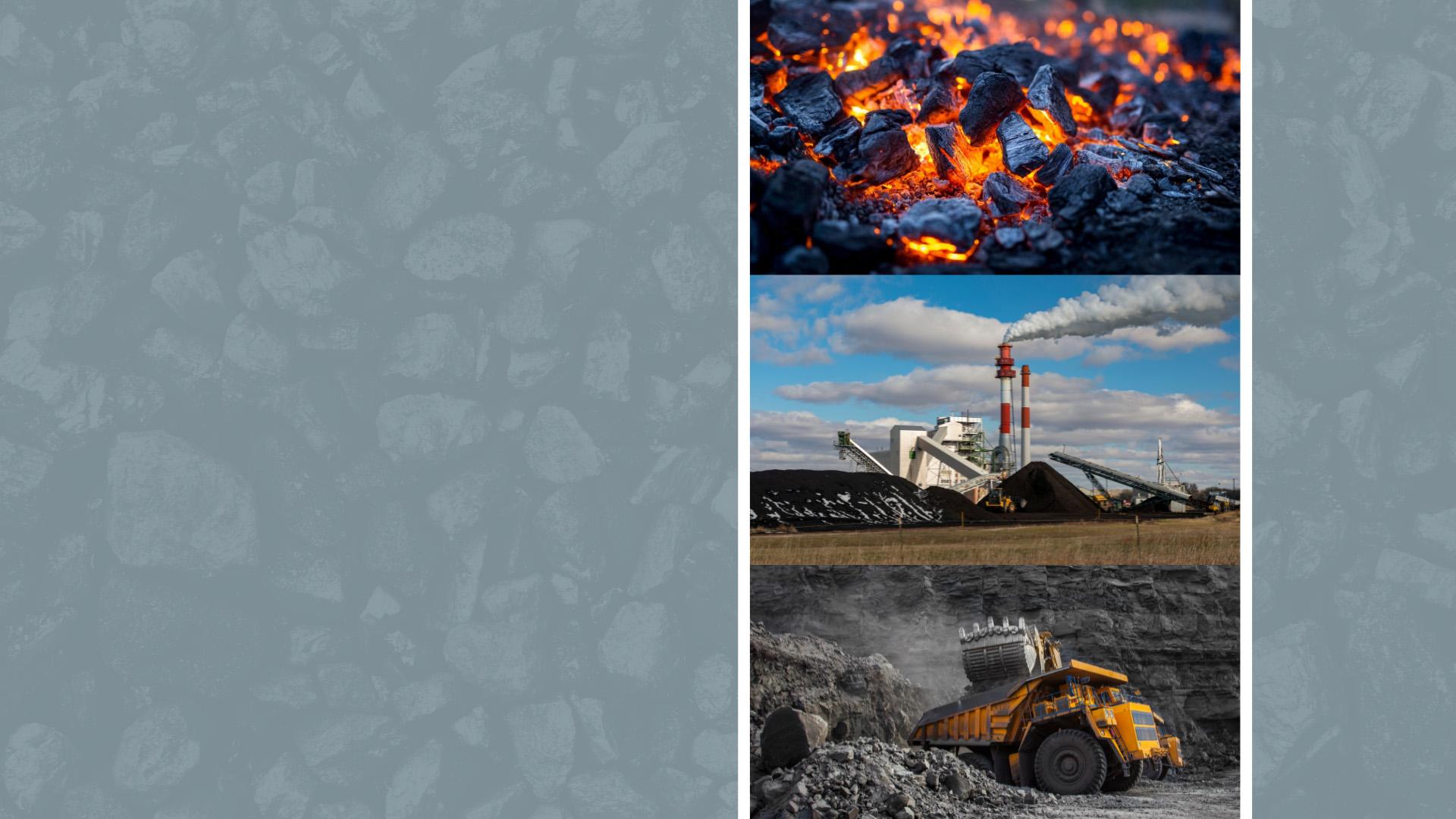
And that’s just the economic and political challenges facing “clean” coal. There’s also the problem of upstream emissions and the inconvenient truth that coal pollution doesn’t start at the power plant.
A problem that even “clean” coal does not address
Even if “clean” coal were economically and politically viable, it still wouldn’t solve one of the biggest, but often overlooked risks of the dirty fuel: spontaneous combustion.
Spontaneous coal combustion (SCC) occurs when coal suddenly catches on fire without any ignition source. While the causes of SCC are not well understood, the negative repercussions are abundantly clear.
SCC reduces the value of coal resources, releases pollution into the environment, damages mining equipment, and affects the health and safety of workers. Indeed, coal fires are among the greatest safety hazards for coal mining communities and miners, emitting a number of planet-warming and health-harming gases, including carbon monoxide, carbon dioxide, methane, ethylene, ethane, as well as particulate matter and coal tar, both of which can be hazardous to people’s health and the environment.
Though quantifying greenhouse gas emissions from SCC is challenging, one study based in China estimated that the annual loss of 20 Mt of coal from SCC may be responsible for as high as 42 Mt of carbon dioxide equivalents, which is roughly the same as the annual emissions from 9 million gas-fueled cars. Such emissions would still occur even if every coal plant in the country were retrofitted with CCS technologies.
Meeting energy demand without “clean” coal
Once upon a time, coal power made sense. It was an abundant, cheap fuel source that could be used virtually anywhere, and even though it had its downsides, it was economically more sensible than other energy sources. But the economic realities of electricity generation have changed over the past decade.
Electricity generated by renewables like solar and wind is now cheaper than electricity from coal power plants. The International Energy Agency found that over 96% of the newly installed solar and wind capacity in 2024 had lower power generation costs than new coal and gas plants, and over 92% of total power expansion that year came from renewables.
In addition, with new and growing demands for electricity for everything from vehicle electrification to AI datacenters, a large amount of power is needed quickly, and solar and wind power are among the fastest to be installed. An average renewable energy facility takes between one and three years to come online, while coal and gas-fired power plants can take up to five years or more.
Ultimately, when deciding whether to keep U.S. coal plants online or even build new ones, it's good to remember a prescient quote often attributed to a surprising source, a former Saudi oil minister: “The Stone Age didn’t end because we ran out of stones.” It’s never been clearer that the global leaders of tomorrow will be those who harness the clean, abundant, and cheap renewable energy sources now available to us. The real question, then, is not whether or not the U.S. should support “clean” coal, but rather, will the U.S. put down the stones and move boldly toward a better future?
About the Author
Jason Lam, BSc, MEL, is a research fellow focusing on the buildings, electricity, and industry sectors. Jason has a Bachelor of Science degree in biosystems engineering with an environmental specialization from the University of Manitoba. He also has a Master of Engineering Leadership in clean energy engineering from the University of British Columbia, expanding his technical knowledge in clean energy and developing business acumen skills.
About Project Drawdown
Project Drawdown is the world’s leading guide to science-based climate solutions. Our mission is to drive meaningful climate action around the world. A 501(c)(3) nonprofit organization, Project Drawdown is funded by individual and institutional donations.
This work is published under a Creative Commons CC BY-NC-ND 4.0 license. You are welcome to republish it following the license terms.