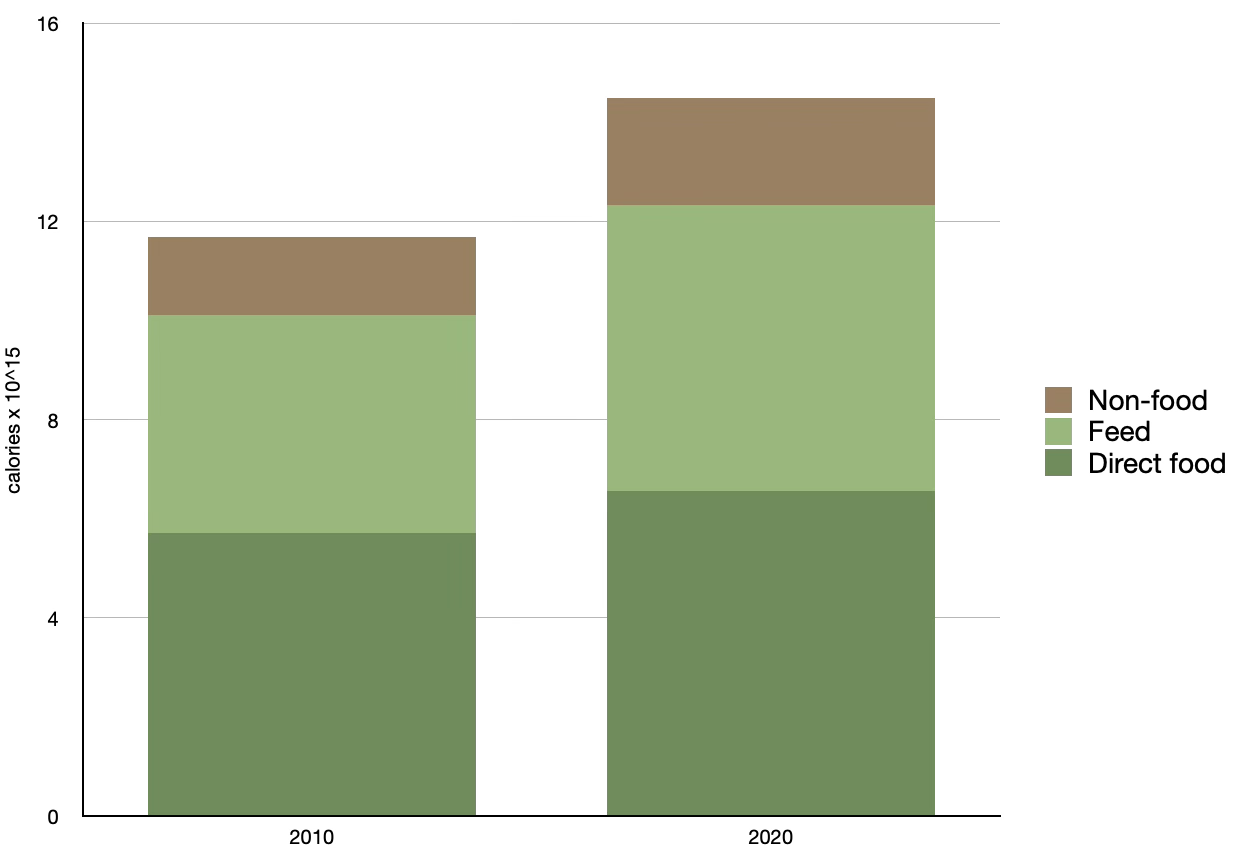
To determine the global efficiency of the agri-food system, researchers analyzed the fate of the top 50 crops by calorie production between 2010 and 2020, amounting to nearly 98% of all calories produced. They found that, in 2020, only half of all calories produced on croplands were available for people to eat, while the other half were “lost” as livestock feed, biofuels, or other non-food uses.
Concerningly, even though total calorie production increased from 2010 to 2020 by roughly 24%, calories for human consumption increased only 17%, reflecting a decrease in how efficiently croplands are being used to directly feed people.
We don’t have a food scarcity problem – we have a cropland use problem,” says study author and Project Drawdown Senior Scientist Paul West, Ph.D. “Nearly 40% of all calories produced were used as feed for livestock, which yield far fewer calories for human consumption. Beef cattle in particular are inefficient in converting feed to human food, consuming one-third of feed calories but only providing 9% of the food calories we get from livestock. Shifting cropland now used to grow feed to produce food for people instead could dramatically reduce the harmful impacts of agriculture on climate, water resources and wildlife habitat.”
Nearly 5% of calories produced were used for biofuels. Although these are less polluting than fossil fuels, they still are responsible for significant greenhouse gas emissions, particularly when land use is taken into account.
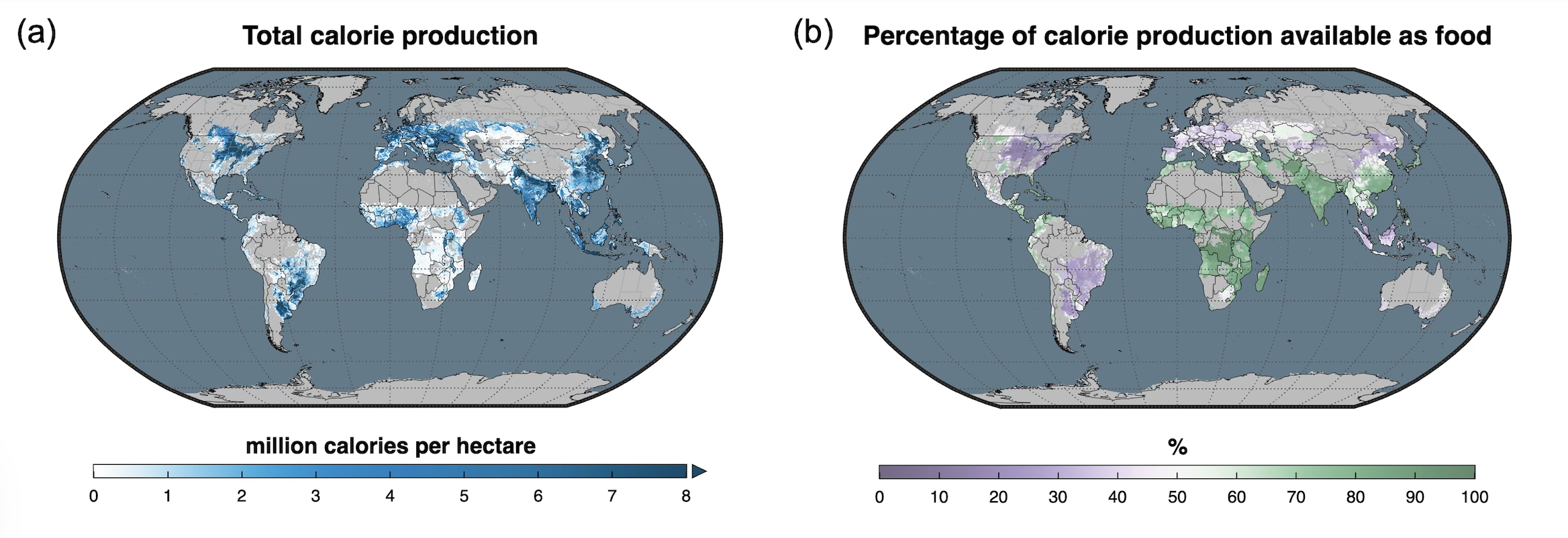
According to the study, such inefficiencies were particularly pronounced in a small set of countries. For instance, around 23% and 29% of total calorie production in the United States and Brazil, respectively, were used to feed people. In contrast, 84% of India’s calorie production feeds people.
In particular, the researchers found that if people in higher-income countries consumed chicken in place of beef – except for the 14 grams of beef per person per day allowed for optimal human and planetary health (roughly a hamburger per week) – the “lost calories” avoided would be enough to meet the caloric needs of 850 million people. More than half of the added benefit would come from the substitution taking place in the United States and Brazil, alone.
“Today’s global food system is staggeringly unsustainable,” says study author and Project Drawdown researcher Emily Cassidy. “Shifting to lower levels of beef consumption and reducing biofuel production could free up an immense amount of land.”
Ironically, the increasing inefficiency of cropland use not only increasingly exacerbates climate change, but it also may be exacerbated by it.
“If we don’t change what we’re growing and consuming, this could contribute to a vicious cycle,” says study author and Project Drawdown Senior Scientist James Gerber, Ph.D. “These inefficiencies could drive continued cropland expansion, leading to higher agricultural emissions and more global warming, which in turn could decrease crop yields, resulting in even more cropland expansion, and on and on.”
Ultimately, the researchers hope these findings will help guide strategic interventions that can feed the planet without destroying it.
“All of the solutions to close this efficiency gap already exist,” Cassidy says. “By targeting actions and policies for the commodities and countries that are the worst offenders, we can have an outsized impact on improving food security, health, and the environment.”
About Project Drawdown
Project Drawdown is the world’s leading guide to science-based climate solutions. Our mission is to drive meaningful climate action around the world. A 501(c)(3) nonprofit organization, Project Drawdown is funded by individual and institutional donations.