New analysis quantifies multiple benefits for farm-based solar
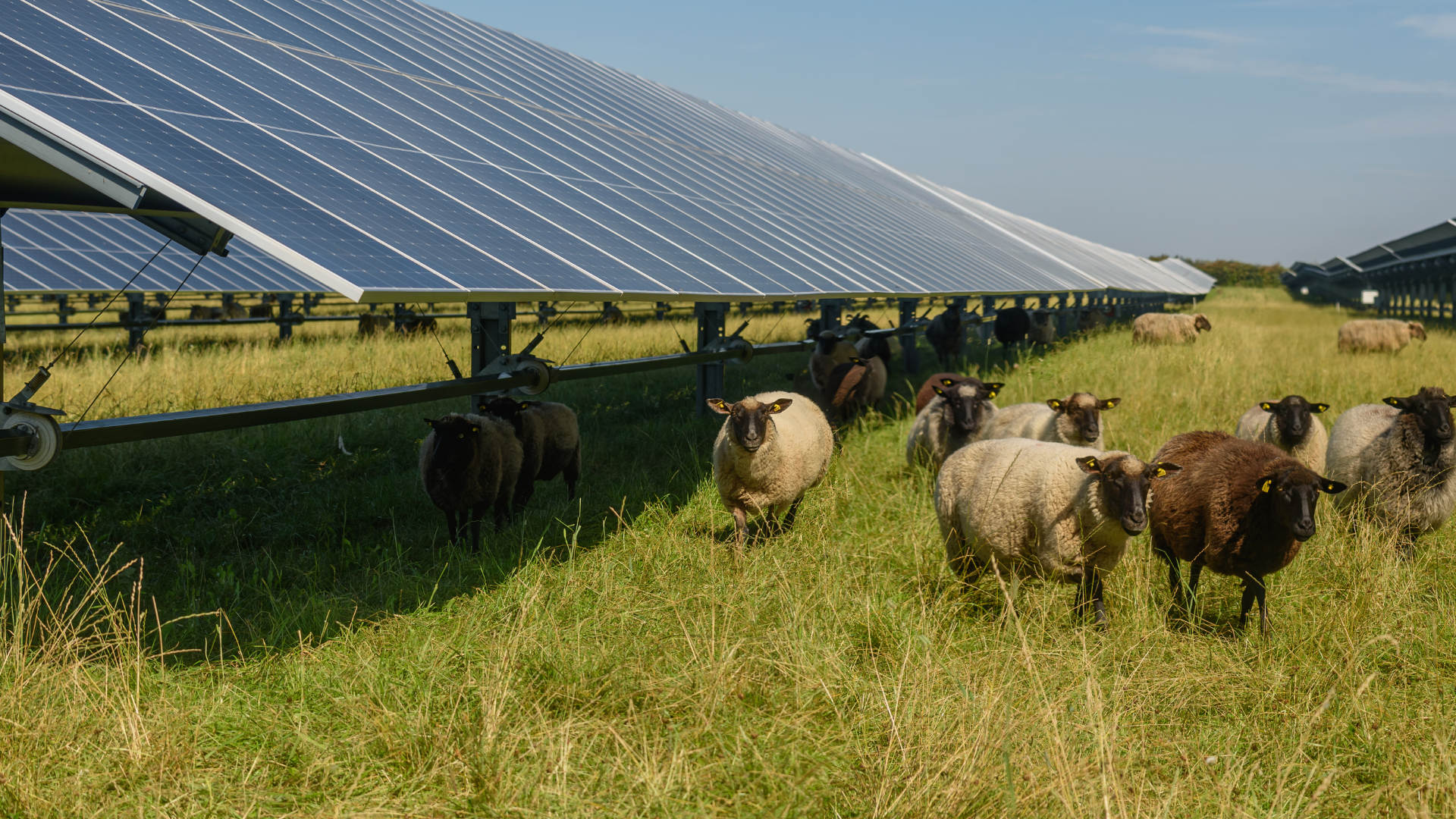
Agrivoltaics – combining crop or livestock production with solar energy generation – not only reduces climate pollution, but also enhances agriculture and offers economic benefits to farmers
Key Takeaways
- Deploying agrivoltaics on just 1% of global agricultural land could theoretically offset 21 PWh of annual electricity demand under ideal conditions. This potential output is nearly equivalent to global total electricity consumption in 2019.
- Agrivoltaic systems generate clean, renewable electricity without displacing agricultural activities, potentially increasing overall land use efficiency up to 200%.
- Agrivoltaic systems have the greatest adoption potential in arid, dry, and land-constrained regions – particularly Africa, the Asia-Pacific, and South and Central America – where solar resources are abundant and the crop-protection benefits of shading are most pronounced.
- Partnerships involving farmers, agricultural cooperatives, solar developers, and utilities, as well as subsidies, tax credits, and zoning support, can help this climate solution reach its full potential.
Grow crops and harvest the sun’s energy for electricity at the same time? Agrivoltaics could be one of the best win–win climate solutions around.
Strategically colocating solar panels with crops or livestock can substantially offset the need to produce electricity from power plants that produce carbon pollution, according to a new analysis and synthesis of peer-reviewed research by Project Drawdown. Not only that, but by shading crops and livestock, solar panels can moderate soil temperatures and reduce water loss, cutting agricultural water use by up to 50% compared with conventional farming.
“Agrivoltaics not only reduces greenhouse gas production, it also provides multiple benefits for farmers,” said research fellow Al-Amin Bugaje, Ph.D., who led the research. “Project Drawdown highly recommends it as a priority technology to deploy as part of efforts to halt climate change.”
Among the report’s other key take-home messages:
- Deploying agrivoltaics on just 1% of global agricultural land could theoretically offset 21 PWh of annual electricity demand under ideal conditions. This potential output is nearly equivalent to global total electricity consumption in 2019.
- Agrivoltaic systems generate clean, renewable electricity without displacing agricultural activities, potentially increasing overall land use efficiency up to 200%.
- Agrivoltaic systems have the greatest adoption potential in arid, dry, and land-constrained regions – particularly Africa, the Asia-Pacific, and South and Central America – where solar resources are abundant and the crop-protection benefits of shading are most pronounced.
- Partnerships involving farmers, agricultural cooperatives, solar developers, and utilities, as well as subsidies, tax credits, and zoning support, can help this climate solution reach its full potential.
Learn more about agrivoltaics and 120-plus additional Drawdown Explorer solutions here.
Contact
Skylar Knight, Senior Communications Manager
skylar.knight@drawdown.org
Interviews available upon request
About Project Drawdown
Project Drawdown is the world’s leading guide to science-based climate solutions. Our mission is to drive meaningful climate action around the world. A 501(c)(3) nonprofit organization, Project Drawdown is funded by individual and institutional donations.
This work is published under a Creative Commons CC BY-NC-ND 4.0 license. You are welcome to republish it following the license terms.
Press Contacts
To request a media interview with one of our experts or scientific researchers, please contact press@drawdown.org.