Cut Emissions Transportation Shift to Alternatives

Increase Carpooling

Highly Recommended
Image
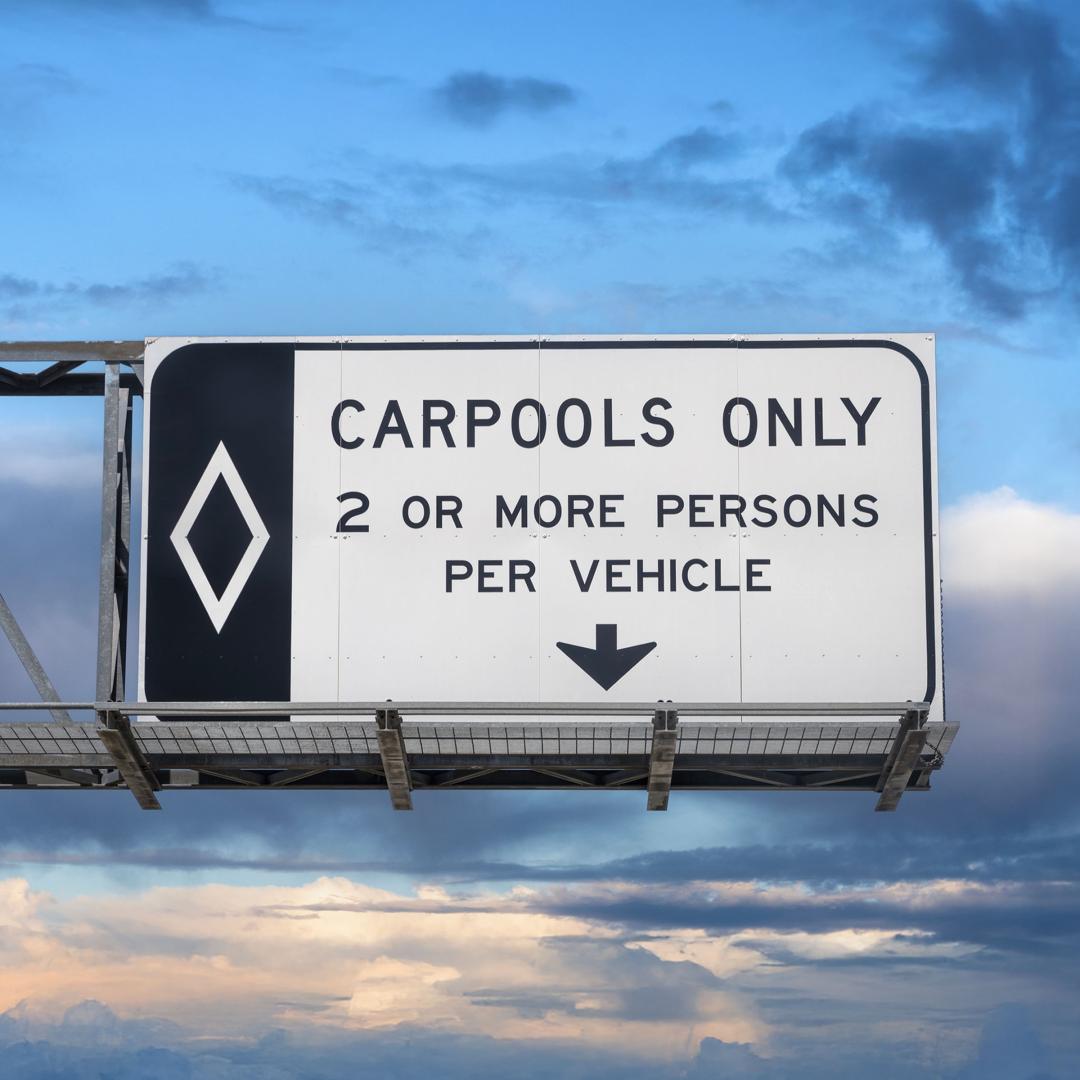
Carpool lane sign

Carpooling entails increasing the occupancy of passenger cars, including taxis, pickup trucks, motorhomes, passenger vans and other such vehicles but not including two- or three-wheeled, freight, public transit, or commercial vehicles, such as buses, heavy trucks, and commercial vans. It replaces the practice of driving alone.

We define Increase Carpooling as having at least one passenger per car in addition to the driver (two passengers for ride-hailing). We consider a fully adopted carpool trip as having 2 passengers for a car occupancy of three. New adoption is considered as any passenger kilometer (pkm)/yr avoided from an increase in the 2023 current adoption baseline (average occupancy of 1.5).

Last updated December 18, 2025

Solution Basics

million pkm avoided

t CO₂-eq (100-yr)/unit
048.7754.71
units/yr
Current 0 04.638×10⁶1.752×10⁷
Achievable (Low to High)

Climate Impact

Gt CO₂-eq (100-yr)/yr
Current Not Determined 0.2540.959
US$ per t CO₂-eq
-3,119
Gradual

CO₂ , CH₄, N₂O, BC

Additional Benefits

183,187,188
    183
  • 184
  • 185
  • 186
  • 187
  • 188
194

Overview

Carpooling involves transporting multiple people in a single car. Because carpooling increases the number of passengers per vehicle, it reduces emissions per pkm (International Transport Forum [ITF], 2021). However, the actual impact depends on how the carpool trip is organized – for example, whether it replaces solo car trips or shifts people away from public or active transport.

Carpooling is generally more efficient when ride-matching is optimized. If trips involve detours to pick up passengers, the benefits can be reduced. Similarly, carpooling may offer less advantage in areas with strong public transportation systems if it replaces public transport use (Schaller, 2021).

In addition to reducing emissions of CO₂, methane, nitrous oxide, and black carbon (ITF, 2023), carpooling can help alleviate traffic congestion and reduce demand for parking (Dong et al., 2025). It may also lower transportation costs for participants (Fulton et al., 2020). However, the full benefits depend on usage patterns, geographic context, and integration with other transport modes.

Impact Calculator

Adjust effectiveness and adoption using range sliders to see resulting climate impact potential.

Effectiveness

54.71
t CO2-eq/million pkm avoided
25th
percentile
48.77
75th
percentile
66.72
54.71
median

Adoption

0
million pkm avoided/yr
Low
4.638×10⁶
High
1.752×10⁷
0
current
Achievable Range

Climate Impact

0.00
Gt CO₂-eq/yr (100-yr)
05
which is the equivalent of
0.00%
of global emissions

The Details

Current State

Every million pkm shifted from car trips (at the current car occupancy) to fully adopted carpool trips avoids 54.71 t/CO₂‑eq on a 100-yr basis (Table 1) or 55.28 t/CO₂‑eq on a 20-yr basis

We found this by calculating baseline car GHG emissions from the global private vehicle fleet, by multiplying the tailpipe emissions intensities of different types of fuels (g/MJ) by the energy intensity of travel by vehicles using those fuels (MJ/vkm) (EV Database, 2024; Graba et al., 2023; International Energy Agency [IEA], 2021; Intergovernmental Panel on Climate Change [IPCC], 2006; ITF, 2020; Mamala et al., 2021; Tsai et al., 2018; U.S. Department of Energy [DOE], 2017). These equaled 112.4 t/CO₂‑eq /million pkm on a 100-year basis (113.6 t/CO₂‑eq /million pkm on a 20-year basis). We multiplied these emissions by the average occupancy of each vehicle type (ITF, 2020) to produce an average emissions intensity for CO₂, methane, and nitrous oxide for every vehicle type. We then combined these into a global weighted average based on the percentage of each type of vehicle (electric, hybrid and fossil fuel–powered) in the global fleet (United Nations Economic Commission for Europe [UNECE], 2023). The result is a car baseline for the global average emissions intensity of passenger cars. 

We then used the global GHG emissions intensity to calculate carpool emissions based on the carpool car occupancy and subtracted them from the baseline car occupancy to determine emissions avoided.

Table 1. Effectiveness at reducing emissions.

Unit: t CO₂‑eq (100-year basis)/million pkm avoided

25th percentile 48.77
Mean 57.72
Median (50th percentile) 54.71
75th percentile 66.72

It costs US$0.34/pkm to run a car (at current global average occupancy of 1.5 (ITF, 2020)), including car purchase and maintenance costs, fuel, etc., but excluding indirect costs such as the value of time spent driving a car. It costs US$0.17/pkm for a fully adopted carpool ride (car occupancy of 3). This is a savings of US$170,662/million pkm (AAA, 2022; Burnham et al., 2021; Gössling et al., 2019, 2022). These direct financial costs do not include estimates of additional fuel needed due to additional weight of passengers or additional mileage due to pick up and drop off.

This amounts to savings of US$3,119 t CO₂‑eq on a 100-year basis (Table 2) or US$3,087 t CO₂‑eq avoided emissions on a 20-year basis. 

Table 2: Cost per unit climate impact.

Unit: US$ (2023) per t CO₂‑eq (100-year basis)

Median -3,119

Carpooling is a behavioral solution, so its performance can improve over time through scaling, experience, and social normalization but not at a quantifiable learning rate

The most important mechanism for increasing carpooling is behavioral familiarity. As people become accustomed to carpooling, social and psychological barriers decline (Adelé & Dionisio, 2020; Malodia & Singla, 2016). Another mechanism that can improve carpooling performance is platform optimization. As apps and algorithms improve, matching riders becomes faster and more efficient (Beed et al., 2020; Santi et al., 2014). Network effects can also improve performance. More users increase the chance of shared trips, reducing wait times and detours (Dong et al., 2025; Manik & Molkenthin, 2020). Over time, through policy support and incentives, cities may develop dedicated lanes, subsidies, or integration with public transport, improving performance (Anthopoulos & Tzimos, 2021; Bachmann et al., 2018).

Speed of action refers to how quickly a climate solution physically affects the atmosphere after it is deployed. This is different from speed of deployment, which is the pace at which solutions are adopted.

At Project Drawdown, we define the speed of action for each climate solution as emergency brake, gradual, or delayed.

Increase Carpooling is a GRADUAL climate solution. It has a steady, linear impact on the atmosphere. The cumulative effect over time builds as a straight line.

Adoption

The current car occupancy is 1.5 persons per car (ITF, 2020). Approximately 2 billion cars are in use worldwide (WHO, 2022). To convert this number into pkm traveled by car, we needed to determine the average pkm that each passenger car travels per year. Using population-weighted data from several countries, we found that the average car carries 1.5 people and travels about 19,500 vkm/yr, or an average of 29,250 pkm/yr. Multiplying this by the number of cars in use gives the total travel distance by cars with the current occupancy. This corresponds to about 59 trillion pkm traveled by car worldwide each year. 

Current car occupancy is from a global average (ITF, 2020), and adoption trend and achievable adoption are based on reported car occupancy from Belgium, Canada, China, Denmark, France, Germany, India, Italy, Japan, Latvia, Romania, United Kingdom, United States, and the European Union (Armoogum et al., 2022; Davis & Boundy, 2022; European Environment Agency [EEA], 2000; Fiorello et al., 2016; Franckx, 2024; Wolfram et al., 2020).

Since 1.5 persons per car is the current occupancy average, we define adoption as the increase in avoided pkm/yr as a result of increased occupancy above 1.5. For this reason, current adoption is represented as zero (Table 3), and potential adoption in Table 6 is the increase in million pkm avoided each year.

Table 3. Current (2024) adoption level.

Unit: million pkm/yr avoided above current levels

Median, or population-weighted mean 0

Average world car occupancy has been flat since the 1990s after declining from higher occupancy in the 1970s. Therefore, we set the adoption trend to zero (Table 4). 

For example, car occupancy in the United States decreased from 1.9 in 1977 to 1.7 in 2009 and held steady at 1.7 in 2017 (Davis & Boundy, 2022). The European Union car occupancy decreased from 2.0 in 1970 to 1.5 in 1990, where it has held steady (EEA, 2000). Despite the emergence of carpooling platforms like BlaBlaCar, Carpoolworld, Liftshare, Participation, Lyft, and (formerly known as) Uber Pool, overall car occupancy has remained largely unchanged. These advances have improved convenience and access, but structural barriers such as travel time mismatches, privacy preferences, and urban sprawl continue to limit adoption. 

Table 4. Adoption trend (2023–2024).

Unit: million pkm/yr avoided above current levels

Median, or population-weighted mean 0

The adoption ceiling for increasing carpooling is equal to the pkm/yr avoidance if every car trip is a fully adopted carpool trip instead of the baseline adoption. Using a population-weighted mean of the average distance (in pkm) traveled per car annually, this translates to about 19.71 trillion pkm/yr avoided (Table 5). We assume that all of these trips can be made by carpool, regardless of purpose or distance. 

Romania reports a car occupancy of 2.7 (Fiorello et al., 2016), more than double the multi-occupancy of countries like the United States, where occupancy has remained around 1.5–1.7 for decades (Davis & Boundy, 2022; ITF, 2020; Wolfram et al., 2020). This demonstrates that significantly higher occupancy is not only possible but already practiced in certain contexts.

Table 5. Adoption ceiling: upper limit for adoption level. 

Unit: million pkm/yr avoided above current levels

Median, or population-weighted mean 19,710,000

Current car occupancy is useful for identifying globally achievable occupancy (Armoogum et al., 2022; Davis & Boundy, 2022; EEA, 2000; Fiorello et al., 2016; Franckx, 2024; ITF, 2023; Wolfram et al., 2020). 

To determine the high achievable level of carpool adoption, we assumed that every country could reach the highest adoption for any country. Romania had the highest reported average car occupancy at 2.7 (Fiorello et al., 2016) in 2016. We therefore set our high adoption at 2.7. This corresponds to 17.5 trillion pkm/yr avoided (Table 6). 

To identify a lower feasible level of carpool adoption, we took the historical average reported estimates for global car occupancy. This corresponds to a car occupancy of 1.7, or 5 trillion pkm/yr avoided by carpooling (Table 6).

Table 6. Range of achievable adoption levels.

Unit: million pkm/yr avoided above current levels

Current adoption 0.00
Achievable – low 4,638,000
Achievable – high 17,520,000
Adoption ceiling (physical limit) 19,710,000

Impacts

If average car occupancy globally reaches the low end of the achievable range of 1.7, it will avoid 0.254 Gt CO₂‑eq/yr GHG emissions (100-yr basis) over the current state.

If average car occupancy reaches 2.7 (the high end of the achievable range), it will avoid 0.959 Gt CO₂‑eq/yr GHG emissions (100-yr basis) over the current state.

If carpooling is fully adopted at a global average car occupancy of 3.0 (adoption ceiling), it would avoid 1.079 Gt CO₂‑eq/yr GHG emissions on a 100-yr basis.

Table7. Climate impact at different levels of adoption above current levels.

Unit: Gt CO₂‑eq per year avoided, 100-yr basis

Current adoption 0.000
Achievable – low 0.254
Achievable – high 0.959
Adoption ceiling (physical limit) 1.079

Income and Work

Carpooling can save money through shared travel costs between passengers (Chan & Shaheen, 2012; Molina et al., 2020; Shaheen et al., 2024). One study estimated that adding one passenger for every 100 vehicles, excluding any additional travel, could avoid 800–820 million gallons of gasoline each year in the United States (Jacobson & King, 2009). Actual cost savings would depend on the price of gasoline and any additional travel required to pick up passengers. These savings may be especially beneficial for low-income households (Zhou et al., 2020). 

Health

Tailpipe emissions from internal combustion engine cars are associated with asthma, lung cancer, increased emergency department visits for respiratory disease, and increased mortality (Anenberg et al., 2019; Guarnieri & Balmes, 2014; Pan et al., 2023; Pennington et al., 2024; Requia et al., 2018; Szyszkowicz et al., 2018). Urban areas, and often those in low- and middle-income countries, experience disproportionately higher vehicle emissions and higher health impacts (Anenberg et al., 2019; Kinney et al., 2011). By reducing vehicle miles traveled, carpooling can reduce vehicle emissions and associated health impacts (Shaheen et al., 2024). A reduction in vehicle miles traveled can improve traffic congestion and road safety (Shaheen et al., 2024). Carpooling is associated with several psychological benefits, including improved sociability and reduced commute stress (Chan & Shaheen, 2012; Molina et al., 2020).

Equality

Communities that are lower income or rich in racial and ethnic minorities tend to be located near highways and major traffic corridors, and so are disproportionately exposed to air pollution (Kerr et al., 2021). Carpooling can reduce the impacts of air pollution on these populations (Shaheen et al., 2024). In the United States, carpooling can increase the accessibility of transportation for low-income, racial and ethnic minority, or immigrant populations who cannot afford personal vehicles or cannot attain driver’s licenses (Liu & Painter, 2012; Shaheen et al., 2024). Enhanced access to transportation broadly is important for increasing economic equality by providing households with income-earning opportunities.

Air Quality

Tailpipe emissions from internal combustion engine cars contain particulate matter, sulfur oxides, nitrous oxides, carbon monoxide, and volatile organic compounds (Union of Concerned Scientists, 2023). Carpooling is associated with reduced energy consumption and reduced emissions from internal combustion engine cars (Molina et al., 2020; Shaheen et al., 2024). Carpooling can reduce traffic congestion, though the magnitude of this reduction is uncertain (Chan & Shaheen, 2011). One study in Langfang, China, found that carpooling can reduce trips during the morning and evening commuting hours, reducing vehicle volume and increasing travel speeds for both carpooling and non-carpooling cars (Li et al., 2018).

Other

Carpooling often falters due to the difficulty of aligning multiple participants’ schedules. Commuters face mismatched work hours, unexpected delays, or shifting routines, raising stress and reducing reliability. Comfort and privacy are additional deterrents because many travelers prefer the autonomy and personal space of driving alone. Trust and safety concerns also play a major role – riding with strangers raises worries about reliability and personal security (Cellina et al., 2024).

Accessibility further complicates adoption. In low-density areas, the limited pool of potential passengers makes ride-matching impractical, while in urban areas cultural resistance and ingrained travel habits hinder uptake (Friman et al., 2020). Finally, digital divides restrict participation in app-based systems, excluding those without reliable smartphone or internet access.

When carpooling uses platform operators it generates some emissions from server use, data processing, and administrative activities. These operational emissions are small compared to the reductions achieved.

Carpooling services could induce additional car use, especially if they offer convenience and low costs that attract people who would otherwise not have traveled or would have used lower-emission modes. This is a form of the rebound effect, where efficiency gains are offset by increased travel demand.

Carpooling may raise safety and security concerns, particularly in informal or app-based systems where passengers share rides with strangers. Concerns around personal safety, especially for women and marginalized groups, can limit adoption or require regulatory oversight.

Promoting carpooling without coordination with public transport policy could erode ridership on bus or rail systems. This could weaken investment in public transit and make systems less viable, especially in low-density or suburban areas.

Carpooling reduces the number of vehicles on the road per trip but still relies on cars rather than shifting demand toward lower-impact modes such as public transit or nonmotorized transportation.

Carpooling requires changes in user behavior and social norms, rather than technological innovation. While this avoids the environmental and financial costs of new infrastructure or vehicles, it can be challenging because it depends on people being willing to alter their travel habits, coordinate with others, and potentially sacrifice convenience or privacy.

The extent of emission reduction depends on how many people share the ride and whether the carpool replaces trips that would have otherwise been made using more sustainable transport modes (e.g., walking, cycling, or public transport).

The environmental benefits of carpooling vary based on travel behavior and context. If carpooling fills otherwise empty seats in cars already on the road, it can be highly efficient. However, if it results in route detours or deadheading or if people shift from using transit to carpooling, the net benefit may be smaller or even negative.

Carpooling can reduce the overall number of cars needed for transportation, which in turn can decrease congestion and urban parking demand. However, this benefit is limited if carpooling is only used during peak hours or if it competes with active or public transport options.

Reinforcing

Carpooling reinforces non-car transportation modes by extending reach, offering first- and last-mile connections, and providing flexible options where fixed-route services are limited.

Carpooling reinforces the benefits of electric and hybrid cars by maximizing each vehicle’s efficiency, spreading battery and fuel savings across more passengers, and further reducing per-capita emissions.

Competing 

Carpooling, electric bicycles, and public transit compete for pkm. Consequently, increased use of carpooling could reduce kilometers traveled using public transit or electric bicycles. 

Consensus of effectiveness in decarbonizing the transport sector: Mixed

There is a high level of consensus among major organizations working in the area of climate solutions that carpooling can substantially reduce GHG emissions. Fewer vehicles mean less fuel burned per pkm. However, research on the real-world effectiveness of carpooling is mixed. Carpooling has remained largely flat for decades despite policy incentives and the advent of ride-sharing platforms, limiting its overall contribution to emission reductions. Additionally, rebound effects may occur or if carpoolers would otherwise have taken public transit, walked, or biked, thereby offsetting some emission avoidance. 

Globally, cars and vans were responsible for 3.8 Gt CO₂‑eq emissions in 2023 – more than 60% of road transport emissions (IEA, 2024).

Large-scale carpooling can significantly reduce fuel consumption and emissions, with studies in Shanghai showing reductions of 15–23% depending on adoption scenarios, and additional efficiency gains from improved traffic flow (Yan et al., 2020).

Carpooling can substantially reduce vehicle activity. Jalali et al. (2017) found up to a 24% decrease in total distance driven and a 40% reduction in vehicle trips under optimal conditions in Changsha, China, which translates into daily CO₂ emission reductions of around 4 tons.

Simulations on university campuses showed potential reductions of 5% in CO₂ and 7% in nitrous oxide emissions, alongside a 7% increase in average speed and an 8% reduction in travel time with increased adoption of carpooling (Tomas et al., 2021).

The results presented in this document summarize findings from 15 reviews and meta-analyses and 24 original studies reflecting current evidence from 52 countries. We recognize this limited geographic scope creates bias, and hope this work inspires research and data sharing on this topic in underrepresented regions.

Take Action

Looking to get involved? Below are some key actions for this solution that can get you started, arranged according to different roles you may play in your professional or personal life.

These actions are meant to be starting points for involvement and are not intended to be prescriptive or necessarily suggest they are the most important or impactful actions to take. We encourage you to explore and get creative!

Lawmakers and Policymakers

  • Incorporate carpooling into government transportation policy; facilitate carpooling systems, encourage and incentivize employee participation, and ensure leaders are committed to and participate in carpooling.
  • Create dedicated coordinating bodies across government agencies, businesses, and the public to develop carpooling systems; conduct regular movement planning to identify changes in participation and opportunities to increase adoption.
  • Reduce the number of fleet vehicles and increase passenger capacity as much as possible.
  • Use a combination of policies that both incentivizes carpooling and disincentivizes single occupancy trips.
  • Implement disincentives for driving such as congestion tolls, fuel taxes, and smog fees (based on how much a car pollutes and is driven).
  • Implement targeted support measures such as carpool lanes, the option to use bus lanes, and dedicated parking spots.
  • Deploy financial incentives such as tax breaks, reduced or waived toll fare, and subsidies for carpoolers.
  • Fund public carpooling schemes or subsidize private carpooling initiatives.
  • Fund free “guaranteed ride home” initiatives for carpoolers via public transit or private taxis/rideshares.
  • Integrate private and individual carpooling initiatives into Mobility as a Service (MaaS) systems, allowing for seamless transfers between public and private transportation systems.
  • Clarify legal structures around carpooling to allow drivers to accept reimbursement while remaining noncommercial operators; ensure the maximum allowable fees are enough to incentivize drivers while not outcompeting public transportation.
  • Develop regulatory structures for web-based carpooling applications that focus on minimum standards related to security, data privacy, and consumer protection; mandate user verification, create a registration system for users, and offer ongoing support for safety and security.
  • Encourage carpooling platforms to enact data-sharing agreements; mandate trip details be shared with regulatory agencies, and cross-reference user identities with national databases to screen for relevant criminal backgrounds.
  • Work with universities, businesses, and other large institutions to encourage carpooling schemes; engage in public-private partnerships with carpooling matching services to increase adoption.
  • Report on success of carpooling efforts including number of drivers and users, fuel reductions, and emissions avoidance.
  • Develop carpooling awareness campaigns focusing on internally motivating factors such as money saved, health benefits, reduced pollution, social connection, and lifestyle sustainability.

Further information:

Practitioners

  • Conduct mobility planning with local government agencies and the public to optimize routes and decrease waiting times.
  • Cluster pick-up and drop-off zones near freeways, residential areas, parking, public transit, and/or popular commercial areas – ensuring well-lit environments.
  • Host events for carpoolers, create in-person carpooling clubs, and start social media groups for carpoolers to build trust.
  • Offer incentives for joining and participating in carpooling programs; collaborate with local government and businesses to offer incentives.
  • Create web applications and websites for matching services that are easy to use, have a professional user interface, and have built-in chat features to build trust for participants.
  • Integrate carpooling initiatives into MaaS systems, allowing for seamless transfers between public and private transportation systems.
  • Use a carpool application screening process to increase trust and safety; gather information on motivations for carpooling to help match like-minded participants.
  • Allow drivers to set their own fees (within a maximum allowable range) or to waive fees for passengers; allow for nonmonetary compensation.
  • Ensure drivers and passengers have public profiles with ratings to allow participants to select drivers and passengers; create filters for categories such as gender, preferred levels of socialization, trip purpose, etc; allow for women-only trips.
  • Designate clear responsibilities for both drivers and passengers.
  • Encourage participants to socialize with each other and to share their experiences and insights with their community.
  • Collect feedback from participants and update web-based matching applications to accommodate local preferences and culture.
  • Create features on web applications that show how much money, fuel, and emissions participants have avoided by carpooling; create competitions for biggest avoiders and most active participants; develop gamification methods appropriate for the local context.
  • Ensure applications offer real-time support and ride tracking to enhance safety and trust.
  • Collaborate with insurance companies to offer carpooling policies that cover injury, property damage, and liability during trips.
  • Develop carpooling awareness campaigns focusing on factors such as money saved, health benefits, reduced pollution, social connection, and lifestyle sustainability.

Business Leaders

  • Develop company policies promoting carpooling; communicate to employees and the public how they support broader company goals; ensure leadership is committed and participates in carpooling.
  • Develop systems to track and plan fleet routes that encourage carpooling.
  • Reduce the number of fleet vehicles and increase passenger capacity.
  • Ask staff, including senior management, to identify barriers and opportunities for carpooling.
  • Work with large institutions such as universities, businesses, and public agencies to coordinate wider carpooling schemes; partner with carpooling matching services.
  • Report on success of carpooling efforts, including number of drivers and users, fuel reductions, and emissions avoidance.
  • Pay a cash bonus or offer pretax benefits for staff who carpool or take public transportation.
  • If your company offers employees courtesy rides via rideshare platforms, incentivize carpooling by covering 100% of carpool trips but only a portion of individual trips.
  • Offer other perks for employees who carpool such as preferred parking.
  • Partner with local and/or private carpooling initiatives to offer promotional incentives such as gift cards or discounts.
  • Create and distribute educational materials for employees on carpooling and commuting best practices.
  • Partner with, support, and/or donate to carpooling infrastructure investments and awareness campaigns.
  • Advocate for better public carpooling policies and integrated services with public transit systems.

Further information:

Nonprofit Leaders

  • Develop policies promoting carpooling; communicate to employees and the public how they support broader organizational goals; ensure leadership is committed and participates in carpooling.
  • Develop systems to track and plan fleet routes that encourage carpooling.
  • Reduce the number of vehicles and increasing passenger capacity as much as possible.
  • Ask staff, including senior management to identify barriers and opportunities for carpooling.
  • Report on success of carpooling efforts including number of drivers and users, fuel reductions, and emissions avoided.
  • Pay a cash bonus or provide pretax benefits for staff who carpool (or take public transportation).
  • Offer other perks for employees who carpool such as preferred parking.
  • Administer carpooling schemes using web-based applications; expand carpooling services to underserved communities by creating matching services or subsidizing participation.
  • Work with large institutions such as universities, businesses, and public agencies to coordinate wider carpooling schemes; partner with carpooling matching services.
  • Advocate for better public carpooling regulations and services with local officials.
  • Help design local regulations to clarify legal classification for carpool drivers or provide means for assessments, data collection, citizen participation, and other steps in the policymaking process.
  • Host or support carpooling clubs, events, social media groups, and other strategies for promoting carpooling.
  • Create, support, or partner with carpooling awareness campaigns that focus on motivating factors such as money saved, health benefits, reduced pollution, social connection, and a sustainable lifestyle.

Investors

  • Encourage employees to carpool.
  • Encourage portfolio companies to incentivize, provide, or promote carpooling opportunities and infrastructure, and to share fleet management plans.
  • Invest in companies that are improving the comfort, accessibility, and cost of carpooling infrastructure.
  • Invest in companies that provide or are developing web-based carpooling matching algorithms or services.
  • Invest in companies that provide MaaS and integration with existing mobility services.
  • Invest in carpooling models, supportive technology, and infrastructure.
  • Deploy capital to efforts that increase safety, trust, and convenience of web-based applications that support carpooling, such as methods of encryption and ways to integrate services into public transportation systems.

Further information:

Philanthropists and International Aid Agencies

  • Develop organizational policies promoting carpooling; communicate to employees and the public how they support broader organizational goals; ensure leadership is committed and participates in carpooling.
  • Develop systems to track and plan fleet routes to enable carpooling.
  • Reduce the number of fleet vehicles and increase passenger capacity.
  • Award grants to organizations developing or organizing carpooling services and/or advocating for improved carpooling regulations; fund projects that pilot carpooling in underserved areas and transit deserts.
  • Invest in companies that provide or are developing web-based carpooling matching services or integration with public transit infrastructure and existing mobility services.
  • Deploy capital to efforts that increase safety, trust, and convenience of web-based applications that support carpooling such as methods of encryption and ways to integrate services into public transportation systems.
  • Administer carpooling schemes using web-based applications; expand carpooling services to underserved communities by creating matching services or subsidizing participation.
  • Advocate for better public carpooling policies and integrated services with public transit systems.
  • Work with large institutions such as universities, businesses, and public agencies to coordinate wider carpooling schemes; partner with carpooling matching services.
  • Create, support, or partner with carpooling awareness campaigns that focus on motivating factors such as money saved, health benefits, reduced pollution, social connection, and a sustainable lifestyle.
  • Host or support carpooling clubs, events, social media groups, and other strategies for promoting carpooling.
  • Improve and finance local infrastructure such as high-occupancy vehicle (HOV) lanes and carpooling capacity.
  • Help design local regulations to clarify legal classification for carpool drivers or provide means for assessments, data collection, citizen participation, and other steps in the policymaking process.
  • Develop carpooling awareness campaigns focusing on motivating factors such as money saved, health benefits, reduced pollution, social connection, and lifestyle sustainability.

Thought Leaders

  • Lead by example and carpool regularly.
  • Share information on carpooling initiatives.
  • Develop carpooling awareness campaigns focusing on motivating factors such as money saved, health benefits, reduced pollution, social connection, and lifestyle sustainability.
  • Help design regulations to clarify legal classification for carpool drivers or provide means for assessments, data collection, citizen participation, and other steps in the policymaking process.
  • Advocate for better public carpooling regulations and services with local officials.
  • Conduct local market research on specific demographics and professions to understand what incentives or disincentives will drive adoption.
  • Host events for carpoolers, create in-person carpooling clubs, and start social media groups for local carpoolers to build trust and community offline.

Technologists and Researchers

  • Develop applications that match users with carpooling opportunities based on routes, time, and location, and integrate them with local public transportation and other mobility services.
  • Use data from mobile phones, GPS trackers, and social networking to identify travelers with similar patterns and suggest carpooling routes.
  • Develop safety protocols for data usage in carpooling apps; create options for women-only rides.
  • Research the impact of incentives and disincentives on modal choice in specific metropolitan areas, regions, and countries; identify the most effective means of increasing adoption.
  • Research what impacts trust between users and carpooling platforms and between users and drivers; investigate differences in trust by local demographic characteristics; examine mechanisms for increasing trust and safety for users.
  • Research the impact of vehicle ownership on willingness to carpool, and how participating as both a driver and passenger can influence adoption.
  • Develop ways to maintain data privacy for participants while also allowing for transparency and safety; examine applications of encryption methods such as homomorphic encryption.

Communities, Households, and Individuals

  • Carpool regularly and encourage your household, neighbors, and community to carpool when feasible.
  • Take advantage of financial incentives such as tax breaks, subsidies, or grants for carpooling.
  • Share information on local carpooling initiatives with your community.
  • Host events for carpoolers, create carpooling clubs, and start social media groups for local carpoolers to build trust offline.
  • Advocate for better public carpooling regulations and services with local officials.
  • Encourage employers and local businesses to provide incentives for carpooling.
  • Participate in or develop carpooling awareness campaigns focusing on motivating factors such as money saved, health benefits, reduced pollution, social connection, and lifestyle sustainability.

“Take Action” Sources

References

AAA. (2022). AAA’s your driving costs. Link to source: https://exchange.aaa.com/automotive/aaas-your-driving-costs 

Adelé, S., & Dionisio, C. (2020). Learning from the real practices of users of a smart carpooling app. European Transport Research Review, 12(1), Article 39. Link to source: https://doi.org/10.1186/s12544-020-00429-3  

Anenberg, S., Miller, J., Henze, D., & Minjares, R. (2019). A global snapshot of the air pollution-related health impacts of transportation sector emissions in 2010 and 2015. International Council on Clean Transportation. Link to source: https://theicct.org/publication/a-global-snapshot-of-the-air-pollution-related-health-impacts-of-transportation-sector-emissions-in-2010-and-2015/  

Anthopoulos, L. G., & Tzimos, D. N. (2021). Carpooling platforms as smart city projects: a bibliometric analysis and systematic literature review. Sustainability, 13(19), Article 10680. Link to source: https://doi.org/10.3390/su131910680  

Armoogum, J., Borgato, S., Fiorello, D., Garcia, C., Gopal, Y., Maffii, S., Mars, K.-J., Popovska, T., Vincent, V., Bogaert, M., Gayda, S., & Schlemmer, L. (2022). Study on new mobility patterns in European cities: EU-wide passenger mobility survey. IFSTTAR - Institut Français des Sciences et Technologies des Transports, de l’Aménagement et des Réseaux. Link to source: https://doi.org/10.2832/728583  

Bachmann, F., Hanimann, A., Artho, J., & Jonas, K. (2018). What drives people to carpool? Explaining carpooling intention from the perspectives of carpooling passengers and drivers. Transportation Research Part F: Traffic Psychology and Behaviour, 59, 260–268. Link to source: https://doi.org/10.1016/j.trf.2018.08.022  

Beed, R. S., Sarkar, S., Roy, A., Biswas, S. D., & Biswas, S. (2020). A hybrid multi-objective carpool route optimization technique using genetic algorithm and A* algorithm (No. arXiv:2007.05781). arXiv. Link to source: https://doi.org/10.48550/arXiv.2007.05781  

Burnham, A., Gohike, D., Rush, L., Stephens, T., Zhou, Y., Delucchi, M. A., Birky, A., Hunter, C., Lin, Z., Ou, S., Xie, F., Proctor, C., Wiryadinata, S., Liu, N., & Boloor, M. (2021). Comprehensive total cost of ownership quantification for vehicles with different size classes and powertrains. Argonne National Laboratory. Link to source: https://publications.anl.gov/anlpubs/2021/05/167399.pdf 

Cellina, F., Derboni, M., Giuffrida, V., Tomic, U., & Hoerler, R. (2024). Trust me if you can: practical challenges affecting the integration of carpooling in Mobility-as-a-Service platforms. Travel Behaviour and Society, 37, Article 100832. Link to source: https://doi.org/10.1016/j.tbs.2024.100832 

Chan, N. D., & Shaheen, S. A. (2012). Ridesharing in North America: past, present, and future. Transport Reviews, 32(1), 93-112. Link to source: https://doi.org/10.1080/01441647.2011.621557 

Chang, X., Wu, J., Kang, Z., Pan, J., Sun, H., & Lee, D.-H. (2024). Estimating emissions reductions with carpooling and vehicle dispatching in ridesourcing mobility. Npj Sustainable Mobility and Transport, 1(1), Article 16. Link to source: https://doi.org/10.1038/s44333-024-00015-3 

Davis, S. C., & Boundy, R. G. (2022). Transportation energy data book: edition 40. Oak Ridge: Oak Ridge National Laboratory. Link to source: https://tedb.ornl.gov/wp-content/uploads/2022/03/TEDB_Ed_40.pdf 

Dong, X., Liu, H., & Gayah, V. V. (2025). An analytical model of many-to-one carpool system performance under cost-based detour limits. International Journal of Transportation Science and Technology, 18, 80–95. Link to source: https://doi.org/10.1016/j.ijtst.2024.05.007 

European Environment Agency. (2000). Are we moving in the right direction? Indicators on transport and environmental integration in the EU: TERM 2000. Link to source: https://www.eea.europa.eu/publications/ENVISSUENo12/page029.html 

EV Database. (2024). Energy consumption of full electric vehicles. (v5.1.0) [Dataset]. Link to source: https://ev-database.org/cheatsheet/energy-consumption-electric-car  

Fiorello, D., Martino, A., Zani, L., Christidis, P., & Navajas-Cawood, E. (2016). Mobility data across the EU 28 member states: results from an extensive CAWI survey. Transportation Research Procedia, 14, 1104–1113. Link to source: https://doi.org/10.1016/j.trpro.2016.05.181 

Franckx, L. (2024). Increasing the occupancy rates of cars: carrot, stick or both? Case Studies on Transport Policy, 15, Article 101132. Link to source: https://doi.org/10.1016/j.cstp.2023.101132 

Friman, M., Lättman, K., & Olsson, L. E. (2020). Carpoolers’ perceived accessibility of carpooling. Sustainability, 12(21), Article 8976. Link to source: https://doi.org/10.3390/su12218976 

Fulton, L., Brown, A., & Compostella, J. (2020). Generalized costs of travel by solo and pooled ridesourcing vs. privately owned vehicles, and policy implications. UC Office of the President: University of California Institute of Transportation Studies. Link to source: https://doi.org/10.7922/G2WD3XTK 

Gössling, S., Choi, A., Dekker, K., & Metzler, D. (2019). The social cost of automobility, cycling and walking in the European Union. Ecological Economics, 158, 65–74. Link to source: https://doi.org/10.1016/j.ecolecon.2018.12.016 

Gössling, S., Kees, J., & Litman, T. (2022). The lifetime cost of driving a car. Ecological Economics, 194, Article 107335. Link to source: https://doi.org/10.1016/j.ecolecon.2021.107335 

Graba, M., Mamala, J., Bieniek, A., Augustynowicz, A., Czernek, K., Krupińska, A., Włodarczak, S., & Ochowiak, M. (2023). Assessment of energy demand for PHEVs in year-round operating conditions. Energies, 16(14), Article 5571. Link to source: https://doi.org/10.3390/en16145571 

Guarnieri, M., & Balmes, J. R. (2014). Outdoor air pollution and asthma. The Lancet, 383(9928), 1581–1592. Link to source: https://www.thelancet.com/journals/lancet/article/PIIS0140-6736(14)60617-6/abstract 

International Energy Agency. (2021). Global fuel economy initiative 2021 data explorer [Data Tool]. Link to source: https://www.iea.org/data-and-statistics/data-tools/global-fuel-economy-initiative-2021-data-explorer 

International Energy Agency. (2024). Global EV outlook 2024. Link to source: https://www.iea.org/reports/global-ev-outlook-2024/outlook-for-emissions-reductions 

Intergovernmental Panel on Climate Change. (2006). Mobile combustion. In S. Eggelston, L. Buendia, K. Miwa, T. Ngara, & K. Tanabe (Eds.), 2006 IPCC guidelines for national greenhouse gas inventories (Vol. 2 Energy, pp. 3.1–3.78). Institute for Global Environmental Strategies (IGES) for the IPCC. Link to source: https://www.ipcc-nggip.iges.or.jp/public/2006gl/pdf/2_Volume2/V2_3_Ch3_Mobile_Combustion.pdf 

International Transport Forum. (2020). Good to go? Assessing the environmental performance of new mobility [Corporate Partnership Board Report]OECD/ITF Publishing. Link to source: https://www.itf-oecd.org/good-to-go-environmental-performance-new-mobility 

International Transport Forum. (2021). ITF transport outlook 2021. OECD Publishing. Link to source: https://doi.org/10.1787/16826a30-en 

International Transport Forum. (2023). ITF transport outlook 2023. OECD Publishing. Link to source: https://doi.org/10.1787/b6cc9ad5-en 

International Transport Workers’ Federation Global. (2025). Understanding informal transport in Africa. Link to source: https://www.itfglobal.org/en/resources/understanding-informal-transport-in-africa 

Jacobson, S. H., & King, D. M. (2009). Fuel saving and ridesharing in the US: motivations, limitations, and opportunities. Transportation Research Part D: Transport and Environment, 14(1), 14–21. Link to source: https://doi.org/10.1016/j.trd.2008.10.001 

Jalali, R., Koohi-Fayegh, S., El-Khatib, K., Hoornweg, D., & Li, H. (2017). Investigating the potential of ridesharing to reduce vehicle emissions. Urban Planning, 2(2), 26–40. Link to source: https://doi.org/10.17645/up.v2i2.937 

Kerr, G. H., Goldberg, D. L., & Anenberg, S. C. (2021). COVID-19 pandemic reveals persistent disparities in nitrogen dioxide pollution. Proceedings of the National Academy of Sciences, 118(30), Article e2022409118. Link to source: https://doi.org/10.1073/pnas.2022409118  

Kinney, P. L., Gichuru, M. G., Volavka-Close, N., Ngo, N., Ndiba, P. K., Law, A., Gachanja, A., Gaita, S. M., Chillrud, S. N., & Sclar, E. (2011). Traffic impacts on PM2.5 air quality in Nairobi, Kenya. Environmental Science & Policy, 14(4), 369–378. Link to source: https://doi.org/10.1016/j.envsci.2011.02.005

Li, R., Liu, Z., & Zhang, R. (2018). Studying the benefits of carpooling in an urban area using automatic vehicle identification data. Transportation Research Part C: Emerging Technologies, 93, 367–380. Link to source: https://doi.org/10.1016/j.trc.2018.06.012 

Liu, C. Y., & Painter, G. (2012). Travel behavior among Latino immigrants. Journal of Planning Education and Research, 32(1), 62–80. Link to source: https://doi.org/10.1177/0739456X11422070 

Malodia, S., & Singla, H. (2016). A study of carpooling behaviour using a stated preference web survey in selected cities of India. Transportation Planning and Technology, 39(5), 538–550. Link to source: https://doi.org/10.1080/03081060.2016.1174368 

Mamala, J., Graba, M., Bieniek, A., Prażnowski, K., Augustynowicz, A., & Śmieja, M. (2021). Study of energy consumption of a hybrid vehicle in real-world conditions. Eksploatacja i Niezawodność – Maintenance and Reliability, 23(4), 636–645. Link to source: https://doi.org/10.17531/ein.2021.4.6 

Manik, D., & Molkenthin, N. (2020). Topology dependence of on-demand ride-sharing. Applied Network Science, 5(1), Article 49. Link to source: https://doi.org/10.1007/s41109-020-00290-2 

Molina, J. A., Giménez-Nadal, J. I., & Velilla, J. (2020). Sustainable commuting: results from a social approach and international evidence on carpooling. Sustainability, 12(22), Article 9587. Link to source: https://doi.org/10.3390/su12229587 

Pan, S., Yu, W., Fulton, L. M., Jung, J., Choi, Y., & Gao, H. O. (2023). Impacts of the large-scale use of passenger electric vehicles on public health in 30 US. metropolitan areas. Renewable and Sustainable Energy Reviews, 173, Article 113100. Link to source: https://doi.org/10.1016/j.rser.2022.113100 

Pennington, A. F., Cornwell, C. R., Sircar, K. D., & Mirabelli, M. C. (2024). Electric vehicles and health: A scoping review. Environmental Research, 251, Article 118697. Link to source: https://doi.org/10.1016/j.envres.2024.118697 

Requia, W. J., Mohamed, M., Higgins, C. D., Arain, A., & Ferguson, M. (2018). How clean are electric vehicles? Evidence-based review of the effects of electric mobility on air pollutants, greenhouse gas emissions and human health. Atmospheric Environment, 185, 64-77. Link to source: https://doi.org/10.1016/j.atmosenv.2018.04.040 

Rodriguez Mendez, Q., Fuss, S., Lück, S., & Creutzig, F. (2024). Assessing global urban CO2 removal. Nature Cities, 1(6), 413–423. Link to source: https://doi.org/10.1038/s44284-024-00069-x 

Santi, P., Resta, G., Szell, M., Sobolevsky, S., Strogatz, S. H., & Ratti, C. (2014). Quantifying the benefits of vehicle pooling with shareability networks. Proceedings of the National Academy of Sciences, 111(37), 13290–13294. Link to source: https://doi.org/10.1073/pnas.1403657111 

Schaller, B. (2021). Can sharing a ride make for less traffic? Evidence from Uber and Lyft and implications for cities. Transport Policy, 102, 1–10. Link to source: https://doi.org/10.1016/j.tranpol.2020.12.015 

Shaheen, S., Cohen, A., & Bayen, A. (2024). The benefits of carpooling. UC Berkeley: Transportation Sustainability Research Center. Link to source: http://dx.doi.org/10.7922/G2DZ06GF 

Szyszkowicz, M., Kousha, T., Castner, J., & Dales, R. (2018). Air pollution and emergency department visits for respiratory diseases: a multi-city case crossover study. Environmental Research, 163, 263–269. Link to source: https://doi.org/10.1016/j.envres.2018.01.043 

Tomás, R., Fernandes, P., Macedo, J., & Coelho, M. C. (2021). Carpooling as an immediate strategy to post-lockdown mobility: a case study in university campuses. Sustainability, 13(10), Article 5512. Link to source: https://doi.org/10.3390/su13105512 

Tsai, J.-H., Yao, Y.-C., Huang, P.-H., & Chiang, H.-L. (2018). Fuel economy and volatile organic compound exhaust emission for motorcycles with various running mileages. Aerosol and Air Quality Research, 18(12), 3056–3067. Link to source: https://doi.org/10.4209/aaqr.2018.07.0264 

United Nations Development Programme. (2024). A closer look at informal (popular) transportation: an emerging portrait. Link to source: https://www.undp.org/acceleratorlabs/publications/closer-look-informal-popular-transportation-emerging-portrait 

United Nations Economic Commission for Europe. (2023). Road vehicle fleet at 31 December by fuel type, type of vehicle,country and year [Dataset]. Link to source: https://w3.unece.org/PXWeb2015/pxweb/en/STAT/STAT__40-TRTRANS__03-TRRoadFleet/03_en_TRRoadFuelFlt_r.px/ 

Union of Concerned Scientists. (2023). Cars, trucks, buses and air pollution. Link to source: https://www.ucs.org/resources/cars-trucks-buses-and-air-pollution

United States Department of Energy. (2017). Fuel economy guide. Link to source: https://www.fueleconomy.gov/feg/download.shtml

World Health Organization. (2022). Number of registered vehicles. Link to source: https://www.who.int/data/gho/data/indicators/indicator-details/GHO/number-of-registered-vehicles 

Wolfram, P., Tu, Q., Hertwich, E., & Pauliuk, S. (2020). Documentation of the transport-sector model within the RECC model framework v1.0. Link to source: https://doi.org/10.5281/zenodo.3631938 

Yan, L., Luo, X., Zhu, R., Santi, P., Wang, H., Wang, D., Zhang, S., & Ratti, C. (2020). Quantifying and analyzing traffic emission reductions from ridesharing: a case study of Shanghai. Transportation Research Part D: Transport and Environment, 89, Article 102629. Link to source: https://doi.org/10.1016/j.trd.2020.102629 

Zhou, Y., Aeschliman, S., & Gohlke, D. (2020). Affordability of household transportation fuel costs by region and socioeconomic factors. Article ANL/ESD--20/11. Argonne National Laboratory. Link to source: https://doi.org/10.2172/1760477

Credits

Lead Fellows

  • Heather Jones, Ph.D.

Contributors

  • Ruthie Burrows, Ph.D.

  • James Gerber, Ph.D.

  • Daniel Jasper

  • Alex Sweeney

Internal Reviewers

  • Aiyana Bodi

  • Hannah Henkin

  • James Gerber, Ph.D.

  • Amanda D. Smith, Ph.D.

  • Heather McDiarmid, Ph.D.

  • Greenhouse gas quantity expressed relative to CO₂ with the same warming impact over 100 years, calculated by multiplying emissions by the 100-yr GWP for the emitted gases.

  • Greenhouse gas quantity expressed relative to CO with the same warming impact over 20 years, calculated by multiplying emissions by the 20-yr GWP for the emitted gases.

  • 8th World Congress on Conservation Agriculture

  • Reducing greenhouse gas concentrations in the atmosphere by preventing or reducing emissions.

  • Air conditioning

  • The process of increasing acidity.

  • The extent to which emissions reduction or carbon removal is above and beyond what would have occurred without implementing a particular action or solution.

  • An upper limit on solution adoption based on physical or technical constraints, not including economic or policy barriers. This level is unlikely to be reached and will not be exceeded.

  • The quantity and metric to measure implementation for a particular solution that is used as the reference unit for calculations within that solution.

  • A composting method in which organic waste is processed in freestanding piles that can be aerated actively with forced air or passively by internal convection.

  • The interactions of aerodynamic forces and flexible structures, often including the stucture's control system.

  • A process in which microbes break down organic materials in the presence of oxygen. This process converts food and green waste into nutrient-rich compost.

  • Farming practices that work to create socially and ecologically sustainable food production.

  • Addition of trees and shrubs to crop or animal farming systems.

  • Spread out the cost of an asset over its useful lifetime.

  • A process in which microorganisms break down organic material in the absence of oxygen. Methane and CO₂ are the main byproducts.

  • A crop that live one year or less from planting to harvest; also called annual.

  • aerated static piles

  • black carbon

  • Solar panels that generate electricity from sunlight captured on both sides, increasing energy output by reflecting light from the ground and surroundings.

  • Made from material of biological origin, such as plants, animals, or other organisms.

  • A renewable energy source generated from organic matter from plants and/or algae.

  • An energy source composed primarily of methane and CO that is produced by microorganisms when organic matter decomposes in the absence of oxygen.

  • Carbon stored in biological matter, including soil, plants, fungi, and plant products (e.g., wood, paper, biofuels). This carbon is sequestered from the atmosphere but can be released through decomposition or burning.

  • Living or dead renewable matter from plants or animals, not including organic material transformed into fossil fuels. Peat, in early decay stages, is partially renewable biomass.

  • Biogas refined to the same quality as natural gas. CO₂ and impurities are removed, and the biomethane can be distributed and used in existing natural gas technologies.
     

  • A type of carbon sequestration that captures carbon from CO via photosynthesis and stores it in soils, sediments, and biomass, distinct from sequestration through chemical or industrial pathways.

  • A synthetic organic compound used to make a type of hard, clear plastic for food and drink packaging and many consumer goods.

  • A climate pollutant, also called soot, produced from incomplete combustion of organic matter, either naturally (wildfires) or from human activities (biomass or fossil fuel burning).

  • A secure, decentralized way of digitally tracking transactions that could be used to improve the transparency and efficiency of carbon markets. 

  • High-latitude (>50°N or >50°S) climate regions characterized by short growing seasons and cold temperatures.

  • bisphenol A

  • The components of a building that physically separate the indoors from the outdoor environment.

  • Businesses involved in the sale and/or distribution of solution-related equipment and technology, and businesses that want to support adoption of the solution.

  • Compound annual growth rate

  • A chemical reaction involving heating a solid to a high temperature; to make cement clinker, limestone is calcined into lime in a process that requires high heat and produces CO.

  • The ratio of the actual electricity an energy technology generates over a period of time to the maximum it could have produced if it operated continuously at full capacity.

  • A four-wheeled passenger vehicle.

  • Average number of people traveling in a car per trip.

  • Technologies that collect CO before it enters the atmosphere, preventing emissions at their source. Collected CO can be used onsite or in new products, or stored long term to prevent release.

  • A greenhouse gas that is naturally found in the atmosphere. Its atmospheric concentration has been increasing due to human activities, leading to warming and climate impacts.

  • Total GHG emissions resulting from a particular action, material, technology, or sector.

  • Amount of GHG emissions released per activity or unit of production. 

  • A marketplace where carbon credits are purchased and sold. One carbon credit represents activities that avoid, reduce, or remove one metric ton of GHG emissions.

  • A colorless, odorless gas released during the incomplete combustion of fuels containing carbon. Carbon monoxide can harm health and be fatal at high concentrations.

  • The time it takes for the emissions reduction from a measure to equal the emissions invested in implementing the measure.

  • Activities or technologies that pull CO out of the atmosphere, including enhancing natural carbon sinks and deploying engineered sinks.

  • Long-term storage of carbon in soils, sediment, biomass, oceans, and geologic formations after removal of CO from the atmosphere or CO capture from industrial and power generation processes.

  • carbon capture and storage

  • carbon capture, utilization, and storage

  • A binding ingredient in concrete responsible for most of concrete’s life-cycle emissions. Cement is made primarily of clinker mixed with other mineral components.

  • chlorofluorocarbon

  • Processes that use chemical reactions or heat to break down plastic waste into basic molecular components or feedstocks that can then be used to make new plastic products.

  • methane

  • A system in which resources, materials, and products are used for as long as possible through reuse, repair, refurbishment, and recycling.

  • Energy sources that have little to no negative environmental or climate impacts during operation relative to fossil fuel–based energy sources.

  • Gases or particles that have a planet-warming effect when released to the atmosphere. Some climate pollutants also cause other forms of environmental damage.

  • A binding ingredient in cement responsible for most of the life-cycle emissions from cement and concrete production.

  • A waste management process where waste is made into the same original product, preserving quality and value so materials can be reused multiple times while keeping resources in continuous use.

  • A system that encompasses both forward supply chains (from producer to consumer) and reverse logistics for reuse, recycling, or proper disposal.

  • Neighbors, volunteer organizations, hobbyists and interest groups, online communities, early adopters, individuals sharing a home, and private citizens seeking to support the solution.

  • A solution that potentially lowers the benefit of another solution through reduced effectiveness, higher costs, reduced or delayed adoption, or diminished global climate impact.

  • The average annual rate at which a value grows over a specified period, assuming profits are reinvested and growth occurs steadily each year.

  • Funding with substantially more generous terms than market loans (typically due to lower interest rates, longer repayment periods, or partial grants) used to support projects with public or development benefits.

  • A farming system that combines reduced tillage, cover crops, and crop rotations.

  • A risk-sharing financial agreement in which two parties (e.g., renewable generator, government) guarantee a fixed price (e.g., electricity price). If market prices fluctuate, one party pays the other the difference.

  • Persistent long, thin clouds that form behind aircraft when water vapor in the exhaust condenses, then freezes into ice crystals at high altitudes. 

  • A measure of the total space cooling demand to maintain an indoor temperature below 24 °C

  • carbon dioxide

  • A  measure standardizing the warming effects of greenhouse gases relative to CO. CO-eq is calculated as quantity (metric tons) of a particular gas multiplied by its GWP.

  • carbon dioxide equivalent

  • Plant materials left over after a harvest, such as stalks, leaves, and seed husks.

  • A granular material made by crushing broken or waste glass.

  • direct air capture

  • Financial agreements in which government creditors forgive a portion of debt in exchange for specific conservation commitments.

  • The process of cutting greenhouse gas emissions (primarily CO) from a particular sector or activity.

  • An industrial process that removes printing ink from used or waste paper fibers, creating clean pulp that can be turned into new paper products.

  • A solution that works slower than gradual solutions and is expected to take longer to reach its full potential.

  • Microbial conversion of nitrate into inert nitrogen gas under low-oxygen conditions, which produces the greenhouse gas nitrous oxide as an intermediate compound.

  • Greenhouse gas emissions produced as a direct result of the use of a technology or practice.

  • A window consisting of two glass panes separated by a sealed gap and typically filled with air or an inert gas to improve the heat flow resistance.

  • A waste management system that transforms waste into different products of lower quality and value, making materials harder to recycle again and limiting reuse.

  • European Energy Agency

  • Ability of a solution to reduce emissions or remove carbon, expressed in CO-eq per installed adoption unit. Effectiveness is quantified per year when the adoption unit is cumulative over time.

  • Exajoule (one quintillion joules)

  • A process that uses electric current to drive a reaction, such as using electricity to split water molecules into hydrogen and oxygen.

  • Greenhouse gas emissions accrued over the lifetime of a material or product, including as it is produced, transported, used, and disposed of.

  • Solutions that work faster than gradual solutions, front-loading their impact in the near term.

  • Methane produced by microbes in the digestive tracts of ruminant livestock, such as cattle, sheep and goats.

  • Environmental Protection Agency

  • Extended Producer Responsibility

  • expanded polystyrene

  • Environmental Research & Education Foundation

  • environmental, social, and governance

  • exchange-traded fund

  • A process triggered by an overabundance of nutrients in water, particularly nitrogen and phosphorus, that stimulates excessive plant and algae growth and can harm aquatic organisms.

  • Electric vehicle

  • An ecological process that releases water into the atmosphere as a gas from soil and ice (evaporation) and plants (transpiration).


  • The scientific literature that supports our assessment of a solution's effectiveness.

  • A policy framework that assigns responsibility to producers for the end-of-life servicing of their products.

  • A group of human-made molecules that contain fluorine atoms. They are potent greenhouse gases with GWPs that can be hundreds to thousands times higher than CO.

  • Food, agriculture, land, and ocean

  • Food and Agriculture Organization of the United Nations

  • feed conversion ratio

  • The efficiency with which an animal converts feed into increased body mass, measured as the ratio of the weight of the feed given to weight gain. Lower FCR means less feed for the same growth.

  • Raw material inputs for manufacturing, processing, and managing waste.

  • Containing or consisting of iron.

  • A measure of fishing activity over time and area, commonly measured by number of trips, vessel time, or gear deployed.

  • A solar PV system with panels mounted at a constant angle.

  • Glass is manufactured by floating molten glass on a molten tin bath, producing a smooth, flat product with high optical clarity, often used for window applications.

  • food loss and waste

  • Food discarded during pre-consumer supply chain stages, including production, harvest, and processing.

  • Food discarded during pre-consumer supply chain stages, including production, harvest, and processing, along with food discarded wt the retail and consumer stages of the supply chain.

  • Food discarded at the retail and consumer stages of the supply chain.

  • Combustible materials found in Earth's crust that can be burned for energy, including oil, natural gas, and coal. They are formed from decayed organisms through prehistoric geological processes.

  • Free, prior, and informed consent

  • A principled process of working with Indigenous communities that requires consent from Indigenous peoples for any decision, action, or activity that impacts their community and/or lands.

  • Unintentional leaks of gases or vapor into the atmosphere.

  • Unintentional leaks of gases or vapor into the atmosphere.

  • A group of countries representing the majority of the world's population, trade, and GDP. There are 19 member countries plus the European Union and the African Union

  • Manipulating the environment to influence the quantities or impact of climate pollutants in the atmosphere.

  • greenhouse gas

  • gigajoule or billion joules

  • The glass layers or panes in a window.

  • A measure of how effectively a gas traps heat in the atmosphere relative to CO. GWP converts greenhouse gases into CO-eq emissions based on their 20- or 100-year impacts.

  • A solution that has a steady impact on the atmosphere. Effectiveness is expected to be constant over time rather than having a higher impact in the near or long term.

  • A fixed income debt instrument focused on sustainable projects. Green bonds work in the same manner as traditional bonds and may be issued by corporations, financial institutions, and governments.

  • A fixed income debt instrument focused on sustainable projects. They work in the same manner as traditional bonds and may be issued by corporations, financial institutions, and governments.

  • The practice of charging more for renewable energy than for conventional energy to cover added costs .

  • Biomass discarded during landscaping and gardening.

  • A gas that traps heat in the atmosphere, contributing to climate change.

  • The makeup of electricity generation on a power grid, showing the share contributed by various energy sources (e.g., coal, natural gas, nuclear, wind, solar, hydro) relative to total electricity production.

  • metric gigatons or billion metric tons

  • global warming potential

  • A low-carbon steel-making technology that uses hydrogen from water, direct reduction of iron, and electric arc furnaces. 

  • hectare

  • household air pollution

  • A sector or process that is exceptionally challenging to decarbonize, often because of a lack of mature technology options.  

  • hydrochlorofluorocarbon

  • Number of years a person is expected to live without disability or other limitations that restrict basic functioning and activity.

  • A measure of the total space heating demand to maintain an indoor temperature above 18 °C

  • A unit of land area comprising 10,000 square meters, roughly equal to 2.5 acres.

  • Hybrid electric car

  • hydrofluorocarbon

  • hydrofluoroolefin

  • hydrofluoroolefin

  • high-income country

  • Metal waste that is produced at a mill or foundry during the metal production process and recycled internally.

  • Particles and gases released from use of polluting fuels and technologies such as biomass cookstoves that cause poor air quality in and around the home.

  • heating, ventilation, air conditioning, and refrigeration

  • Organic compounds that contain hydrogen and carbon.

  • Human-made F-gases that contain hydrogen, fluorine, and carbon. They typically have short atmospheric lifetimes and GWPs hundreds or thousands times higher than CO

  • Human-made F-gases that contain hydrogen, fluorine, and carbon, with at least one double bond. They have low GWPs and can be climate-friendly alternatives to HFC refrigerants.

  • Hydrogen is a gas that can be a fuel, feedstock, or means of storing energy. It generates water instead of GHG when burned, but the process of producing it can emit high levels of GHGs. 

  • A recycling process that separates fibers from contaminants for reuse. Paper or cardboard is mixed with water to break down fibrous materials into pulp.

  • internal combustion engine

  • International Energy Agency

  • Aerobic decomposition of organic waste in a sealed container or bin/bay system. 

  • Greenhouse gas emissions produced as a result of a technology or practice but not directly from its use.

  • A solid block of purified silicon formed by melting and crystallizing raw silicon; it serves as the base material for slicing into wafers used in solar cells.

  • Device used to power vehicles by the intake, compression, combustion, and exhaust of fuel that drives moving parts.

  • The annual discount rate that balances net cash flows for a project over time. Also called IRR, internal rate of return is used to estimate profitability of potential investments.

  • Individuals or institutions willing to lend money in search of a return on their investment.

  • Intergovernmental Panel on Climate Change

  • Indigenous peoples’ land

  • Integrated pest management.

  • internal rate of return

  • International Union for Conservation of Nature

  • The most comprehensive global list of species threatened with extinction, maintained by the International Union for Conservation of Nature.

  • International agreement adopted in 2016 to phase down the use of high-GWP HFC F-gases over the time frame 2019–2047.

  • A measure of energy equivalent to the energy delivered by 1,000 watts of power over one hour.

  • kiloton or one thousand metric tons

  • kilowatt-hour

  • A land-holding system, e.g. ownership, leasing, or renting. Secure land tenure means farmers or other land users will maintain access to and use of the land in future years.

  • Gases, mainly methane and CO, created by the decomposition of organic matter in the absence of oxygen.

  • levelized cost of electricity

  • leak detection and repair

  • Regular monitoring for fugitive methane leaks throughout oil and gas, coal, and landfill sector infrastructure and the modification or replacement of leaking equipment.

  • Relocation of emissions-causing activities outside of a mitigation project area rather than a true reduction in emissions.

  • The rate at which solution costs decrease as adoption increases, based on production efficiencies, technological improvements, or other factors.

  • Percent decrease in costs per doubling of adoption.

  • A metric describing the expected break-even cost of generating electricity per megawatt-hour ($/MWh), combining costs related to capital, operation, and fuel (if used) and dividing by total output over the generator's lifetime.

  • landfill gas

  • Greenhouse gas emissions from the sourcing, production, use, and disposal of a technology or practice.

  • A process that converts biomass, plastics, or other solid wastes into liquid fuel or chemicals.

  • The total weight of an organism before any meat processing.

  • low- and middle-income country

  • liquefied petroleum gas

  • land use change

  • A measure of the amount of light produced by a light source per energy input.

  • live weight

  • marginal abatement cost curve

  • Livestock grazing practices that strategically manage livestock density, grazing intensity, and timing. Also called improved grazing, these practices have environmental, soil health, and climate benefits, including enhanced soil carbon sequestration.

  • A tool to measure and compare the financial cost and abatement benefit of individual actions based on the initial and operating costs, revenue, and emission reduction potential.

  • Defined by the International Union for Conservation of Nature as: "A clearly defined geographical space, recognised, dedicated and managed, through legal or other effective means, to achieve the long-term conservation of nature with associated ecosystem services and cultural values." References to PAs here also include other effective area-based conservation measures defined by the IUCN. 

  • A facility that receives recyclable waste from residential, commercial, and industrial sources; separates, processes, and prepares them; and then sells them to manufacturers for reuse in new products.

  • A measure of energy equivalent to the energy delivered by one million watts of power over one hour.

  • A greenhouse gas with a short lifetime and high GWP that can be produced through a variety of mechanisms including the breakdown of organic matter.

  • A measure of mass equivalent to 1,000 kilograms (~2,200 lbs).

  • million hectares

  • Soils mostly composed of inorganic materials formed through the breakdown of rocks. Most soils are mineral soils, and they generally have less than 20% organic matter by weight.

  • A localized electricity system that independently generates and distributes power. Typically serving limited geographic areas, mini-grids can operate in isolation or interconnected with the main grid.

  • Reducing the concentration of greenhouse gases in the atmosphere by cutting emissions or removing CO.

  • megajoule or one million joules

  • Percent of trips made by different passenger and freight transportation modes.

  • Marine Protected Area

  • materials recovery facility

  • Municipal solid waste

  • megaton or million metric tons

  • Materials discarded from residential and commercial sectors, including organic waste, glass, metals, plastics, paper, and cardboard.

  • megawatt

  • Megawatt-hour

  • micro wind turbine

  • square meter kelvins per watt (a measure of thermal resistance, also called R-value)

  • nitrous oxide

  • The enclosed housing at the top of a wind turbine tower that contains the main mechanical and electrical components of the turbine.

  • A commitment from a country to reduce national emissions and/or sequester carbon in alignment with global climate goals under the Paris Agreement, including plans for adapting to climate impacts.

  • A gaseous form of hydrocarbons consisting mainly of methane.

  • Chemicals found in nature that are used for cooling and heating, such as CO, ammonia, and some hydrocarbons. They have low GWPs and are ozone friendly, making them climate-friendly refrigerants.

  • Microbial conversion of ammonia or ammonium to nitrite and then to nitrate under aerobic conditions.

  • A group of air pollutant molecules composed of nitrogen and oxygen, including NO and NO.

  • A greenhouse gas produced during fossil fuel combustion and agricultural and industrial processes. NO is hundreds of times more potent than CO at trapping atmospheric heat, and it depletes stratospheric ozone.

  • Metals or alloys that do not contain significant amounts of iron.

  • Social welfare organizations, civic leagues, social clubs, labor organizations, business associations, and other not-for-profit organizations.

  • A material or energy source that relies on resources that are finite or not naturally replenished at the rate of consumption, including fossil fuels like coal, oil, and natural gas.

  • nitrogen oxides

  • nitrous oxide

  • The process of increasing the acidity of seawater, primarily caused by absorption of CO from the atmosphere.

  • Organisation for Economic Co-operation and Development

  • An agreement between a seller who will produce future goods and a purchaser who commits to buying them, often used as project financing for producers prior to manufacturing.

  • Waste made of plant or animal matter, including food waste and green waste.

  • organic waste

  • Protected Area

  • A certification that verifies a metric ton of packaging waste has been recovered and is being exported for reprocessing.

  • A certification that verifies a metric ton of packaging waste has been recovered and reprocessed.

  • Productive use of wet or rewetted peatlands that does not disturb the peat layer, such as for hunting, gathering, and growing wetland-adapted crops for food, fiber, and energy.

  • A legally protected area that lacks effective enforcement or management, resulting in minimal to no conservation benefit.

  • Airborne particles composed of solids and liquids.

  • A measure of transporting one passenger over a distance of one kilometer.

  • Incentive payments to landowners or managers to conserve natural resources and promote healthy ecological functions or ecosystem services.

  • Small, hardened pieces of plastic made from cooled resin that can be melted to make new plastic products.

  • The longevity of any greenhouse gas emission reductions or removals. Solution impacts are considered permanent if the risk of reversing the positive climate impacts is low within 100 years.

  • Packaging waste export recovery note

  • Advanced solar cells combining perovskite and silicon layers to capture more of the solar spectrum, achieving higher efficiency than conventional silicon cells.

  • Payments for ecosystem services

  • A mixture of hydrocarbons, small amounts of other organic compounds, and trace amounts of metals used to produce products such as fuels or plastics.

  • Per- and polyfluoroalkyl substances, a class of synthetic chemicals that do not degrade easily in the environment. They can pollute the environment and can have negative impacts on human health.

  • Reduce the use of a material or practice over time.

  • Eliminate the use of a material or practice over time.

  • Plug-in hybrid electric car

  • Private, national, or multilateral organizations dedicated to providing aid through in-kind or financial donations.

  • An atmospheric reaction among sunlight, VOCs, and nitrogen oxide that leads to ground-level ozone formation. Ground-level ozone, a component of smog, harms human health and the environment.

  • The process by which certain materials, such as those in solar cells, convert sunlight into electricity by releasing electrons.

  • The process by which sunlight is converted into electricity. When light hits certain materials, such as those in solar panels, it mobilizes electrons, creating an electric current.

  • A family of synthetic organic compounds used to make plastics softer, more flexible, and durable. They are added to a wide range of plastics for consumer and industrial uses.

  • polyisocyanurate

  • The adjustment of turbine blade angles around their long axis in which a control system rotates blades slightly forward or backward to regulate wind capture and optimize electricity generation.

  • passenger kilometer

  • particulate matter

  • Particulate matter 2.5 micrometers or less in diameter that can harm human health when inhaled.

  • Elected officials and their staff, bureaucrats, civil servants, regulators, attorneys, and government affairs professionals.

  • System in a vehicle that generates power and delivers it to the wheels. It typically includes an engine and/or motor, transmission, driveshaft, and differential.

  • Purchase Power Agreements

  • Purchase Power Agreement.

  • People who most directly interface with a solution and/or determine whether the solution is used and/or available. 

  • A substance that is the starting material for a chemical reaction that forms a different substance.

  • Extraction of naturally occurring resources from the Earth, including mining, logging, and oil and gas refining. These resources can be used in raw or minimally processed forms to produce materials.

  • The process of converting inorganic matter, including carbon dioxide, into organic matter (biomass), primarily by photosynthetic organisms such as plants and algae.

  • Packaging waste recovery note

  • Defined by the International Union for the Conservation of Nature as "A clearly defined geographical space, recognised, dedicated and managed, through legal or other effective means, to achieve the long-term conservation of nature with associated ecosystem services and cultural values". References to PAs here also include other effective area-based conservation measures defined by the IUCN. 

  • A process that separates and breaks down wood and other raw materials into fibers that form pulp, the base ingredient for making paper products.

  • polyurethane

  • Long-term contract between a company (the buyer) and a renewable energy producer (the seller).

  • Long-term contracts between a company (the buyer) and a renewable energy producer (the seller).

  • photovoltaic

  • research and development

  • A situation in which improvements in efficiency or savings lead to consumers increasing consumption, partially or fully offsetting or exceeding the emissions or cost benefits.

  • renewable energy certificate

  • Chemical or mixture used for cooling and heating in refrigeration, air conditioning, and heat pump equipment. Refrigerants absorb and release heat as they move between states under changing pressure.

  • The amount of refrigerant needed for a particular refrigeration, air conditioning, or heat pump system.

  • A group of approaches to farming and ranching that emphasizes enhancing the health of soil by restoring its carbon content and providing other benefits to the farm and surrounding ecosystem.

  • A solution that can increase the beneficial impact of another solution through increased effectiveness, lower costs, improved adoption, enhanced global climate impact, and/or other benefits to people and nature.

  • A material or energy source that relies on naturally occuring and replenishing resources such as plant matter, wind, or sunlight.

  • A market-based instrument that tracks ownership of renewable energy generation.

  • The moldable form of raw plastic material, created by melting down waste or virgin plastics and serving as the building block for creating new plastic goods.

  • The process of moving items from end users (e.g., consumers) back to the sellers or manufacturers to reuse, recycle, or dispose of. This can include transportation, cleaning, sorting, and more.

  • A class of animals with complex stomachs that can digest grass. Most grazing livestock are ruminants including cows, sheep, and goats along with several other species.

  • sustainable aviation fuel

  • A wetland ecosystem regularly flooded by tides and containing salt-tolerant plants, such as grasses and herbs.

  • Very large or small numbers are formatted in scientific notation. A positive exponent multiplies the number by powers of ten; a negative exponent divides the number by powers of ten.

  • Seasonal coefficient of performance

  • Sustainable Development Goals

  • Average units of heat energy released for every unit of electrical energy consumed, used to measure heat pump efficiency.

  • A practice in which multiple utility companies own and operate high-voltage power lines, sharing both costs and benefits.

  • A window consisting of one glass pane without any additional insulating layers.

  • Small-scale family farmers and other food producers, often with limited resources, usually in the tropics. The average size of a smallholder farm is two hectares (about five acres).

  • soil organic carbon

  • Carbon stored in soils, including both organic (from decomposing plants and microbes) and inorganic (from carbonate-containing minerals).

  • Carbon stored in soils in organic forms (from decomposing plants and microbes). Soil organic carbon makes up roughly half of soil organic matter by weight.

  • Biologically derived matter in soils, including living, dead, and decayed plant and microbial tissues. Soil organic matter is roughly half carbon on a dry-weight basis.

  • Reducing global warming by increasing how much of the sun's radiation is reflected back to space and/or decreasing how much of the Earth's radiative heat is trapped in the atmosphere. 

  • soil organic matter

  • A substance that takes up another liquid or gas substance, either by absorbtion or adsorption.

  • sulfur oxides

  • sulfur dioxide

  • The rate at which a climate solution physically affects the atmosphere after being deployed. At Project Drawdown, we use three categories: emergency brake (fastest impact), gradual, or delayed (slowest impact).

  • Climate regions between latitudes 23.4° to 35° above and below the equator characterized by warm summers and mild winters.

  • A polluting gas produced primarily from burning fossil fuels and industrial processes that directly harms the environment and human health.

  • A group of gases containing sulfur and oxygen that predominantly come from burning fossil fuels. They contribute to air pollution, acid rain, and respiratory health issues.

  • Processes, people, and resources involved in producing and delivering a product from supplier to end customer, including material acquisition.

  • Sport utility vehicle

  • metric ton

  • metric tons

  • Technology developers, including founders, designers, inventors, R&D staff, and creators seeking to overcome technical or practical challenges.

  • Climate regions between 35° to 50° above and below the equator characterized by moderate mean annual temperatures and distinct seasons, with warm summers and cold winters.

  • A measure of energy equivalent to the energy delivered by one trillion watts of power over one hour.

  • trifluoroacetic acid

  • trifluoroacetic acid

  • A measure of how well a material prevents heat flow, often called R-value or RSI-value for insulation. A higher R-value means better thermal performance.

  • A measure of the rate of heat flow or heat transfer through a material or building component. A lower U-value means better thermal performance.

  • Individuals with an established audience for their work, including public figures, experts, journalists, and educators.

  • Charges for disposal of materials paid to facility operators. Fees can be charged per ton of waste disposed or based on economic indicators such as the Consumer Price Index.

  • A solar PV systems with panels that move automatically to follow the sun’s path, maximizing energy capture and improving efficiency over fixed systems.

  • A window consisting of three panes of glass separated by two insulating inert gas-filled layers, providing more heat flow resistance than single or double glazing.

  • Low-latitude (23.4°S to 23.4°N) climate regions near the Equator characterized by year-round high temperatures and distinct wet and dry seasons.

  • Terawatt, equal to 1,000 gigawatts

  • terawatt-hour

  • United Nations

  • United Nations Environment Programme

  • U.S. Composting Council

  • Self-propelled machine for transporting passengers or freight on roads.

  • A measure of one vehicle traveling a distance of one kilometer.

  • Aerobic decomposition of organic waste by earthworms and microorganisms.

  • vehicle kilometer

  • volatile organic compound

  • Gases made of organic, carbon-based molecules that are readily released into the air from other solid or liquid materials. Some VOCs are greenhouse gases or can harm human health.

  • watt (a measure of power or energy transfer.)

  • Watts per square meter Kelvin

  • A thin, flat slice of silicon cut from an ingot and processed to create individual solar cells that convert sunlight into electricity.

  • Landscape waste, storm debris, wood processing residues, and recovered post-consumer wood.

  • A framework for waste management that ranks options by their sustainability: 1) prevent (do not purchase unnecessary waste), 2) reduce, 3) reuse, 4) recycle, 5) recover, 6) dispose.

  • A measure of power equal to one joule per second.

  • Using strategies such as insulation, air sealing, ventilation, and moisture control to upgrade a building’s exterior structure, making indoors more comfortable and energy efficient.

  • Aerobic decomposition of organic waste in long, narrow rows called windrows. Windrows are generally twice as long as they are wide.

  • A subset of forest ecosystems that may have sparser canopy cover,  smaller-stature trees, and/or trees characterized by basal branching rather than a single main stem.

  • extruded polystyrene

  • The rotation of the nacelle (the enclosed housing at the top of a wind turbine tower that contains the main mechanical and electrical components of the turbine) so that the rotor blades are always facing directly into the wind.

  • year-over-year

  • year

Support Climate Action

Drawdown Delivered

Join the 85,000+ subscribers discovering how to drive meaningful climate action around the world! Every other week, you'll get expert insights, cutting-edge research, and inspiring stories.

Receive biweekly email newsletter updates from Project Drawdown. Unsubscribe at any time.